Photo: Wikipedia
Strategic Assessment of Saginaw County
Meaningful friction. Expect exposure to either population pressure, blast zones, or natural disaster risk. Consider buying a retreat property.
What does the Strategic Assessment tell us?
Our Strategic Assessment grades tactical survivability of an area. Major population centers, military targets, fallout zones, natural disasters, and border exposure all drive risk — lower exposure means a more defensible position in a crisis.
This is heavily inspired by Joel Skousen's Strategic Relocation book. Highly recommended you checkout the book ($)What does this tell us?
Our Strategic Assessment grades tactical survivability of an area. Major population centers, military targets, fallout zones, natural disasters, and border exposure all drive risk — lower exposure means a more defensible position in a crisis.
This is heavily inspired by Joel Skousen's Strategic Relocation book. Highly recommended you checkout the book ($)Strategic Pillars

Key Distances
Strategic Assessment Analysis
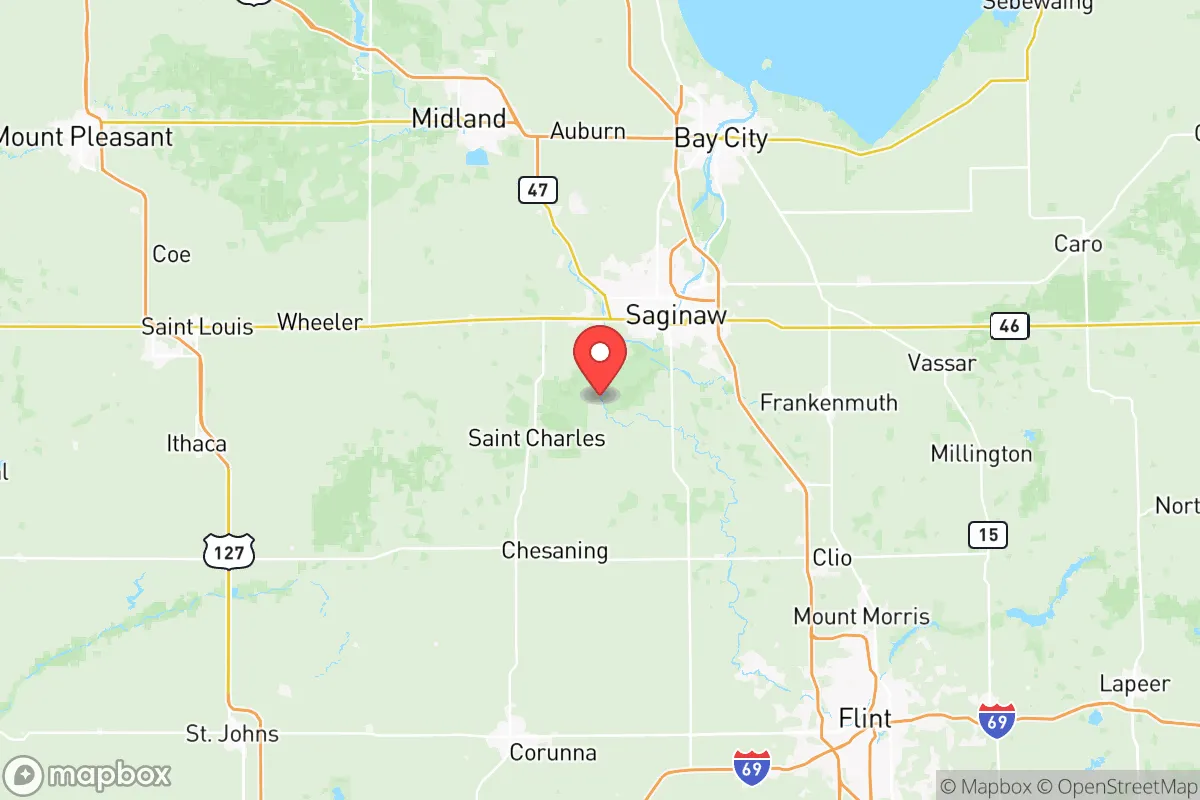
Saginaw County, Michigan, occupies a middle ground in the resilience landscape—neither a remote fortress nor a high-risk coastal sprawl. Its strategic value lies in a blend of moderate population density, access to two of the Great Lakes (Huron and Michigan via the Saginaw River and Bay), and a diversified regional economy that includes agriculture, manufacturing, and light industry. For a relocator thinking seriously about disaster readiness and self-sufficiency, Saginaw County offers a workable foundation: it is far enough from the most obvious military or industrial targets to avoid 'ground zero' status, yet close enough to major supply routes that resupply and community support are realistic. The county seat, Saginaw, anchors the region with a population around 190,000, while smaller towns like Frankenmuth, Birch Run, and Chesaning provide buffer and rural access.
Geographic position, natural advantages, and regional stability
The area sits in the Saginaw Valley, a fertile agricultural basin that is one of Michigan's most productive farming regions. This means a built-in, local food base—soybeans, corn, wheat, and dairy operations are common within a 20-minute drive of most neighborhoods. The Saginaw River, which flows north through the county into Saginaw Bay, is a consistent freshwater source, though its industrial history means careful well testing is advised for anyone considering a private water system. The region is not seismically active, tornado risk is present but modest compared to the Plains states, and blizzard/high-wind events are manageable with basic winter preparedness. The Great Lakes act as a massive thermal buffer, moderating temperature extremes and reducing wildfire risk. For a relocator, the ability to grow food, access surface water, and avoid major natural disaster zones gives Saginaw County a stable baseline.
Exposure to man-made risks and proximity to fallout-relevant infrastructure
No place is immune from strategic risk, and Saginaw County has several features that warrant a clear-eyed look. The most significant is its proximity to the Zilwaukee Bridge (I-75) and the Dow Chemical complex in Midland, roughly 25 miles north. Dow's facility in Midland County includes chemical manufacturing that could be a target or a source of industrial accident. Additionally, the McKellar-Sipes Regional Airport (located about 60 miles southwest in Jackson, TN) is less relevant here, but note that Saginaw's own MBS International Airport (serving Saginaw, Bay City, and Midland) is a regional hub that could be a military staging point in a crisis—and thus a potential target. The area also has a significant rail presence: Canadian National Railway lines run through the county, carrying industrial and hazardous materials. Being within 50 miles of the Midland parts of the state's chemical corridor introduces a moderate risk of secondary fallout or supply-chain disruption. On the positive side, Saginaw County lacks a major military base, nuclear power plant, or large-dam downstream flood zone; the nearest bases are Selfridge Air National Guard Base (~90 miles southeast) and Camp Grayling (~100 miles north), both distant enough to be irrelevant for blast radius concerns.
Practical resilience for the relocator: food, water, energy, and defensibility
For someone serious about self-sufficiency, Saginaw County offers strong practical advantages. Food production is the standout feature. The agricultural land is affordable, with raw acreage often available for under $5,000 per acre outside the metro core. You can realistically keep livestock, plant orchards, and run row crops—the soil is rich, and the growing season (roughly 140 days) allows for substantial yields. Local farmers' markets in Saginaw, Frankenmuth, and Chesaning operate from spring through fall, providing a backup supply network. Water access is reliable: the Saginaw River, Bad River, and Cass River are perennial, and groundwater depth averages 50-100 feet in most rural areas, making well drilling feasible and affordable. Energy resilience is more mixed. The grid is served by Consumers Energy, which has a moderate outage history during ice storms and high winds. However, the county has no rolling-blackout reputation, and natural gas infrastructure is widespread. Solar adoption is growing but not dominant; a backup propane or diesel generator is a reasonable investment here. Defensibility considerations: the southern and eastern parts of the county—townships like Frankenmuth Township, Bridgeport Charter Township, and Blumfield Township—offer rural, low-population densities with good road networks (both paved and gravel) and natural chokepoints (rivers, wooded corridors). The terrain is flat to gently rolling, offering decent visibility. Outbuildings, barns, and older farmsteads are common, providing ready-made storage and cover. A relocator should prioritize properties away from the I-75 corridor (which runs north-south through the county) to minimize noise, risk, and visibility.
The strategic picture for Saginaw County is that of a solid middle-tier option—not a survivalist paradise, but a genuinely workable area for someone balancing readiness with modern convenience. It offers clean water, productive land, and manageable risk from both natural and man-made threats. The proximity to larger metro areas (Detroit, Flint, Lansing are all within 90 minutes) is a double-edged sword: it ensures supply availability and medical access, but also means some fallout risk from those urban centers. For a single individual or family prioritizing food independence, water access, and a community that values self-reliance (the area has a strong hunting, fishing, and outdoor culture), Saginaw County merits serious consideration. The key is choosing your township wisely—targeting rural southwestern or eastern edge areas, away from rail lines and the chemical corridor to the north. It's not the most remote spot in Michigan, but it may be the most balanced.

* Values derived from national, state, county, city and local statistics and may differ in a specific area. Last updated: 2026-07-02T23:48:44.000Z
Narrative content on this page is AI-generated and may contain mistakes. Verify any details that matter before acting on them.
ReloMaps may earn a commission from affiliate links at no extra cost to you.

