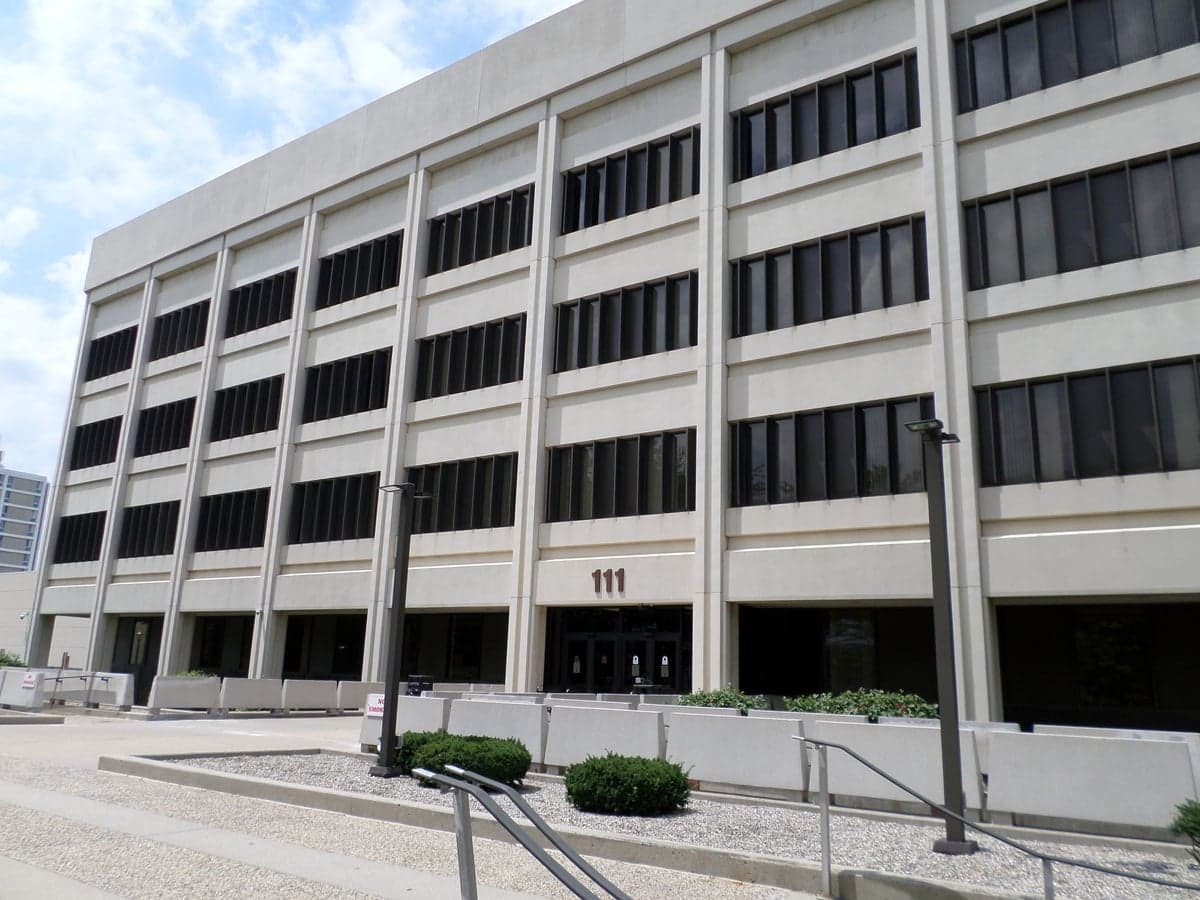
Photo: Wikipedia
Personal Sovereignty in Saginaw County
Strong independent fundamentals that actively favor personal liberty and low regulation.
What does Personal Sovereignty tell us?
Personal Sovereignty measures your capacity for self-reliance and independence with minimal government friction. Higher scores mean fewer barriers between you and the way you want to live... but it assumes you have the space you need and good neighbors.
What does this tell us?
Personal Sovereignty measures your capacity for self-reliance and independence with minimal government friction. Higher scores mean fewer barriers between you and the way you want to live... but it assumes you have the space you need and good neighbors.
State Policy
Energy independence: Importer (20% of energy produced in-state)
Personal Liberty
Homesteading

Personal Liberty Analysis
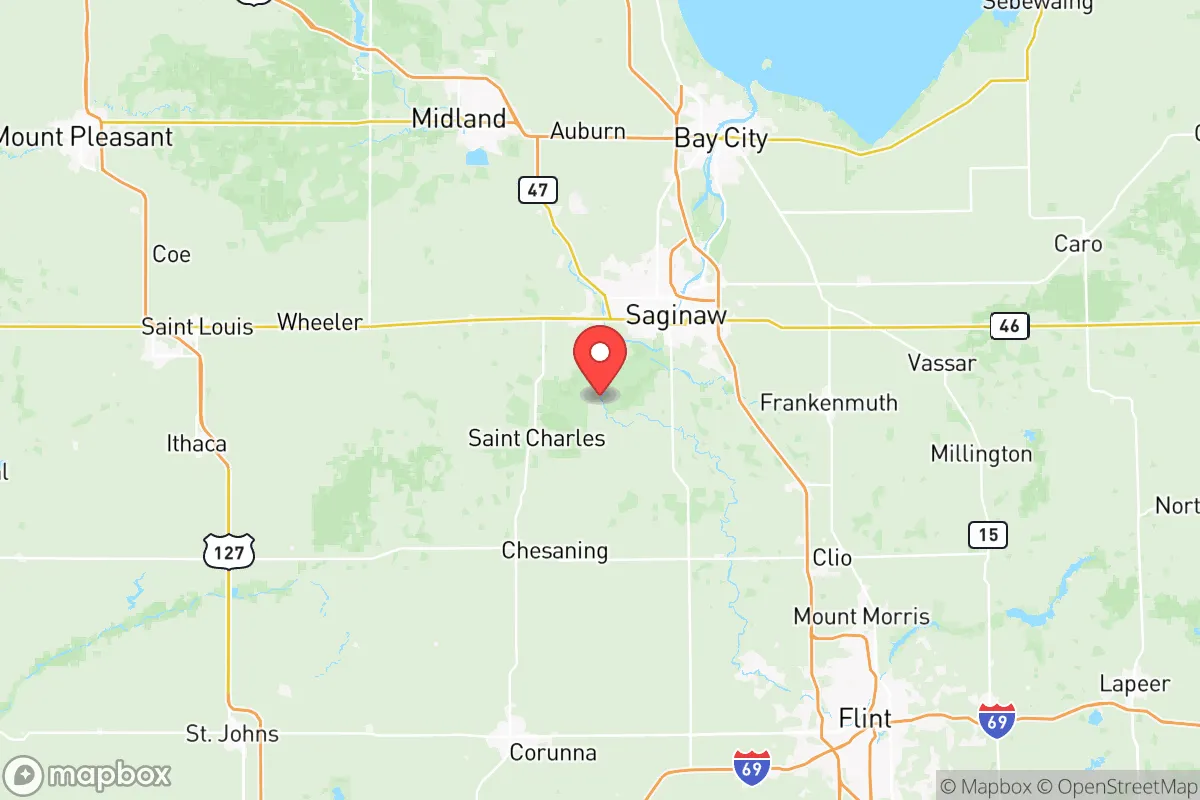
Saginaw County offers a mixed but generally favorable environment for personal sovereignty, where state-level protections for gun rights and property use intersect with a local regulatory landscape that varies significantly between the urban core and outlying townships. The county’s autonomy profile is shaped by Michigan’s relatively permissive framework for self-defense, homesteading, and parental rights, but tempered by a tax burden that is moderate by national standards and a regulatory posture that leans heavier in the city of Saginaw and lighter in rural townships like James Township and Fremont Township. For a conservative-leaning individual or family weighing relocation, the key question is not whether Saginaw County is uniformly free, but where within it the balance of taxes, zoning, and local enforcement best aligns with their priorities.
Tax burden and regulatory posture across Saginaw County
Michigan’s state income tax is a flat 4.25%, and Saginaw County’s average property tax rate hovers around 1.5% of assessed value, which is slightly above the national median but below many counties in the Chicago or New York metro areas. The county’s regulatory posture is most visible in its zoning codes. The city of Saginaw enforces standard urban ordinances on building setbacks, lot coverage, and noise, which can complicate small-scale workshops or home-based businesses. In contrast, townships like Thomas Township and Spalding Township operate under more permissive agricultural and rural residential zoning, allowing larger lot sizes (often 2–5 acres minimum) and fewer restrictions on accessory structures. The county’s planning department generally processes permits within 30–45 days for standard residential projects, but variances for non-conforming uses (e.g., a home-based auto repair shop) can take 60–90 days and require a public hearing. For a family wanting to run a small farm or keep livestock, the regulatory path is smoother in the townships than inside the Saginaw city limits, where urban zoning restricts animals to small flocks of chickens and prohibits pigs or goats.
Self-defense and gun law specifics in Saginaw County
Michigan is a shall-issue state for concealed pistol licenses (CPL), and Saginaw County’s gun culture is robust, with multiple indoor and outdoor ranges including the Dow Gun Club in Saginaw Township and the Mid-Michigan Gun Club near Chesaning. The county sheriff’s office processes CPL applications within the statutory 45-day window, and there are no local ordinances that exceed state law on magazine capacity or firearm registration. Open carry is legal without a permit for anyone 18 or older who can legally possess a firearm, and the county’s law enforcement agencies generally do not harass lawful carriers. Stand-your-ground protections apply statewide, and Saginaw County courts have upheld self-defense claims in home-invasion cases, though the urban areas of Saginaw city see higher rates of violent crime (roughly 1,200 violent crimes per 100,000 residents in 2024) than the county average (about 450 per 100,000), making self-defense a practical concern for residents in the city core. In townships like Birch Run and Frankenmuth, the crime rate is low enough that most residents view firearms as a lifestyle choice rather than a daily necessity.
Self-reliance and homesteading viability: lot sizes, zoning, and off-grid feasibility
Homesteading and off-grid living are viable in Saginaw County’s rural townships, but the feasibility depends heavily on location. Minimum lot sizes in agricultural zones (common in Fremont Township and Jonesfield Township) are typically 5 acres, with some parcels available at 10 acres or more. Zoning in these areas permits livestock, poultry, and beekeeping without special permits, and many properties already have wells and septic systems. Off-grid solar is legal statewide, but net metering rules require interconnection with the grid for any system over 20 kW; smaller systems can operate independently without permits beyond standard electrical inspections. Rainwater collection is unrestricted in Michigan, and composting toilets are allowed under the state’s plumbing code for properties not connected to municipal sewer. The county’s building department does not require permits for agricultural outbuildings under 200 square feet, which covers most chicken coops and tool sheds. However, full off-grid living (no grid connection at all) is rare in Saginaw County because most rural parcels still have access to electricity at the road, and the local utility, Consumers Energy, charges a monthly standby fee of about $15–$25 for grid-tied solar systems. For a family wanting to raise goats, grow a large garden, and heat with wood, townships like Spalding Township offer the most permissive environment, while the city of Saginaw and its inner suburbs (e.g., Carrollton) are effectively off-limits for serious homesteading due to lot size minimums of 0.25 acres and livestock prohibitions.
Personal liberties: parental rights, medical autonomy, speech, and property
Michigan law provides strong protections for parental rights, including the right to direct a child’s education, medical care, and religious upbringing. Saginaw County has a mix of public, private, and charter schools, and homeschooling is straightforward: parents file a simple intent to homeschool with the local intermediate school district (ISD) and are not subject to curriculum approval or standardized testing requirements. Medical autonomy is more constrained at the state level; Michigan has a vaccine mandate for school entry (with medical and religious exemptions available), and the state’s emergency powers during the COVID-19 pandemic led to temporary business closures and gathering limits that were controversial among conservative residents. Since 2023, the state legislature has passed bills limiting the governor’s emergency powers, but the regulatory memory remains a concern for some. Free speech is fully protected under the First Amendment, and Saginaw County has no local ordinances restricting political signage or public assembly beyond standard time-place-manner rules. Property rights are generally strong, with no county-level rent control or inclusionary zoning mandates. The county’s tax foreclosure process is standard: properties are auctioned after three years of delinquency, but the county offers payment plans and hardship extensions that reduce the risk of sudden loss. For a family that values medical freedom and educational choice, Saginaw County’s legal environment is more permissive than states like New York or California, but less so than Texas or Florida, where vaccine mandates are weaker and emergency powers are more tightly constrained.
Overall, Saginaw County delivers a solid middle-tier sovereignty environment for a conservative-leaning household. The tax burden is manageable, gun rights are well-protected, and the rural townships offer genuine homesteading opportunities at land prices that are roughly half of what you’d pay in comparable counties in Colorado or Washington. The main trade-offs are the urban crime rate in Saginaw city and the state-level medical autonomy restrictions that may rankle families who prioritize vaccine choice or emergency-powers limits. For a family that can choose a township like Fremont or Spalding, the county offers a level of personal freedom that is competitive with the Midwest’s better-known liberty-friendly counties, while still being within commuting distance of the Tri-Cities (Saginaw, Bay City, Midland) for jobs and services.

* Values derived from national, state, county, city and local statistics and may differ in a specific area. Last updated: 2026-07-02T23:48:44.000Z
Narrative content on this page is AI-generated and may contain mistakes. Verify any details that matter before acting on them.
ReloMaps may earn a commission from affiliate links at no extra cost to you.

