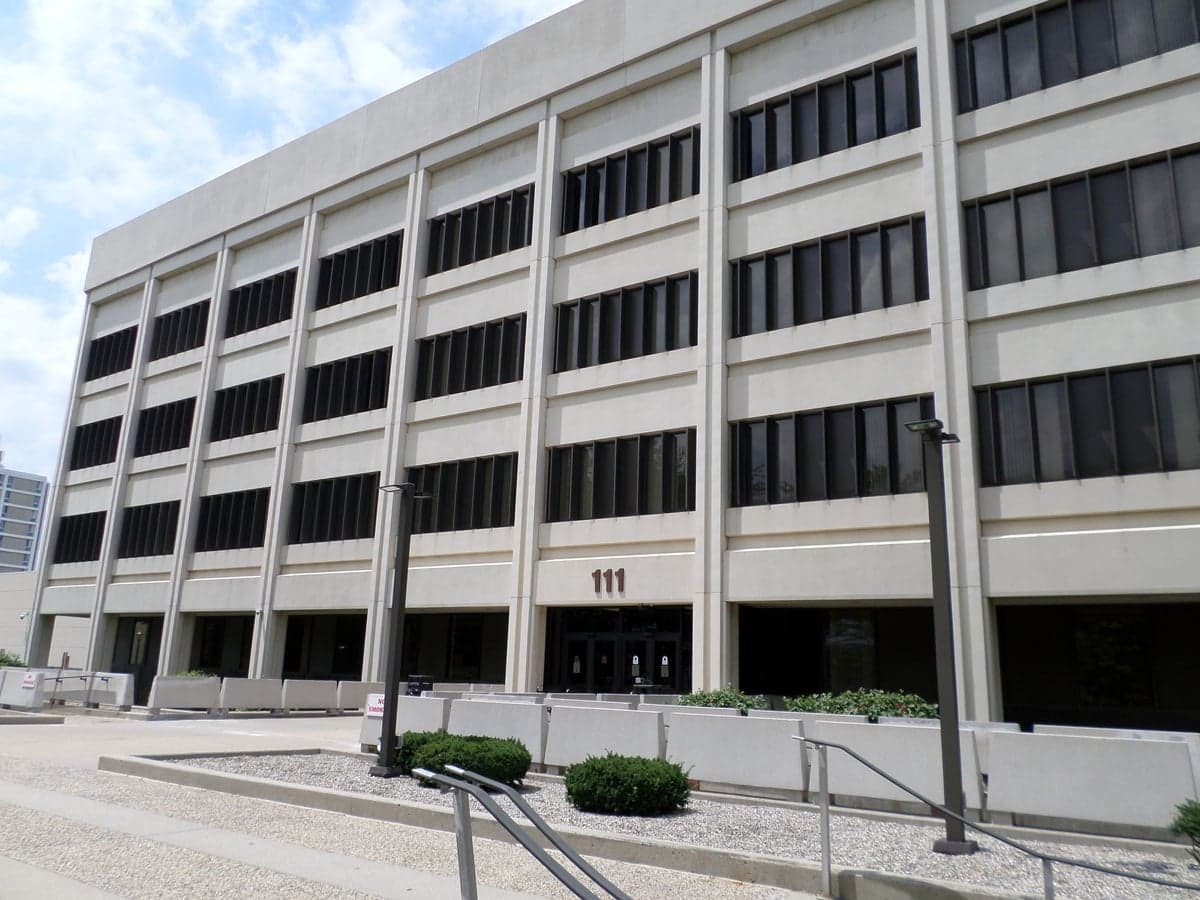
Photo: Wikipedia
Political ClimatePolitical Climate in Saginaw County
Showing district-level results — no local-only data available.
Local Political AnalysisPolitical Analysis of Saginaw County
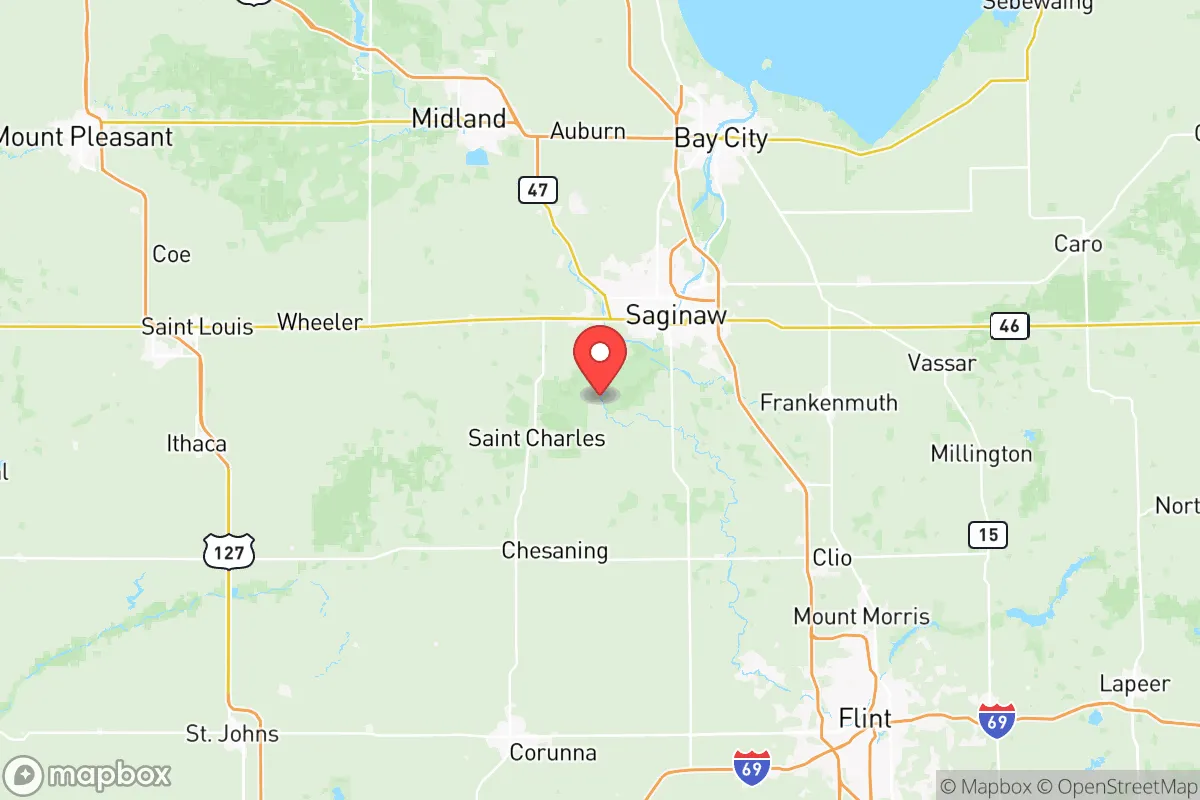
Saginaw County is a classic Michigan bellwether that has been drifting rightward, now carrying a Cook PVI of R+1, while the state of Michigan as a whole sits at EVEN. This means the county is slightly more Republican-leaning than the state average, a shift driven by working-class voters in the city of Saginaw's outer ring and the surrounding rural townships. The city of Saginaw itself remains a Democratic stronghold, but its shrinking population has reduced its electoral weight, while growing conservative precincts in places like Thomas Township, Frankenmuth, and St. Charles are pulling the county's overall numbers to the right. The 2024 presidential race saw Donald Trump carry the county by a few points, a reversal from 2020 when Joe Biden narrowly won it, confirming the area's slow but steady move away from its historical Democratic roots.
How it compares to Michigan as a whole
Michigan's EVEN PVI reflects a state that is a true toss-up, with Detroit and Ann Arbor counterbalancing the conservative western and northern Lower Peninsula. Saginaw County's R+1 rating makes it slightly more Republican than the state, but the comparison is nuanced. The county's political geography mirrors the state's urban-rural divide in miniature: the city of Saginaw votes like Detroit (heavily Democratic, with precincts often going 80%+ blue), while townships like Birch Run and Taymouth vote like the rural thumb region (solidly Republican). The swing precincts are in the suburban townships of Saginaw Charter Township and Buena Vista Charter Township, where ticket-splitting is common. In 2022, Governor Gretchen Whitmer lost Saginaw County by about 1,000 votes, while winning the state by 10 points, illustrating how the county is now a few points to the right of the state average. This gap has widened since 2012, when the county was still a reliable Democratic bellwether.
What this means for residents
For conservative residents, the R+1 lean means their votes carry slightly more weight in county-level races than they would in a neutral county. Republicans hold a majority on the Saginaw County Board of Commissioners, and local policy on issues like tax rates and land use tends to reflect a center-right consensus. For liberal residents, the city of Saginaw remains a safe space for progressive organizing, but countywide ballot initiatives—such as millage renewals for public transit or community college—often require bipartisan coalition-building. The practical effect is that neither side can dominate unilaterally; the county's politics are competitive enough that both parties invest in ground operations here. This creates a political culture where compromise is more common than in deep-red or deep-blue areas, but also where every election feels high-stakes.
Culturally, Saginaw County retains a distinct blue-collar identity that transcends party lines. The United Auto Workers still has a strong presence in the city, while the farming communities in the county's southern and western townships lean conservative on social issues but remain skeptical of corporate overreach. The county's policy distinctions are subtle: it has a relatively low property tax rate compared to neighboring Genesee County, but its road funding debates are perennial, reflecting a shared frustration with infrastructure that neither party has fully solved. The annual Saginaw County Fair in Chesaning is a rare neutral ground where political signs are left at the gate, and the local news coverage in The Saginaw News still treats local government as a matter of civic duty rather than partisan warfare. For anyone moving here, the takeaway is simple: you'll find your people, but you'll also have to talk to the other side at the grocery store.

State Political ClimatePolitical Climate in Michigan
State Political AnalysisPolitical Environment in the State
Michigan is a classic swing state, holding a Cook PVI of EVEN that perfectly captures its razor-edge competitiveness in presidential elections. Over the past 20 years, the state has shifted from a reliably blue blue-collar stronghold to a true battleground, with Donald Trump flipping it in 2016, Joe Biden flipping it back by 154,000 votes in 2020, and the state now hosting some of the most expensive and closely watched races in the country. The dominant coalitions are the heavily Democratic, union-heavy urban cores of Detroit, Ann Arbor, and Grand Rapids (Kent County flipped blue in 2020 for the first time in decades) versus the staunchly Republican exurbs and rural stretches of western and northern Lower Peninsula and the Upper Peninsula (the "UP"), which has trended red as union loyalty weakens.
Urban vs. rural divide
The political map of Michigan is a microcosm of the national divide. Southeast Michigan is the Democratic engine: Wayne County (Detroit) alone delivers a quarter-million vote margin for Democrats, while Oakland County (the wealthy northern suburbs of Detroit) has shifted from a GOP bastion to a reliable Democratic stronghold since 2016, thanks to college-educated voters repudiating Trump. Washtenaw County (Ann Arbor) is the most liberal in the state. The surprise flip in 2020 was Kent County (Grand Rapids), which had not voted Democratic since 1964; the city's growing tech and healthcare sector (Steelcase, Meijer, Spectrum Health) brought in younger, more liberal residents. In contrast, the Thumb region (Huron, Sanilac counties) and the western UP (Gogebic, Iron counties) are deeply red, voting 70%+ Republican. The swing suburbs that decide elections are Macomb County (north of Detroit) and Ottawa County west of Grand Rapids — both blue-collar, ancestrally Democratic areas that shifted hard to Trump. Macomb's "Reagan Democrats" are now the most coveted voting bloc in the state.
Policy environment
Michigan's policy environment has become a patchwork reflecting the state's partisan deadlock. Taxes: the state income tax is a flat 4.25%, with a 2023 law that triggered a temporary reduction to 4.05% (rebated in 2025) thanks to a surplus. Sales tax is 6%, and property taxes are locally set under the Headlee Amendment, which caps increases at inflation. A key feature relocators should understand is the Michigan Business Tax was replaced in 2012 with a flat 6% corporate income tax, making it competitive for manufacturers. Regulation: the state has a right-to-work law passed in 2012, but Democrats repealed it in 2023, making Michigan the first state in decades to reverse right-to-work. That repeal also restored prevailing wage requirements on public projects. Education: the Michigan Department of Education has expanded pre-K access and championed school funding reform, but charter schools remain robust, with Detroit having one of the highest charter densities in the nation. Election laws: in 2022, voters passed Proposal 2, enshrining nine days of early voting, drop boxes, and absentee voting by constitutional amendment — a major victory for voting access advocates. Gun laws: after the 2023 Oxford High School shooting, Democrats passed universal background checks and safe storage requirements (the Bipartisan Safer Communities Act state-level complement), and a "red flag" law (Extreme Risk Protection Order) took effect in 2024. The state also requires a permit to purchase a pistol, but open carry of long guns is still legal without a license.
Recent policy direction
The 2023-2024 Democratic trifecta (Governor Gretchen Whitmer, state House, state Senate) passed the most sweeping progressive agenda in decades, shifting the state left on several fronts a relocator should weigh carefully.
- Self-defense and gun law: As noted, the new Extreme Risk Protection Order Act (red flag) and universal background checks took effect in 2024. Open carry of rifles without a license remains legal; concealed pistol licenses (CPL) are "shall issue" from county clerks, but the state has no "stand your ground" doctrine — you have a duty to retreat if safely possible. This is a key difference from Florida or Texas for firearm owners.
- Parental and education rights: The legislature repealed the 2016 "Third Grade Reading Law" that would have held back struggling readers, and expanded LGBTQ+ anti-discrimination protections in schools. A conservative-led Parental Rights movement is active in districts like Rockford and Grand Haven, pushing for book bans and transparency in curriculum; the state has not passed any statewide "parents' bill of rights" as of 2025.
- Speech and privacy: Michigan has no statewide social media law like Texas's HB 20, and no broad surveillance law beyond standard Fourth Amendment protections. The Michigan PIED PIPER Act (2019) restricts facial recognition use by police without a warrant.
- Medical and bodily autonomy: The 2022 Proposal 3 constitutional amendment enshrined a broad right to reproductive freedom, including abortion up to viability (generally 24 weeks). This was a defining issue in the 2022 midterm. Medical marijuana has been legal since 2008; recreational cannabis was legalized by Proposal 1 in 2018, with a 10% excise tax. The regulatory structure is mature, with licensed dispensaries in virtually every county.
- Property rights: Michigan has relatively strong property rights under the Revised Judicature Act, but the state has been active in using eminent domain for redevelopment in Detroit and Flint. The Property Tax Reimbursement Act (Proposal A) limits assessment increases to 5% annually for homes held by the same owner, a major benefit for longtime owners but a shock for new buyers (who are taxed on current market value).
- Taxes: In 2024, the legislature considered but did not pass a tax rebate for low-income earners; the failed MI Family Tax Credit would have expanded the Earned Income Tax Credit. As of 2025, no state-level capital gains exemption exists.
- Voting and ballot access: Proposal 2 (2022) was the biggest change, making absentee voting no-excuse, establishing a permanent absentee list, and requiring nine days of early voting. The law also bars private funding of elections, a response to the 2020 "Zuckerbucks" controversy in other states.
The overall direction since 2023 has been a sharp leftward shift on abortion, guns, and labor, while taxes remain relatively competitive for business. The 2024 election saw the state back Democratic President Biden by 2.8 points, confirming the new coalition's durability.
Civil unrest & political movements
Michigan has been a flashpoint for both left- and right-wing activism. In 2020, the Wolverine Watchmen militia was charged in a plot to kidnap Governor Whitmer, stoking national concern over domestic extremism. The protest movements around the COVID lockdowns — including the armed occupation of the state Capitol in Lansing in April 2020 — were a defining moment, rallying conservative and libertarian voters. On the left, the 2020 George Floyd protests in Detroit and Grand Rapids saw some looting and arson, leading to guard deployment. Immigration politics: Detroit is a designated "sanctuary city" since 2017 (though the state itself has no sanctuary law), meaning city police will not detain individuals based on immigration status alone. The border with Canada means regular ICE checkpoints near the Blue Water Bridge in Port Huron. Election integrity was a hot topic after 2020, with conservative groups like the Michigan Election Integrity Network conducting audits of voter rolls; the state's Republican-led Senate Oversight Committee found no evidence of widespread fraud, but the controversy persists. A new resident would see the occasional Trump flag in rural areas alongside "Protect Abortion Access" yard signs in Ann Arbor — the divide is inescapable.
Projection
Over the next 5-10 years, I expect Michigan to remain a swing state, but with a slight Democratic lean in presidential years thanks to continued urbanization of Grand Rapids and the Detroit suburbs, and slow population decline in the rural UP and northern Lower Peninsula. The 2023 repeal of right-to-work and the strong Prop 3 victory suggest the Democratic coalition is energized. However, the state's economic future is uncertain: heavy reliance on auto manufacturing (especially EVs) and the semiconductor industry (the new GM battery plant in Delta Township) could either boom or bust. In-migration from high-tax states like Illinois and California is modest but real, with Traverse City and Grand Rapids seeing the most growth. These newcomers tend to be more liberal on social issues but fiscally conservative — the classic "Michigan moderate" who may tip future close races. The key wildcard: if the state's population falls, it could lose one congressional seat in 2030 redistricting, which would amplify the rural vote. A Republican may win the state in a midterm by 3-4 points, but a Democrat will probably hold it in a presidential year by a similar margin until at least 2032.
The bottom line for a new resident: If you move to Michigan, you'll live in a state where your vote truly matters — and you will see that civic participation reflected in the constant barrage of campaign ads. Conservatives will find welcoming communities in the Ottawa County lakeshore towns like Holland and Grand Haven, and in the UP's hunting country, but they will face a state government that is increasingly progressive on social issues and gun policy. Liberals will feel at home in Ann Arbor, Detroit's core, and Grand Rapids' downtown, but they will have to accept a state where rural voters hold outsized influence in the legislature due to gerrymandering. Practical takeaway: property taxes are moderate but unpredictable for new buyers, schools are above average in the suburbs, and the political climate means your local government — city council, school board — is where policy actually touches your life. The state level will oscillate every two years. If you can live with that whiplash, Michigan offers a fascinating, balanced political laboratory. If you want a solidly red or blue lockbox, look elsewhere — this state will keep you engaged either way.
* Values derived from national, state, county, city and local statistics and may differ in a specific area. Last updated: 2026-07-02T23:48:44.000Z
Narrative content on this page is AI-generated and may contain mistakes. Verify any details that matter before acting on them.
ReloMaps may earn a commission from affiliate links at no extra cost to you.

