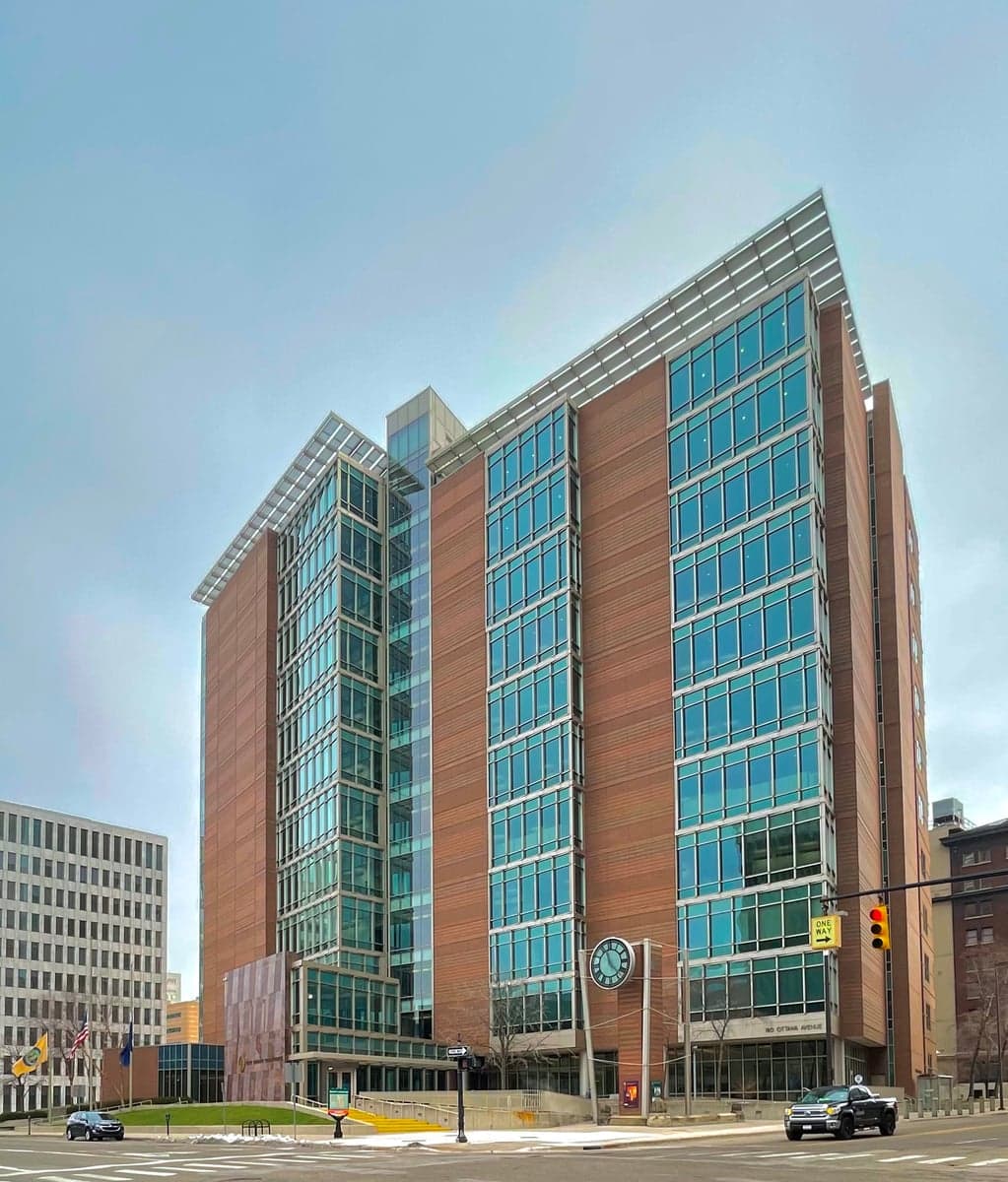
Photo: Wikipedia
Political ClimatePolitical Climate in Kent County
Showing district-level results — no local-only data available.
Local Political AnalysisPolitical Analysis of Kent County
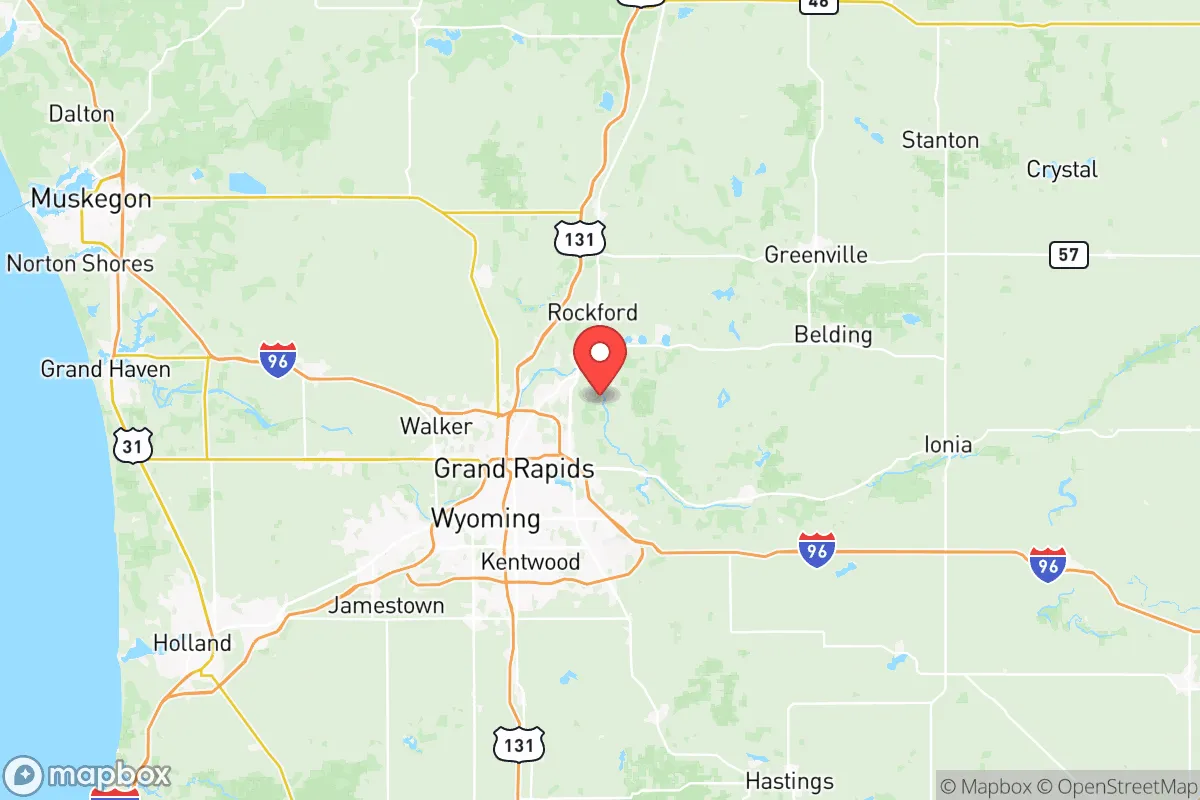
Look, I’ve lived in Kent County my whole life, and I’ve watched this place change—especially Grand Rapids. The political climate here used to be a reliable conservative stronghold, but it’s shifted noticeably left in the last decade. The Cook PVI now sits at D+4, meaning the county leans Democratic by four points, which is a far cry from where we were even 15 years ago. That shift is driven almost entirely by the city of Grand Rapids and its inner-ring suburbs, while the outer towns and rural areas have held the line. It’s a tale of two counties under one name, and the tension between those worlds is what defines local politics today.
How it compares
Compared to the rest of Michigan—which has a Cook PVI of EVEN, meaning it’s a pure swing state—Kent County is now more Democratic. That’s a reversal from the 2000s, when Kent was reliably red and helped balance out the blue votes from Detroit and Ann Arbor. The biggest driver of this change is Grand Rapids itself, where neighborhoods like Eastown, Heritage Hill, and the Medical Mile area vote overwhelmingly blue. But drive 15 minutes south to Byron Center or Caledonia, and you’ll find precincts that vote 65-70% Republican. The same goes for Rockford to the north and Lowell to the east. The swing precincts are actually in the townships just outside the city—places like Gaines Township and Cascade Township—where moderate voters decide close races. Statewide, Michigan’s EVEN rating means Kent County’s D+4 now puts it slightly to the left of the state average, which is a big deal for a county that used to be the GOP’s anchor in West Michigan.
What this means for residents
For folks who value limited government and personal freedoms, the trend here is concerning. The county commission and city council in Grand Rapids have pushed progressive policies—like higher minimum wages, expanded non-discrimination ordinances that some see as overreach into private business decisions, and zoning changes that prioritize dense development over single-family neighborhoods. Meanwhile, the outer townships and smaller cities like Cedar Springs and Sparta still elect conservative boards that push back on county-level mandates. The practical effect is that your experience of government overreach depends heavily on where you live. If you’re in the city, you’re dealing with more regulations and higher taxes; if you’re in the suburbs or rural areas, you still have a fair amount of local control. But the countywide shift means that state-level elections often see Kent County delivering Democratic margins, which has helped flip Michigan’s legislature and governor’s office blue in recent years.
Culturally, the old Dutch Reformed conservative ethos that built Grand Rapids is fading. The city’s downtown is now a hub for progressive activism, with groups like the Kent County Democratic Party and local chapters of Indivisible holding regular events. The policy distinctions are real: the county has adopted a “sanctuary” stance on immigration enforcement, and the city has pushed for police reform measures that some residents feel handcuff law enforcement. For a conservative who values personal responsibility and limited government, the trajectory is worrying. If you’re thinking of moving here, I’d recommend sticking to the outer townships or smaller towns if you want to preserve that traditional West Michigan feel. The city itself is becoming a different place—and not everyone is happy about it.

State Political ClimatePolitical Climate in Michigan
State Political AnalysisPolitical Environment in the State
Michigan is a true battleground state, with a Cook PVI of EVEN, meaning it votes almost exactly in line with the national average. Over the past 20 years, the state has shifted from a reliably blue stronghold in presidential races to a purple toss-up, driven by a stark urban-rural divide and the realignment of working-class voters. The dominant coalitions are the heavily Democratic, union-heavy southeast (Detroit, Ann Arbor, Flint) versus a growing Republican base in the western and northern Lower Peninsula, plus the reliably red Upper Peninsula. The 2024 election saw Trump win the state by a razor-thin margin, a flip from Biden’s 2020 victory, signaling that Michigan is now the epicenter of national political competition.
Urban vs. rural divide
The political map of Michigan is a textbook case of geographic polarization. The city of Detroit and its inner-ring suburbs like Southfield and Dearborn are overwhelmingly Democratic, powered by strong Black and Arab-American voting blocs. Ann Arbor, home to the University of Michigan, is a progressive stronghold that reliably delivers 70-80% Democratic margins. In contrast, the western side of the state — places like Grand Rapids, Holland, and the lakeshore counties of Ottawa and Allegan — have become solidly Republican, fueled by evangelical Christians and small-business owners. The Upper Peninsula, once a Democratic bastion due to mining unions, has flipped hard red over the last decade, with counties like Gogebic and Dickinson now voting Republican by double digits. The key swing areas are Macomb County (north of Detroit) and Kent County (Grand Rapids), where working-class voters have shifted right on cultural and economic issues, making them the decisive battlegrounds in every election.
Policy environment
Michigan’s policy landscape is a mixed bag for conservatives. The state has a flat income tax rate of 4.25%, which is moderate but not low, and property taxes are relatively high, especially in the southeast. The regulatory environment is generally business-friendly in the western and northern parts of the state, but the Democratic-controlled state government under Governor Gretchen Whitmer has pushed a progressive agenda since 2019. Key policies include the repeal of right-to-work laws in 2023, which re-empowered unions and made Michigan the first state in decades to roll back such protections. Education policy is contentious: the state has a robust school choice program with charter schools and a thriving homeschooling community, but the Detroit Public Schools system remains a disaster, with low test scores and chronic mismanagement. Healthcare is dominated by the expansion of Medicaid under the Affordable Care Act, which Whitmer has defended. Election laws are relatively open — no voter ID requirement for absentee ballots, and same-day voter registration is allowed, which conservatives view as a vulnerability. The state also has a Democratic trifecta (governor, House, Senate) as of 2025, which has accelerated progressive legislation.
Trajectory & freedom
Michigan is trending in a concerning direction for personal freedom, especially in the last few years. The most alarming development is the 2023 repeal of right-to-work, which forces workers in unionized workplaces to pay dues or fees as a condition of employment — a direct infringement on individual liberty. On gun rights, Michigan enacted a "red flag" law in 2023, allowing courts to temporarily seize firearms from individuals deemed a risk, which conservatives view as a due-process violation. The state also passed universal background checks and safe storage requirements. On the positive side, Michigan has no state-level income tax on Social Security benefits, and property tax increases are capped by the Headlee Amendment, offering some fiscal predictability. However, the trend is toward more government control: the Whitmer administration has used executive orders aggressively, including during COVID-19 lockdowns that were among the strictest in the nation. Parental rights are under threat, with the state’s Department of Education pushing LGBTQ+ inclusive curriculum standards that some parents argue bypass local control. The trajectory is clearly toward less individual freedom, particularly in the southeast, while the western and northern regions fight to preserve local autonomy.
Civil unrest & political movements
Michigan has been a flashpoint for political activism on both sides. The most visible event was the 2020 "Operation Gridlock" protest in Lansing, where thousands of armed protesters, including the Wolverine Watchmen militia, stormed the state capitol to oppose COVID-19 lockdowns — a moment that captured national attention. On the left, the Detroit-based "Black Lives Matter" protests in 2020 were large and occasionally violent, with property damage in downtown Detroit. The state has a strong "sanctuary" movement in cities like Ann Arbor and Detroit, which limit cooperation with federal immigration enforcement, creating tension with conservative rural areas. Election integrity remains a hot-button issue: the 2020 election saw widespread use of absentee ballots without strict ID requirements, and the 2024 recount in Wayne County (Detroit) was marred by allegations of irregularities, though no major fraud was proven. The "Wolverine Watchmen" militia group was involved in a foiled plot to kidnap Governor Whitmer in 2020, which has polarized opinions — conservatives see it as a government entrapment, while liberals view it as domestic terrorism. These flashpoints make Michigan a state where political tensions are palpable, especially in the capitol city of Lansing.
Projection
Over the next 5-10 years, Michigan is likely to become even more competitive, but with a slight rightward drift in the western and northern regions. The key demographic shift is the exodus from Detroit and its suburbs to the "Up North" areas — places like Traverse City, Petoskey, and the Upper Peninsula — which are attracting conservative-leaning retirees and remote workers fleeing high taxes in blue states. This in-migration is slowly turning previously purple counties red. However, the Democratic stronghold in the southeast is being reinforced by immigration from abroad and from other blue states, particularly in Ann Arbor and Grand Rapids’ urban core. The state’s electoral map will likely remain a toss-up, but the cultural and policy battles will intensify. Expect more fights over school curriculum, gun rights, and union power. The 2026 gubernatorial election will be a critical test: if a Republican wins, the state could reverse some of the recent progressive laws. But if Democrats hold the trifecta, Michigan will continue down a path of higher taxes, stricter gun laws, and expanded government control. For a conservative moving in now, the next decade will be a constant tug-of-war between the progressive southeast and the increasingly red rest of the state.
For a new resident, the bottom line is that Michigan offers a mixed bag: low cost of living and beautiful natural resources in the west and north, but a state government that is actively moving left on taxes, unions, and personal freedoms. If you’re moving to the Upper Peninsula or the lakeshore, you’ll find a community that shares your values and fights for local control. But if you settle in the southeast, you’ll be living under a Democratic regime that is expanding its reach into your wallet and your rights. The best advice is to choose your county carefully — Ottawa, Allegan, and Livingston counties are conservative havens, while Wayne, Washtenaw, and Ingham are the opposite. Michigan is a state worth fighting for, but it’s not a place where you can assume your freedoms are safe without staying engaged in local politics.
* Values derived from national, state, county, city and local statistics and may differ in a specific area. Last updated: 2026-05-16T04:01:29.000Z
Narrative content on this page is AI-generated and may contain mistakes. Verify any details that matter before acting on them.
ReloMaps may earn a commission from affiliate links at no extra cost to you.

