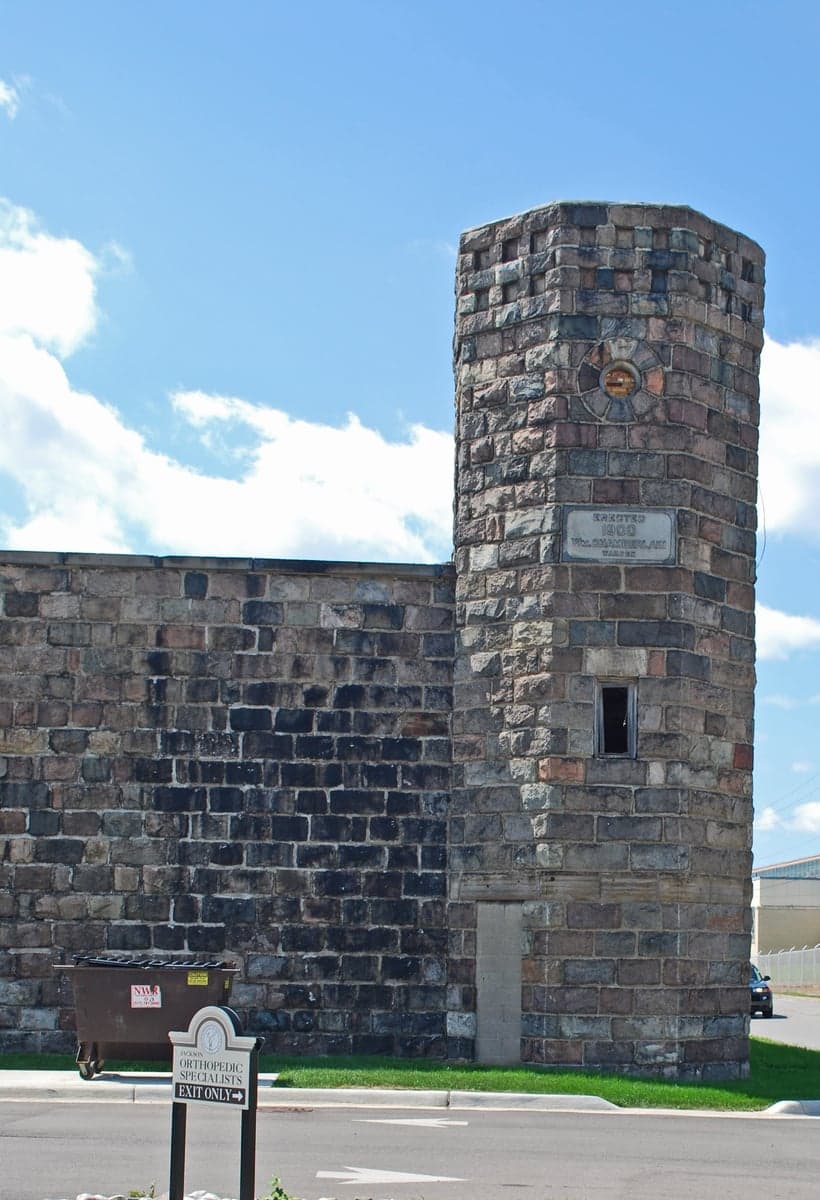
Photo: Wikipedia
Political ClimatePolitical Climate in Jackson County
Showing district-level results — no local-only data available.
Local Political AnalysisPolitical Analysis of Jackson County
Jackson County, Michigan, has a solidly Republican lean, reflected in its Cook Partisan Voting Index (PVI) of R+13, meaning it votes about 13 points more Republican than the nation as a whole. This stands in stark contrast to the state of Michigan, which sits at a PVI of EVEN, making it a classic swing state. The county has been trending redder over the past decade, driven by strong GOP turnout in its rural townships and exurban communities, even as the city of Jackson itself has become a more reliable Democratic stronghold. If you’re moving here, you’ll find a place where conservative values dominate local elections, but the political landscape isn’t monolithic—there’s real variation from one town to the next.
How it compares
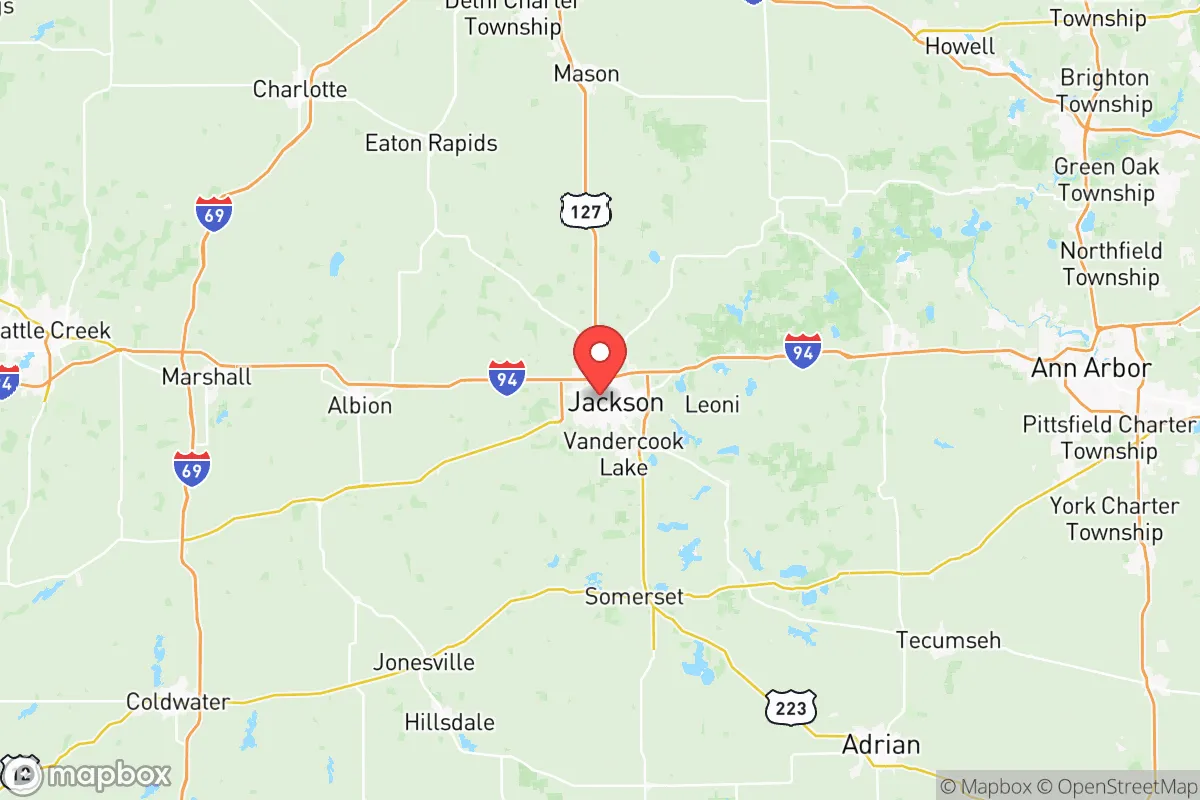
Michigan as a whole is a battleground, flipping between parties in presidential and gubernatorial races, but Jackson County is a reliable Republican anchor in the state’s southern tier. The county’s R+13 PVI is roughly in line with neighboring rural counties like Hillsdale (R+28) and Lenawee (R+12), but it’s significantly redder than Washtenaw County (D+18) to the east, home to Ann Arbor. Within Jackson County, the political divide is geographic: the city of Jackson and its inner-ring suburbs like Vandercook Lake and Summit Township lean Democratic, often voting 55-60% for Democratic candidates in recent cycles. Meanwhile, townships like Hanover, Liberty, and Rives are deeply red, regularly delivering 70-75% of the vote for Republicans. The swing precincts are in the county’s more suburbanized areas—places like Blackman Township and Leoni Township—where growth from commuters working in Ann Arbor or Lansing has introduced more moderate voters. These areas can flip between parties depending on the race, making them the key battlegrounds in local elections.
What this means for residents
For conservative residents, Jackson County feels like a safe bet. Local offices—from the county commission to the sheriff and prosecutor—are almost always held by Republicans, and policy tends to reflect that, with lower taxes and a focus on Second Amendment rights. The county’s GOP base is active, with strong turnout in rural precincts and a network of conservative churches and civic groups. For liberal residents, life here can feel like swimming against the tide, but it’s not hostile. The city of Jackson itself provides a blue oasis, with a Democratic mayor, a progressive city council, and a growing arts scene that attracts younger, left-leaning residents. The county’s Democratic Party is small but organized, focusing on turning out voters in the city and the swing townships. In practice, this means that while statewide issues like abortion rights or union laws can be contentious, local governance tends to be pragmatic—roads, schools, and public safety are the main concerns, and most elected officials work across the aisle on those.
Culturally, Jackson County is more traditional and family-oriented than the state as a whole. You’ll see more American flags and fewer pride flags in the rural areas, and the local news often covers school board meetings and county fair politics rather than Detroit’s urban issues. The county’s strong manufacturing and agricultural base reinforces a blue-collar conservatism that’s less about national culture wars and more about local control and fiscal responsibility. For newcomers, the key is understanding that while the county leans red, the city of Jackson and its immediate suburbs offer a more diverse political environment. If you’re a conservative, you’ll find plenty of like-minded neighbors; if you’re a liberal, you’ll find a community that’s welcoming but politically outnumbered. Either way, the political climate here is stable, predictable, and deeply rooted in the area’s history as a working-class, rural-urban mix.

State Political ClimatePolitical Climate in Michigan
State Political AnalysisPolitical Environment in the State
Michigan is a true battleground state with a Cook PVI of EVEN, meaning it sits precisely at the national average in partisan lean. Over the last 10-20 years, the state has shifted from a reliably blue Rust Belt stronghold — which voted for Democrats in every presidential election from 1992 to 2012 — to a full-on toss-up, narrowly going for Trump in 2016, flipping back to Biden in 2020, and remaining fiercely contested at every level. The dominant coalitions are a union-backed, metro-Detroit Democratic base versus a growing, Trump-aligned coalition in the outstate and rural areas, with the Detroit suburbs, Grand Rapids, and mid-sized cities like Traverse City and Kalamazoo serving as the key swing territory. Newcomers should expect a state where politics is inescapable, but where the partisan balance can shift with a single election cycle.
Urban vs. rural divide
The political map of Michigan is a textbook example of the urban-rural split. The Democratic stronghold is overwhelmingly concentrated in Wayne County (Detroit), Washtenaw County (Ann Arbor), and Ingham County (Lansing and East Lansing). These three counties alone delivered roughly 70% of Biden's statewide margin in 2020. Meanwhile, the rural Upper Peninsula, the northern Lower Peninsula, and West Michigan — outside the city of Grand Rapids itself — are deeply Republican. The real battlegrounds are the suburban ring around Detroit, particularly Oakland County and Macomb County. Macomb County, once the classic "Reagan Democrat" territory, flipped hard for Trump in 2016 by 12 points and stayed red in 2020, while Oakland County, historically moderate Republican, has trended steadily blue and voted for Biden by 14 points. The city of Grand Rapids itself is a moderate Democratic island in a sea of conservative West Michigan, but its growing population is pulling the region left. Traverse City in the northwest is a fast-growing blue dot in a red area, fueled by transplants and tourism.
Policy environment
Michigan's policy environment is a mixed bag that reflects its swing-state status. The state has a flat income tax of 4.25%, which was reduced from 4.35% in 2023 through an automatic trigger mechanism — a rare tax cut in a blue-trending state. Sales tax stands at 6%, with no state tax on groceries or prescription drugs. Property taxes are relatively high, often around 1.5-2% of assessed value, but are capped by Proposal A (1994), limiting annual increases to the rate of inflation or 5%, whichever is lower. The regulatory posture is moderate: Michigan is a right-to-work state, but that law was repealed in March 2023 by the Democratic-led legislature and governor, effective for private-sector workers in early 2024. Education policy is heavily centralized under the state's School Reform Office, with a mix of traditional public schools, charter schools, and a robust homeschool community. Election laws are relatively liberal: no-excuse absentee voting was approved by voters in 2018 via Proposal 3, and same-day voter registration is available. The healthcare landscape is dominated by the Healthy Michigan Plan (Medicaid expansion), which covers over a million residents, and the state operates its own health insurance marketplace under the Affordable Care Act.
Recent policy direction
The recent policy direction has been a sharp pivot to the left under Governor Gretchen Whitmer and a Democratic trifecta (2023-2024). Key legislation includes the repeal of right-to-work, the restoration of collective bargaining for public employees, and the expansion of the Elliott-Larsen Civil Rights Act to include sexual orientation and gender identity. On gun policy, the state passed universal background checks and a red flag law in 2023, marking a major shift from its previous permissive posture. Parental and education rights saw a significant change with the expansion of school choice — Michigan now has over 300 charter schools, though funding disparities remain. On bodily autonomy, Michigan voters enshrined abortion rights in the state constitution via Proposal 3 in November 2022, with 56.7% approval. Privacy and surveillance saw a mixed record: the state passed a biometric privacy law in 2023, restricting how private companies collect facial recognition data, but local police use of automated license plate readers remains largely unregulated. Property rights are generally strong, with no statewide rent control and a robust homestead property tax exemption. Voting access was expanded with automatic voter registration via the Secretary of State's office, but the state also banned large-scale ballot harvesting in 2023. The overall trend is toward a more activist government, but the 2024 election could flip control again.
Civil unrest & political movements
Michigan has been a flashpoint for political movements in recent years. The Wolverine Watchmen plot to kidnap Governor Whitmer in 2020 brought national attention to anti-government sentiment in the state. The #OpenMichigan protests in spring 2020, which included armed protests at the state capitol, were among the largest and most visible of the COVID restrictions protests. The state is a major hub for the American militia movement, with groups like the Michigan Militia and Proud Boys having a visible presence, particularly in the northern Lower Peninsula and the Thumb. On the left, the Detroit chapter of the Democratic Socialists of America is active, and the Michigan Education Association is a powerful union force. Immigration politics are relatively low-key compared to border states, but Ann Arbor and Detroit have declared themselves "sanctuary cities," limiting cooperation with federal ICE requests. The 2020 election brought intense scrutiny to the state, with the Antrim County ballot tabulator error becoming a rallying cry for election integrity activists, though multiple audits and recounts confirmed Biden's win. A new resident would see political yard signs everywhere, partisan bickering on local news, and a palpable tension between the urban and rural populations, but few actual confrontations.
Projection
Over the next 5-10 years, Michigan is likely to remain a competitive swing state, but the trajectory suggests a slight rightward drift in the Detroit suburbs and a leftward drift in Grand Rapids and the college towns. The in-migration from Illinois — particularly to suburbs like Rochester Hills, Novi, and West Bloomfield — tends to be moderately Democratic, while the out-migration of younger, liberal-leaning residents from small towns is accelerating. The state's demographic shift is slow: the population is aging and growing slowly, with the greatest growth in the exurban and rural areas of West Michigan, which lean Republican. The auto industry's transition to electric vehicles is creating a new economic divide — the "EV belt" in Grand Rapids, Lansing, and Ann Arbor is pulling in high-skilled workers who tend to be liberal, while traditional internal combustion engine manufacturing in Flint, Saginaw, and Muskegon is declining and fostering populist dissatisfaction. The current Democratic trifecta will likely be short-lived — the state has a history of splitting power, and redistricting in 2021-2022, which created more competitive swing districts, keeps the legislature in play. A newcomer moving in now should expect a state that will remain 50-50 for at least another decade, with neither party able to hold a majority for long.
For a new resident, the bottom line is that Michigan offers a genuinely competitive political environment where every vote counts. Conservatives will find a firearm-friendly culture outside of Detroit and a strong property rights framework, but should expect continued pressure on gun laws and higher taxes for public services. Liberals will find a supportive policy direction in the current trifecta, but should be prepared for policy reversals in future cycles. The practical takeaway: if you want to live in a place where elections have real consequences and your voice matters more than in a solid blue or solid red state, Michigan delivers. Just don't expect it to stay the same for long.
* Values derived from national, state, county, city and local statistics and may differ in a specific area. Last updated: 2026-06-29T00:24:35.000Z
Narrative content on this page is AI-generated and may contain mistakes. Verify any details that matter before acting on them.
ReloMaps may earn a commission from affiliate links at no extra cost to you.

