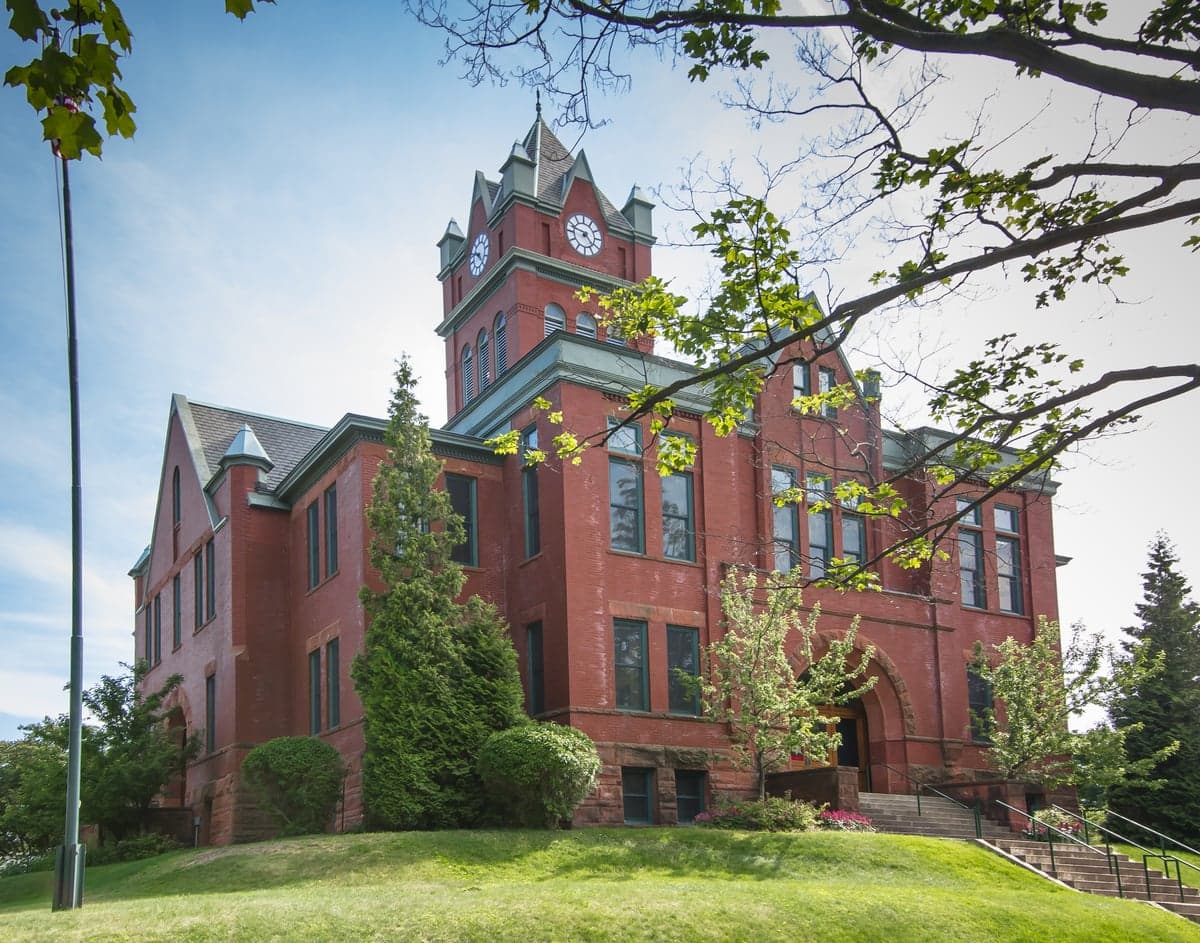
Photo: Wikipedia
Quality of Life in Grand Traverse County
A livable area that tracks near national norms for affordability, walkability, and neighborhood health.
What does Quality of Life tell us?
Quality of Life measures an area by evaluating factors like cost of living, nearby amenities, country club access, airport proximity, socioeconomic signals and neighborhood character. For large states, this is a general average — quality of life can vary dramatically between metro areas, suburbs, and rural communities within the same state.
What does this tell us?
Quality of Life measures an area by evaluating factors like cost of living, nearby amenities, country club access, airport proximity, socioeconomic signals and neighborhood character. For large states, this is a general average — quality of life can vary dramatically between metro areas, suburbs, and rural communities within the same state.
Cost of Living
5% above national average
94%
The Real Cost of Living in Grand Traverse County for 2026
| Tier | Individual | Family (4) |
|---|---|---|
| Survival | $19k | $36k |
| Comfortable | $58k | $85k |
| Luxury | $135k+ | $209k+ |
| Elite (Top 5%) | $159k+ | $246k+ |
Quality-of-Life Analysis
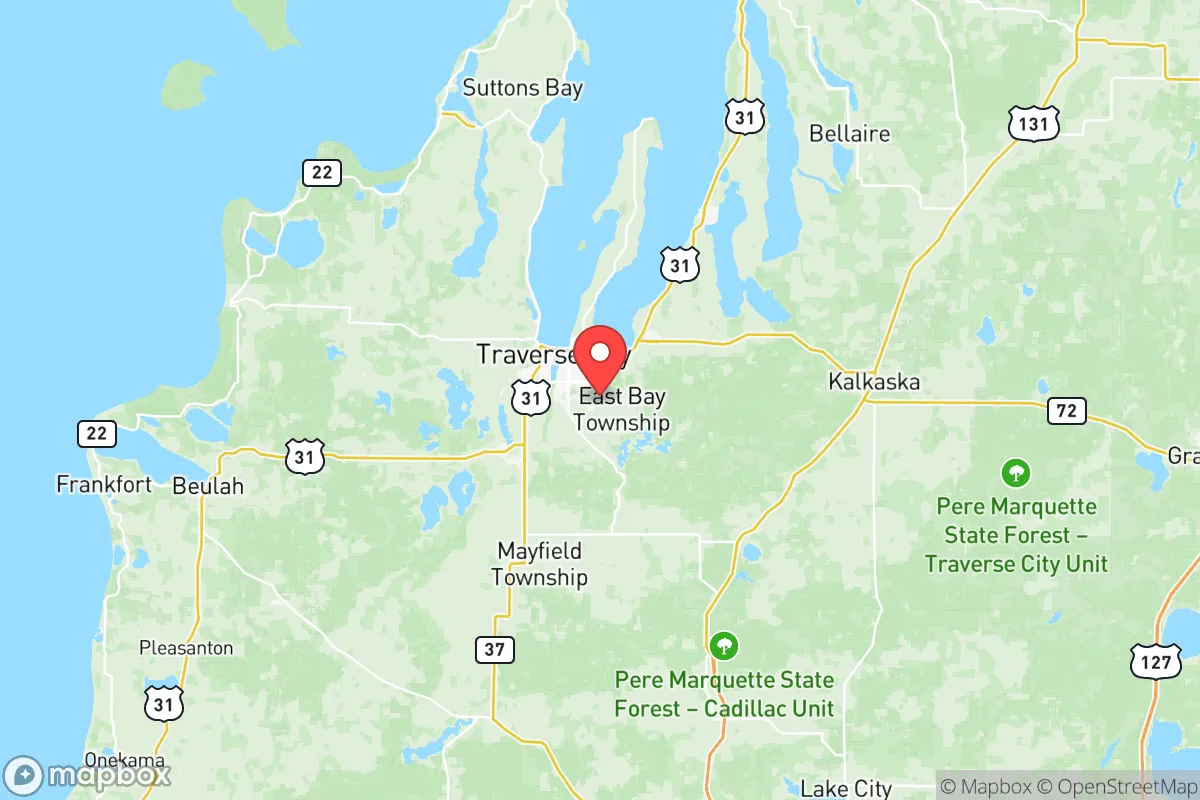
Grand Traverse County offers a quality-of-life spectrum that ranges from the walkable, amenity-rich urban core of Traverse City to quiet lakeside hamlets and deep-woods rural townships. The county’s character shifts noticeably within a 20-minute drive: one household may prioritize a downtown loft with restaurant access, while another seeks acreage and privacy near Long Lake or the Boardman River. This diversity draws a mix of remote workers, second-home owners, retirees, and young families, each finding a distinct niche within the county’s 600 square miles.
Largest town(s) & population centers
Traverse City is the undisputed hub, home to roughly 16,000 residents and the region’s primary employment, retail, and cultural center. Daily life here revolves around the downtown corridor along Front Street, where independent shops, breweries, and the historic State Theatre anchor pedestrian activity. The city’s waterfront along West Grand Traverse Bay provides public beaches, a marina, and the TART Trail for biking and running. Housing is dense and expensive relative to the rest of the county: the median home value in Traverse City proper often exceeds $350,000, and rental vacancy is tight. The city attracts professionals in healthcare (Munson Medical Center is the largest employer), tourism, and tech, plus seasonal residents who value walkability. Garfield Township, which wraps around the city’s southern and eastern edges, functions as a suburban extension with big-box retail (Grand Traverse Mall), chain restaurants, and newer subdivisions. It offers more affordable single-family homes than downtown but still carries a county-wide cost of living index of 105 (100 = U.S. average).
Smaller towns & rural pockets
Outside the Traverse City orbit, distinct smaller communities each have their own identity. Kingsley, in the county’s southwest corner, is a village of about 1,500 with a working-class feel, lower home prices (often under $200,000), and a strong agricultural base. Fife Lake, straddling the Grand Traverse–Kalkaska county line, centers on its namesake lake and a compact downtown with a grocery store and diner; it’s popular with families seeking a small-town school system and lake access. Interlochen, home to the renowned Interlochen Center for the Arts, is an unincorporated community that blends a creative, seasonal population with year-round residents living on wooded lots near Green Lake and Duck Lake. Old Mission Peninsula, a narrow strip of land jutting into Grand Traverse Bay, is almost entirely rural and agricultural, famous for cherry orchards and vineyards. Homes there are a mix of historic farmhouses and high-end lakefront estates, with no commercial center beyond a few winery tasting rooms. East Bay Township and Acme Township, east of Traverse City, offer a mix of lakefront subdivisions, golf communities, and undeveloped state forest land along the Boardman River corridor.
Cost & lifestyle range
The cost of living and lifestyle options vary dramatically across the county. At the high end, Old Mission Peninsula and the East Bay waterfront command median home values above $500,000, with many properties exceeding $1 million. These areas attract affluent retirees, second-home owners, and remote workers who prioritize water views, privacy, and proximity to Traverse City’s amenities. At the moderate end, Garfield Township and Acme Township offer newer subdivisions and townhomes in the $280,000–$350,000 range, with commutes of 10–15 minutes to downtown. At the affordable end, Kingsley and Fife Lake have median home values closer to $180,000–$220,000, though inventory is limited. The county-wide median rent of $1,215 is manageable for many, but rents in Traverse City proper often exceed $1,400 for a one-bedroom. The average commute across the county is just 21 minutes, meaning even residents in the most rural townships can reach Traverse City quickly. Property taxes vary by township but generally run 1.2–1.5% of assessed value, with no county-wide income tax.
Grand Traverse County suits people who want a range of lifestyle densities within a compact geography. Young professionals and empty-nesters thrive in Traverse City’s walkable core. Families seeking good schools and lower housing costs gravitate to Kingsley or Fife Lake. Outdoor enthusiasts and artists find their niche in Interlochen or the rural townships along the Boardman River. The county’s key trade-off is between convenience and space: the closer to the bay, the higher the price and the more crowded the summer streets. For those willing to drive 20 minutes, the county offers genuine rural living with lake access, farmland, and forest—all within reach of a regional hospital, an airport, and a vibrant downtown.

Crime in Grand Traverse County
Crime rates similar to the national median for U.S. locations.
Violent CrimeViolent Crime Analysis
Property CrimeProperty Crime Analysis
Crime Analysis
Grand Traverse County presents a mixed safety profile for prospective residents. The county's violent crime rate of 417.5 incidents per 100,000 residents is notably higher than the national average, while its property crime rate of 1,259 per 100,000 sits slightly below the national benchmark. These figures, however, mask significant variation between the county's urban core and its more rural townships, making neighborhood selection a critical factor for anyone considering a move to the Traverse City area.
Crime in context
When compared to statewide and national averages, Grand Traverse County's violent crime rate is a concern. The rate of 417.5 per 100,000 is roughly 20% higher than the national average of approximately 380 per 100,000 and significantly exceeds Michigan's statewide rate of around 450 per 100,000. Property crime, at 1,259 per 100,000, is slightly below the national average of roughly 1,342 per 100,000 but remains a persistent issue, particularly in areas with higher tourist traffic and transient populations. The county's crime index places it in a moderate-risk category, but the upward trend in violent offenses since 2020 warrants attention, especially given the progressive-leaning judicial policies in the 13th Circuit Court, which covers Grand Traverse County. Critics argue that a focus on rehabilitation over incarceration for non-violent offenders has contributed to repeat offenses and a sense of impunity among some criminal elements, though supporters point to reduced jail overcrowding.
What residents experience
Daily life in Grand Traverse County varies sharply by location. The city of Traverse City itself, as the county's population and economic hub, experiences the highest concentration of both violent and property crime. Incidents of assault, theft from vehicles, and drug-related offenses are most common in the downtown core and along the South Airport Road corridor. In contrast, the townships of Long Lake and Blair report far lower crime rates, with violent crime nearly absent and property crime limited to occasional break-ins. The village of Kingsley, in the southern part of the county, sees minimal violent crime but struggles with property theft, likely tied to its proximity to US-131. Residents in Acme Township, near the Grand Traverse Resort, report a generally safe environment, though seasonal tourist influxes can spike petty theft and disorderly conduct. The county's District Court, which handles misdemeanors and preliminary felony hearings, has been criticized by some residents for lenient sentencing on drug possession and theft cases, a pattern common in jurisdictions with progressive prosecutors. This has led to a perception that repeat offenders cycle through the system without meaningful consequences, particularly in Traverse City's core neighborhoods.
Neighborhood-level data reinforces the importance of location. The Central Neighborhood and Slabtown areas of Traverse City have higher reported incidents of assault and burglary, while the Old Town district and East Bay waterfront areas are comparatively safer but still experience occasional property crime. The rural townships of Paradise and Fife Lake report the lowest crime rates in the county, with violent crime virtually nonexistent and property crime limited to isolated incidents. For families and retirees, these outlying areas offer a significantly lower risk profile, though they come with longer commutes and fewer amenities. Overall, Grand Traverse County's safety picture is one of contrasts: a relatively safe region by national standards, but with a notable violent crime problem concentrated in its urban center, exacerbated by a justice system that some residents feel prioritizes offender rehabilitation over public safety.
* Values derived from national, state, county, city and local statistics and may differ in a specific area. Last updated: 2026-11-03T18:29:31.000Z
Narrative content on this page is AI-generated and may contain mistakes. Verify any details that matter before acting on them.
ReloMaps may earn a commission from affiliate links at no extra cost to you.

