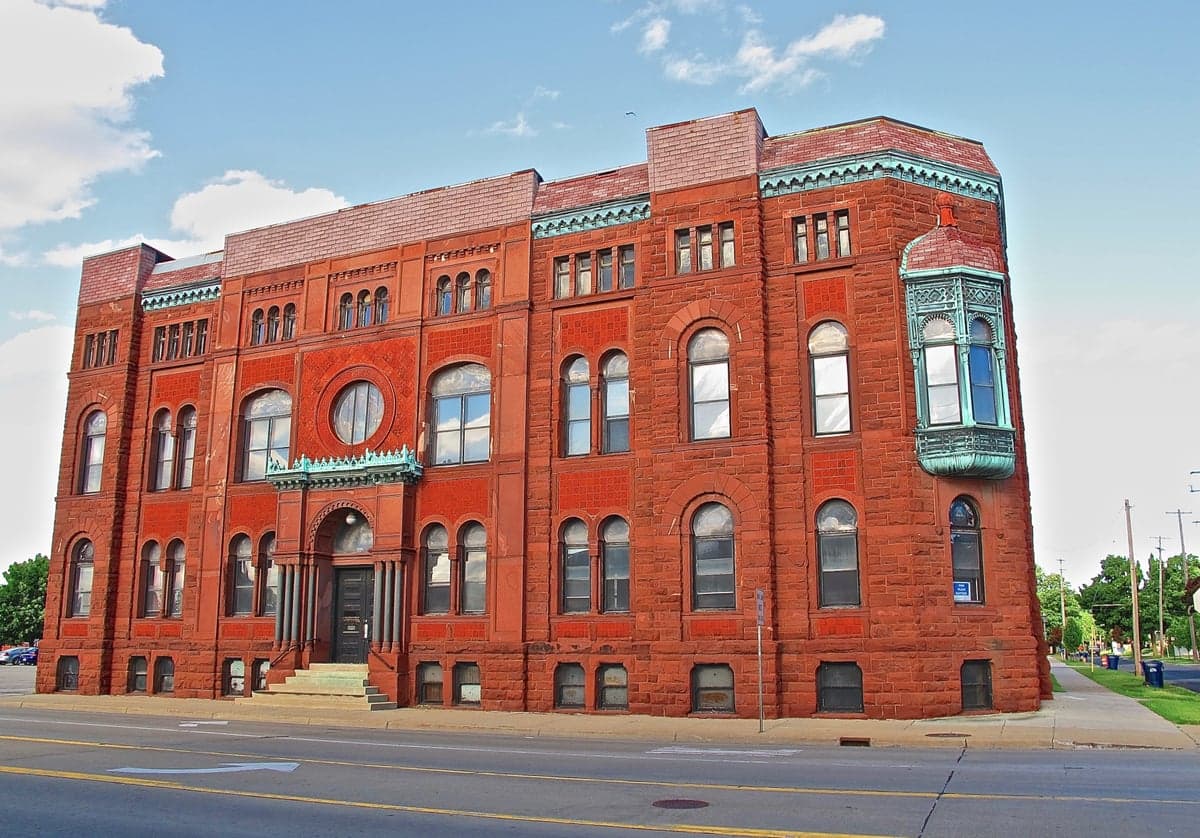
Photo: Wikipedia
Political ClimatePolitical Climate in Bay County
Showing district-level results — no local-only data available.
Local Political AnalysisPolitical Analysis of Bay County
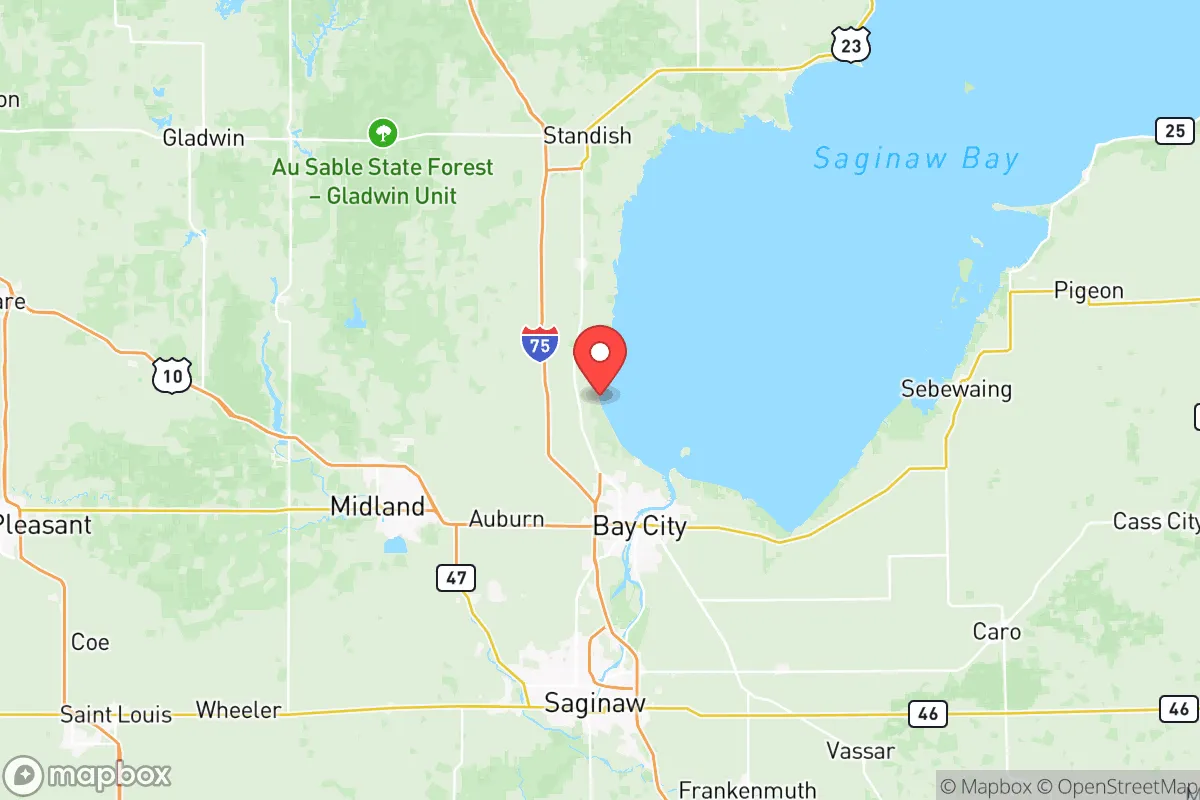
Bay County, Michigan, sits at a fascinating political crossroads, carrying a Cook Partisan Voting Index (PVI) of R+1, meaning it leans just slightly more Republican than the nation as a whole. This makes it a genuine swing county in a state that is itself a pure battleground, with Michigan's statewide PVI at EVEN. For decades, this area was a reliable blue-collar Democratic stronghold, but the shift toward the GOP has been steady and noticeable, particularly in the rural townships outside the city of Bay City itself. The county's political identity is now a split personality, with the urban core pulling one way and the surrounding communities pulling another, making every election a true toss-up.
How it compares to Michigan's statewide lean
While Michigan as a whole is perfectly neutral at EVEN, Bay County's R+1 rating shows it is slightly more conservative than the state average, but not by a huge margin. The real story is the internal divide. Bay City itself, especially its downtown and east side precincts, still votes reliably Democratic, reflecting its union-heavy history tied to the automotive and chemical industries. In contrast, towns like Essexville and Hampton Township have become more competitive swing areas, while rural communities such as Pinconning, Auburn, and the townships of Frankenlust and Monitor have shifted noticeably to the right. The county's trajectory is a microcosm of the broader Upper Midwest realignment: working-class voters who once voted for Democrats on economic issues are now voting for Republicans on cultural and social issues. This means Bay County often votes more Republican than the state in presidential years, but can swing back toward Democrats in local races where candidate quality and specific issues matter more.
What this means for residents
For a conservative resident, Bay County offers a comfortable environment where Republican candidates are competitive and conservative values are well-represented in local government, especially in the townships. You'll find plenty of like-minded neighbors in the outlying areas, and the local GOP is active and organized. For a liberal resident, life is far from hostile, but it requires more engagement. Bay City itself remains a blue island where progressive candidates can win, and the city's cultural institutions, like the historic State Theatre and the growing downtown food scene, tend to attract a more diverse and open-minded crowd. The practical reality is that most local elections are decided by a few hundred votes, so every resident's participation genuinely matters. Neither side can afford to be complacent, which keeps local politics lively and engaged.
Cultural and policy distinctions
One of the most telling cultural distinctions in Bay County is the relationship between the city and the surrounding townships on issues like land use and taxation. Bay City has a more urban approach to governance, with higher millage rates for services like parks, libraries, and public safety, while the townships generally favor lower taxes and fewer regulations. This creates a subtle but persistent tension, especially when county-wide ballot proposals come up. Another key distinction is the area's relationship with the Saginaw Bay and its environmental concerns. While both conservatives and liberals value the bay for fishing and recreation, there is a split on how aggressively to regulate agricultural runoff and industrial pollution, with the city's environmental advocates pushing for stricter rules than many rural residents support. The presence of major employers like Covenant HealthCare and Dow Chemical also shapes the political conversation, as both companies have significant influence on local economic policy and development decisions. Overall, Bay County is a place where the national political divide plays out in miniature, but with a distinctly local flavor that keeps things interesting.

State Political ClimatePolitical Climate in Michigan
State Political AnalysisPolitical Environment in the State
Michigan is the ultimate swing state, with a Cook PVI of EVEN, meaning it votes almost exactly in line with the national average. Over the past 20 years, it has flipped from reliably blue (voting for Gore, Kerry, and Obama twice) to a razor-thin Trump win in 2016, then back to Biden in 2020 by just 154,000 votes. The state’s political identity is a tug-of-war between the heavily unionized, diverse urban core of Detroit and the vast, more culturally conservative rural and exurban areas of Western and Northern Michigan. For a conservative relocator, Michigan offers a genuine battleground where your vote actually counts, but the policy environment can shift dramatically depending on which party controls Lansing.
Urban vs. rural divide
The political map of Michigan is a study in contrasts. The southeastern corner, anchored by Detroit, Ann Arbor, and Flint, is the engine of the Democratic vote. Wayne County (Detroit) alone delivers a massive blue margin, while Washtenaw County (Ann Arbor) is one of the most liberal areas in the Midwest. In contrast, the western side of the state—places like Grand Rapids, Holland, and Traverse City—has historically been a Republican stronghold, though Grand Rapids itself is trending more moderate. The real conservative firepower comes from the rural "outstate" areas: the Thumb region, the Upper Peninsula, and counties like Ottawa and Kent (outside Grand Rapids). A key recent shift: Macomb County, north of Detroit, flipped hard for Trump in 2016 and 2020, embodying the blue-collar, union-worker revolt against the national Democratic Party. This urban-rural split means that a conservative living in Midland or Traverse City will feel very much in the majority, while a conservative in Ann Arbor or Detroit will be a distinct minority.
Policy environment
Michigan’s policy landscape is a mixed bag that has swung leftward in the last two years. The state has a flat income tax rate of 4.25%, which is moderate, but property taxes can be high, especially in desirable school districts. The regulatory posture is generally business-friendly in right-to-work counties, but the state repealed its right-to-work law in 2023, a major win for unions and a loss for conservatives who value workplace freedom. On education, Michigan has a robust school choice system, including charter schools and inter-district open enrollment, which is a plus for families. However, the state’s education bureaucracy is heavily influenced by the teachers' unions. Healthcare policy is dominated by the expansion of Medicaid under the Affordable Care Act, which has broad support. Election laws are a flashpoint: Michigan has no-excuse absentee voting, early voting, and ballot drop boxes, which conservatives often criticize as less secure, though no major fraud has been proven. For a conservative, the policy environment feels like a pendulum—you get some wins (school choice, flat tax) but also significant losses (union power, election access).
Recent policy direction
The last two years under Governor Gretchen Whitmer and a Democratic-controlled legislature have seen a sharp leftward turn. On gun and self-defense law, Michigan passed universal background checks and safe storage requirements in 2023, a major shift in a state with a strong hunting and sporting culture. Parental and education rights have been a battleground: the state repealed a 1931 law banning abortion, codified reproductive rights into state law via a 2022 ballot initiative (Prop 3), and passed an expansive LGBTQ+ nondiscrimination law. For conservatives concerned about speech and privacy, Michigan has not enacted the kind of social media content moderation laws seen in Florida or Texas. On property rights, the state has strong eminent domain protections, but local zoning can be restrictive. Taxation saw a modest rollback: the state’s retirement tax was phased out in 2023, a win for seniors. Voting and ballot access expanded significantly with Prop 2 in 2022, which enshrined early voting, absentee voting, and same-day registration into the state constitution. For a conservative relocator, the recent direction is clearly progressive on social issues and labor, but the state’s direct democracy system (ballot initiatives) means voters can push back, as they did with Prop 2 and Prop 3.
Civil unrest & political movements
Michigan has been a national flashpoint for political activism. The Wolverine Watchmen militia group was involved in a 2020 plot to kidnap Governor Whitmer, which remains a stark example of extreme anti-government sentiment. On the left, the Detroit area saw significant Black Lives Matter protests in 2020, and the state has a strong labor movement that regularly mobilizes for worker rights. Immigration politics are less heated than in border states, but Michigan has sanctuary city policies in Ann Arbor and Detroit, which can be a concern for conservatives who prioritize immigration enforcement. Election integrity remains a live issue: after the 2020 election, there were widespread calls for audits and recounts, particularly in Antrim County, where a software error initially showed a Biden win before being corrected to Trump. This fueled ongoing distrust among many conservatives. A new resident will notice that political bumper stickers and yard signs are common, and conversations about politics can get heated, especially in mixed areas like Grand Rapids or Lansing.
Projection
Over the next 5-10 years, Michigan is likely to remain a competitive swing state, but demographic trends favor Democrats. The Detroit suburbs are diversifying and becoming more liberal, while the rural population is aging and shrinking. However, in-migration from other states is modest compared to the Sun Belt, so the political balance may shift only slightly. The wild card is the Upper Peninsula and northern lower peninsula, which are becoming more conservative as they attract retirees and remote workers from blue states. A conservative moving to Michigan now should expect a state that will continue to swing between parties, with periods of progressive policy followed by conservative pushback. The state’s direct democracy system will remain a key tool for voters to bypass the legislature. In a decade, Michigan will likely still be a purple state, but the center of gravity may shift slightly leftward due to suburbanization and union strength.
For a new resident, the bottom line is this: Michigan offers a genuine political battleground where your vote matters, but the policy environment is volatile. If you are a conservative, you will find welcoming communities in Grand Rapids, Traverse City, and the rural Thumb, but you will also face a state government that is often controlled by Democrats pushing a progressive agenda. The key practical takeaway is to choose your county carefully—local politics vary wildly from the liberal enclaves of Ann Arbor to the conservative strongholds of Ottawa County. Michigan is not a red state or a blue state; it is a state where the fight is constant, and that can be either exhausting or invigorating depending on your perspective.
* Values derived from national, state, county, city and local statistics and may differ in a specific area. Last updated: 2026-07-09T15:11:22.000Z
Narrative content on this page is AI-generated and may contain mistakes. Verify any details that matter before acting on them.
ReloMaps may earn a commission from affiliate links at no extra cost to you.

