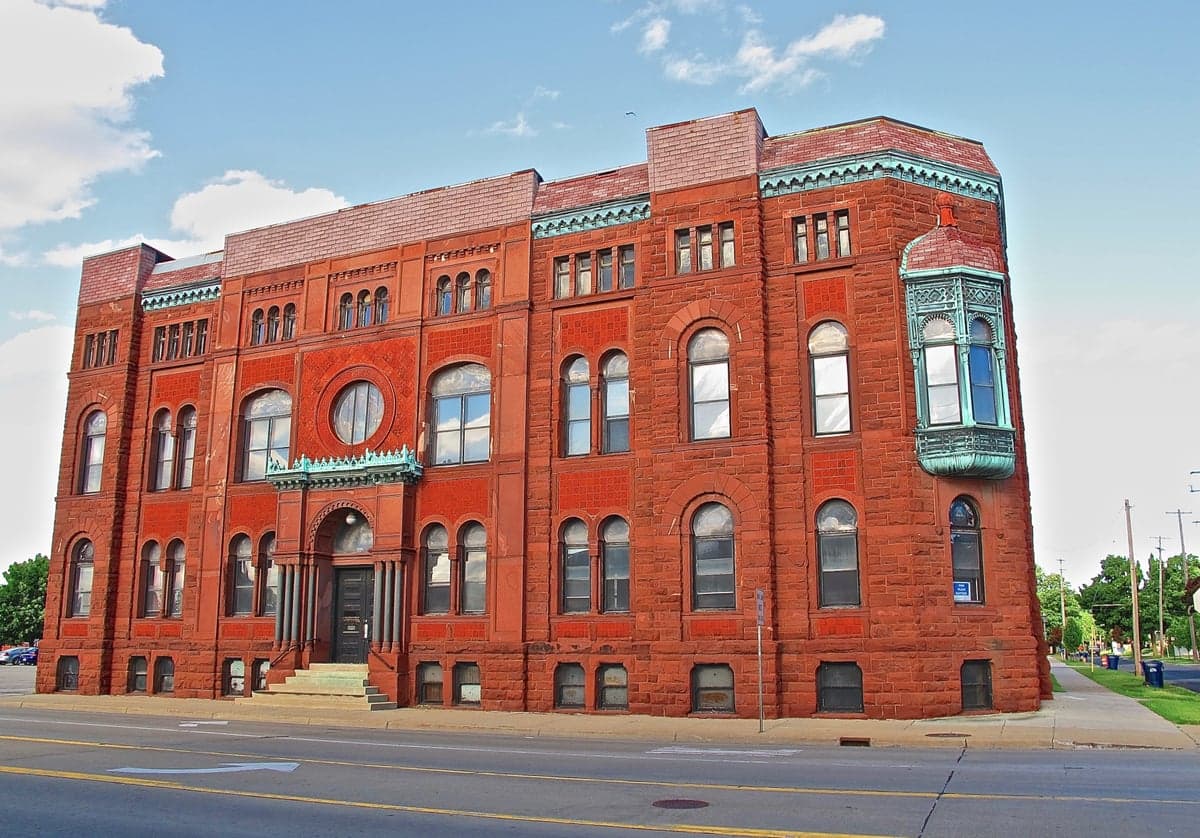
Photo: Wikipedia
Demographics of Bay County
Affluence Level in Bay County
A middle-class area roughly in line with national averages across income, home values, education, and employment.
People of Bay County
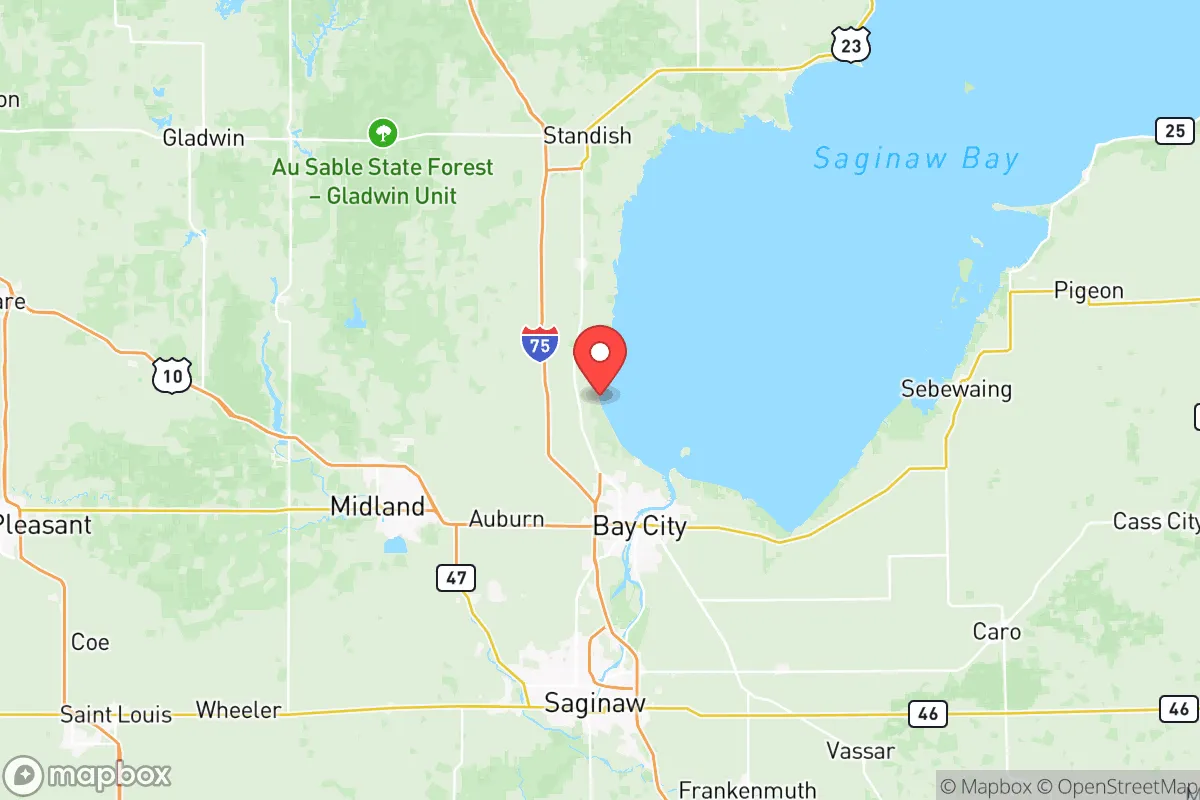
Bay County, Michigan, is a predominantly white, working-class community of 103,235 residents shaped by its Great Lakes industrial heritage and a strong, family-oriented cultural identity. With a population that is 88.6% white and a foreign-born rate of just 0.4%, the county remains one of the least ethnically diverse in the state, though a small but growing Hispanic community (5.8%) is beginning to add new layers to its character. The area’s distinctive identity is rooted in a legacy of timber, shipbuilding, and automotive manufacturing, creating a pragmatic, self-reliant populace that values stability, outdoor recreation along Saginaw Bay, and a slower pace of life compared to the nearby urban centers of Saginaw and Midland.
Settlement & growth (pre-1960)
Before European settlement, the region was home to the Anishinaabe peoples, primarily the Ojibwe (Chippewa) and Odawa, who used the Saginaw Bay shoreline for fishing, trade, and seasonal camps. French explorers and fur traders passed through the area in the 17th and 18th centuries, but permanent American settlement did not begin in earnest until after the 1819 Treaty of Saginaw, which ceded the land to the United States. The first wave of American settlers were Yankees from New York and New England, arriving in the 1830s and 1840s, drawn by the promise of cheap farmland and the region’s vast pine forests. They founded the county seat of Bay City in 1837, along with smaller farming communities like Essexville and Hampton Township.
The second and largest wave came with the timber boom of the 1850s through the 1880s. German and Polish immigrants arrived in large numbers to work in the sawmills and lumber camps that lined the Saginaw River. Bay City became a major lumber port, and the German influence remains visible today in the city’s architecture and the presence of Lutheran churches. Polish immigrants concentrated in the south end of Bay City and in the village of Linwood, where they established Catholic parishes and tight-knit neighborhoods. A smaller wave of Irish immigrants also settled in Bay City during this period, working as laborers on the docks and railroads.
By the early 20th century, the timber industry had declined, but the region’s economy pivoted to shipbuilding and heavy manufacturing. The Industrial Workers of the World (IWW) and later the United Auto Workers (UAW) organized workers in Bay City’s foundries and factories. The 1920s and 1930s saw an influx of workers from the Upper Peninsula and rural Michigan, drawn by jobs at companies like the Industrial Brownhoist Corporation and the Defoe Shipbuilding Company. The post-World War II era brought a modest wave of Appalachian migrants from Kentucky and Tennessee, seeking work in the auto parts plants that dotted the county. Suburbanization began in the 1950s, with families moving from Bay City to newer developments in Bangor Township and Monitor Township, though the county remained overwhelmingly white and native-born throughout this period.
Modern era (post-1965)
The 1965 Hart-Cellar Act had minimal impact on Bay County, as the region did not attract the large-scale immigration seen in coastal or major Midwestern cities. The foreign-born population today stands at just 0.4%, one of the lowest rates in Michigan. The county’s demographic story since 1965 is instead one of domestic out-migration and gradual aging. The decline of manufacturing in the 1980s and 1990s, particularly the closure of several auto parts plants and the downsizing of the shipbuilding industry, led to a steady population loss from a peak of roughly 110,000 in 1970 to the current 103,235. Many younger residents left for job opportunities in Grand Rapids, the Detroit suburbs, or out of state, leaving behind an older, more settled population.
The most notable demographic shift since 1965 has been the growth of the Hispanic population, which now stands at 5.8%. This community is largely of Mexican-American heritage, with families who began arriving in the 1990s to work in agriculture, particularly in the sugar beet and dry bean fields around Kawkawlin and Auburn. A smaller number came for construction and service jobs in Bay City. The Hispanic population remains dispersed rather than concentrated in a single enclave, though a growing presence is visible in the southern parts of Bay City and in Frankenlust Township. The Black population (1.3%) and East/Southeast Asian population (0.3%) are very small, with most Black residents living in Bay City proper and the few Asian families scattered across the county. The Indian-subcontinent population is negligible at 0.1%.
Suburbanization continued through the 1970s and 1980s, with Bangor Township and Monitor Township absorbing much of the growth as Bay City’s urban core lost population. The construction of US-10 and M-25 facilitated commutes to Saginaw and Midland, turning parts of Bay County into bedroom communities for the Dow Chemical and Dow Corning workforce. However, the county never experienced the explosive suburban growth seen in other parts of Michigan; instead, it has maintained a relatively stable, low-density character.
The future
Bay County’s population is projected to continue a slow decline over the next 10-20 years, driven by an aging demographic and limited in-migration. The median age is already above the state average, and the county’s birth rate has fallen below replacement level. The Hispanic population is likely to grow modestly, potentially reaching 8-10% by 2040, as existing families have children and a small number of new arrivals come for agricultural and service jobs. However, the county is not expected to see significant diversification from other groups. The white population will remain the overwhelming majority, though its share will shrink slightly due to aging and out-migration of younger adults.
New residential development is concentrated in Bangor Township and along the M-25 corridor near Pinconning, where retirees and commuters to Midland are building homes. Bay City’s downtown has seen a modest revival, with new apartments and restaurants attracting some empty-nesters and young professionals, but this is a small-scale trend. The county’s cultural identity is likely to remain rooted in its working-class, outdoor-oriented character, with a growing emphasis on tourism and recreation along the Saginaw Bay shoreline.
For someone moving in now, Bay County offers a stable, affordable, and safe environment with a strong sense of community, but it is not a place of rapid demographic change or economic dynamism. The population is aging, white, and native-born, and the county’s future will depend on its ability to retain young families and attract new residents through its low cost of living and access to the Great Lakes. It is a place where tradition runs deep, and newcomers will find a welcoming but homogeneous social landscape.

* Values derived from national, state, county, city and local statistics and may differ in a specific area. Last updated: 2026-07-09T15:11:22.000Z
Narrative content on this page is AI-generated and may contain mistakes. Verify any details that matter before acting on them.
ReloMaps may earn a commission from affiliate links at no extra cost to you.

