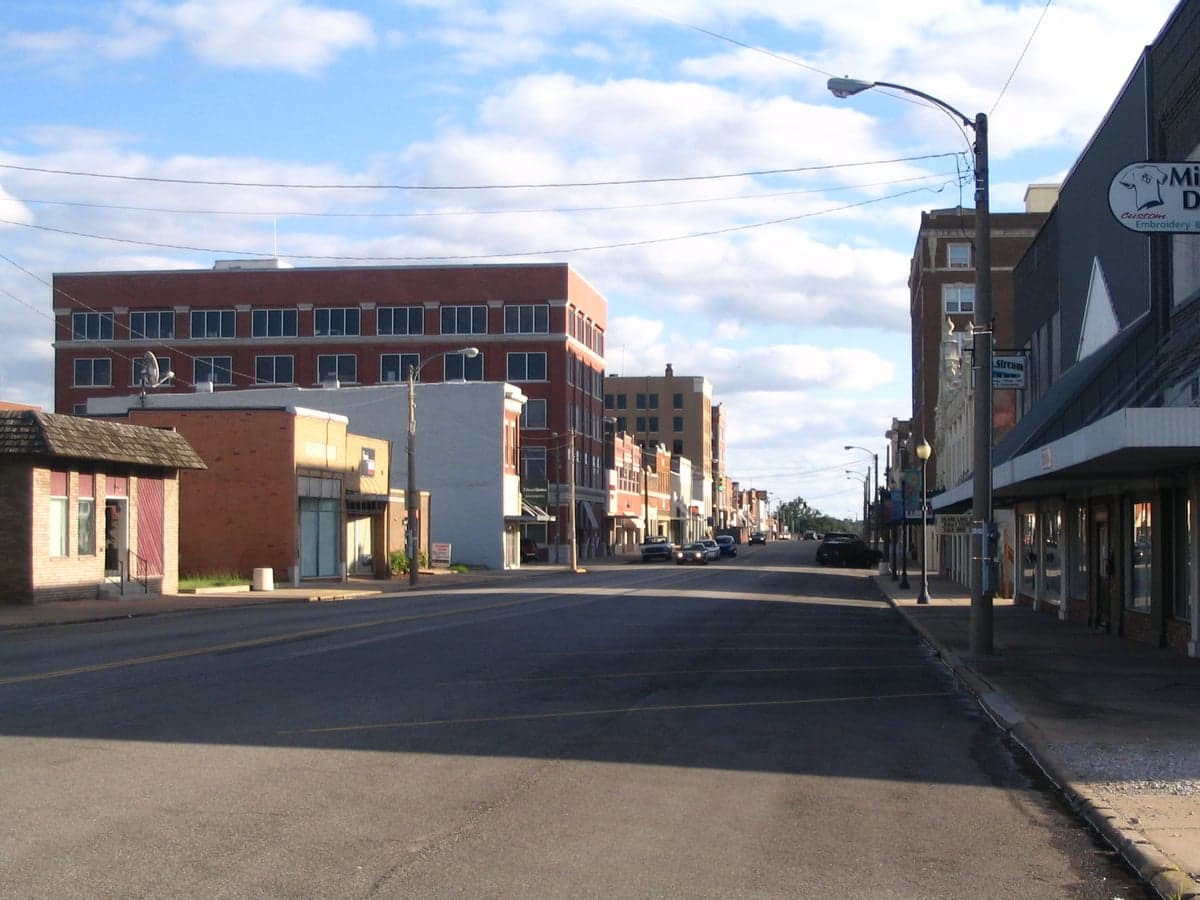
Photo: Wikipedia
Political ClimatePolitical Climate in Miami, OK
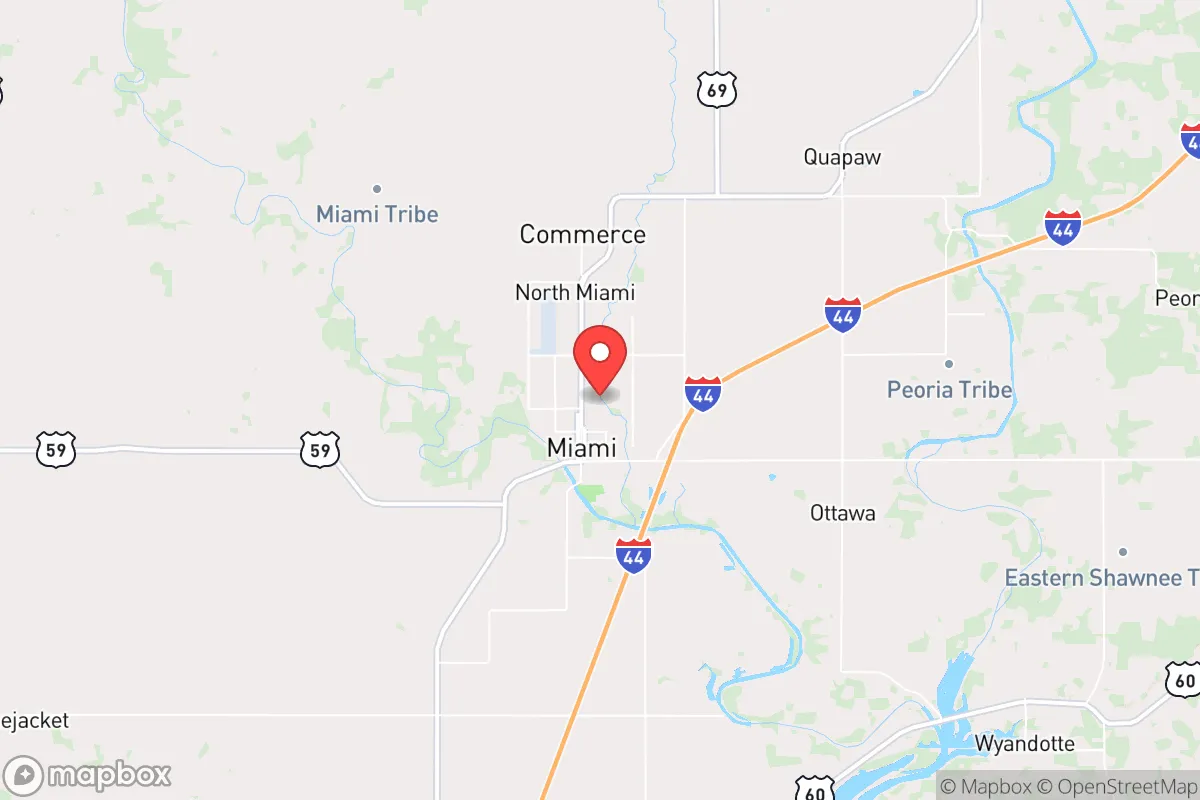
District shown is the primary district for this city’s centroid. Cities may span multiple districts.
Local Political AnalysisPolitical Analysis of Miami, OK
Miami, Oklahoma, sits deep in solidly red territory, with a Cook PVI of R+28 that puts it among the most conservative small cities in the state. That number isn't just a statistic—it reflects a community where traditional values and limited-government principles have been the bedrock for generations. While the broader country has lurched leftward on everything from gun rights to school curriculum, Miami has largely held the line, though you can feel the pressure building from the coasts and from bigger cities like Tulsa, about 90 miles west, where progressive policies have started creeping into local governance.
How it compares
Drive 20 minutes north to Commerce or 30 minutes east to Grove, and you'll find the same conservative DNA—folks who believe the Second Amendment isn't up for debate and that your paycheck belongs to you, not the government. But contrast that with Joplin, Missouri, just 15 miles north across the state line, which has seen a noticeable shift toward more moderate stances on taxes and zoning. Miami's R+28 rating means Republicans routinely win here by double-digit margins, even in statewide races where Democrats sometimes perform better in Ottawa County's rural precincts. The real contrast, though, is with places like Norman or Oklahoma City, where progressive activism has pushed for higher property taxes and more restrictive business regulations—exactly the kind of overreach that makes Miami residents uneasy.
What this means for residents
For someone living here, the political climate translates into a daily life that feels freer than in many parts of the country. There's no city income tax, property taxes are among the lowest in the state, and the local government generally stays out of your business—whether that means how you run your small farm, what you teach your kids, or how you carry your firearm. School board meetings don't turn into shouting matches over critical race theory or gender ideology like they do in Tulsa or Kansas City. That said, there's a growing concern among longtime residents that outside money and activist groups are trying to push Miami toward the same progressive agenda that's hollowed out communities elsewhere. Any move toward higher taxes, more zoning restrictions, or "equity" initiatives in local schools is seen as a red flag—a sign that government overreach is creeping in where it doesn't belong.
Cultural and policy distinctions
Miami's political identity isn't just about voting patterns—it's woven into the culture. The annual Peach Festival and Route 66 celebrations draw crowds that lean heavily patriotic, with flags flying and veterans honored. Local churches are still central to community life, and the city council has consistently rejected proposals that would restrict gun carry in public parks or impose mask mandates. There's a strong libertarian streak here—people don't want the government telling them what to do, whether it's about COVID restrictions, land use, or school choice. The biggest worry among locals is that as Miami grows—and it is growing, thanks to its proximity to the Joplin metro—newcomers might bring big-government ideas with them. For now, though, the political climate remains one of the last strongholds where personal freedom and local control still mean something real.

State Political ClimatePolitical Climate in Oklahoma
State Political AnalysisPolitical Environment in the State
Oklahoma is a deeply conservative state, with Republicans holding every statewide office and supermajorities in both legislative chambers, but the political landscape is more nuanced than a simple red-state label suggests. The state has shifted sharply rightward over the past 20 years, moving from a competitive purple state in the 1990s to one where Donald Trump won by over 33 points in 2024. However, beneath the surface, there are growing tensions between the rural conservative base and the increasingly progressive urban centers, particularly Oklahoma City and Tulsa, which are driving a quiet but real cultural and political divide.
Urban vs. rural divide
The political map of Oklahoma is a classic tale of two worlds. The vast rural expanse—counties like Texas, Cimarron, and Beaver in the Panhandle, plus the southeastern and southwestern regions—votes overwhelmingly Republican, often by margins of 80% or more. These areas are the engine of the state’s conservative supermajority. In contrast, Oklahoma County (home to Oklahoma City) and Tulsa County are the only real blue-leaning population centers, though even they are not reliably Democratic. Oklahoma City’s core has trended leftward, with precincts in the Midtown and Plaza District areas voting for Biden in 2020, but the surrounding suburbs like Edmond and Yukon remain solidly red. Tulsa’s trend is similar: the downtown and Kendall-Whittier areas are becoming more progressive, while suburbs like Broken Arrow and Jenks are deeply conservative. The real flashpoint is Norman, home to the University of Oklahoma, which has become a progressive island in a sea of red, with city council races often turning on issues like police funding and housing policy. This urban-rural split is not just about voting—it’s about lifestyle, with rural residents feeling increasingly alienated from the cultural shifts in the cities.
Policy environment
Oklahoma’s policy environment is aggressively conservative, with a focus on low taxes, limited regulation, and cultural traditionalism. The state has a flat income tax rate of 4.75% (down from 5% in 2022), and there are ongoing efforts to eliminate the income tax entirely. Property taxes are among the lowest in the nation, thanks to a constitutional cap. The regulatory posture is business-friendly, with few zoning restrictions outside major cities and a right-to-work law that has kept union influence minimal. On education, the state has embraced school choice, with a universal voucher program passed in 2023 that allows any family to use public funds for private or homeschool expenses. Healthcare is a mixed bag: Oklahoma expanded Medicaid under the 2020 vote, but the state has also passed strict abortion bans, including a near-total ban with no exceptions for rape or incest, which has driven some providers out of the state. Election laws have tightened, with voter ID requirements and restrictions on absentee ballot drop boxes, though no major fraud scandals have emerged. The state also has a strong preemption law that prevents cities from enacting their own gun control or labor ordinances, which keeps local governments from straying too far from the conservative line.
Trajectory & freedom
Oklahoma is moving in a direction that many conservatives would call freer, but the picture is complicated. On the plus side, the state has expanded gun rights significantly: permitless carry was signed into law in 2019, and the state has a strong castle doctrine and stand-your-ground law. Parental rights were bolstered by the 2022 “Parents’ Bill of Rights,” which requires schools to notify parents about curriculum changes and medical services. The state also passed a law in 2023 banning gender transition procedures for minors, which has been a major win for social conservatives. On the economic freedom front, the flat tax cuts and the voucher program are clear expansions of choice. However, there are concerning trends. The state’s medical marijuana program, once one of the most liberal in the country, has been heavily restricted by new licensing caps and a ban on out-of-state ownership, which feels like government overreach into a market that was working. Additionally, the state’s heavy reliance on oil and gas tax revenue means that personal freedom is tied to the boom-and-bust cycle of energy prices, which can create economic instability. The biggest red flag for freedom advocates is the state’s growing use of eminent domain for private development projects, particularly in rural areas where wind and solar farms are being pushed through despite local opposition.
Civil unrest & political movements
Oklahoma has seen its share of political flashpoints, but they tend to be localized rather than statewide. The most visible movement in recent years has been the “Save the Children” rallies in Oklahoma City and Tulsa, which drew thousands of parents concerned about critical race theory and LGBTQ content in schools. These protests were largely peaceful but reflected a deep distrust of public school administration. On the left, the 2020 George Floyd protests in Oklahoma City led to clashes with police and calls to defund the department, but those efforts fizzled after the city council voted to increase police funding. Immigration politics are less heated here than in border states, but there is a growing tension in the Panhandle and southwestern counties where meatpacking plants have attracted a significant Hispanic workforce. The state has no sanctuary cities, and a 2024 law requires local law enforcement to cooperate with ICE. Election integrity remains a hot-button issue: the 2020 election saw no major irregularities, but the state’s Republican Party has pushed for hand-counting of ballots, which was debated but not passed. The most unique political movement is the ongoing push for tribal sovereignty, particularly from the Cherokee, Chickasaw, and Choctaw nations, which has led to legal battles over jurisdiction and taxation. This is a quiet but persistent undercurrent that new residents should be aware of, especially if they live near tribal lands.
Projection
Over the next 5-10 years, Oklahoma is likely to become even more conservative, but with a growing urban progressive counterweight. The in-migration pattern is key: people moving to Oklahoma are largely coming from blue states like California and Texas, seeking lower costs and conservative governance, which will reinforce the rural and suburban red vote. However, the urban cores of Oklahoma City and Tulsa are attracting younger, more diverse populations who are pushing for bike lanes, public transit, and more inclusive policies. This will create a more polarized state, with the legislature likely to pass even more preemption laws to curb city-level progressive experiments. The biggest wildcard is the state’s budget: if oil prices stay high, the tax cuts will continue, but a downturn could force a reckoning. The voucher program will likely expand, further weakening the public school system in rural areas. On social issues, expect more battles over transgender rights and library content, as the legislature continues to mirror the national conservative agenda. For a new resident, the Oklahoma of 2035 will feel very familiar to the Oklahoma of 2025—deeply red, culturally traditional, and increasingly divided between the cities and the countryside.
For a conservative family or individual looking to relocate, Oklahoma offers a strong alignment with traditional values, low taxes, and a government that generally stays out of your personal life—at least in the rural and suburban areas. The key is choosing your location carefully: stick to the suburbs of Oklahoma City or Tulsa, or the smaller towns in the western and southern parts of the state, and you’ll find a community that shares your worldview. Avoid the urban cores if you want to avoid the cultural battles, and be prepared for the summer heat and the occasional tornado. The bottom line is that Oklahoma is a state where your rights are respected, your taxes are low, and your voice matters—but it’s not immune to the national trends that are reshaping every corner of America.
* Values derived from national, state, county, city and local statistics and may differ in a specific area. Last updated: 2026-04-25T13:52:20.000Z
Narrative content on this page is AI-generated and may contain mistakes. Verify any details that matter before acting on them.
ReloMaps may earn a commission from affiliate links at no extra cost to you.

