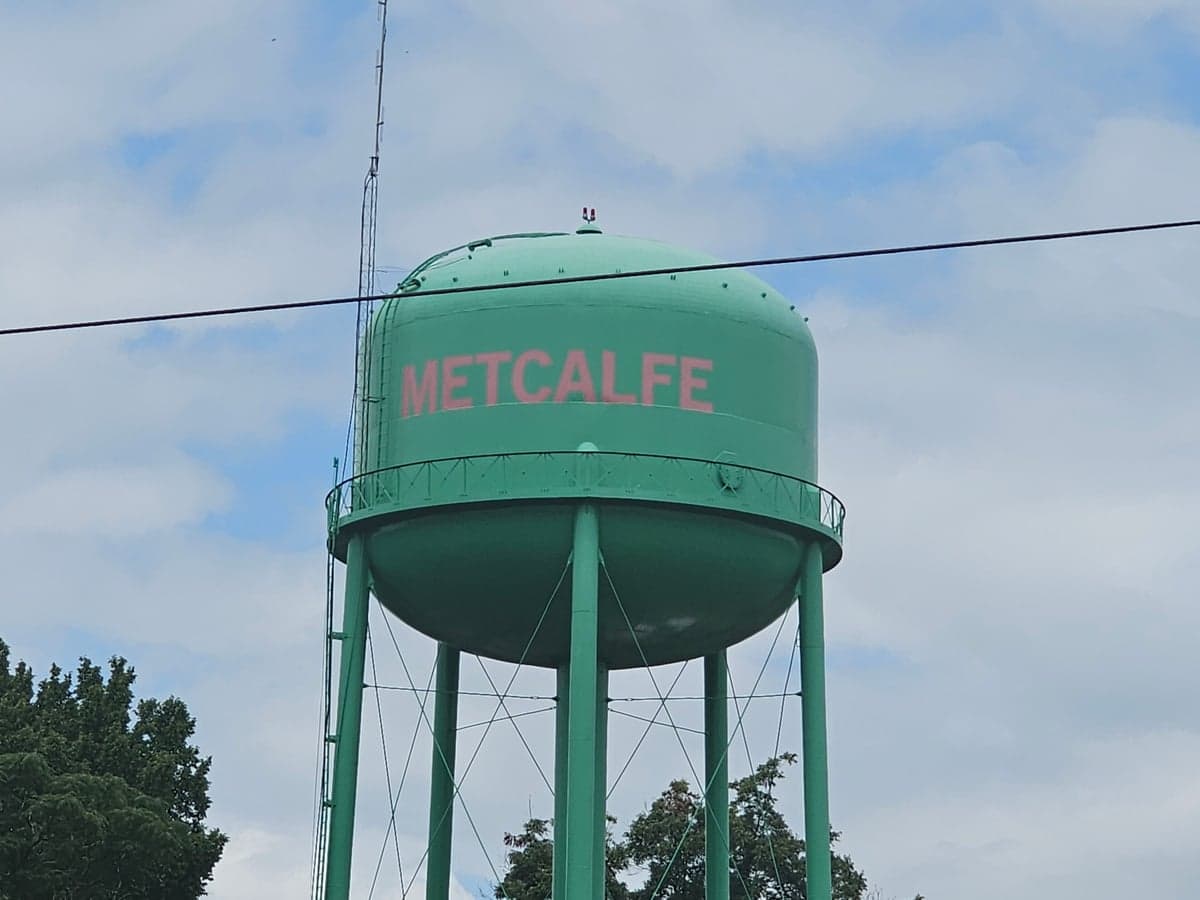
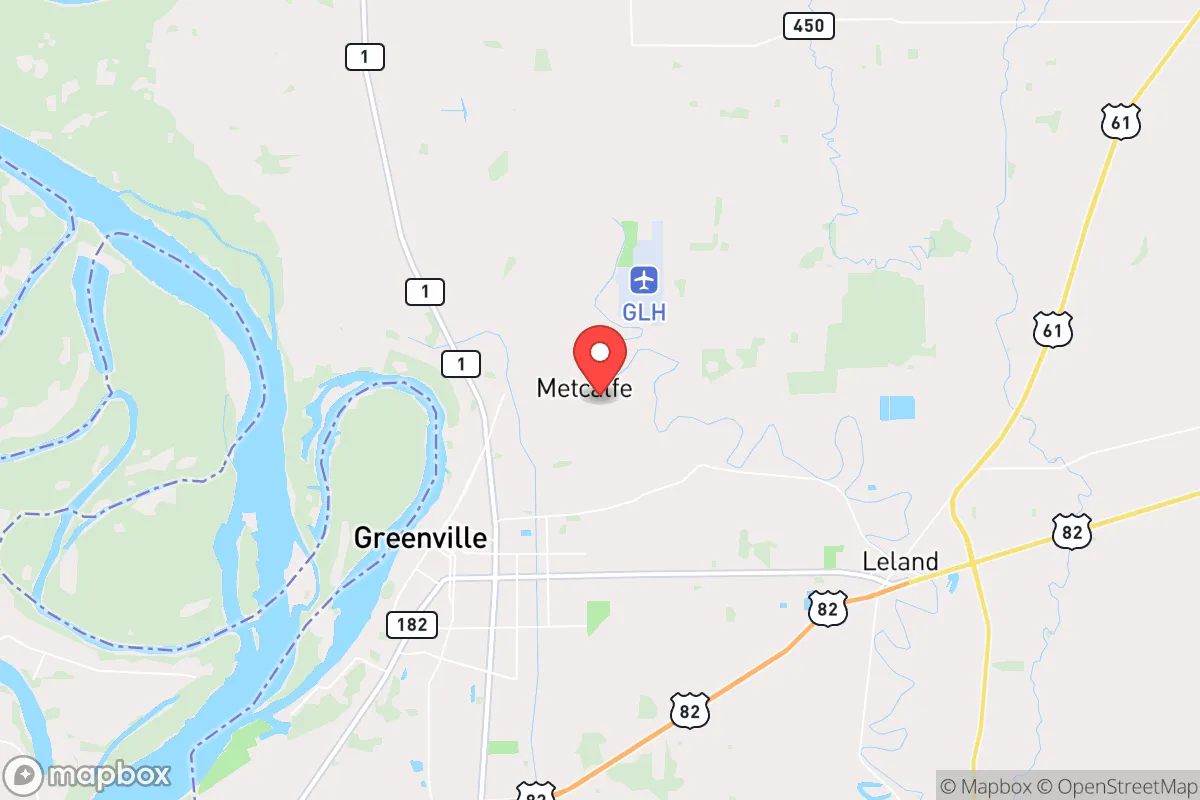
Photo: Wikipedia
Demographics of Metcalfe, MS
Affluence Level in Metcalfe, MS
A low-income area with significant economic hardship. Household wealth and educational attainment are well below national averages.
People of Metcalfe, MS
Metcalfe, Mississippi, is a small, tightly-knit community of 1,141 residents, defined by its nearly uniform demographic composition: 98.0% Black or African American. The city has a distinctly rural, low-density character, with a population that is overwhelmingly native-born (0.0% foreign-born) and a college education rate of 17.2%, reflecting a working-class identity rooted in the region's agricultural and industrial past. For a prospective resident, Metcalfe offers a quiet, insular environment where generational ties to the land and local institutions remain strong.
How the city was settled and grew
Metcalfe was founded in the late 19th century as a railroad stop along the Yazoo and Mississippi Valley Railroad, a line that opened the Mississippi Delta to cotton shipping and commerce. The original settlers were Black sharecroppers and tenant farmers who moved to the area after the Civil War, drawn by the promise of work on the vast cotton plantations that dominated Washington County. These early residents built their homes in what is now known as the Old Town District, a cluster of modest frame houses near the railroad tracks that served as the community's commercial and social hub. By the early 1900s, a second wave of Black families arrived from the surrounding rural areas, seeking better access to schools and markets. They settled in the Southside Neighborhood, an area of small farms and shotgun houses that grew as the local cotton gin and sawmill expanded. The city's population remained overwhelmingly Black and rural through the mid-20th century, with no significant white settlement or suburban development, as Metcalfe was never a planter-class town but rather a service center for the surrounding agricultural workforce.
Modern era (post-1965)
The post-1965 era brought profound demographic stability rather than change to Metcalfe. Unlike many Mississippi towns that experienced white flight or suburbanization, Metcalfe's population remained almost entirely Black, with the 0.0% white and 0.0% Hispanic figures reflecting a community that never attracted significant in-migration from other racial or ethnic groups. The mechanization of cotton farming in the 1970s and 1980s led to a gradual population decline, as many younger residents left for jobs in Greenville (10 miles west) or further north. Those who remained concentrated in the East Metcalfe Addition, a post-war subdivision of brick ranch homes built in the 1960s and 1970s, which became the preferred area for families with steady employment at the nearby Mississippi River industrial plants. The West End, a cluster of older homes near the city limits, absorbed many of the elderly residents who stayed after their children moved away. The 0.0% foreign-born figure underscores that Metcalfe has not participated in the immigration trends seen in larger Mississippi cities like Jackson or Gulfport; its population is entirely native-born and deeply rooted in the local Black community.
The future
Metcalfe's population is projected to continue its slow decline, mirroring the broader trend of rural depopulation across the Mississippi Delta. The city's age structure is skewing older, as younger adults increasingly move to Greenville or out of state for employment, while the 0.0% Hispanic and 0.0% Asian figures suggest no near-term diversification. The North Metcalfe Corridor, a stretch of older homes along the main road, has seen the most turnover, with some properties being purchased by absentee landlords and falling into disrepair. The Riverside Addition, a small subdivision built in the 1990s near the levee, has attracted a handful of returning retirees, but new construction is virtually nonexistent. Over the next 10-20 years, Metcalfe is likely to become even more homogeneous and older, with a population that may dip below 1,000. The cultural identity will remain strongly tied to the local church network and family histories, but the community's economic base—once reliant on agriculture and local industry—will continue to erode.
For someone moving in now, Metcalfe offers a deeply rooted, stable community where neighbors know each other and life moves at a slow, predictable pace. It is not a place of demographic change or economic dynamism, but rather a quiet, affordable option for those seeking a low-cost, rural lifestyle within commuting distance of Greenville's jobs and services. The city's future is one of gentle contraction, not transformation, and new residents should expect to find a place that values continuity over change.

* Values derived from national, state, county, city and local statistics and may differ in a specific area. Last updated: 2026-11-20T10:49:52.000Z
Narrative content on this page is AI-generated and may contain mistakes. Verify any details that matter before acting on them.
ReloMaps may earn a commission from affiliate links at no extra cost to you.

