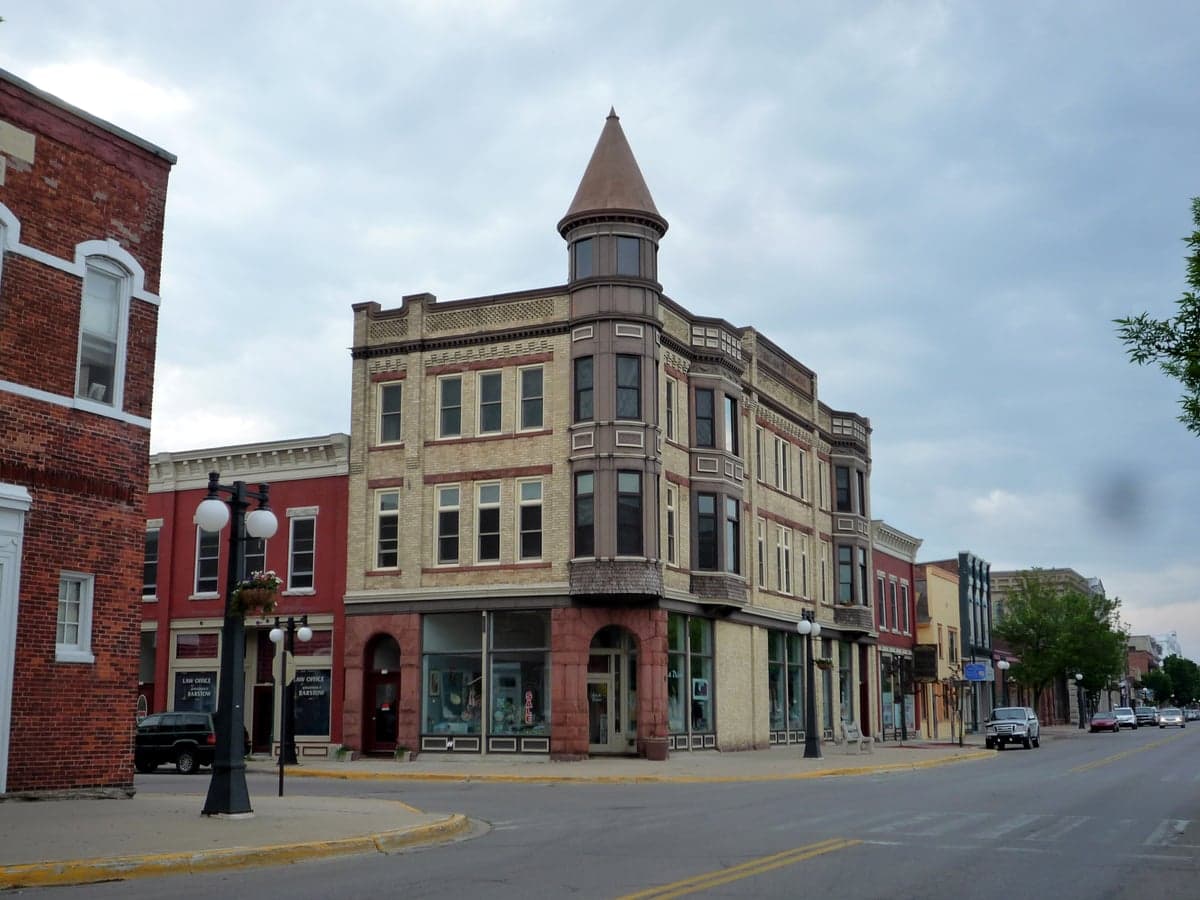
Photo: Wikipedia
Political ClimatePolitical Climate in Menominee, MI
District shown is the primary district for this city’s centroid. Cities may span multiple districts.
Inherited from parent county — no local data available.
* Lean and PVI are calculated from Menominee, MI’s own 2020 presidential results (precinct returns summed to the city), with 2024 estimated from the surrounding county’s 2020–2024 shift, Cook-style. Sources: state election offices; VEST 2020 precinct results (CC BY 4.0).
Political rankings in Michigan
- Most Conservative Cities in Michigan
- Most Liberal Cities in Michigan
- Best Liberal-Leaning Towns in the Midwest
- Safest Liberal-Leaning Towns in the Midwest
- Safest Conservative-Leaning Towns in the Midwest
- Affordable Small Towns for Conservatives
- Most Affordable Liberal-Leaning Small Towns in the U.S.
- Safest Conservative-Leaning Cities in the U.S.
- Most Conservative Counties in Michigan
- Most Liberal Counties in Michigan
Local Political AnalysisPolitical Analysis of Menominee, MI
Menominee, Michigan, is a reliably conservative stronghold in the Upper Peninsula, with a Cook Partisan Voting Index (PVI) of R+17, meaning it votes about 17 points more Republican than the national average. This isn't a recent shift—the area has leaned red for decades, but the margin has widened noticeably since 2016, mirroring a broader rural trend across the U.P. In contrast, the state of Michigan as a whole sits at a Cook PVI of EVEN, making it a true battleground where elections are often decided by suburban swing voters in places like Oakland County or Kent County. So while the state flips between parties, Menominee stays firmly in the GOP column, and that gap is only growing.
How it compares
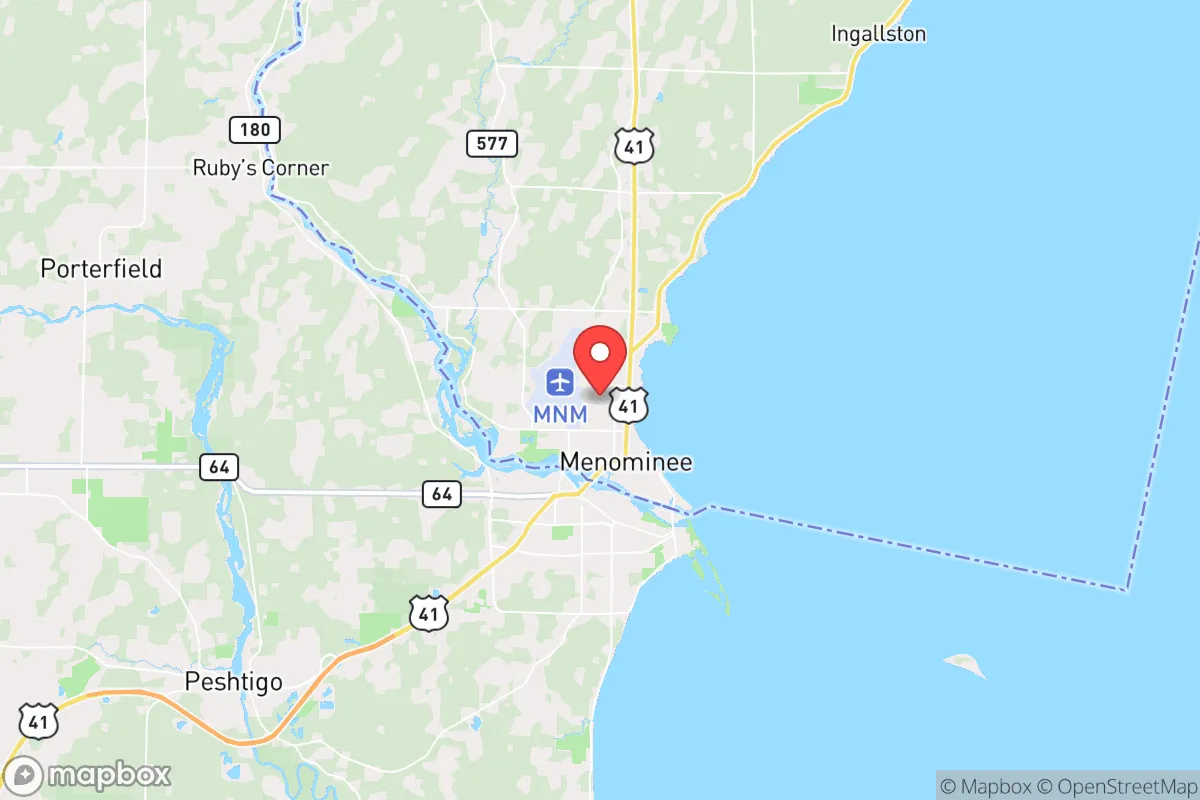
To understand Menominee's political isolation, look at its neighbors. Just across the river in Marinette, Wisconsin, you'll find a similar conservative bent, but drive 45 minutes south to Green Bay, and you hit a more moderate, swing-voting metro area. Head east to Escanaba, and while it's also in the U.P., it's slightly less conservative—more of an R+10 feel—thanks to a larger unionized workforce in paper mills and government jobs. The real contrast is with downstate Michigan: places like Ann Arbor (D+30) or Grand Rapids (R+9 but trending purple) are worlds apart. Menominee's politics are closer to those of rural northern Wisconsin or the western U.P. than to the rest of Michigan. That R+17 PVI isn't just a number—it means that in a close statewide race, Menominee's votes are almost a guaranteed lock for the Republican candidate, while the state's outcome hinges on Detroit's suburbs and the Grand Rapids area.
What this means for residents
For conservative residents, Menominee feels like a safe harbor. Local elections are rarely competitive, and Republican candidates often run unopposed or win by 60-70% margins. This means conservative policies—like lower taxes, Second Amendment protections, and limited local government—are the default. For liberal residents, it can feel isolating. There's no active Democratic Party presence to speak of, and progressive causes like environmental regulations on the paper industry or expanded social services often struggle to gain traction. That said, the small-town culture means most disagreements are handled face-to-face, not through partisan shouting matches. You'll find plenty of folks who vote red but support local unions or the local fishing industry, creating a pragmatic, live-and-let-live atmosphere. The trajectory suggests this gap will widen as younger, more conservative families move in from downstate for cheaper housing, while liberal-leaning retirees head to warmer climates.
Culturally, Menominee's conservatism is more about tradition than ideology. The area's economy—timber, paper, tourism, and small manufacturing—shapes its politics. There's a strong sense of self-reliance and skepticism of outside interference, whether from Lansing or Washington. You won't see many "Don't Tread on Me" flags, but you will see a lot of support for local hunting and fishing rights. The biggest policy distinction from the rest of Michigan is on environmental issues: Menominee residents are generally wary of strict environmental regulations that could hurt the paper mills or limit access to public lands for recreation. Meanwhile, the state government in Lansing has pushed for tighter pollution controls and renewable energy mandates, creating a quiet tension. For anyone moving here, the takeaway is simple: if you're conservative, you'll feel at home. If you're liberal, you'll find a respectful community, but you'll need to drive to Green Bay or Marquette for a more like-minded social scene.

State Political ClimatePolitical Climate in Michigan
State Political AnalysisPolitical Environment in the State
Michigan is a true battleground state, with a Cook PVI of EVEN that reflects its razor-thin margins in recent presidential elections. Over the past 20 years, the state has shifted from a reliably blue stronghold in the industrial Midwest to a fiercely contested swing state, driven by the collapse of union power in Detroit, the rise of the auto industry’s suburbanization, and a growing rural-urban polarization. The dominant coalitions are a Democratic coalition anchored in Wayne County (Detroit), Washtenaw County (Ann Arbor), and parts of Kent County (Grand Rapids), versus a Republican coalition that dominates the Upper Peninsula, the Thumb region, and the western and northern Lower Peninsula. The 2016 and 2020 elections saw the state flip from Obama to Trump and back to Biden, with margins under 3% each time, cementing Michigan’s status as a national bellwether.
Urban vs. rural divide
The political map of Michigan is a textbook study in geographic polarization. The Democratic stronghold is the southeastern corner, anchored by Detroit and its inner-ring suburbs like Southfield and Dearborn, which together deliver massive vote margins for Democrats. Ann Arbor, home to the University of Michigan, is a deep-blue liberal enclave that reliably votes 70-80% Democratic. The other major metro, Grand Rapids, has been trending blue in recent cycles, with Kent County flipping to Biden in 2020 after decades of Republican dominance, driven by a growing professional class and a more diverse population. In contrast, the rural and exurban areas are overwhelmingly Republican. The Upper Peninsula (UP) is culturally conservative but economically dependent on government jobs and mining; it voted for Trump in 2020 by about 10 points. The Thumb region (e.g., Bad Axe, Port Huron) and the western Lower Peninsula (e.g., Traverse City’s surrounding counties) are deeply red, with many counties voting 65-70% Republican. The divide is stark: the 10 most populous counties account for about 60% of the vote, and the rest of the state’s 73 counties lean heavily Republican. This means statewide elections are decided by turnout in the Detroit suburbs and Grand Rapids, while the rural areas provide a solid floor for Republicans.
Policy environment
Michigan’s policy environment is a mix of progressive and conservative elements, reflecting its swing-state status. The state has a flat income tax rate of 4.25%, which is moderate compared to neighboring Ohio (3.5% flat) and Indiana (3.15% flat). Property taxes are relatively high, with an average effective rate of 1.54%, but the Proposal A system (1994) caps annual increases for homeowners, providing stability. Sales tax is 6%, with no local add-ons. On education, Michigan has a school choice system that includes charter schools and inter-district open enrollment, but funding per pupil is below the national average. The state’s regulatory posture is mixed: environmental regulations are stricter than in many red states, especially around Great Lakes water quality, but business regulations are generally moderate. Healthcare policy is a flashpoint: Michigan expanded Medicaid under the Affordable Care Act in 2014, and the state has a robust individual insurance market. Election laws are relatively accessible: no-excuse absentee voting was approved by voters in 2018, and same-day voter registration is available. However, voter ID is required at the polls, and the state has a Republican-controlled legislature that has pushed for stricter voter roll maintenance. For conservatives, the tax structure is tolerable but not low, while liberals appreciate the expanded voting access and Medicaid expansion.
Recent policy direction
Michigan’s recent policy direction has been a tug-of-war between a Democratic governor (Gretchen Whitmer) and a Republican-controlled legislature (until 2022, when Democrats flipped both chambers). Key recent legislation includes the repeal of the state’s right-to-work law in 2023, which had been in place since 2012 and made Michigan the first state in decades to reverse such a law. This is a major win for unions and a loss for conservatives who value workplace freedom. On gun policy, Michigan passed universal background checks and safe storage laws in 2023, following the Oxford High School shooting, but the state still allows open carry without a permit and has a “shall issue” concealed carry system. Parental rights have been a battleground: the state’s 2023 “Parents’ Bill of Rights” (HB 4156) was vetoed by Whitmer, but local school boards in conservative areas like Macomb County have adopted their own policies on curriculum transparency. On abortion, Michigan voters enshrined reproductive rights in the state constitution via Proposal 3 in 2022, a major victory for bodily autonomy. Property rights are generally strong, with no statewide rent control and relatively few land-use restrictions outside of environmental zones. On voting, the 2022 “Promote the Vote” initiative expanded early voting and ballot drop boxes, while Republicans have pushed for stricter voter ID laws (not yet passed). For a relocator, the direction is clear: Michigan is moving left on labor, guns, and abortion, but remains moderate on taxes and property rights. Conservatives will find the state less friendly than a decade ago, while liberals will see progress.
Civil unrest & political movements
Michigan has been a hotspot for political activism on both sides. The 2020 COVID-19 lockdowns sparked the “Wolverine Watchmen” plot to kidnap Governor Whitmer, a stark example of anti-government extremism. The “Operation Gridlock” protests in Lansing in April 2020 drew thousands of armed protesters to the state capitol, demanding an end to stay-at-home orders. On the left, the 2020 racial justice protests in Detroit and Grand Rapids were large but largely peaceful, though property damage occurred in downtown Detroit. Immigration politics are relatively quiet compared to border states, but Dearborn has a large Arab-American community that has been vocal on U.S. foreign policy, particularly regarding Palestine. Sanctuary policies are limited: no major city is a formal sanctuary, but Detroit and Ann Arbor have policies limiting cooperation with ICE. Election integrity has been a major issue since 2020, with Trump’s legal challenges in Michigan leading to ongoing distrust among conservatives. The state’s Bureau of Elections has been under scrutiny, and Republican-led audits in counties like Antrim County (where a software error briefly flipped results) have fueled conspiracy theories. A new resident will notice the political polarization in yard signs, bumper stickers, and local news coverage, but actual civil unrest is rare outside of organized protests. The most visible flashpoint is the state capitol in Lansing, which has become a regular site for rallies on both sides.
Projection
Over the next 5-10 years, Michigan is likely to remain a swing state, but with a slight leftward tilt driven by demographic shifts. The Detroit suburbs are becoming more diverse and educated, which tends to favor Democrats, while the rural areas are aging and shrinking. In-migration is modest, with most newcomers coming from other Midwest states and a small but growing number from the coasts, particularly to Ann Arbor and Traverse City. The state’s population growth is slow (0.2% annually), so political change will come more from generational replacement than migration. The 2024 election will be a key test: if Democrats can hold the state again, it will solidify the trend; if Trump wins it back, the state will remain a toss-up. For conservatives, the outlook is challenging: the repeal of right-to-work and the passage of gun control suggest the state is moving left on key issues, but the rural base remains strong and could flip the state in a low-turnout election. For liberals, the trajectory is promising but fragile, as the state’s economy is still heavily dependent on auto manufacturing, which faces headwinds from electrification and global competition. A new resident moving in now should expect a state that is politically competitive, with policy swings every election cycle, and a culture that is more polarized than a decade ago but still fundamentally Midwestern in its pragmatism.
For a new resident, the bottom line is that Michigan offers a balanced political environment where your vote truly matters. Conservatives will find a state with moderate taxes, strong property rights, and a vibrant rural culture, but they will need to accept progressive policies on abortion, guns, and labor. Liberals will find a state that is moving in their direction on social issues, but with a tax structure that is not as progressive as coastal states. The practical takeaway is to choose your location carefully: Macomb County (north of Detroit) is a bellwether that leans conservative, Washtenaw County is deep blue, and the Upper Peninsula is reliably red. No matter where you land, you’ll be in a state where politics is a constant topic of conversation, but where neighbors still help each other shovel snow.
* Values derived from national, state, county, city and local statistics and may differ in a specific area. Last updated: 2026-11-22T17:22:35.000Z
Narrative content on this page is AI-generated and may contain mistakes. Verify any details that matter before acting on them.
ReloMaps may earn a commission from affiliate links at no extra cost to you.

