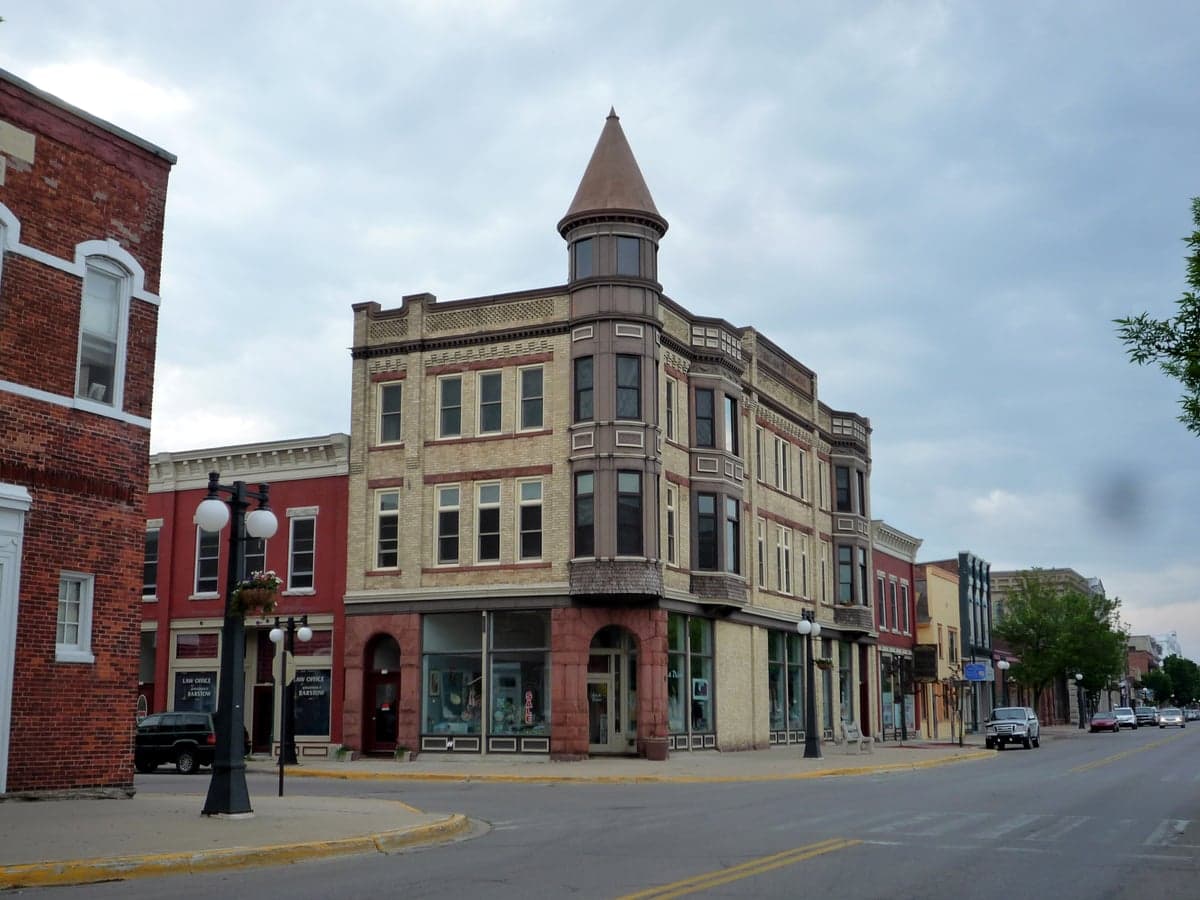
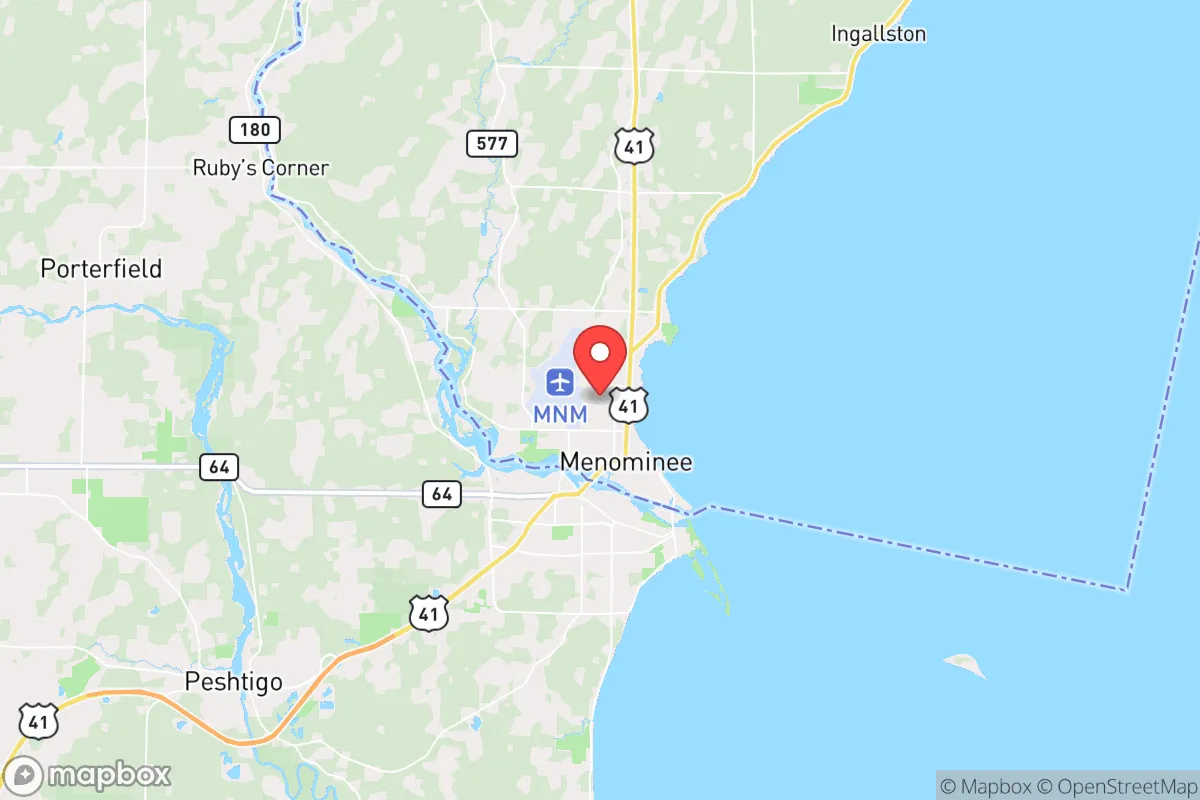
Photo: Wikipedia
Personal Sovereignty in Menominee, MI
Strong independent fundamentals that actively favor personal liberty and low regulation.
What does Personal Sovereignty tell us?
Personal Sovereignty measures your capacity for self-reliance and independence with minimal government friction. Higher scores mean fewer barriers between you and the way you want to live... but it assumes you have the space you need and good neighbors.
What does this tell us?
Personal Sovereignty measures your capacity for self-reliance and independence with minimal government friction. Higher scores mean fewer barriers between you and the way you want to live... but it assumes you have the space you need and good neighbors.
State Policy
Energy independence: Importer (22% of energy produced in-state)
Personal Liberty
Homesteading

Personal Liberty Analysis
Menominee, Michigan, offers a notably high degree of personal sovereignty, rooted in Michigan’s status as a right-to-work state with relatively light regulatory oversight compared to neighboring Wisconsin or Illinois. For individuals and families prioritizing autonomy, the city and surrounding county provide a legal and cultural environment where self-reliance is the norm, not the exception. The local tax burden is moderate, gun laws are permissive, and the region’s zoning and land-use policies generally support independent living arrangements, making it a practical choice for those seeking to minimize external control over their daily lives.
Tax burden and regulatory posture in Menominee and Michigan
Michigan’s overall tax burden ranks in the middle of the pack nationally, but Menominee benefits from a few specific advantages. The state has a flat income tax rate of 4.25% as of 2026, and while local municipalities can levy their own income taxes, Menominee does not impose one—keeping more money in residents’ pockets. Property taxes in Menominee County average around 1.5% of assessed value, slightly below the state median, and the city’s millage rates are competitive with rural Upper Peninsula communities. Regulatory posture is generally light-touch: Michigan is a right-to-work state (though the law was repealed in 2023, the practical effect on union density in Menominee, a historically industrial area, has been minimal), and there are no county-level business licensing hurdles beyond basic state requirements. For a small business owner or freelancer, the administrative burden is low—no occupational taxes, no complex local permitting for home-based operations. The state’s corporate income tax is a flat 6%, and sales tax is capped at 6%, with no local add-ons. Compared to Illinois, where combined state-local sales taxes can exceed 10%, Menominee’s fiscal environment is distinctly favorable for those seeking to retain earnings and minimize government friction.
Self-defense and gun law specifics in Michigan and Menominee
Michigan is a shall-issue state for concealed pistol licenses (CPL), meaning that as long as an applicant meets basic criteria—age 21, no felony record, completion of a safety course—the county sheriff must issue the permit. Menominee County’s gun culture is strong, with local sheriff’s office processing times typically under 30 days. Open carry is legal without a permit for anyone over 18 who can legally possess a firearm, and the state preempts local ordinances, so Menominee city cannot enact its own restrictions beyond state law. Stand-your-ground protections are codified in Michigan law (MCL 780.972), with no duty to retreat in any place where the individual has a legal right to be. Magazine capacity is unrestricted, and there is no state-level assault weapons ban. For those considering a move from states with more restrictive regimes—California, New York, or Illinois—the difference is stark: no waiting periods beyond the standard NICS check, no firearm roster, and no requirement to register handguns or long guns. The only notable limitation is that private sales of handguns require a purchase license from the local police or sheriff, but long guns can be sold privately without paperwork. For a self-defense-minded individual, Menominee offers a legal framework that strongly favors the law-abiding gun owner.
Self-reliance and homesteading viability: lot sizes, zoning, and off-grid feasibility
Menominee’s zoning code and land availability make it a viable location for homesteading and off-grid living. Within city limits, minimum lot sizes are typically 6,000 to 10,000 square feet for single-family homes, but the real opportunity lies in the surrounding Menominee County, where agricultural and rural residential zoning allows for parcels as small as 1 acre and as large as 40 acres with minimal restrictions. The county’s zoning ordinance explicitly permits accessory dwelling units, small-scale livestock (chickens, goats, bees), and non-commercial farming on parcels over 2 acres. Off-grid systems—solar panels, rainwater collection, composting toilets—are not prohibited by county code, though any electrical work must meet state electrical code if connected to the grid. The city of Menominee does require connection to municipal water and sewer for properties within its service area, but rural properties are exempt and can rely on wells and septic systems. Michigan’s building code applies statewide, but enforcement in Menominee County is less aggressive than in downstate urban areas; many rural homeowners build pole barns, workshops, and cabins without formal permits, though this carries risk for insurance and resale. For a family wanting to raise food, generate their own power, and reduce dependence on supply chains, the regulatory environment is permissive—especially compared to states like Oregon or Colorado, where county-level restrictions on off-grid living are common.
Personal liberties: parental rights, medical autonomy, speech, and property
Michigan law generally respects parental rights in education and healthcare. The state does not mandate COVID-19 vaccines for school attendance, and parents can opt children out of sex education and other controversial curricula without a religious exemption requirement. Homeschooling is lightly regulated: parents need only file a simple intent form with the local school district and provide instruction in core subjects, with no standardized testing or home visits required. Medical autonomy is mixed: Michigan expanded Medicaid under the ACA and has a state-run health insurance exchange, but there are no state-level vaccine mandates for adults, and the state does not track or restrict alternative medical treatments like ivermectin or hydroxychloroquine prescriptions. Speech protections are robust under both the U.S. and Michigan constitutions, and the state has no hate speech laws that criminalize protected expression. Property rights are strong: Michigan’s eminent domain laws require a public purpose and just compensation, and Menominee County has not engaged in aggressive condemnation for private development. The state’s “dark store” tax loophole has been closed, but residential property assessments remain tied to market value, with a cap on annual increases (the Proposal A inflation cap) that protects long-term homeowners from sudden tax spikes. For a reader concerned about government overreach in family decisions, healthcare choices, or property use, Menominee’s legal landscape is notably hands-off.
Overall, Menominee ranks as one of the more sovereignty-friendly small cities in the Midwest. Its combination of no local income tax, permissive gun laws, homesteading-friendly zoning, and light regulation of personal choices places it well ahead of most urban areas in Michigan and neighboring states. For a conservative-leaning individual or family seeking a place where the default answer from government is “yes” rather than “no,” Menominee delivers a practical, low-friction environment for self-directed living.

* Values derived from national, state, county, city and local statistics and may differ in a specific area. Last updated: 2026-11-22T17:22:35.000Z
Narrative content on this page is AI-generated and may contain mistakes. Verify any details that matter before acting on them.
ReloMaps may earn a commission from affiliate links at no extra cost to you.

