Political ClimatePolitical Climate in Melissa, TX
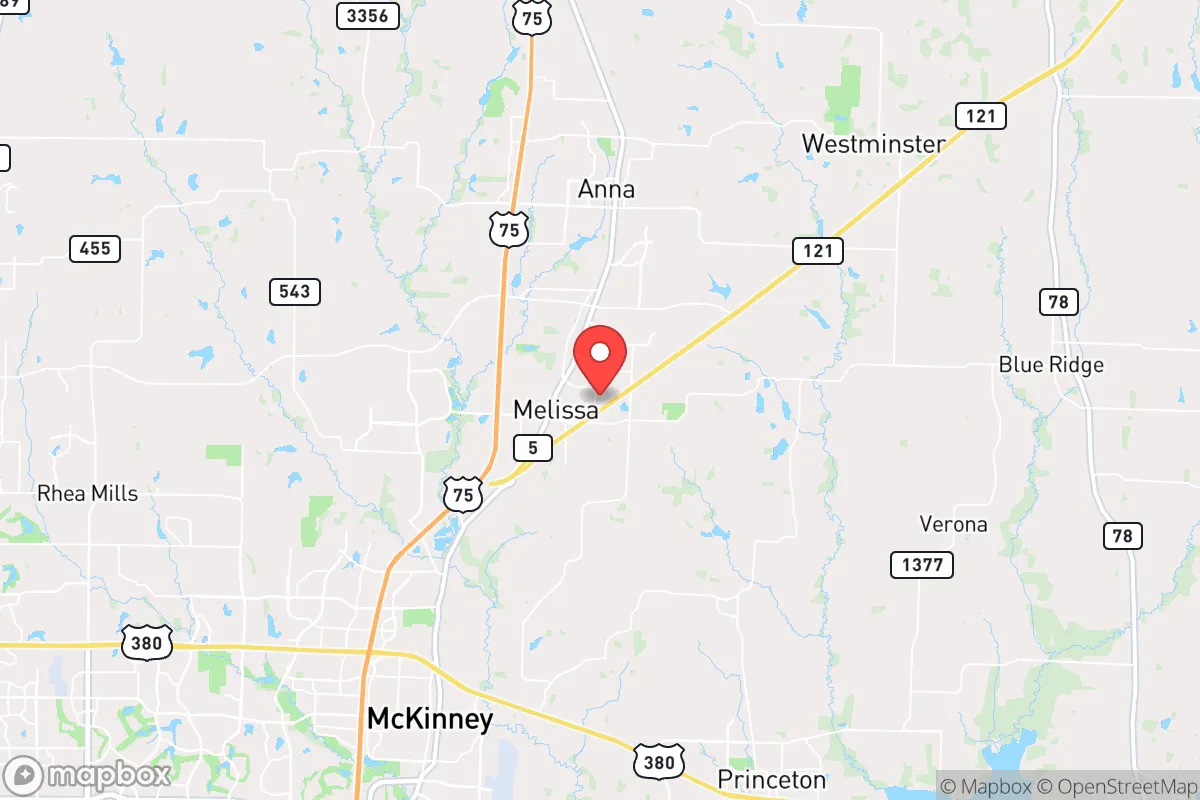
District shown is the primary district for this city’s centroid. Cities may span multiple districts.
Local Political AnalysisPolitical Analysis of Melissa, TX
Melissa, Texas, is about as solidly conservative as it gets in North Texas, and that’s not changing anytime soon. The Cook Partisan Voting Index (PVI) here is a strong R+10, which is a full six points more Republican than the state of Texas as a whole (R+4). What that means in plain terms is that when you walk into a polling place in Melissa, you’re in a community where conservative values aren’t just tolerated—they’re the baseline. This isn’t a purple suburb hedging its bets; it’s a place where the political culture still reflects the traditional Texas ethos of limited government, personal responsibility, and a healthy skepticism of federal overreach.
How it compares
To understand how distinct Melissa is, you have to look at the broader landscape. While Texas itself has been trending slightly more competitive in recent cycles—thanks largely to explosive growth in blue-leaning metros like Houston, Dallas, and Austin—Melissa is bucking that trend. The R+10 PVI puts it in the same league as deeply red rural counties, not the typical suburban drift you see in places like Plano or Frisco, which have shifted leftward as they’ve densified. Drive 15 minutes south to McKinney, and you’ll find a more moderate, sometimes split-ticket electorate. Head 20 minutes west to Celina, and you’ll see a similar conservative profile, but Melissa feels more insulated from the progressive cultural currents that are creeping into Collin County’s older suburbs. The contrast is stark: Melissa’s politics are closer to what you’d find in rural Grayson County than in the Dallas urban core.
What this means for residents
For folks living here, this political climate translates directly into daily life. You’re not going to see the kind of government overreach that’s become common in blue cities—no mask mandates that drag on for months, no heavy-handed business closures, no zoning fights that prioritize density over property rights. The local city council and school board tend to be filled with people who believe in keeping government small and letting families make their own choices. That’s a big deal if you’re concerned about the erosion of personal freedoms that’s happening in places like Austin or even parts of Dallas County. The tax burden is relatively low, and there’s a strong cultural resistance to new regulations that might infringe on gun rights, homeschooling, or religious expression. If you’re looking for a place where the government stays out of your business, Melissa delivers.
That said, the rapid growth is a double-edged sword. As new subdivisions go up and more people move in from out of state, there’s always a risk that the political character could shift. Some of the newcomers come from blue states and bring different expectations about the role of government. So far, the conservative majority has held firm, but it’s something to watch. In the near term, expect Melissa to remain a reliably red stronghold. Long-term, the trajectory depends on whether the community can maintain its cultural identity while absorbing new residents. For now, it’s one of the few places in North Texas where you can still feel like the government is on your side, not the other way around.

State Political ClimatePolitical Climate in Texas
State Political AnalysisPolitical Environment in the State
Texas has been a reliably Republican state for decades, with a Cook PVI of R+4 reflecting a solid but not overwhelming conservative lean. The dominant coalition is a mix of suburban fiscal conservatives, rural social conservatives, and a growing number of libertarian-leaning transplants drawn by low taxes and light regulation. Over the past 10-20 years, the state has shifted rightward on cultural issues while maintaining its pro-business posture, though the explosive growth of the Austin, Dallas-Fort Worth, and Houston metros has begun to inject a noticeable progressive undercurrent into what was once a deep-red landscape.
Urban vs. rural divide
The political map of Texas is a tale of two worlds. The vast rural expanse — from the Panhandle down through West Texas and into the Hill Country — votes overwhelmingly Republican. Counties like Lubbock, Midland, and Kerr County routinely deliver 70-80% of their votes to GOP candidates. Meanwhile, the major urban centers are blue islands: Austin (Travis County) is the most liberal major city in the South, with Democrats routinely winning by 40+ points. El Paso and Houston (Harris County) are reliably Democratic, driven by diverse, younger populations. The real battleground is the suburbs — places like Collin County (north of Dallas) and Fort Bend County (southwest of Houston) have been trending leftward as educated professionals move in, though they still lean Republican overall. The 2020 election saw Tarrant County (Fort Worth) flip to Biden for the first time since 1964, a warning sign for conservatives that the suburban firewall is cracking.
Policy environment
Texas remains a low-tax, low-regulation haven compared to blue states. There is no state income tax, and property taxes are high but capped by law (the 2019 reform limited annual appraisal increases to 10% for homesteads). The regulatory posture is aggressively pro-business, with minimal permitting hurdles and a right-to-work law that keeps unions weak. On education, the state has leaned into school choice, with the 2023 passage of a universal education savings account program that lets parents use public funds for private or homeschool expenses — a major win for parental rights. Healthcare policy is mixed: Texas refused Medicaid expansion under Obamacare, keeping the uninsured rate high, but also passed some of the strongest pro-life laws in the nation after Dobbs. Election laws tightened in 2021 with SB 1, which banned drive-through voting, restricted mail-in ballot access, and empowered poll watchers — a response to 2020 concerns that remains controversial but popular with the conservative base.
Trajectory & freedom
On balance, Texas has been expanding personal freedom in several key areas, but there are worrying signs of government overreach. The 2021 permitless carry law (HB 1927) allows most adults to carry a handgun without a license — a clear expansion of Second Amendment rights. The 2023 parental rights bill (HB 900) restricted sexually explicit content in school libraries and gave parents more power to challenge curriculum. However, the state has also cracked down on medical freedom: the 2023 ban on gender transition procedures for minors (SB 14) was framed as protecting children, but critics see it as the government dictating medical decisions. Property rights remain strong, with no statewide zoning and minimal eminent domain abuse, though local governments in blue cities like Austin have imposed their own land-use restrictions that can feel intrusive. The overall trajectory is toward more cultural conservatism, but the growing urban population is pushing back on issues like abortion access and voting rights.
Civil unrest & political movements
Texas has seen its share of political flashpoints. The 2020 protests in Austin and Dallas over George Floyd’s death turned violent in some cases, leading to property damage and a lasting distrust between activists and law enforcement. The border crisis has been a constant source of tension: Governor Abbott’s Operation Lone Star, launched in 2021, deployed state troopers and National Guard to the border, bused migrants to sanctuary cities, and installed razor wire along the Rio Grande — a direct challenge to federal authority that has drawn lawsuits but energized the conservative base. Secession rhetoric, while fringe, has grown louder among some GOP activists, with the Texas Nationalist Movement gaining modest traction. Election integrity remains a hot-button issue: the 2020 and 2022 cycles saw widespread claims of irregularities in Harris County, leading to the state takeover of elections there in 2023. A new resident will notice the political polarization in everyday life — yard signs, bumper stickers, and even church sermons often wear their politics on their sleeve.
Projection
Over the next 5-10 years, Texas is likely to become more politically competitive, but not necessarily more liberal. The massive in-migration from California and other blue states is often overstated — many newcomers are conservatives or libertarians fleeing high taxes and crime. However, the sheer volume of new residents in the Dallas-Fort Worth and Houston suburbs is diluting the rural Republican advantage. The state’s Hispanic population, long assumed to be a Democratic wave, has been trending rightward — in 2024, Trump improved his share of the Hispanic vote in Texas by several points, especially in border counties like Starr and Zapata. The biggest wildcard is the state legislature: if Democrats flip a few more suburban seats, they could break the Republican supermajority and block conservative priorities like school choice and election integrity bills. For now, the GOP is likely to hold the governor’s mansion and both chambers, but the margin will shrink. A new resident should expect a state that remains conservative on taxes, guns, and cultural issues, but with a louder, more organized progressive opposition in the cities.
For someone moving to Texas, the bottom line is this: you’ll enjoy low taxes, strong property rights, and a government that mostly stays out of your personal life — especially on guns and education. But you’ll also live in a state where political battles are constant and visible, from the border to the school board. If you value personal freedom and limited government, Texas is still one of the best bets in the country. Just be prepared for the fight to keep it that way.
* Values derived from national, state, county, city and local statistics and may differ in a specific area. Last updated: 2026-05-11T19:35:58.000Z
Narrative content on this page is AI-generated and may contain mistakes. Verify any details that matter before acting on them.
ReloMaps may earn a commission from affiliate links at no extra cost to you.

