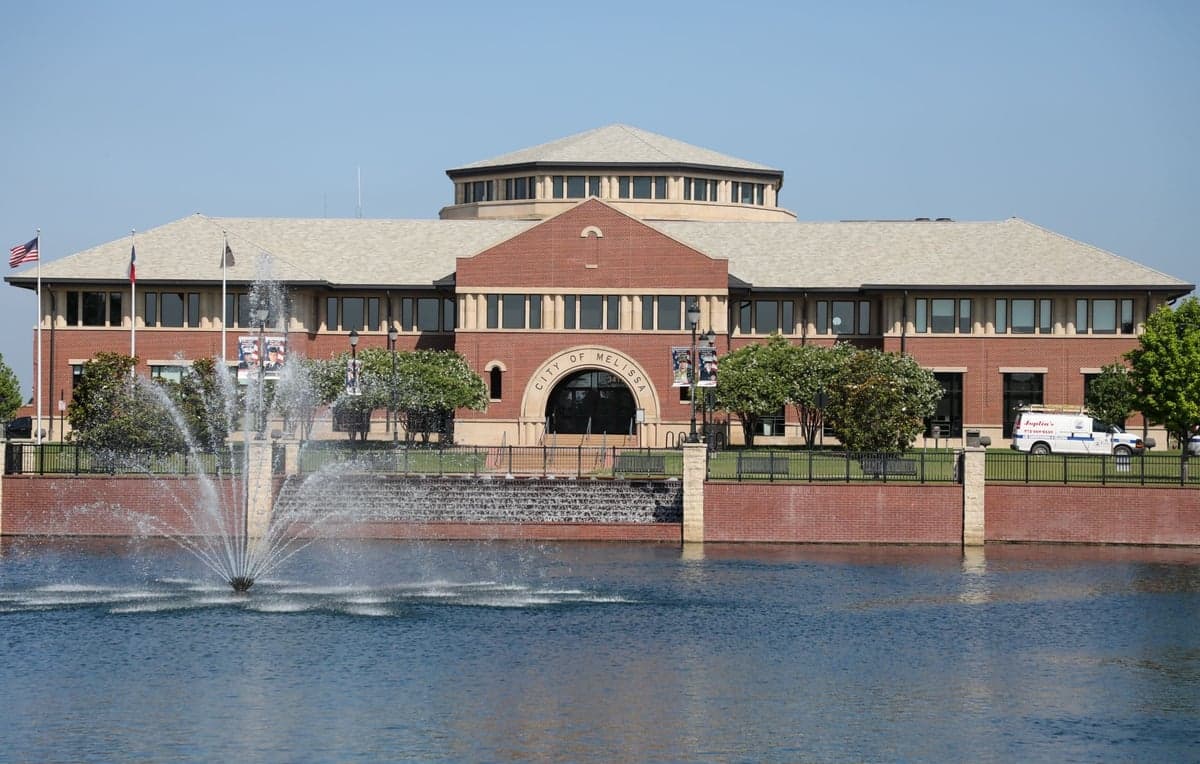
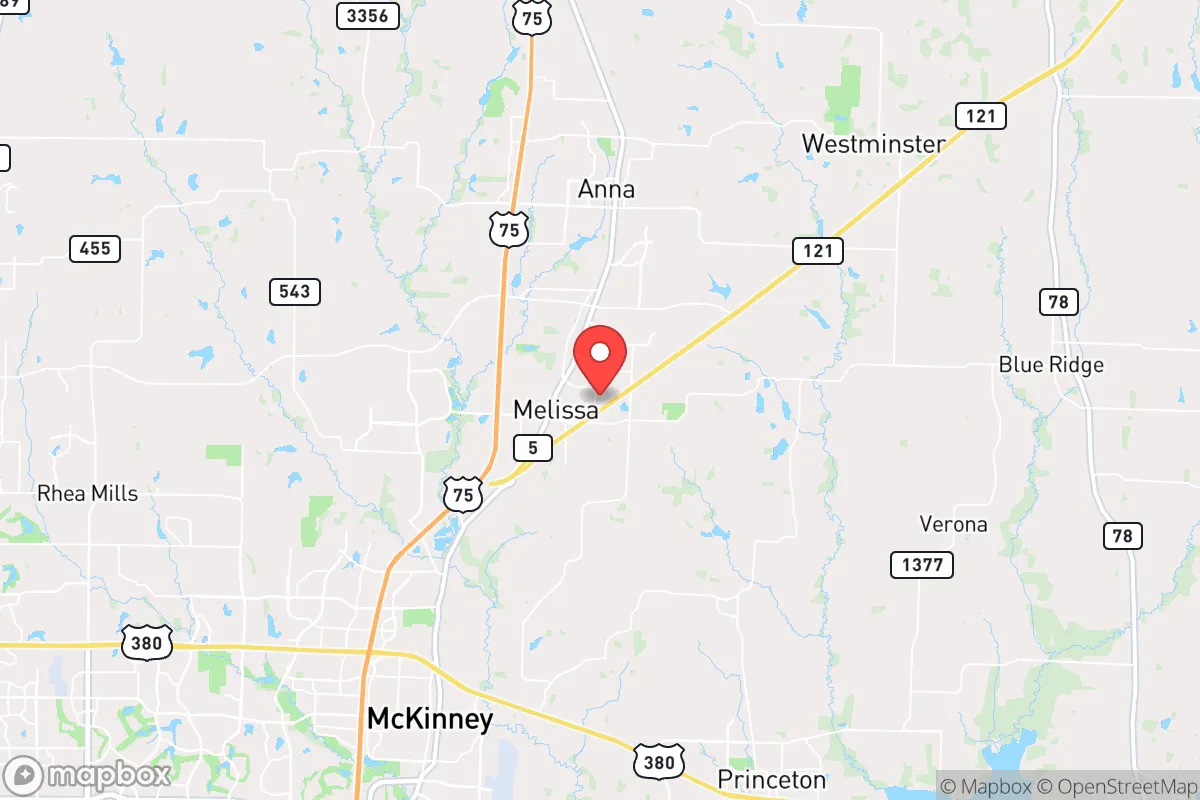
Demographics of Melissa, TX
Affluence Level in Melissa, TX
An upper-middle-class area. Household wealth, education levels, and homeownership run ahead of national benchmarks.
People of Melissa, TX
The people of Melissa, Texas today number 17,497, forming a fast-growing, family-oriented suburb where White (60.0%) and Black (17.3%) residents are the largest groups, alongside a significant Hispanic minority (13.6%) and smaller East/Southeast Asian (2.5%) and Indian-subcontinent (2.2%) communities. With 52.2% holding a college degree and only 3.4% foreign-born, the city skews educated, native-born, and politically moderate-to-conservative, attracting families seeking newer housing and strong schools in a semi-rural setting. Distinctive identity markers include a high proportion of young couples with children, a visible presence of Black professionals in newer subdivisions, and a tight-knit, church-oriented social fabric that contrasts with the anonymity of larger Dallas-Fort Worth suburbs.
How the city was settled and grew
Melissa was founded in 1853 as a stop on the Houston and Texas Central Railway, originally named "Melissa" after the daughter of a railroad official. The first settlers were Anglo-American farmers and ranchers drawn by the Blackland Prairie's fertile soil for cotton and corn, and by the railroad's promise of market access. These early families—many from the U.S. South—built homes in what is now Old Town Melissa, the historic core centered around the original depot and the one-block commercial district along U.S. Highway 75. A second wave arrived after the Civil War, when freedmen established small homesteads on the outskirts, forming the nucleus of what later became the Melissa African American community, concentrated historically along the eastern edge of town near the railroad tracks. Through the early 20th century, the population remained small—under 500 until the 1970s—and overwhelmingly White, with a modest Black minority descended from those post-war settlers. No significant immigrant groups arrived during this period; the city was a quiet, agricultural hamlet with a stable, native-born population.
Modern era (post-1965)
The post-1965 era brought no major foreign-born influx—Melissa's foreign-born share remains just 3.4%—but domestic migration reshaped the city dramatically. The key catalyst was the expansion of the Dallas-Fort Worth metroplex northward along the U.S. 75 corridor. In the 1990s and 2000s, developers began building large master-planned subdivisions targeting White and Black middle-class families priced out of McKinney and Allen. The first of these was West Crossing, a 400-acre development of single-family homes that opened in the early 2000s, attracting a mix of White professionals and Black families from Dallas County seeking newer, larger homes. This was followed by Trinity Falls, a massive 1,200-acre planned community launched in 2015, which accelerated growth and diversified the population further. Trinity Falls drew a notably higher share of Black buyers—now roughly 20% of its residents—alongside White families and a small but growing number of East/Southeast Asian households (mostly Vietnamese and Korean professionals). The Hispanic population, while present, grew more slowly, concentrated in older, more affordable areas like Melissa Heights and the East Side near the original railroad corridor, where many work in construction and landscaping. The Indian-subcontinent community, though small at 2.2%, is clustered in the newer, higher-end sections of Trinity Falls, drawn by the school district's reputation and proximity to tech jobs in Plano and Frisco.
The future
Melissa's population is heading toward continued rapid growth—projected to exceed 30,000 by 2035—but with a distinct pattern of homogenization within each enclave rather than broad mixing. The city is not tribalizing into hostile camps, but it is developing clear neighborhood-level demographic signatures: Trinity Falls will likely become more diverse, with rising East/Southeast Asian and Indian-subcontinent shares as tech-adjacent families continue to arrive, while West Crossing and Old Town will remain predominantly White and Black, respectively. The Hispanic share is expected to plateau around 15-18%, as new Hispanic arrivals tend to settle in cheaper areas like Sherman or Denison rather than Melissa's increasingly expensive housing stock. The foreign-born share may rise modestly to 5-6% as more Asian and Indian professionals move in, but Melissa will remain a predominantly native-born, English-dominant suburb. The Black population, already the second-largest group, is likely to grow further as Dallas County families continue their northward migration, potentially reaching 20-22% by 2040.
For someone moving in now, Melissa is becoming a stratified but stable suburb where neighborhood choice largely determines social experience—families in Trinity Falls will encounter a more diverse, college-educated environment, while those in older areas will find a more traditional, locally rooted community. The city's conservative character, strong schools, and low crime are likely to persist, making it a predictable, family-safe choice for those who value homogeneity of lifestyle over urban diversity.

* Values derived from national, state, county, city and local statistics and may differ in a specific area. Last updated: 2026-05-11T19:35:58.000Z
Narrative content on this page is AI-generated and may contain mistakes. Verify any details that matter before acting on them.
ReloMaps may earn a commission from affiliate links at no extra cost to you.

