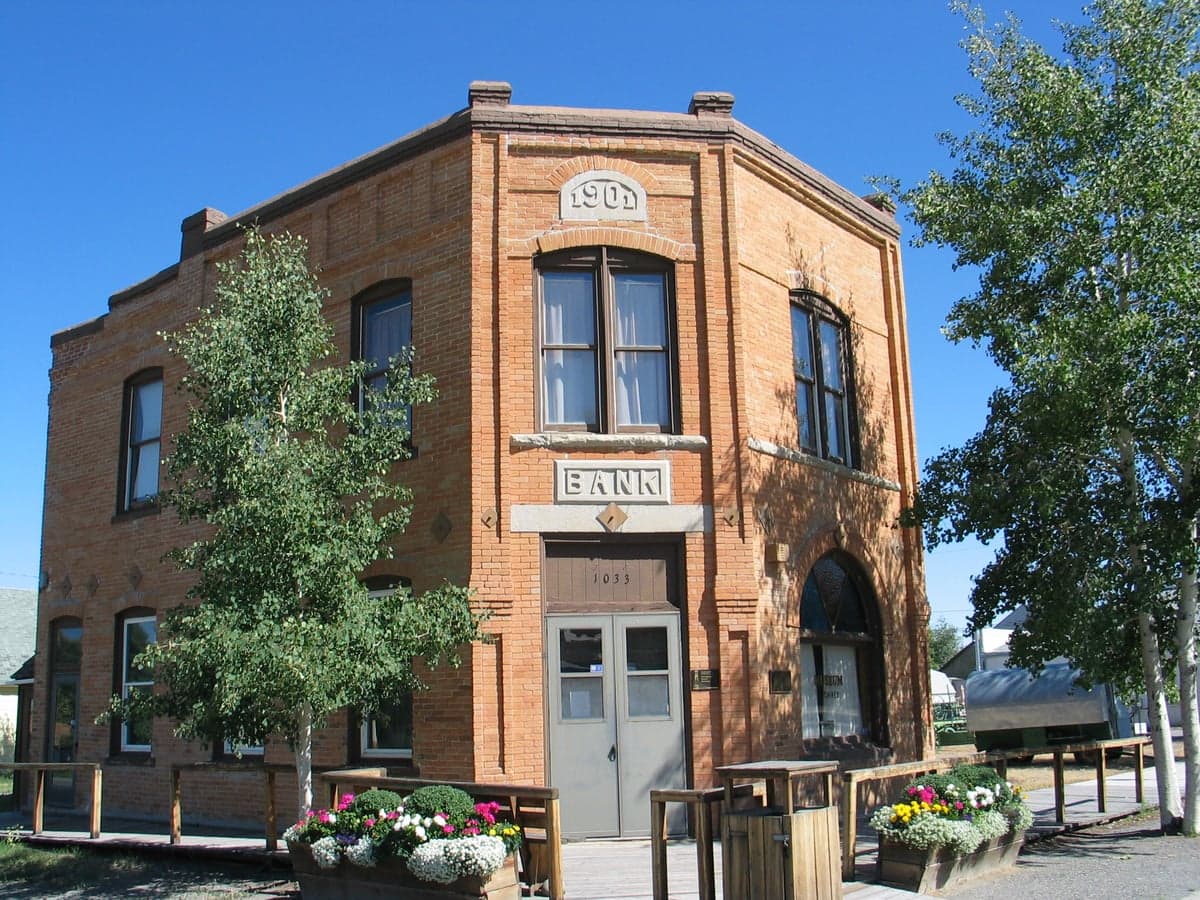
Photo: Wikipedia
Political ClimatePolitical Climate in Meeteetse, WY
District shown is the primary district for this city’s centroid. Cities may span multiple districts.
Inherited from parent state — no local data available.
Local Political AnalysisPolitical Analysis of Meeteetse, WY
Meeteetse, Wyoming, is about as solidly Republican as a place can get, with a Cook PVI of R+23 that mirrors the state of Wyoming as a whole. This isn't a recent shift; the area has been a conservative stronghold for generations, rooted in a ranching and energy-extraction economy that prizes self-reliance and limited government. If you're looking for a political swing district or a purple patch, you won't find it here — the local trajectory is one of steady, deep-red continuity, with no signs of that changing in the near or long term.
How it compares
When you compare Meeteetse to the rest of Wyoming, the political landscape is remarkably uniform. The Cook PVI for both is R+23, meaning the area votes about 23 points more Republican than the national average. That's a heavy lean, and it puts Meeteetse in the same conservative camp as most of the state's rural communities. For a real contrast, you'd have to drive a couple hours to Jackson or Laramie, where the presence of tourism, a university, and a more transient population creates pockets of blue — Teton County went for Biden in 2020, for instance. But here in the Big Horn Basin, places like Cody and Powell share Meeteetse's conservative DNA. The difference is mostly one of scale, not ideology. Meeteetse is smaller and more isolated, so the political conversations happen over coffee at the local diner rather than in formal party meetings, but the underlying values are the same.
What this means for residents
For conservative residents, life in Meeteetse is comfortable and affirming. Local policies align with their views on gun rights, land use, and taxation. The county commission and school board are reliably Republican, so there's little friction between personal beliefs and local governance. For liberal residents, the reality is different. They are a distinct minority, and while there's no active hostility — this is a polite, neighborly place — they often keep their political opinions private to avoid awkwardness or social friction. Practical consequences include limited access to progressive services or advocacy groups, and a local media diet that skews heavily conservative. That said, the small-town culture means people are judged more by their character and work ethic than their bumper stickers. A liberal who helps with the volunteer fire department or coaches Little League will be accepted, even if their politics are known. The key is that political identity rarely comes first here; community membership does.
One cultural distinction worth noting is the area's deep connection to federal land management, which creates a unique political dynamic. While Meeteetse residents are broadly anti-regulation, they also depend on access to Shoshone National Forest and BLM land for grazing and recreation. This creates a pragmatic, sometimes contradictory stance: locals want less federal oversight but also want the feds to maintain roads and manage wildfire risk. It's a nuance that gets lost in national political narratives but is central to daily life here. In practice, this means local Republicans are often more libertarian than the national party platform, especially on land-use issues. For newcomers, understanding this local flavor is more important than knowing the party registration numbers. The political climate in Meeteetse is stable, predictable, and deeply woven into the fabric of rural Wyoming life — for better or worse, it's not going anywhere.

State Political ClimatePolitical Climate in Wyoming
State Political AnalysisPolitical Environment in the State
Wyoming is one of the most reliably Republican states in the nation, with a Cook PVI of R+23, meaning it votes about 23 points more Republican than the national average in presidential elections. The state hasn't voted for a Democratic presidential candidate since 1964, and the GOP holds every statewide elected office, supermajorities in both legislative chambers, and both U.S. Senate seats. Over the past 10-20 years, the state has shifted further right, driven by out-migration of younger, more moderate residents and an influx of conservative retirees and remote workers from places like Colorado and California, though the overall population has remained relatively flat.
Urban vs. rural divide
The political map of Wyoming is defined by a stark urban-rural split, but even the "urban" areas are small by national standards. Cheyenne, the state capital and largest city (population ~65,000), is the most politically moderate area, with Laramie County occasionally electing Democrats to local office and voting slightly less Republican than the state average. Casper (Natrona County) leans Republican but has a noticeable independent streak, while Laramie (home to the University of Wyoming) is the state's most liberal enclave, with Albany County often being the only county to vote Democratic in statewide races. The real engine of Wyoming's conservatism is the vast rural expanse: counties like Sublette, Lincoln, and Park routinely deliver 80-90% Republican margins. Jackson Hole (Teton County) is an interesting outlier — it's the wealthiest county in the state and votes reliably Democratic due to its high concentration of out-of-state transplants and second-home owners, but its population is too small to shift the statewide balance.
Policy environment
Wyoming's policy environment is shaped by its small population, energy-dependent economy, and deep distrust of federal authority. The state has no personal or corporate income tax, relying instead on a 4% state sales tax (local options can add up to 2%), property taxes that are among the lowest in the nation, and severance taxes on mineral extraction. The regulatory posture is aggressively pro-business, with minimal zoning, weak environmental enforcement, and a right-to-work law that limits union power. Education policy is a mixed bag: the state spends above the national average per pupil, but outcomes lag, and the legislature has recently focused on school choice and parental rights, including a 2023 law allowing parents to opt children out of curriculum they object to. Healthcare is a perennial challenge — Wyoming is one of the few states that has not expanded Medicaid under the ACA, leaving roughly 20,000 residents in the coverage gap, and the state has a chronic shortage of providers, especially in rural areas. Election laws are moderately restrictive: voter ID is required, same-day registration is not available, and absentee voting requires an excuse, though mail voting is permitted for those who qualify.
Recent policy direction
Over the past five years, Wyoming's legislature has moved decisively on a range of liberty-related issues that relocators often weigh. On gun and self-defense law, the state passed constitutional carry in 2021, allowing permitless concealed carry for anyone 21 or older, and in 2023 enacted a "Second Amendment Preservation Act" that purports to nullify federal firearms regulations — though its enforceability is uncertain. Parental and education rights saw a major push in 2023 with the "Parents' Bill of Rights" (SF 117), which requires schools to notify parents of curriculum changes and allows them to opt children out of lessons they find objectionable; the same session banned transgender girls from participating in girls' sports (SF 133) and restricted gender-affirming medical care for minors (SF 99). On speech and privacy, the state passed a broad data privacy law in 2024 (the Wyoming Data Privacy Act) giving residents rights to access, correct, and delete personal data held by large companies, though it lacks a private right of action. Medical and bodily autonomy is sharply divided: abortion is banned at all stages of pregnancy except to save the mother's life (trigger law effective July 2022), but the state has also legalized medical marijuana via a 2024 ballot initiative — though the program is not yet operational due to legislative wrangling. Property rights are strongly protected, with a 2023 law limiting eminent domain for carbon capture pipelines, reflecting skepticism of green energy infrastructure. Taxation remains a bright spot for conservatives: the legislature passed a significant property tax cut in 2024, capping annual increases at 5% for primary residences. Voting and ballot access tightened in 2022 with a law requiring proof of citizenship to register and limiting drop boxes, though early voting remains available.
Civil unrest & political movements
Wyoming is not known for large-scale civil unrest, but it has a strong tradition of libertarian and anti-federal activism. The Bundy standoff of 2014, though centered in Nevada, had deep Wyoming connections, and the state has been a hotbed of the "county supremacy" movement, with several counties (including Fremont and Park) passing resolutions asserting local control over federal lands. In 2020, the state saw modest Black Lives Matter protests in Cheyenne and Laramie, but they were small and largely peaceful. The Yellowstone National Park region has been a flashpoint for debates over federal land management, with local officials in Park County frequently clashing with the National Park Service over bison management and snowmobile access. Immigration politics are less visible than in border states, but the legislature passed a 2024 law requiring local law enforcement to cooperate with ICE detainers, and there are no sanctuary cities in the state. Election integrity controversies have been muted compared to other states, though the 2022 secretary of state race saw a hardline election-denier win the Republican primary before losing in the general to a more moderate Republican. The Meadowlark movement, a loose coalition of ranchers and environmentalists, has pushed for collaborative land management, but it remains a fringe force.
Projection
Over the next 5-10 years, Wyoming's political trajectory is likely to continue its rightward drift, but with some moderating pressures. In-migration from blue states — particularly remote workers and retirees drawn by low taxes and wide-open spaces — is slowly changing the demographic mix, especially in Teton County and the Jackson Hole area, which could become more politically competitive. However, the state's population is aging and shrinking in rural areas, which tends to amplify conservative voting power. The energy transition away from coal will be a major political fault line: as coal production declines (down 40% from its 2008 peak), the state is diversifying into wind and carbon capture, but this creates tension between traditional extractive industries and newer green economy interests. The legislature is likely to continue pushing on cultural issues — expect further restrictions on transgender rights, expanded school choice, and possibly a push for a state constitutional amendment on abortion. The biggest wild card is federal land policy: if a future Democratic administration tightens restrictions on drilling and grazing, Wyoming's political establishment will likely escalate its "transfer of public lands" rhetoric, which could lead to real legal confrontations. For a new resident, the practical reality is that Wyoming will remain a deeply conservative state for the foreseeable future, but the flavor of that conservatism is shifting from old-school "leave me alone" libertarianism toward a more culturally assertive, nationally aligned Republicanism.
For someone moving to Wyoming, the bottom line is straightforward: if you're a conservative who values low taxes, gun rights, and minimal government interference, you'll find the state broadly aligned with your priorities. If you're a liberal, you'll be in a clear minority, but you'll find like-minded communities in Laramie, Jackson, and parts of Cheyenne — just don't expect your vote to matter much in statewide elections. The state's small population means that individual involvement in local politics can have outsized impact, and the culture of neighborly self-reliance means that most people, regardless of party, are willing to help out. Just be prepared for long drives, cold winters, and a political landscape that isn't changing anytime soon.
* Values derived from national, state, county, city and local statistics and may differ in a specific area. Last updated: 2026-06-21T12:36:54.000Z
Narrative content on this page is AI-generated and may contain mistakes. Verify any details that matter before acting on them.
ReloMaps may earn a commission from affiliate links at no extra cost to you.

