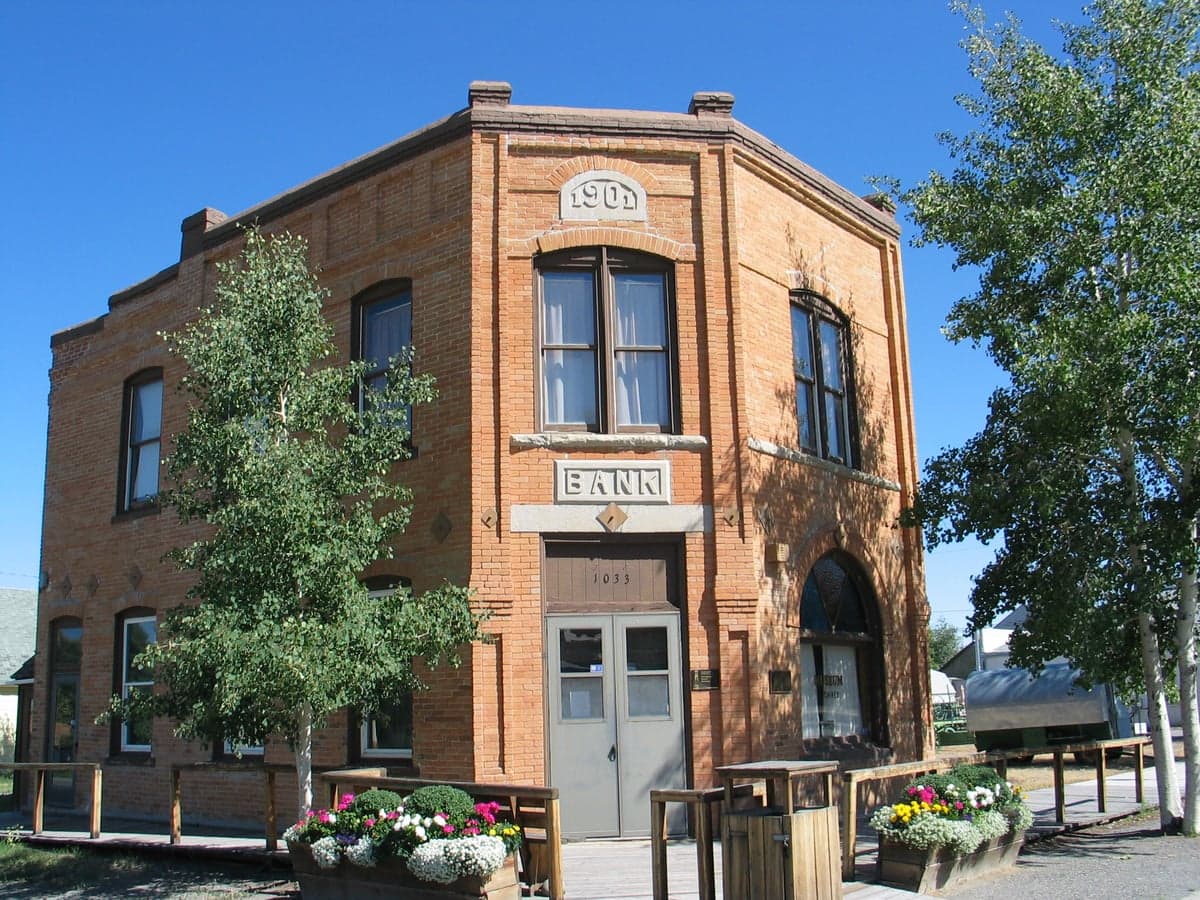
Photo: Wikipedia
Strategic Assessment of Meeteetse, WY
Strong survivability profile. Good buffer from population centers, with manageable environmental and tactical risks.
What does the Strategic Assessment tell us?
Our Strategic Assessment grades tactical survivability of an area. Major population centers, military targets, fallout zones, natural disasters, and border exposure all drive risk — lower exposure means a more defensible position in a crisis.
This is heavily inspired by Joel Skousen's Strategic Relocation book. Highly recommended you checkout the book ($)What does this tell us?
Our Strategic Assessment grades tactical survivability of an area. Major population centers, military targets, fallout zones, natural disasters, and border exposure all drive risk — lower exposure means a more defensible position in a crisis.
This is heavily inspired by Joel Skousen's Strategic Relocation book. Highly recommended you checkout the book ($)Strategic Pillars

Key Distances
Regional Safe Places
Below is our recommended "safe zones" in Wyoming and the surrounding area based on our strategic heuristics. For most people, it's unrealistic to live in a “safe zone” full-time due to work, family or other personal reasons. They tend to be more rural. However, many of these areas are perfect for second homes and retreat properties that double as a vacation home or even a short-term rental.
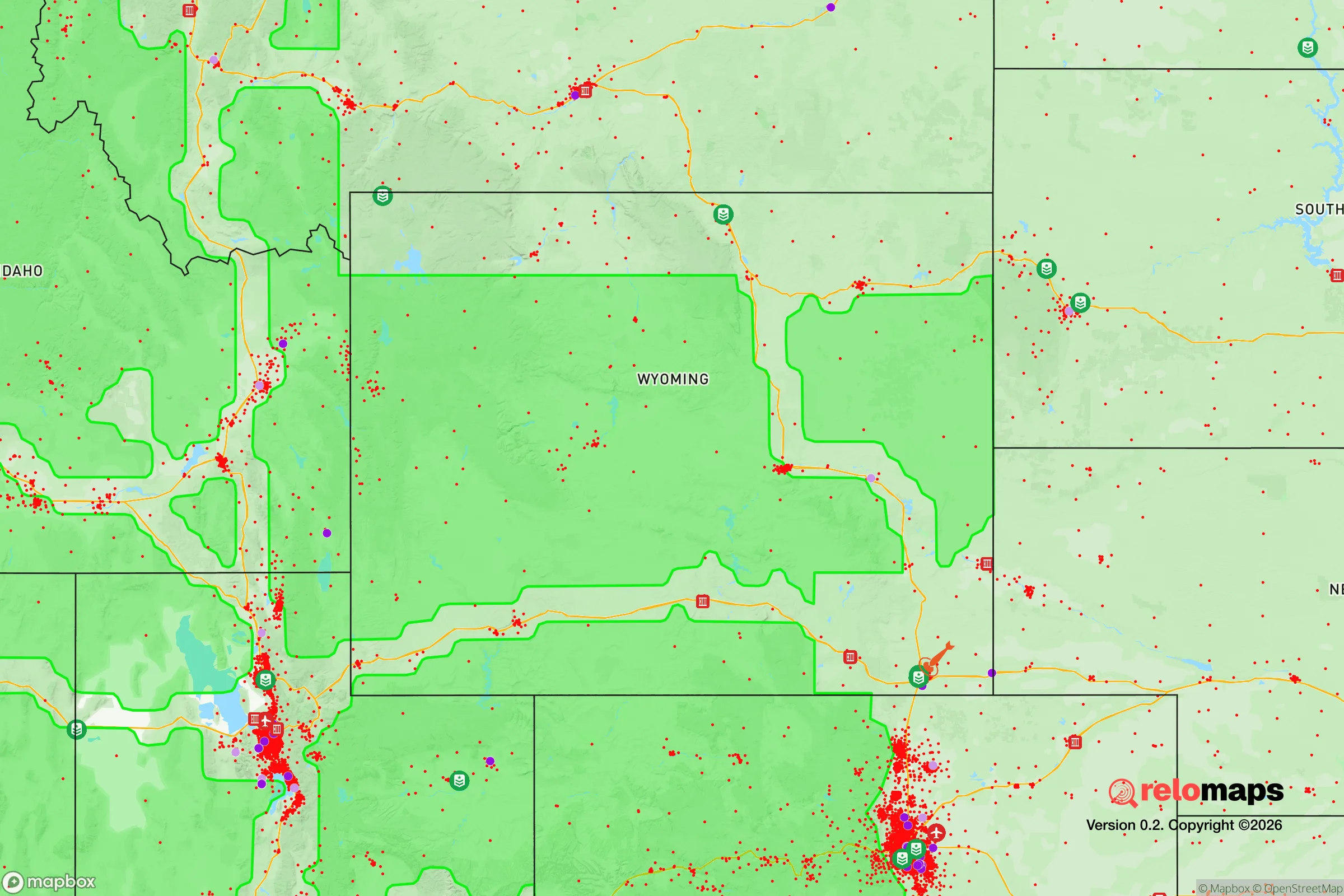
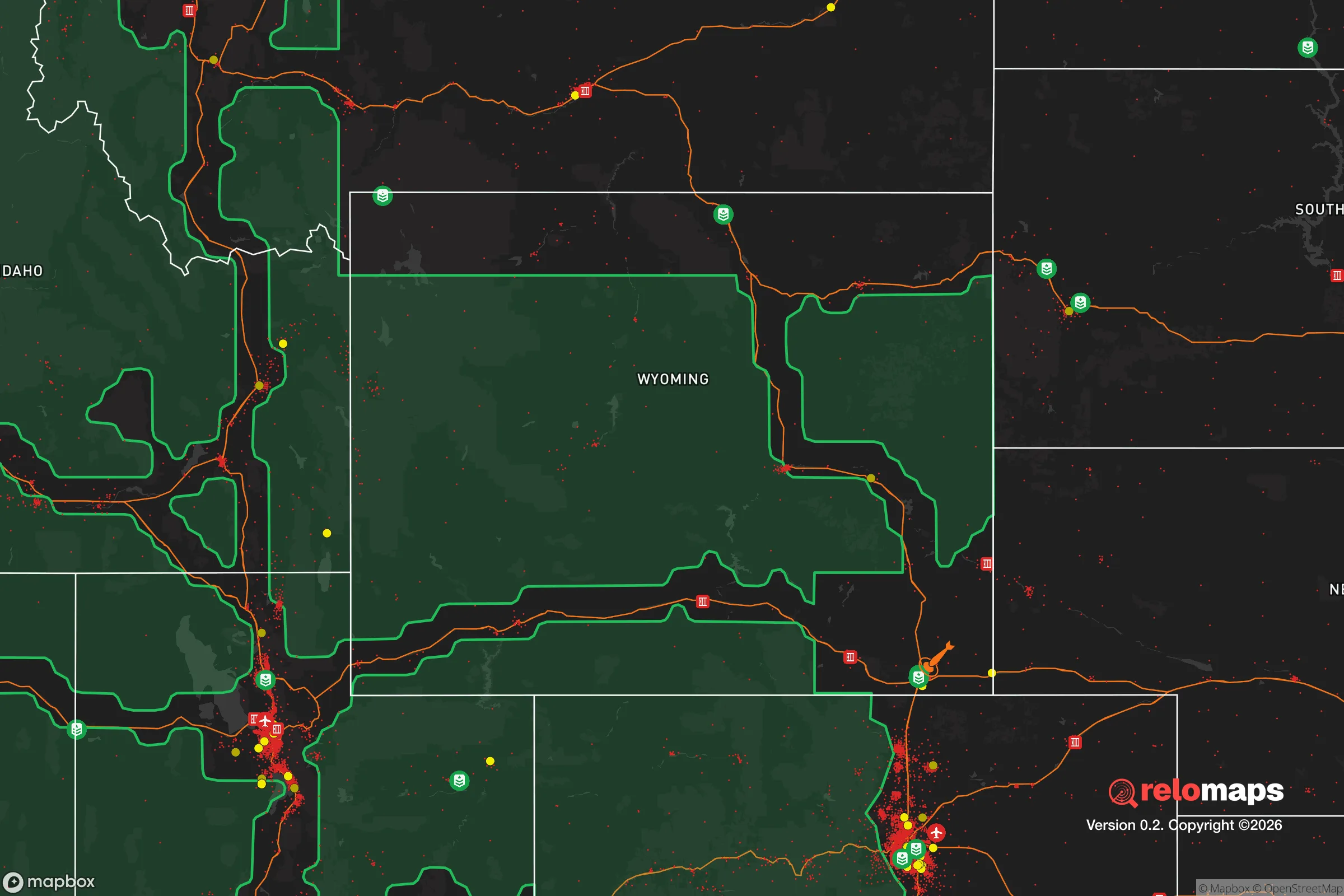


Important Note: For informational purposes only. This does not mean nothing bad ever happens in the green zones. Please use common sense. This is based on public data and modeled with AI. We tried to take a conservative approach but mistakes happen. We update this regularly as new information becomes available.
Solar Generator Recommendations
Backup power matters more here than in safer locations. We've picked three solar generators across budgets and capacity tiers — start with the budget unit if you only need a few essentials, or step up if you want to run a fridge and HVAC for days at a time.

Jackery Portable Power Station Explorer 300
Budget OptionPower on the Go: Weighing only 11 lbs, it's convenient to set up and store with book-sized foldable solar panels

BLUETTI Portable Power Station AC180
Designed for both indoor and outdoor scenarios, AC180 is highly capable as it has a robost capacity and continuous output power.

EF ECOFLOW DELTA Pro Ultra Power Station
Upgraded PickEcoFlow DELTA Pro Ultra is a whole-home energy system designed to grow with your family. Integrated with the Smart Home Panel 2, it scales to meet your evolving energy needs — keeping your home powered, intelligent, and secure through every stage of life.
We earn a commission, at no additional cost to you.
Strategic Assessment Analysis
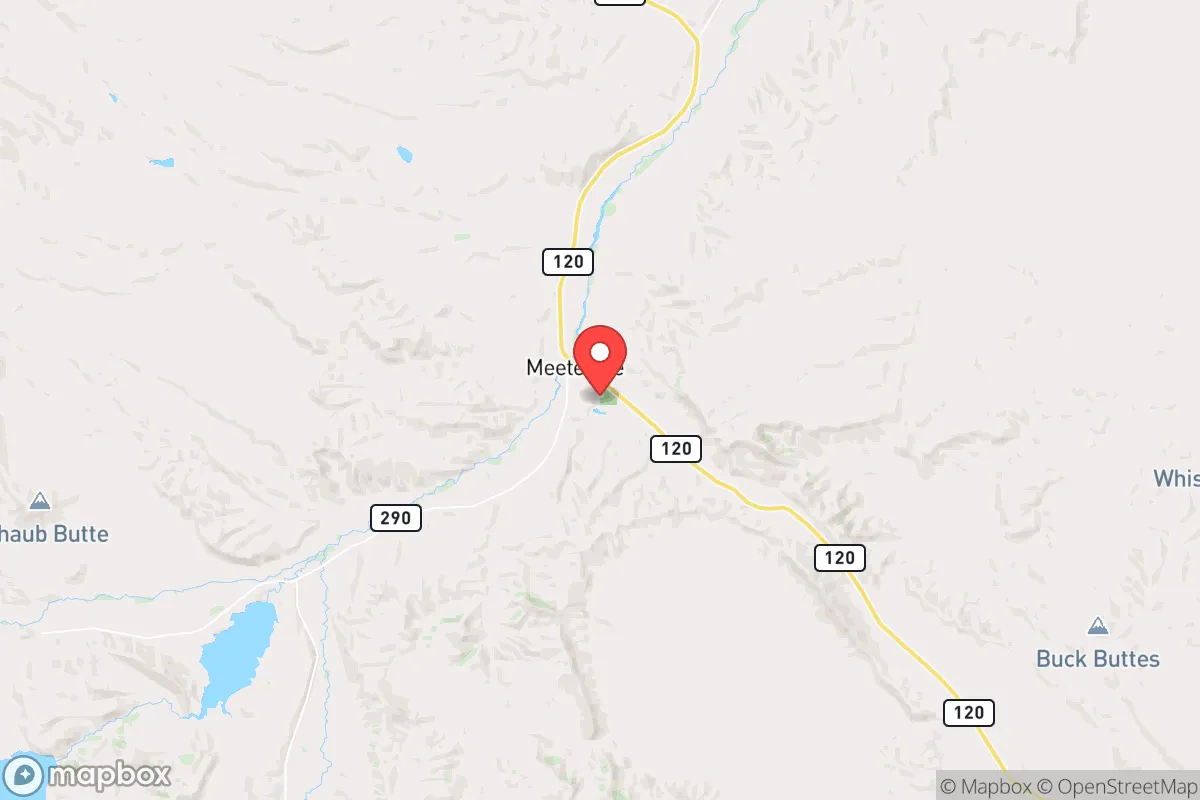
Meeteetse, Wyoming, offers a strategic relocation option for those prioritizing disaster readiness and self-sufficiency, primarily due to its extreme remoteness and low population density. Situated in the Big Horn Basin at the edge of the Absaroka Range, this town of roughly 300 residents sits over 60 miles from the nearest city of any size (Cody) and over 100 miles from Billings, Montana. This geographic isolation, combined with a high-desert climate and access to significant public lands, creates a baseline of resilience that is difficult to find in the lower 48 states, though it comes with distinct trade-offs in logistics and resource availability.
Geographic position and natural advantages for long-term security
Meeteetse’s primary strategic asset is its position within a natural basin, shielded by mountain ranges that buffer it from major weather systems and, critically, from the blast and fallout patterns of a nuclear event targeting a major city. The town sits at roughly 5,500 feet elevation, which reduces the risk of flooding (the Greybull River runs through town but is manageable) and places it above inversion layers that trap pollution in lower basins. The surrounding Shoshone National Forest and BLM lands provide a massive buffer zone—over 2.4 million acres of public land within a 50-mile radius—meaning a relocator has immediate access to hunting, foraging, and timber without needing to own vast acreage. The area’s water security is notable: the Greybull River is snowmelt-fed and perennial, and the local aquifer is deep and generally uncontaminated by industrial agriculture. However, the high desert climate means annual precipitation is only 10–12 inches, so dryland farming is not viable without irrigation, and the growing season is short (roughly 90–110 frost-free days). For a self-sufficient household, this limits what can be grown to cold-hardy crops like potatoes, root vegetables, and some grains, but it does not preclude a well-planned garden with season extension techniques.
Risks, exposures, and proximity to fallout-relevant landmarks
While Meeteetse is far from major population centers, it is not without exposure to man-made and natural risks that a serious prepper must weigh. The nearest significant target for a nuclear strike would be the oil refineries and rail hubs in Billings, Montana (population 120,000, roughly 110 miles north), or the missile fields of central Wyoming and Montana. Prevailing winds in the Big Horn Basin are generally from the west and southwest, which means fallout from a Billings event would likely blow east-northeast, away from Meeteetse. However, a ground burst at the Minuteman III silos near Cheyenne or the F.E. Warren Air Force Base (roughly 300 miles southeast) could send fallout northward depending on seasonal wind patterns. The more immediate risk is industrial: the region has active oil and gas fields, including the Elk Basin and Oregon Basin fields within 30–40 miles, and a major ammonia pipeline runs through the area. A rupture or intentional sabotage of these facilities could contaminate local water or air. Natural risks include wildfire (the 2020 Mullen Fire burned over 176,000 acres in the Medicine Bow National Forest, though it was 100 miles south), severe winter storms that can cut off road access for days, and the remote possibility of seismic activity along the Yellowstone caldera fault system, which is roughly 80 miles west. None of these are deal-breakers, but they require a relocator to have a robust plan for fire mitigation, winter fuel storage, and a well-stocked medical kit, as emergency services are thin—the nearest hospital is in Cody, 45 minutes away by car in good weather.
Practical resilience for a relocator: food, water, energy, and defensibility
For a family or individual serious about self-sufficiency, Meeteetse offers a mixed but workable picture. Water is the strongest asset: the Greybull River flows year-round, and groundwater is accessible via shallow wells (typically 50–150 feet deep) with good yields. A hand pump or solar-powered well pump can provide water independent of the grid. However, surface water must be treated for giardia and agricultural runoff from upstream cattle grazing. Food production is the weakest link: the short growing season and alkaline soils mean that a household cannot rely on gardening alone for calories. Hunting (mule deer, elk, pronghorn) and fishing (Yellowstone cutthroat trout in the Greybull) are viable protein sources, but a family would need to store at least 6–8 months of staple foods (grains, legumes, oils) to bridge the winter and early spring. The local grocery store in Meeteetse is small and expensive; bulk purchasing from Cody or online delivery is necessary. Energy is manageable: the area has excellent solar insolation (over 300 sunny days per year), and off-grid solar systems are common among rural residents. Wood heating is the primary backup, with public lands offering abundant deadfall for harvesting with a permit. Propane is available locally but requires delivery. Defensibility is high: the town is a classic rural hamlet with a single main road (WY-120) and limited choke points. The surrounding terrain—sagebrush flats, rimrock, and pine-covered hills—provides natural cover and long sightlines. The local population is small, tight-knit, and generally armed, which deters casual threats but also means an outsider must invest time in building trust. The nearest law enforcement is the Park County Sheriff’s office in Cody, with a response time of 30–45 minutes for emergencies. For a relocator, the strategic calculus is that Meeteetse is defensible and resource-rich in water and fuel, but food security requires significant upfront investment in storage and infrastructure.
Overall, Meeteetse presents a strong strategic option for a relocator who values isolation, water security, and low population density over convenience and economic opportunity. The area’s resilience is anchored by its geography—far from major targets, buffered by public lands, and with reliable water—but it demands a high level of personal preparedness in food storage, medical self-sufficiency, and winter survival skills. It is not a place for someone seeking a turnkey retreat; it is a place for someone willing to work the land, build relationships with a wary but capable community, and accept that the nearest hardware store is an hour away. For the right person, Meeteetse offers a rare combination of remoteness and resource availability that is increasingly hard to find in the contiguous United States. The trade-off is clear: you gain security from external shocks, but you must bring your own resilience.

* Values derived from national, state, county, city and local statistics and may differ in a specific area. Last updated: 2026-06-21T12:36:54.000Z
Narrative content on this page is AI-generated and may contain mistakes. Verify any details that matter before acting on them.
ReloMaps may earn a commission from affiliate links at no extra cost to you.

