
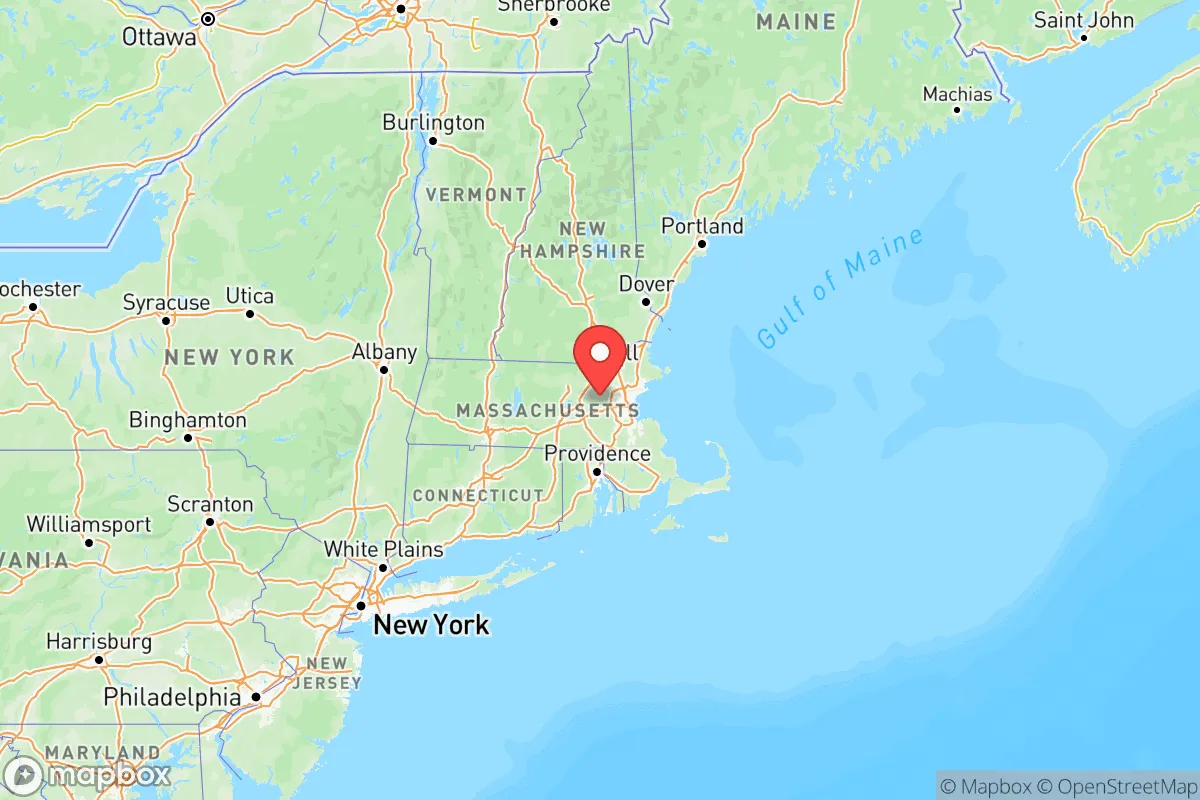
Photo: Wikipedia
Personal Sovereignty in Massachusetts
Viable for self-reliance. Generally workable, though some barriers may limit total independence.
What does Personal Sovereignty tell us?
Personal Sovereignty measures your capacity for self-reliance and independence with minimal government friction. Higher scores mean fewer barriers between you and the way you want to live... but it assumes you have the space you need and good neighbors.
What does this tell us?
Personal Sovereignty measures your capacity for self-reliance and independence with minimal government friction. Higher scores mean fewer barriers between you and the way you want to live... but it assumes you have the space you need and good neighbors.
State Policy
Energy independence: Importer (5% of energy produced in-state)
Personal Liberty
Homesteading

Personal Liberty Analysis
Massachusetts presents a complex and often contradictory landscape for personal sovereignty, where deep historical roots in self-governance clash with one of the most robust state-level regulatory apparatuses in the nation. For the strategic relocation researcher with a conservative, survivalist, or prepper mindset, the Commonwealth offers a stark lesson: individual autonomy is heavily circumscribed by state authority, particularly in the eastern urban corridor. While the western hill towns and Cape Cod outliers retain a whisper of Yankee independence, the overall environment is one of managed liberty, where the state government actively shapes daily life from healthcare mandates to building codes, making it a challenging but not impossible environment for those prioritizing self-reliance.
Tax burden and regulatory posture: How the state's fiscal structure impacts personal autonomy
Massachusetts imposes a flat personal income tax rate of 5% on all earned income, which was increased via a 2022 ballot measure (Question 1) to include an additional 4% surtax on income over $1 million, a move that signals a progressive appetite for redistribution that directly impacts high-earning individuals and small business owners. Property taxes are levied at the local level, averaging about 1.1% of assessed value, but this masks wild variation: Boston and Cambridge have relatively low rates (around 0.6%) due to high commercial property values, while rural communities like Worcester County towns (e.g., Hubbardston, Barre) often see rates above 1.5% to fund local schools and services. The regulatory posture is dense and pervasive. The state's Massachusetts Environmental Policy Act (MEPA) and local conservation commissions can delay or kill any development, including off-grid cabins or homestead expansions, through wetlands protection and stormwater management reviews. For the prepper, this means that even buying a simple parcel of land in Berkshire County (e.g., Becket, Otis) requires navigating a thicket of permits for septic systems, well drilling, and tree removal that would be unheard of in states like New Hampshire or Maine. The state's Title 5 septic regulations are particularly onerous, often requiring expensive engineered systems on small lots, effectively limiting the viability of cheap, self-sufficient land purchases.
Self-defense and gun law specifics: What the Second Amendment landscape looks like on the ground
Massachusetts is one of the most restrictive states for firearm ownership in the United States, operating under a "may-issue" framework for licenses to carry (LTC) that gives local police chiefs enormous discretion. In practice, Boston, Cambridge, and Somerville are notoriously difficult jurisdictions where LTCs are often denied or restricted to "target and hunting" only, effectively banning concealed carry for self-defense. Conversely, many rural towns in Franklin County (e.g., Colrain, Heath) and Berkshire County (e.g., Cheshire, Savoy) have chiefs who issue unrestricted LTCs more readily, though the state's 2014 "safe storage" law and the 2024 "Massachusetts Gun Safety Act" have added layers of compliance. The state bans "assault weapons" by name and feature, restricts magazine capacity to 10 rounds, and requires a state-mandated firearms safety course and a background check through the state's own system (the Massachusetts Instant Record Check System, or MIRCS). For the survivalist, the practical reality is that stockpiling ammunition, building a defensive rifle, or even owning standard-capacity handguns is legally precarious. The state also has a "red flag" law (Extreme Risk Protection Order) that allows family or police to petition for temporary firearm removal without a criminal charge, a tool that critics argue is ripe for abuse in family disputes or neighborly conflicts. If self-defense is a non-negotiable priority, Massachusetts is a poor choice compared to neighboring New Hampshire or Vermont.
Self-reliance and homesteading viability: Lot sizes, zoning, and off-grid feasibility across the state
The viability of a self-reliant homestead in Massachusetts is highly location-dependent, with the eastern half of the state (east of Worcester) being largely suburbanized and hostile to anything resembling off-grid living. In Plymouth County towns like Middleborough or Carver, minimum lot sizes are often 1-2 acres, but zoning bylaws typically require connection to municipal water and sewer, and prohibit composting toilets, rainwater collection as a primary water source, or any structure without a certificate of occupancy. The western part of the state offers more breathing room. Berkshire County towns like Alford, Mount Washington, and Egremont have large tracts of land with minimum lot sizes of 5-10 acres, and some allow "agricultural exemptions" for barns and sheds that can be used for storage or animal husbandry without full building permits. However, the state's Board of Building Regulations and Standards (BBRS) enforces the Massachusetts State Building Code (780 CMR) statewide, meaning any habitable dwelling must meet strict energy, structural, and safety standards. True off-grid living—no grid electricity, no municipal water, no septic system—is virtually illegal for a primary residence. You can have a "camp" (seasonal use) without full compliance in some towns, but year-round habitation requires a permit. For the prepper, the best bet is Franklin County, specifically towns like Rowe, Charlemont, or Hawley, where zoning is minimal, land is cheap (often under $5,000/acre), and the local culture is more tolerant of alternative lifestyles. Even there, expect to pay for a drilled well ($10,000-$20,000) and a Title 5 septic system ($8,000-$15,000) before you can legally sleep in your own cabin.
Personal liberties: Parental rights, medical autonomy, speech, and property rights under state law
Massachusetts has a strong tradition of protecting individual rights in some areas while aggressively curtailing them in others. Parental rights are significantly eroded compared to states like Florida or Texas. The state mandates comprehensive sex education in public schools (the 2023 "Healthy Youth Act") that includes LGBTQ+ topics, and parents cannot opt their children out of these lessons—only out of the "human sexuality" portion, and even that is subject to school district interpretation. Medical autonomy is heavily state-managed: Massachusetts has a mandatory health insurance requirement (the "individual mandate") that predates the ACA, and the state's Public Health Council has broad authority to mandate vaccines for school attendance, including COVID-19 vaccines for K-12 students (though this was paused in 2024). For the vaccine-hesitant or those seeking medical freedom, this is a hostile environment. Free speech is protected under the state constitution, but the state has a "hate crimes" law that enhances penalties for speech or conduct deemed to target protected classes, and local ordinances in Cambridge and Amherst have attempted to restrict "hateful" speech in public forums, though these are often struck down in court. Property rights are the most concerning for the prepper: the state has a robust eminent domain power used for conservation projects (e.g., the state's "Conservation Partnership Act" allows taking land for trails and parks), and local conservation commissions can restrict land use through wetlands bylaws that go far beyond state or federal requirements. In Concord and Lincoln, for example, you cannot cut down a tree within 100 feet of a wetland without a permit, effectively controlling what you can do with your own land.
Overall, Massachusetts ranks among the lowest states in the nation for personal sovereignty when measured against a conservative or survivalist framework. The state's dense regulatory environment, restrictive gun laws, erosion of parental rights, and aggressive public health mandates create a system where individual autonomy is constantly negotiated with state authority. For those who can afford the high cost of living and are willing to navigate the permit maze, the western hill towns of Berkshire and Franklin Counties offer a relative refuge, but they are islands in a sea of state control. If your primary goal is to maximize personal freedom, self-defense capability, and off-grid self-reliance, Massachusetts is a strategic liability. Neighboring New Hampshire, Vermont, or even upstate New York offer far more breathing room for the sovereign-minded individual. The Commonwealth is best suited for those who value institutional stability and community infrastructure over rugged independence, and who are willing to trade personal autonomy for access to world-class healthcare, education, and a predictable legal environment.

Top Cities for Personal Sovereignty in Massachusetts
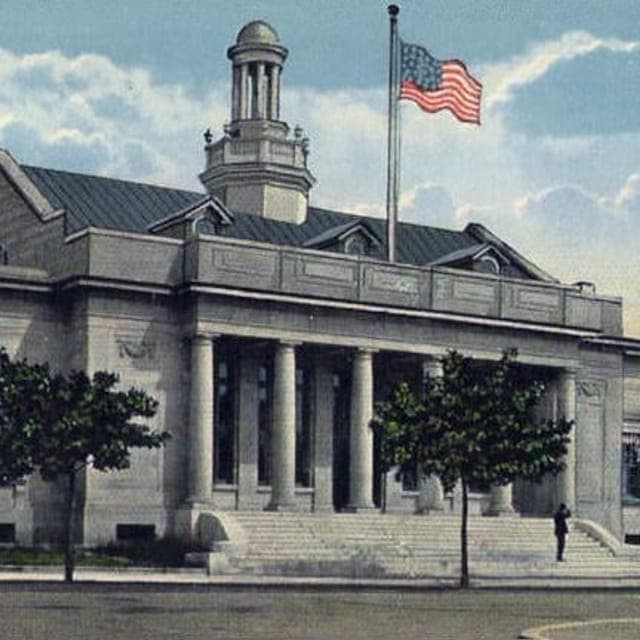 1B-
1B- 2B-
2B-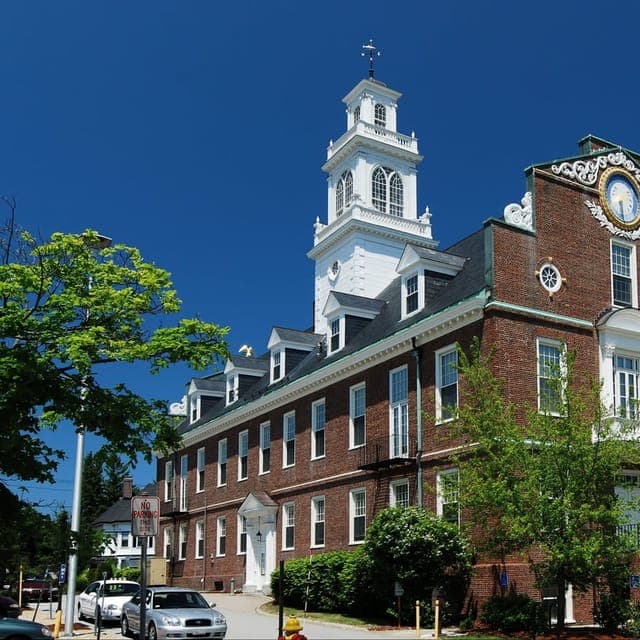 3B-
3B- 4B-
4B- 5B-
5B- 6B-
6B- 7B-8B-
 9B-
9B- 10B-
10B-* Values derived from national, state, county, city and local statistics and may differ in a specific area. Last updated: 2026-04-18T22:53:10.000Z
Narrative content on this page is AI-generated and may contain mistakes. Verify any details that matter before acting on them.
ReloMaps may earn a commission from affiliate links at no extra cost to you.

