Photo: Wikipedia
Demographics of Berkshire County
Affluence Level in Berkshire County
A middle-class area roughly in line with national averages across income, home values, education, and employment.
People of Berkshire County
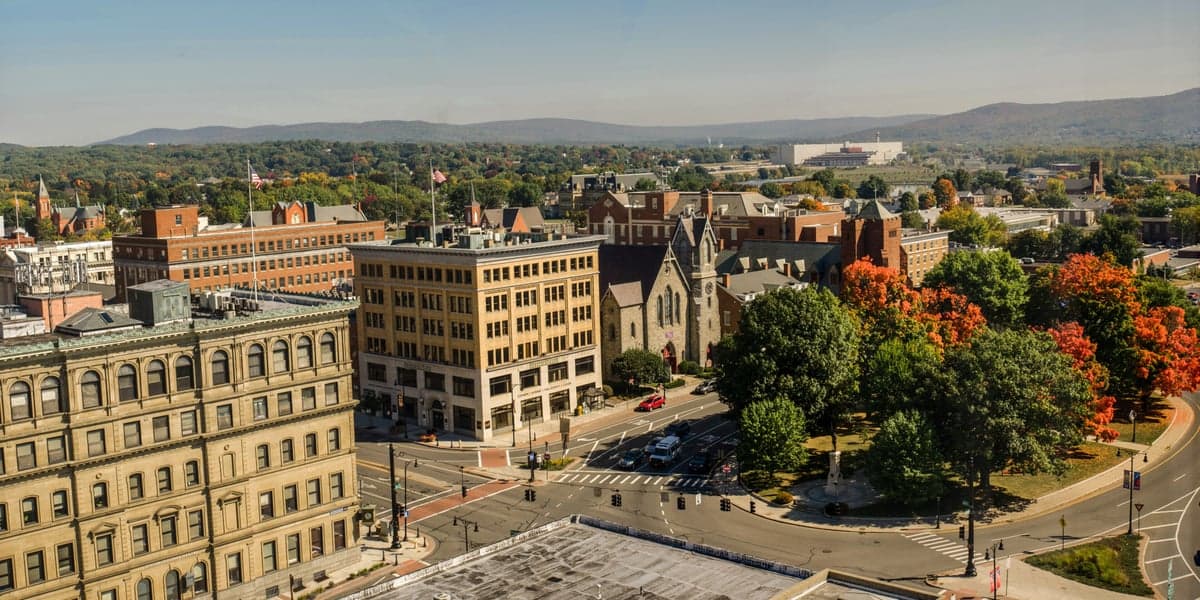
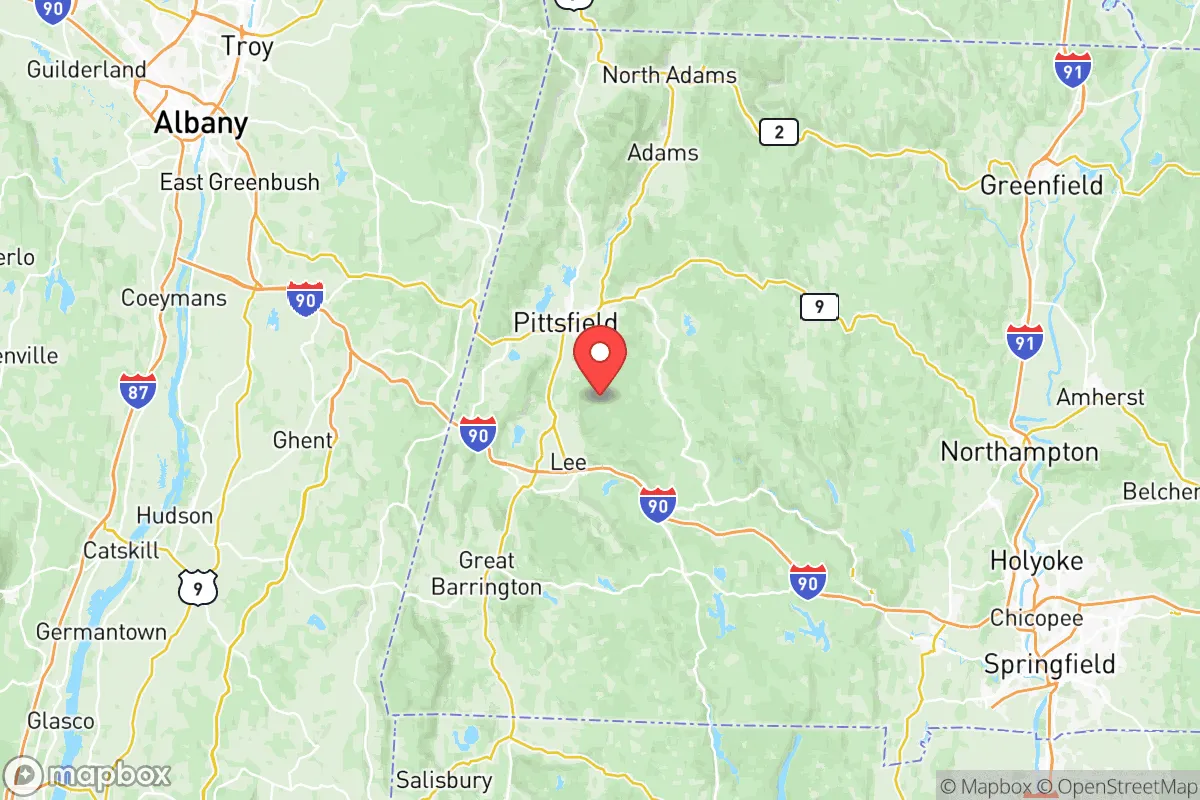
Today, Berkshire County's 128,047 residents form one of the most stable and homogeneous populations in Massachusetts. With a foreign-born share of just 2.5% and a white population of 85.7%, the county retains the demographic character forged during its 19th-century industrial and agricultural heyday. Residents cluster in small cities like Pittsfield (the county seat) and North Adams, and in historic towns such as Stockbridge, Great Barrington, and Lenox. The median age is well above the state average, reflecting a long pattern of young adults leaving for urban jobs while families and retirees value the region's low crime, good schools, and natural beauty.
Settlement & growth (pre-1960)
Before European settlement, the Housatonic River valley was home to the Mohican people, whose principal village was near present-day Stockbridge. The first English settlers—Congregationalists from Connecticut and eastern Massachusetts—arrived in the 1720s and 1730s, establishing towns such as Sheffield (1733), Great Barrington (1761), and Stockbridge (1739, initially as a Christian Indian mission). After the American Revolution, Yankee farmers from coastal New England moved inland, filling the fertile valleys and hill towns.
The real population surge came with industrialization. The region's abundant water power from the Housatonic and Hoosic Rivers drove paper mills, textile factories, and ironworks. Pittsfield became a manufacturing hub after General Electric opened a transformer plant in the 1880s, and North Adams

* Values derived from national, state, county, city and local statistics and may differ in a specific area. Last updated: 2026-06-24T22:48:13.000Z
Narrative content on this page is AI-generated and may contain mistakes. Verify any details that matter before acting on them.
ReloMaps may earn a commission from affiliate links at no extra cost to you.

