
Photo: Wikipedia
Personal Sovereignty in Washington County
Viable for self-reliance. Generally workable, though some barriers may limit total independence.
What does Personal Sovereignty tell us?
Personal Sovereignty measures your capacity for self-reliance and independence with minimal government friction. Higher scores mean fewer barriers between you and the way you want to live... but it assumes you have the space you need and good neighbors.
What does this tell us?
Personal Sovereignty measures your capacity for self-reliance and independence with minimal government friction. Higher scores mean fewer barriers between you and the way you want to live... but it assumes you have the space you need and good neighbors.
State Policy
Energy independence: Importer (8% of energy produced in-state)
Personal Liberty
Homesteading

Personal Liberty Analysis
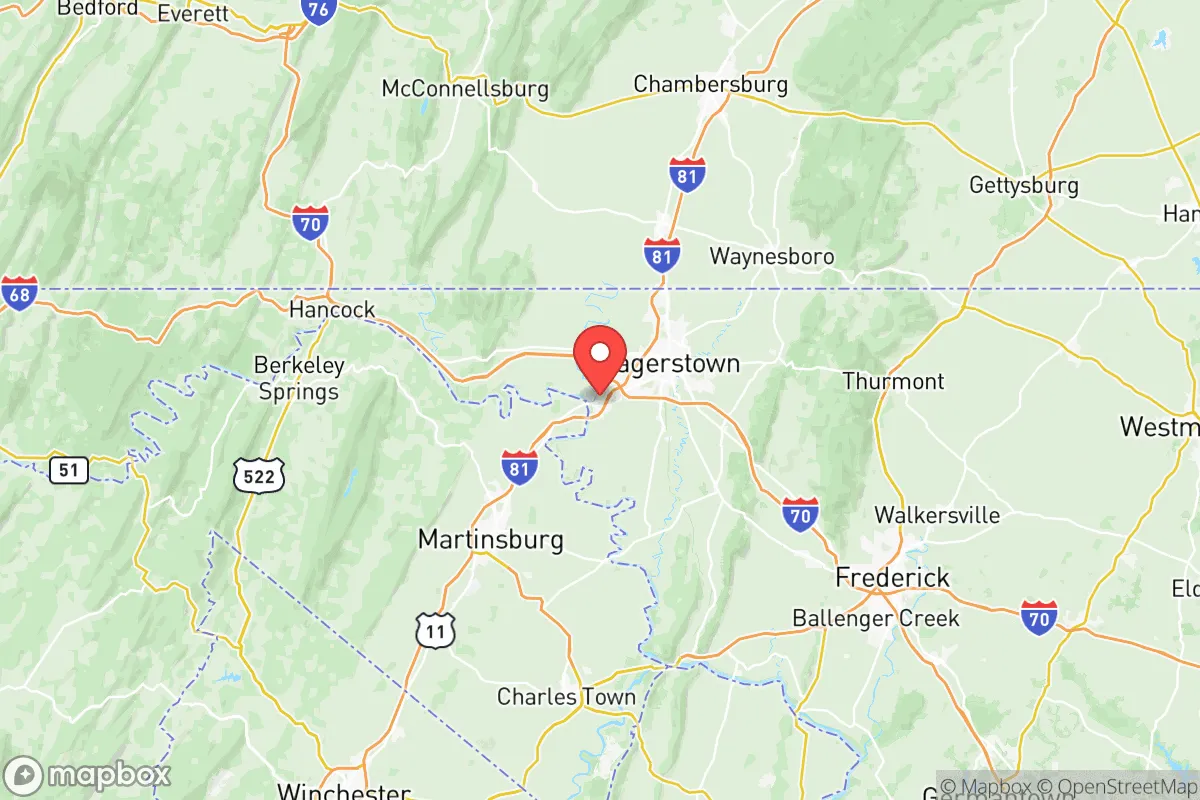
Washington County, Maryland offers a notably higher degree of personal sovereignty than much of the state, particularly the densely regulated Baltimore-Washington corridor, but it is not a libertarian free-for-all. The county’s rural character, conservative local governance, and proximity to the Pennsylvania and West Virginia borders create an environment where individual autonomy is generally respected, though residents must still contend with Maryland’s statewide tax structure and gun laws. For a relocation-minded individual or family prioritizing self-reliance, the key question is how much of the state’s regulatory framework actually constrains daily life in places like Hagerstown, Boonsboro, or Hancock versus the more permissive cultures found just across the state line.
Tax burden and regulatory posture in Washington County compared to surrounding areas
Maryland’s overall tax burden is high — ranked among the top 10 states nationally — but Washington County mitigates some of that sting with relatively moderate local rates. The county’s income tax rate is 2.8% (on top of the state’s progressive rate up to 5.75%), and the property tax rate hovers around $0.948 per $100 of assessed value, which is lower than in Montgomery or Frederick counties. The regulatory posture is mixed: the county government is generally pro-business and less inclined toward the aggressive land-use controls seen in central Maryland, but it still operates under state-level mandates on environmental review, building codes, and septic system permitting. In towns like Smithsburg and Clear Spring, the permitting process for home additions or small businesses is noticeably faster and less costly than in Hagerstown’s city limits, where zoning is denser and more prescriptive. For a family comparing tax burdens, the total effective property tax rate in Washington County is roughly 1.0% of market value, which is competitive with parts of Pennsylvania but higher than West Virginia’s Jefferson County just across the Potomac.
Self-defense and gun law specifics for Washington County residents
Maryland’s firearm laws are among the most restrictive in the nation, and Washington County residents must comply with them fully — there is no local opt-out. This means a handgun qualification license (HQL) is required to purchase a handgun, a seven-day waiting period applies to all regulated firearms, and the state maintains a ban on so-called assault weapons and magazines over 10 rounds. However, the county’s sheriff’s office, led by Sheriff Doug Mullendore, has historically taken a pro-Second Amendment stance in its administration of carry permits. Since the Bruen decision in 2022, Maryland has become a shall-issue state, and Washington County’s application process for a wear-and-carry permit is handled efficiently, with most applicants reporting approval within 60-90 days. In practice, the gun culture in Hancock and Sharpsburg is far more relaxed than in the state capital; open carry is legal (though uncommon), and private firearm sales between individuals are permitted without a background check, provided neither party is a prohibited person. For a self-defense-minded reader, the key trade-off is that while the county itself is gun-friendly, the state-level restrictions are real and enforceable — a fact that drives some residents to keep primary residences across the border in Pennsylvania or West Virginia for more permissive storage and purchase options.
Self-reliance and homesteading viability: lot sizes, zoning, and off-grid feasibility
Washington County is one of the more viable areas in Maryland for homesteading and self-reliant living, thanks to its agricultural zoning and relatively permissive land-use policies. Outside of Hagerstown’s urban growth boundary, the minimum lot size for a single-family home on septic is typically one acre, and in the county’s agricultural zones (A1 and A2), lots of 5 to 20 acres are common and affordable — land prices in Big Pool and Indian Springs run $5,000 to $12,000 per acre as of 2026, far cheaper than Frederick County. Off-grid feasibility is limited by state health department requirements: all homes must have an approved water supply and sewage disposal system, and Maryland does not permit composting toilets as a primary sanitation method. Solar panels are allowed without special permitting, but net metering is capped at 2 megawatts for residential systems, and the state’s interconnection rules are moderately burdensome. Rainwater collection for outdoor use is legal, but using it as a primary potable water source requires a permit and regular testing. In Boonsboro and Keedysville, residents commonly keep chickens, goats, and even small livestock on parcels under 5 acres, and the county’s right-to-farm ordinance protects agricultural activities from nuisance complaints — a meaningful protection for anyone serious about self-sufficiency.
Personal liberties: parental rights, medical autonomy, speech, and property
Washington County’s local governance leans conservative on several personal liberty fronts, though state law preempts many areas. Parental rights in education are relatively strong: the county school board has resisted some of the more progressive curriculum mandates seen in Montgomery or Howard counties, and parents in Williamsport and Funkstown report a responsive, accessible school administration. Medical autonomy is constrained by Maryland’s vaccine mandates for school attendance and its strict COVID-era public health orders, which were enforced more lightly in Washington County than in the Baltimore suburbs. Speech and assembly are fully protected under the First Amendment, and the county has not enacted any local ordinances restricting political signage, leafleting, or public gatherings. Property rights are generally respected, with the county’s zoning appeals board showing a pattern of approving variances for accessory dwelling units, home-based businesses, and nonconforming uses — particularly in the more rural districts around Hagerstown’s western edge. The main friction point is the state’s Critical Area Law, which imposes additional permitting requirements on any development within 1,000 feet of tidal waters or the Potomac River, affecting a narrow band of properties along the county’s southern border.
Overall, Washington County offers a meaningful degree of personal sovereignty relative to most of Maryland, but it is not a low-regulation haven on the order of West Virginia or rural Pennsylvania. The county’s tax burden is moderate by state standards but high nationally, its gun laws are state-mandated and restrictive, and its off-grid options are limited by health code requirements. Where it excels is in its cultural posture: local officials, law enforcement, and school boards generally respect individual autonomy, and the cost of land and housing makes self-reliant lifestyles financially attainable. For a family or individual who values personal freedom but needs to remain within commuting distance of the I-81 corridor or the Baltimore-Washington job market, Washington County represents a pragmatic middle ground — more sovereignty than anywhere closer to the capital, but with clear boundaries set by Annapolis.

* Values derived from national, state, county, city and local statistics and may differ in a specific area. Last updated: 2026-07-25T16:23:46.000Z
Narrative content on this page is AI-generated and may contain mistakes. Verify any details that matter before acting on them.
ReloMaps may earn a commission from affiliate links at no extra cost to you.

