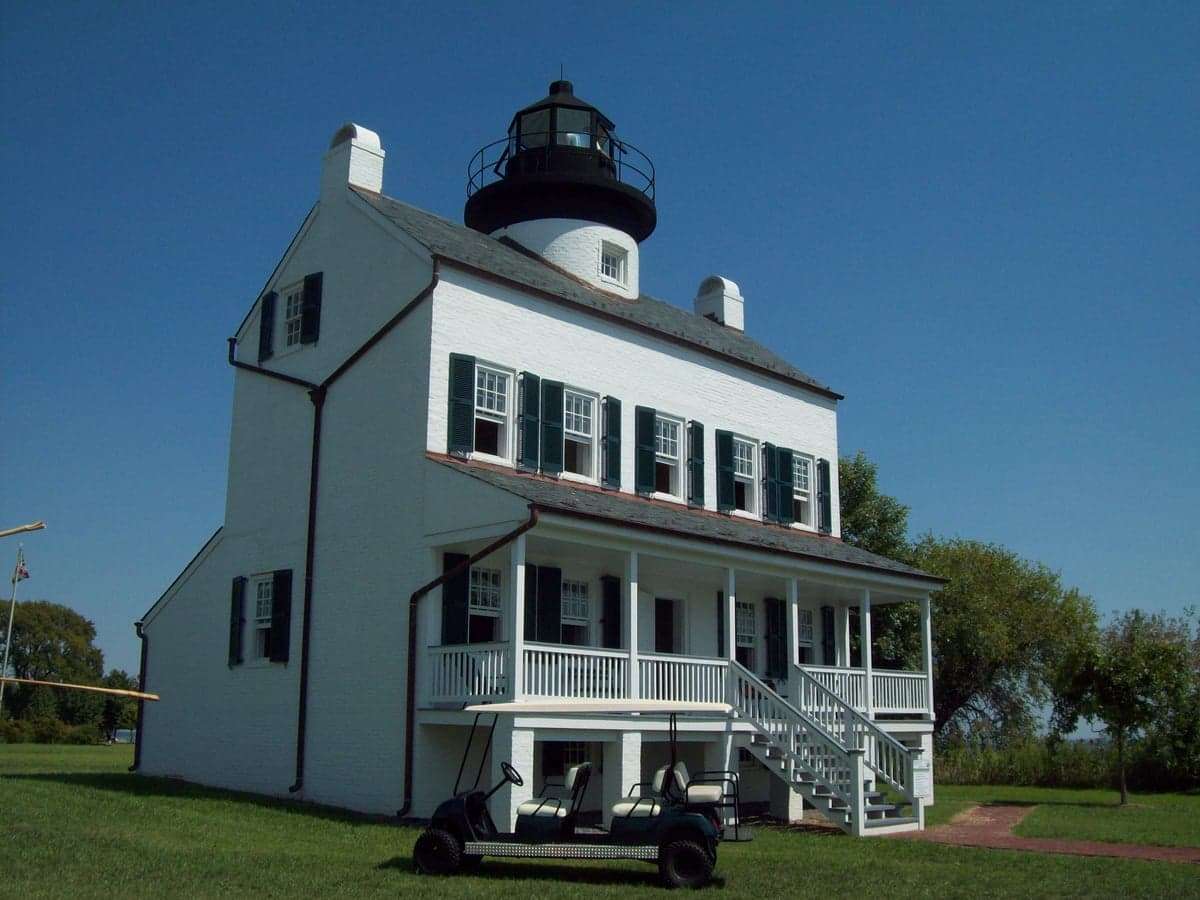
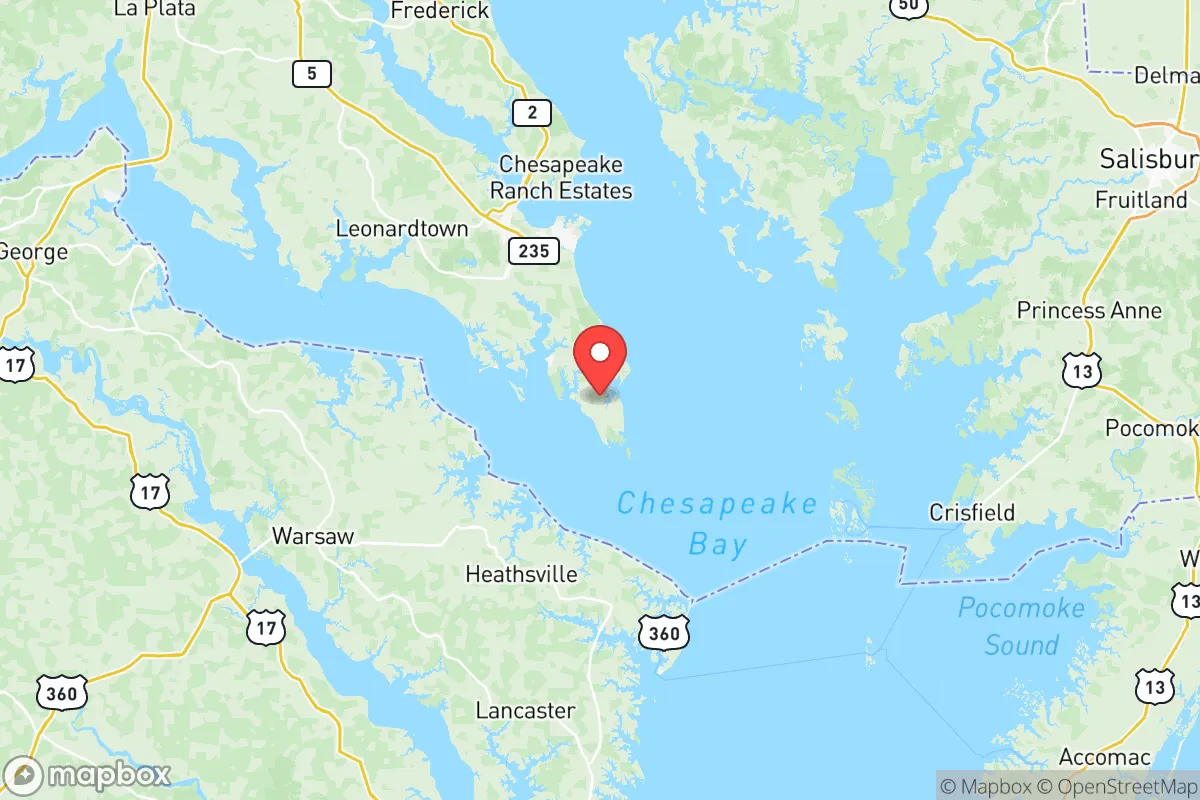
Photo: Wikipedia
Demographics of St Marys County
Affluence Level in St Marys County
A middle-class area roughly in line with national averages across income, home values, education, and employment.
People of St Marys County
St. Mary’s County, Maryland, is home to 114,372 residents who form a community rooted in deep colonial history, a strong military and defense presence, and a growing suburban character. The population is predominantly white (71.0%) with a significant Black minority (14.6%), a small but growing Hispanic community (5.9%), and a modest East/Southeast Asian population (2.2%). The county’s identity is shaped by its role as the birthplace of Maryland, its rural Chesapeake Bay heritage, and the modern economic engine of Naval Air Station Patuxent River, which draws a steady stream of professionals and military families.
Settlement & growth (pre-1960)
Long before European arrival, the region was home to the Yaocomico people, an Algonquian-speaking tribe who lived in palisaded villages along the Potomac River and St. Mary’s River. Their primary settlement was near what is now St. Mary’s City, the site where English colonists would later establish Maryland’s first capital. The Yaocomico were decimated by disease and displacement after contact, but their legacy endures in place names and archaeological sites throughout the county.
The first permanent English settlement in Maryland was established in 1634 at St. Mary’s City, when roughly 140 colonists aboard the Ark and the Dove landed under the leadership of Leonard Calvert. These early settlers were a mix of English Catholics seeking religious freedom and Protestant indentured servants. They established tobacco plantations along the St. Mary’s River and the Potomac shoreline, with early settlements spreading to Leonardtown (founded 1660) and Chaptico. The county’s population remained overwhelmingly English and rural through the colonial period, with a growing enslaved African population working the tobacco fields.
After the American Revolution, St. Mary’s County’s economy stagnated as tobacco exhausted the soil. The county’s population actually declined through much of the 19th century as families moved west. The enslaved population remained substantial until Emancipation, after which many freed Black families remained in the county, forming communities like the ones in Ridge and Valley Lee. A small number of German and Irish immigrants arrived in the late 1800s to work on railroad construction and in the oyster industry, but the county remained overwhelmingly native-born and rural through World War II.
The single most transformative event in St. Mary’s County’s modern history was the 1942 establishment of Naval Air Station Patuxent River in Lexington Park. The base brought thousands of military personnel, civilian engineers, and support workers from across the country. This influx doubled the county’s population between 1940 and 1960 and created the suburban corridor of Lexington Park, California, and Great Mills. The base’s arrival also began the county’s shift from a tobacco-and-seafood economy to one centered on defense and aerospace.
Modern era (post-1965)
The 1965 Hart-Cellar Act had a relatively muted effect on St. Mary’s County compared to urban areas, because the county’s economy is driven by a single federal installation rather than by diverse urban industries. The foreign-born population remains very low at just 1.8%, far below the national average. The small immigrant communities that do exist are concentrated in Lexington Park and California, where defense contractors have recruited engineers and scientists from East and Southeast Asian countries, particularly the Philippines and Vietnam. These East/Southeast Asian residents (2.2% of the population) are primarily professionals working at Pax River or at the Patuxent River Naval Air Museum and related facilities.
The Indian subcontinent population is even smaller at 0.4%, consisting mostly of IT and engineering professionals employed by defense contractors. They tend to live in the newer subdivisions around California and Lexington Park rather than forming a distinct ethnic enclave. The Hispanic population, at 5.9%, has grown steadily since 2000, driven by both domestic migration from other states and a smaller number of immigrants from Central America. Hispanic residents are dispersed across the county but have a visible presence in the construction, landscaping, and service industries that support the Pax River economy.
Domestic migration has reshaped the county more than immigration. Since the 1980s, St. Mary’s County has attracted a steady flow of military retirees, federal employees, and defense contractors from higher-cost areas of the Washington, D.C. metro region. These newcomers tend to settle in the newer subdivisions of California, Mechanicsville, and Charlotte Hall, pushing the county’s suburban footprint northward. The Black population (14.6%) remains concentrated in the historic communities of Lexington Park, Great Mills, and the rural southern end of the county around Ridge and Valley Lee, though there has been some movement into newer suburban developments.
The county’s college-educated share is 35.1%, reflecting the high proportion of professionals working at Pax River and related defense industries. This is above the national average but below the Washington, D.C. suburbs closer to the capital. The county’s political character has shifted from reliably Democratic to a competitive lean-Republican posture, driven by the influx of military and defense-oriented voters.
The future
St. Mary’s County is projected to continue growing slowly, driven primarily by domestic migration rather than international immigration. The population is likely to become slightly more diverse, with the Hispanic and East/Southeast Asian shares increasing gradually as defense contractors recruit from a national talent pool. However, the foreign-born share will likely remain well below the national average, as the county lacks the ethnic enclaves and urban job diversity that attract large immigrant populations.
The most significant demographic trend is the continued suburbanization of the northern half of the county, particularly around Mechanicsville, Charlotte Hall, and the Hughesville area. These communities are absorbing spillover from the Washington, D.C. exurbs, drawing families who want lower housing costs and a more rural feel while still commuting to Pax River or teleworking for federal agencies. The southern end of the county, including St. Mary’s City and Ridge, will likely remain more rural and less dense, preserving the county’s historic character.
The county’s cultural identity is evolving from a sleepy Chesapeake Bay backwater into a defense-oriented suburban community with strong military traditions. The historic Catholic and tobacco-farming roots are fading, replaced by a more transient population of military and federal families who stay for a few years before moving to their next assignment. This creates a community that is welcoming to newcomers but less rooted in local history than in decades past.
For someone moving to St. Mary’s County today, the area offers a stable, family-oriented environment with good schools, low crime, and a strong tax base supported by the federal government. The trade-off is a limited cultural and dining scene, a very low foreign-born population, and a social life that revolves heavily around the military base and its calendar. It is a place where newcomers can integrate quickly if they work at Pax River, but may find it harder to connect if they do not. The county is becoming more suburban and more politically conservative, but it retains enough rural character and Chesapeake Bay heritage to feel distinct from the generic exurbs farther north.

* Values derived from national, state, county, city and local statistics and may differ in a specific area. Last updated: 2026-11-18T22:13:56.000Z
Narrative content on this page is AI-generated and may contain mistakes. Verify any details that matter before acting on them.
ReloMaps may earn a commission from affiliate links at no extra cost to you.

