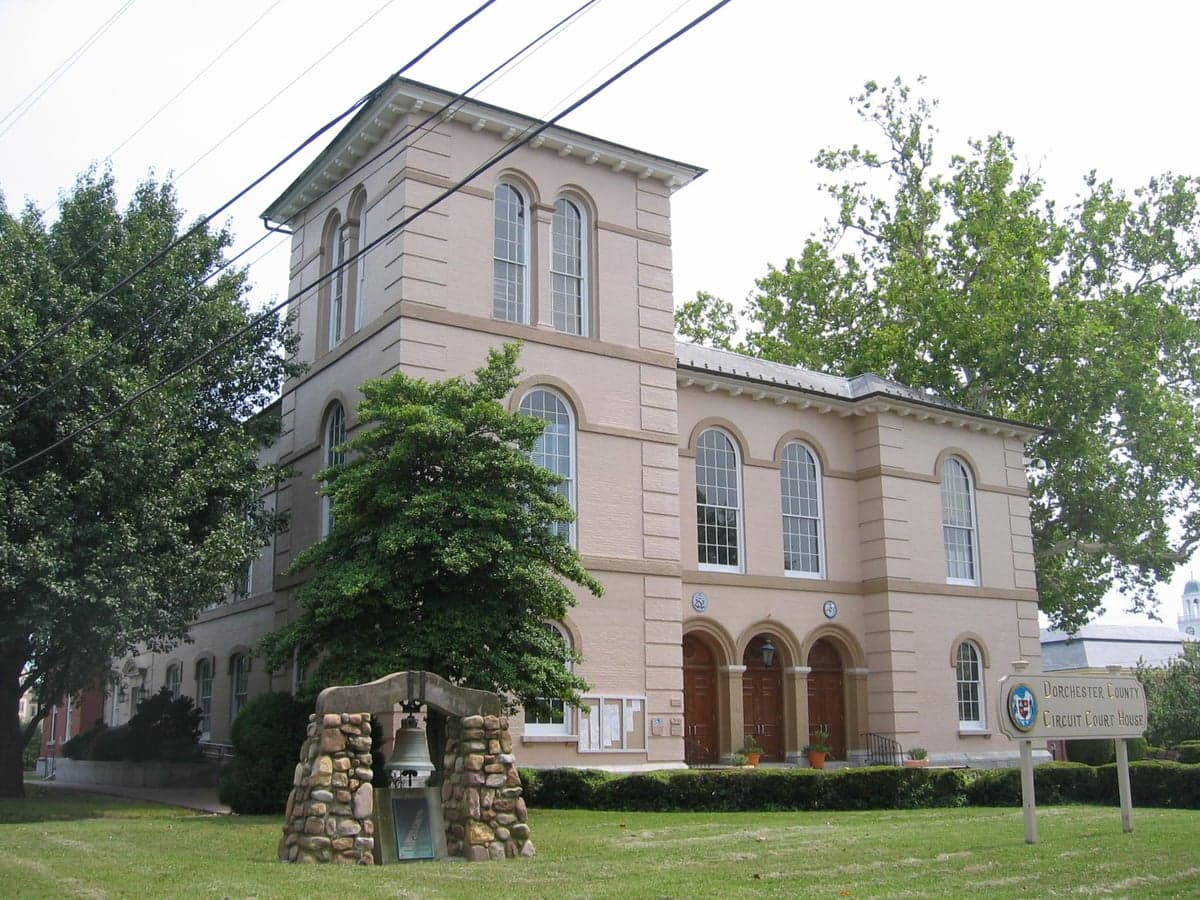
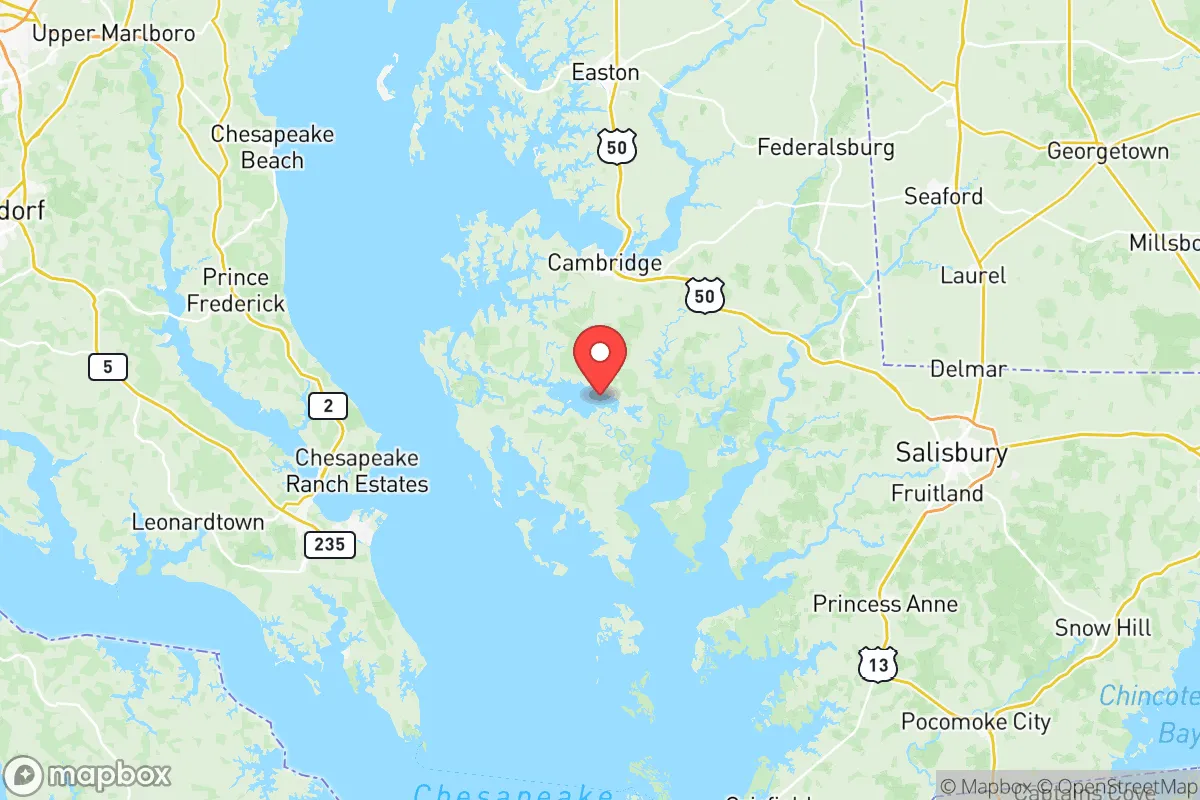
Photo: Wikipedia
Personal Sovereignty in Dorchester County
Viable for self-reliance. Generally workable, though some barriers may limit total independence.
What does Personal Sovereignty tell us?
Personal Sovereignty measures your capacity for self-reliance and independence with minimal government friction. Higher scores mean fewer barriers between you and the way you want to live... but it assumes you have the space you need and good neighbors.
What does this tell us?
Personal Sovereignty measures your capacity for self-reliance and independence with minimal government friction. Higher scores mean fewer barriers between you and the way you want to live... but it assumes you have the space you need and good neighbors.
State Policy
Energy independence: Importer (8% of energy produced in-state)
Personal Liberty
Homesteading

Personal Liberty Analysis
Dorchester County, Maryland, offers a notably higher degree of personal sovereignty than much of the state, particularly the Washington-Baltimore corridor, due to its rural character, lower population density, and a local culture that leans toward self-reliance. While Maryland as a whole imposes significant state-level restrictions on firearms and has a progressive tax structure, Dorchester County’s local governance is comparatively light-touch, and its geography—spanning the Eastern Shore with access to the Chesapeake Bay—provides tangible opportunities for independent living. For a relocation-minded individual or family prioritizing autonomy, the trade-off is clear: you accept Maryland’s state-level constraints in exchange for a county where daily life is less regulated, neighbors are more likely to respect your privacy, and the land itself supports a degree of self-sufficiency that is increasingly rare in the mid-Atlantic.
Tax burden and regulatory posture in Dorchester County
Maryland’s tax burden is among the highest in the nation, and Dorchester County residents are not exempt from state income tax rates that range from 2% to 5.75%, nor from the state’s 6% sales tax. However, the county’s local property tax rate is a competitive $0.89 per $100 of assessed value (as of 2025), which is lower than many neighboring Eastern Shore counties like Talbot ($0.98) and Wicomico ($1.04). The county also offers a Homestead Tax Credit that caps annual assessment increases for owner-occupied primary residences, providing predictability for long-term homeowners. Regulatory posture is distinctly rural: zoning in the unincorporated areas—which make up the vast majority of the county—is minimal. Towns like Cambridge, the county seat, have more structured zoning and building codes, but outside town limits, in areas like Church Creek or Wingate, property owners face far fewer hurdles for agricultural structures, sheds, or home-based businesses. The county’s planning department is small and responsive, and permit fees for basic improvements like decks or fences are generally under $100. For a reader accustomed to suburban or urban Maryland, the regulatory atmosphere here feels noticeably freer, though it is not a deregulated free-for-all—state environmental laws, particularly around Chesapeake Bay critical areas and wetlands, impose real constraints on waterfront property development.
Self-defense and gun law specifics in Dorchester County
Maryland’s state-level gun laws are restrictive, and Dorchester County operates within that framework. The state requires a Handgun Qualification License (HQL) to purchase a handgun, a seven-day waiting period for all firearm purchases, and a permit (the Wear and Carry Permit) to carry a concealed handgun. However, Dorchester County’s sheriff’s office, under Sheriff James Phillips, has historically been shall-issue in practice for wear-and-carry permits, meaning that applicants who meet the state’s training and background requirements—including the mandated 16-hour training course—are approved without additional local hurdles. This contrasts sharply with more restrictive counties like Montgomery or Prince George’s, where sheriffs have been known to delay or deny permits even after the 2022 Bruen decision. Open carry is legal in unincorporated areas of the county, though it is uncommon and may draw attention in towns like Cambridge or Hurlock. The county has no local gun registration or additional magazine capacity restrictions beyond state law (which bans magazines over 10 rounds). For self-defense-minded residents, the practical reality is that you can legally own and carry firearms, but you must navigate a state-level bureaucracy that includes fingerprinting, background checks, and a $50 HQL fee. Gun culture is present but not overt: you will see "Gun Free Zone" signs on schools and some businesses, but the local sporting goods stores and gun shops in Cambridge and Vienna are well-stocked and staffed by knowledgeable, friendly people who treat firearm ownership as a normal part of rural life.
Self-reliance and homesteading viability in Dorchester County
Dorchester County is one of the most viable places in Maryland for homesteading and off-grid living, thanks to its large minimum lot sizes in agricultural zones (typically 20 acres for subdivision, but existing parcels of 1-5 acres are common) and a permissive zoning code for accessory structures. In unincorporated areas, you can keep chickens, goats, and even a few head of cattle on parcels as small as 2 acres without a special permit. Towns like Secretary and East New Market have more relaxed animal ordinances than Cambridge, where roosters are prohibited and livestock is limited. Off-grid feasibility is real but requires planning: the county does not mandate connection to municipal water or sewer in rural zones, so wells and septic systems are standard. Solar panels are permitted by right, and the county’s net metering policy (following state guidelines) allows you to sell excess power back to the grid. However, full off-grid living (no utility connection at all) is technically allowed on parcels of 5+ acres, provided you meet state health department standards for water and waste. The county’s agricultural extension office offers free soil testing and workshops on small-scale farming, and the local farmers’ market in Cambridge is a viable outlet for selling produce. For a family seeking to grow their own food, raise animals, and reduce reliance on external systems, Dorchester County offers a realistic path that is nearly impossible in Maryland’s suburban counties. The trade-off is that the county has limited broadband internet—Starlink is the go-to solution for many—and the nearest major hardware store (Home Depot) is 30 minutes away in Easton.
Personal liberties in Dorchester County: parental rights, medical autonomy, speech, and property
Dorchester County’s local culture strongly supports parental rights in education. The county’s school board, elected in nonpartisan elections, has resisted state-level mandates on curriculum transparency and health education, and parents have significant input through local school improvement teams. Homeschooling is straightforward: you file a one-page notice with the local superintendent’s office, and the county does not require portfolio reviews or standardized testing beyond what state law mandates (which is minimal—an annual assessment of your choice). Medical autonomy is more constrained by state law: Maryland has broad vaccine mandates for school attendance (though philosophical exemptions exist for K-12, and medical exemptions are available), and the state’s telehealth laws are permissive. Dorchester County has no local health department restrictions beyond state requirements. Free speech is robust; the county has no local hate speech ordinances or permit requirements for public gatherings outside of town limits. Property rights are strong: the county’s zoning code explicitly states that “no permit shall be required for the use of property in a manner that is consistent with the agricultural, residential, or commercial character of the zone”—a clause that gives landowners wide latitude. In practice, this means you can build a fence, install a shed, or start a small repair business on your property without county approval, as long as you are not in a town’s municipal limits. The county’s planning and zoning office is known for answering questions by phone quickly and issuing verbal approvals for minor projects, which is a stark contrast to the multi-month review processes common in central Maryland.
Overall, Dorchester County offers a meaningfully higher degree of personal sovereignty than any county in the Washington-Baltimore metro area, and it compares favorably to other Eastern Shore counties like Talbot (more restrictive on short-term rentals and building) or Wicomico (more urbanized and higher taxes). The state-level constraints—particularly on firearms and income taxes—are real and cannot be ignored, but within that framework, the county’s local governance is among the most hands-off in Maryland. For a conservative-leaning individual or family who values self-reliance, the ability to own land, raise food, carry a firearm, and educate children without excessive interference, Dorchester County is a strong candidate. It is not a libertarian enclave—you will still pay state taxes and follow state gun laws—but it is a place where the default answer from local government is “yes, unless there is a clear reason not to,” which is a rare and valuable quality in the mid-Atlantic region.

* Values derived from national, state, county, city and local statistics and may differ in a specific area. Last updated: 2026-06-17T23:08:26.000Z
Narrative content on this page is AI-generated and may contain mistakes. Verify any details that matter before acting on them.
ReloMaps may earn a commission from affiliate links at no extra cost to you.

