Photo: Wikipedia
Demographics of Dorchester County
Affluence Level in Dorchester County
A middle-class area roughly in line with national averages across income, home values, education, and employment.
People of Dorchester County
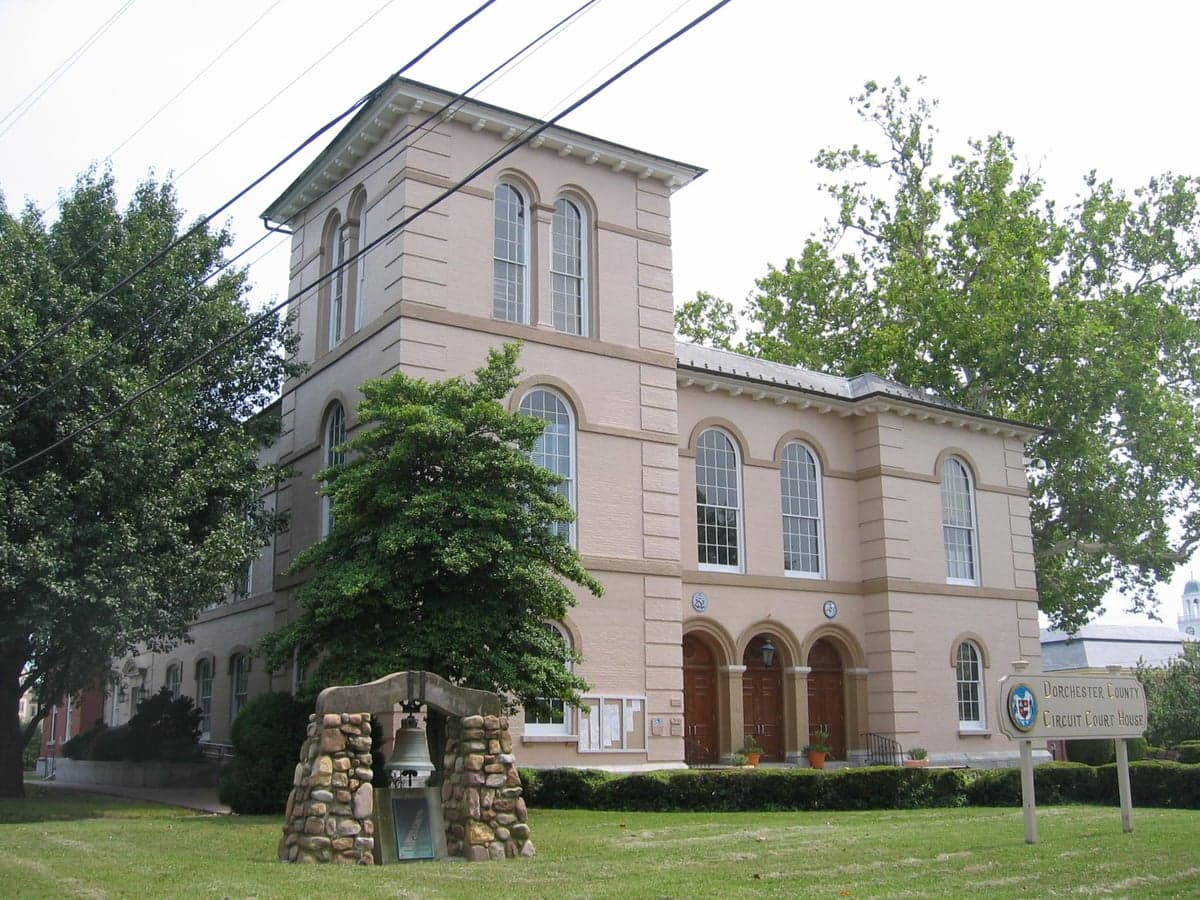
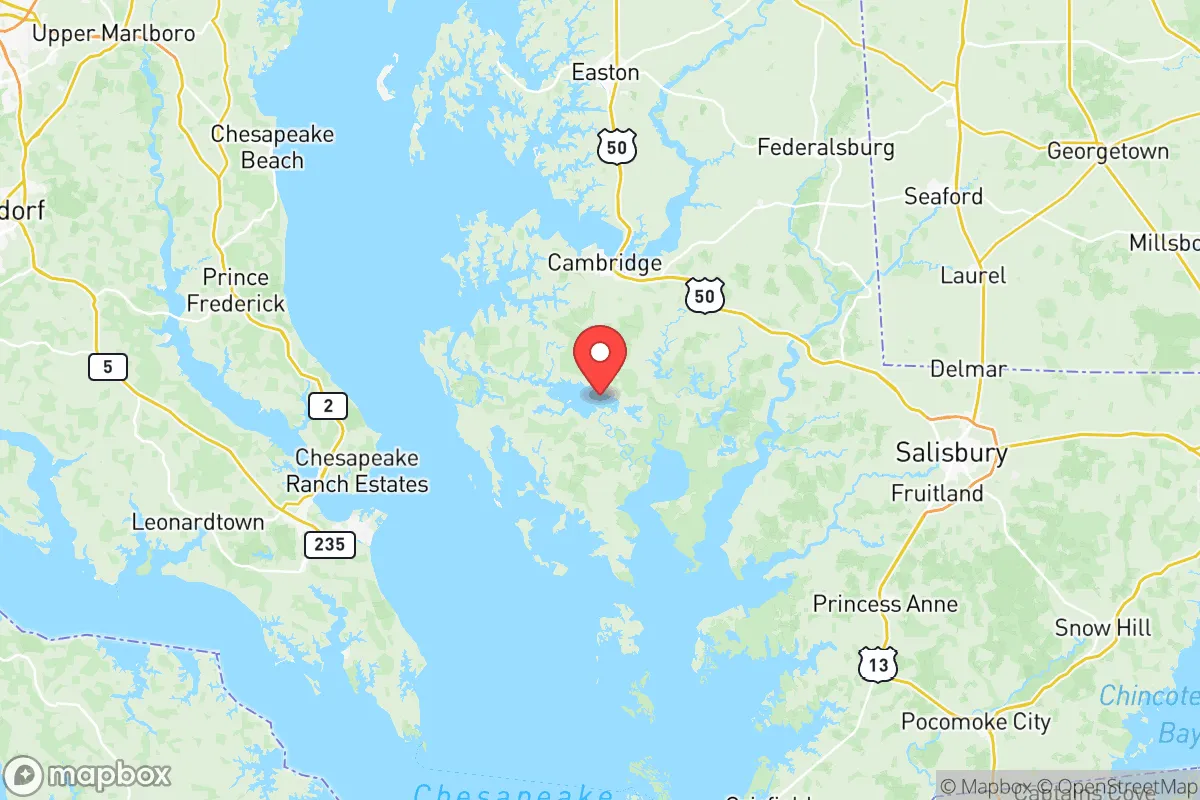
Dorchester County, Maryland, is home to 32,612 residents, a population that is 61.0% White, 25.3% Black, and 5.9% Hispanic, with a very small foreign-born share of just 2.0%. The county’s character is defined by its Chesapeake Bay shoreline, historic towns like Cambridge and Vienna, and a deeply rooted African American heritage alongside a long-standing white rural population. With only 18.8% of adults holding a college degree, the county retains a working-class, agricultural, and seafood-based economy that sets it apart from Maryland’s more affluent and suburbanized regions. Its people are notably insular, with a strong sense of local identity tied to the water and the land.
Settlement & growth (pre-1960)
The earliest inhabitants of Dorchester County were Algonquian-speaking Native American tribes, including the Nanticoke and Choptank peoples, who lived along the rivers and bays for thousands of years before European contact. By the early 1600s, English colonists began arriving, and the area was formally settled in 1669 when the colonial assembly created Dorchester County. The first permanent English settlements clustered around the port town of Cambridge, founded in 1684, and the smaller riverfront communities of Vienna and Secretary. These settlers were primarily Anglican English farmers and planters who established tobacco plantations worked by enslaved Africans, a system that defined the county’s economy and social structure for the next two centuries.
By the mid-1700s, the enslaved Black population in Dorchester County had grown substantially, forming the backbone of the tobacco and later wheat economies. After the American Revolution, the county saw a gradual influx of free Black families, many of whom settled in rural enclaves like Church Creek and Woolford. The 19th century brought a wave of Irish immigrants who worked on the construction of the Dorchester County Canal and later the railroad lines connecting Cambridge to the Eastern Shore Railway. Small numbers of German farmers also arrived, settling in the northern part of the county near Hurlock and East New Market, where they established grain and livestock operations.
The post-Civil War period saw the emancipation of Dorchester County’s large enslaved population, which numbered over 4,000 by 1860. Freedmen and their descendants formed independent communities such as Bucktown and Preston, where they built churches, schools, and small farms. The early 20th century brought a modest wave of Italian and Polish immigrants who found work in the seafood industry, particularly oyster shucking and crab picking, in Cambridge and the fishing village of Taylors Island. However, Dorchester County never experienced the heavy industrial immigration seen in Baltimore or the Midwest; its population remained overwhelmingly native-born Black and white, with a small but stable white ethnic minority.
Modern era (post-1965)
The 1965 Hart-Cellar Act had a minimal direct impact on Dorchester County, as the foreign-born population today is only 2.0%, far below the national average. Unlike many parts of Maryland, the county did not attract significant post-1965 immigration from Asia, Latin America, or the Middle East. The small Hispanic population of 5.9% is largely composed of Mexican and Central American workers who arrived in the 1990s and 2000s, drawn by seasonal agricultural labor in the county’s vegetable and grain fields, particularly around Hurlock and Federalsburg. These workers are often transient, with many returning to home countries or moving to larger cities after harvest seasons.
The most significant demographic shift since 1965 has been domestic: the outmigration of younger, educated residents to Baltimore, Washington, D.C., and the suburban counties of Anne Arundel and Howard. This “brain drain” has left Dorchester County with an older, less educated population—only 18.8% of adults hold a bachelor’s degree or higher. At the same time, the county has seen a modest influx of white retirees and second-home buyers from the Mid-Atlantic region, attracted by waterfront properties in Cambridge and along the Choptank River. The Black population, which was historically concentrated in Cambridge and rural communities like Bucktown and Church Creek, has remained stable in numbers but has aged, with younger Black residents also leaving for urban opportunities.
Suburbanization has been limited. Dorchester County remains predominantly rural, with no major suburban developments. The town of Cambridge has seen some revitalization efforts, including the restoration of its historic downtown and the development of the Hyatt Regency Chesapeake Bay resort, which has attracted a small number of new residents and seasonal workers. However, the county’s population has been essentially flat since 2010, growing by less than 1% per year, as the loss of young adults offsets any gains from retirees or immigrant labor.
The future
Dorchester County’s population is projected to remain stable or decline slightly over the next 10-20 years, as the aging white and Black populations continue to shrink and the small Hispanic community grows only modestly. The county is not becoming more diverse in a meaningful way; the Hispanic share may rise to 7-8% by 2040, but the foreign-born share will likely stay below 3%. The East/Southeast Asian population of 1.2% and the Indian subcontinent population of 0.1% are negligible and not expected to grow significantly, as there are no major employers or ethnic enclaves to attract these groups.
The cultural identity of Dorchester County is likely to remain rooted in its Chesapeake Bay heritage, with a strong emphasis on seafood, hunting, and farming. The county’s political leanings are conservative, and the population is resistant to rapid change. New residents are most likely to be white retirees or remote workers from the Washington-Baltimore corridor, settling in waterfront areas like Cambridge and Taylors Island. These newcomers may bring some economic diversification but are unlikely to alter the county’s demographic fundamentals. The Black population, which has deep historical roots, will continue to be a significant but aging presence, concentrated in Cambridge and the historic rural communities.
For someone moving in now, Dorchester County offers a quiet, rural lifestyle with strong community ties and low cost of living, but it is not a place of rapid growth or demographic dynamism. The population is stable, insular, and predominantly native-born, with limited exposure to the diversity seen in other parts of Maryland. The county’s future is one of slow, gradual aging rather than transformation, making it best suited for those seeking a traditional, water-oriented life rather than career opportunities or cultural variety.

* Values derived from national, state, county, city and local statistics and may differ in a specific area. Last updated: 2026-06-17T23:08:26.000Z
Narrative content on this page is AI-generated and may contain mistakes. Verify any details that matter before acting on them.
ReloMaps may earn a commission from affiliate links at no extra cost to you.

