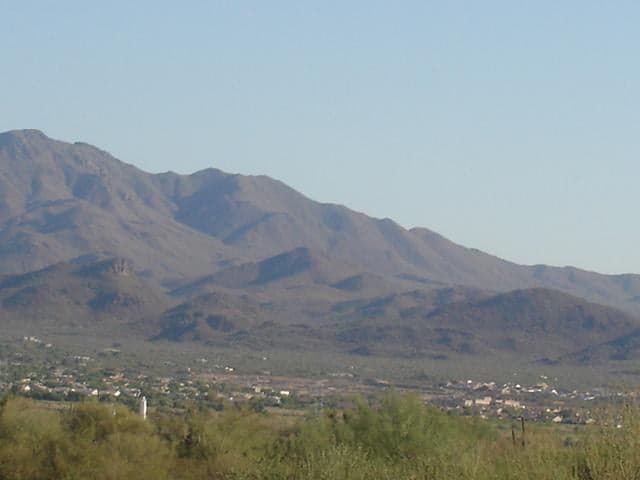
Photo: Wikipedia
Quality of Life in Marana, AZ
Above-average quality of iife. The area offers a reasonable cost of living, decent mobility, and a mix of neighborhood amenities.
What does Quality of Life tell us?
Quality of Life blends cost of living, nearby amenities, socioeconomic signals, and neighborhood character. City-level scores represent the whole municipality; individual neighborhoods can differ.
What does this tell us?
Quality of Life blends cost of living, nearby amenities, socioeconomic signals, and neighborhood character. City-level scores represent the whole municipality; individual neighborhoods can differ.
Cost of Living
42% above national average
The Real Cost of Living in Marana, AZ for 2026
| Tier | Individual | Family (4) |
|---|---|---|
| Survival | $27k | $51k |
| Comfortable | $74k | $109k |
| Luxury | $161k+ | $250k+ |
| Elite (Top 5%) | $190k+ | $294k+ |
100%
The Area Signal
A metric tracking the socioeconomic signals of the area.
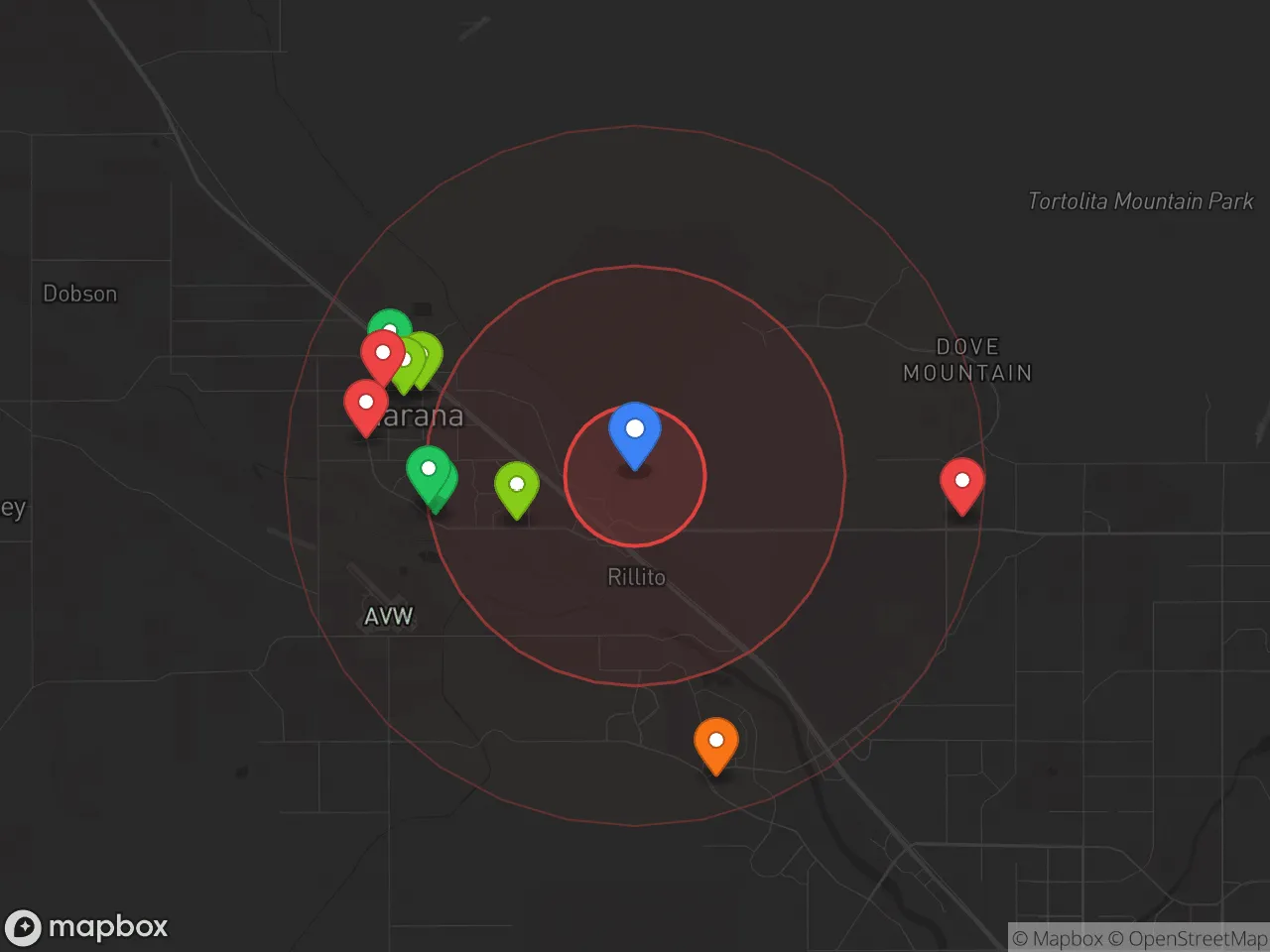
Hobbies
Explore the areaGroceries
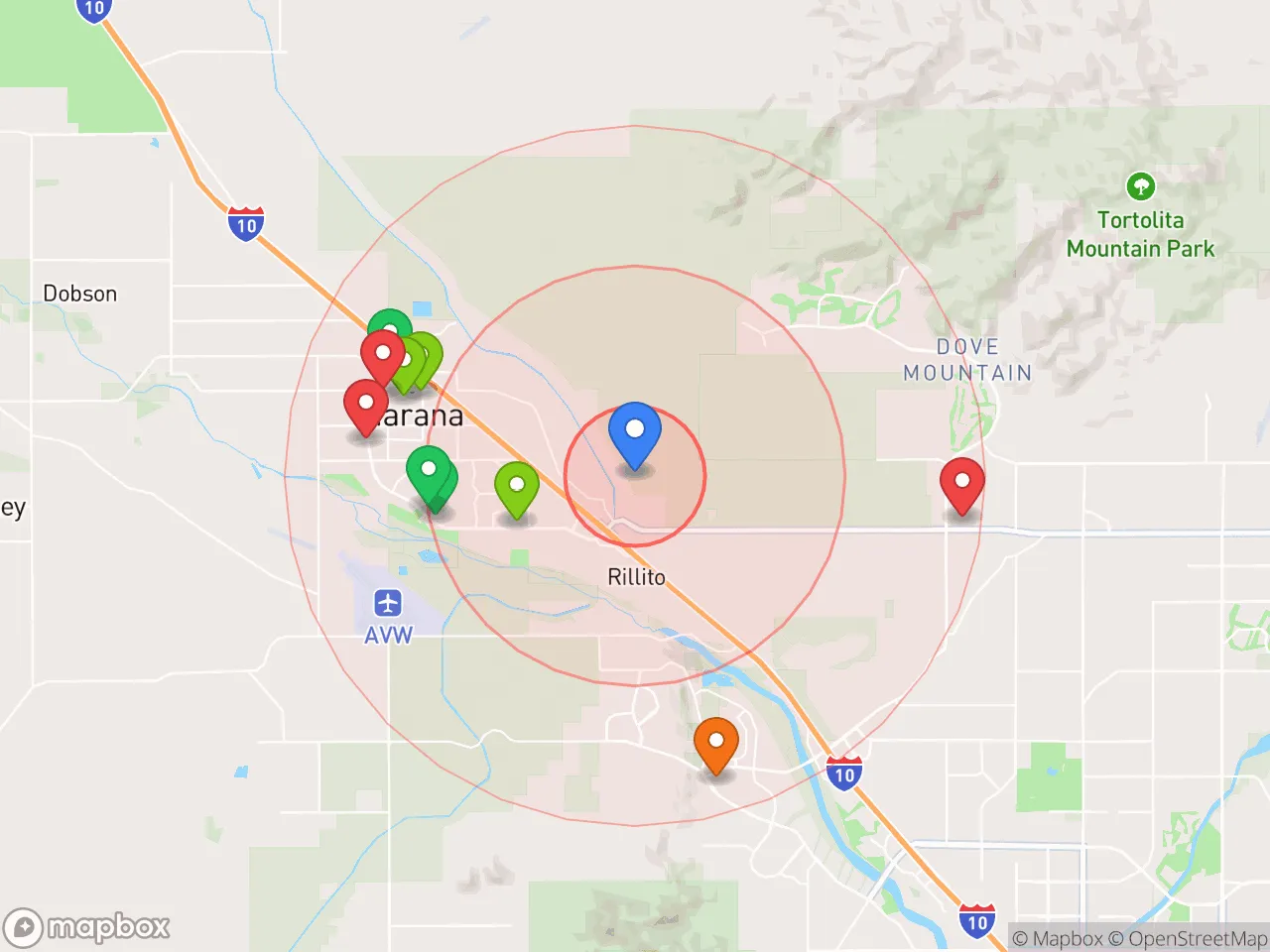
4 within 10 miles
Gas
20 within 10 miles
Hospital
10 within 20 miles
Airport
SAN — San Carlos Apache
Post Office
USPS — Cortaro, AZ
Critical Amenities
Quality-of-Life Analysis
Marana, Arizona, presents a quality-of-life profile defined by upper-middle-class affluence, master-planned communities, and a demographic skew toward families and retirees seeking space and newer housing. With a cost-of-living index of 142 (42% above the national average), the town attracts professionals and empty-nesters who prioritize modern amenities, low crime, and proximity to Tucson’s job market over urban density or bargain pricing. The typical resident is a homeowner in a planned subdivision, commuting into Tucson or working locally in healthcare, logistics, or retail.
Cost of living, housing, and how Marana compares to Tucson and Oro Valley
Marana’s housing market is the primary driver of its above-average cost of living. The median home value sits at $380,100, significantly higher than the Tucson metro median of roughly $310,000, though slightly below Oro Valley’s $420,000 range. Median rent is $1,702, which is about $200 more than the Tucson average but comparable to other northwest-side suburbs. For buyers, this means a 20% down payment on a median-priced home requires roughly $76,000, and monthly mortgage payments (at 2026 rates) land near $2,400—well above the national typical payment. Property taxes in Pima County are moderate, averaging about 0.7% of assessed value, which helps offset some of the housing premium. Renters face a tight market: vacancy rates in Marana hover around 4%, and newer apartment complexes near the I-10 corridor command premiums for walkability to retail. Compared to Phoenix suburbs like Surprise or Goodyear, Marana is roughly 5-10% cheaper on housing, but it lacks the same volume of entry-level inventory. The average commute of 28.2 minutes reflects the town’s role as a bedroom community—most workers drive south into Tucson or east to Davis-Monthan Air Force Base, with I-10 and Cortaro Road serving as the main arteries.
What daily life is like: amenities, schools, and local rhythm
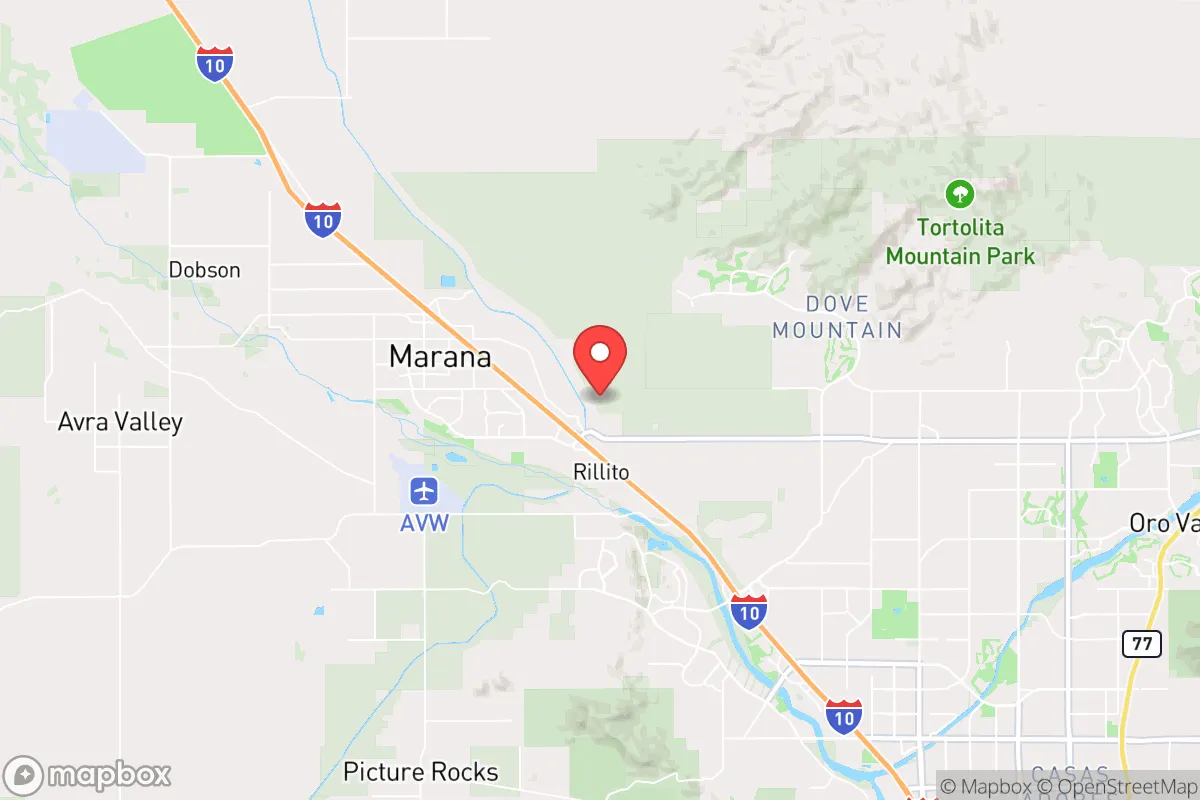
Daily life in Marana revolves around its master-planned communities—Dove Mountain, Continental Reserve, and Gladden Farms—each offering neighborhood pools, parks, and HOA-maintained landscaping. The town’s retail spine is the intersection of Cortaro Road and I-10, anchored by a Walmart Supercenter, a Fry’s Marketplace, and a growing collection of chain restaurants and medical offices. For outdoor recreation, the Marana Heritage River Park along the Santa Cruz River provides walking trails and a dog park, while the nearby Tortolita Mountains offer hiking on the Wild Burro Trail. Schools are a major draw: the Marana Unified School District consistently ranks above Pima County averages, with Marana High School earning a 7/10 on GreatSchools and Dove Mountain CSTEM K-8 scoring a 9/10 for its STEM focus. Private options include the Montessori School of Marana. The cultural rhythm is quiet and car-dependent—there is no downtown core, and most entertainment (dining, movies, concerts) requires a 15-20 minute drive into Tucson’s northwest side. The town hosts seasonal events like the Marana Pumpkin Patch and the Holiday Light Parade, but nightlife is minimal. Healthcare access is solid: Northwest Medical Center in Oro Valley is 10 minutes away, and Banner–University Medical Center Tucson is a 25-minute drive.
Marana is best suited for families and mid-career professionals who value new housing, good schools, and a low-crime environment over urban walkability or cultural density. Retirees who prefer a quieter, car-oriented lifestyle with golf courses and mountain views also fit well here. Singles or young renters on a tight budget may find the cost-to-amenity ratio less favorable, as the town offers few rental options under $1,400 and limited social infrastructure. For those who can absorb the housing premium, Marana delivers a predictable, safe, and amenity-rich suburban experience with solid access to Tucson’s employment base.

Crime in Marana, AZ
Lower crime rates than 88% of comparable U.S. locations.
Violent CrimeViolent Crime Analysis
Property CrimeProperty Crime Analysis
Crime Analysis
Marana, Arizona, presents a mixed safety profile that requires careful examination. While the town’s violent crime rate of 59.9 per 100,000 residents is notably low, its property crime rate of 1,284.3 per 100,000 is a significant concern, particularly given its location within the broader Tucson metropolitan area. The influence of progressive criminal justice policies in Pima County, including the office of the Pima County Attorney, has raised questions about recidivism and the effective prosecution of property and drug-related offenses, directly impacting public safety in suburban communities like Marana.
Crime in context
Marana’s violent crime rate is roughly one-third the national average and significantly lower than the Arizona state average, making it one of the safer large towns in Southern Arizona for violent offenses. However, its property crime rate is approximately 30% higher than the national average and on par with the state rate. This disparity is common in communities adjacent to larger metro areas, where property criminals can easily move between jurisdictions. The Pima County justice system, which has adopted several progressive reforms—including diversion programs and reduced sentencing guidelines for non-violent property crimes—has been criticized by law enforcement for creating a “catch-and-release” cycle that emboldens repeat offenders. This directly contributes to the elevated property crime numbers that Marana residents face.
What residents experience
For Marana residents, the daily reality is a low risk of violent confrontation but a tangible threat to personal property. Vehicle break-ins, package theft, and residential burglaries are the most commonly reported incidents, particularly in neighborhoods near Interstate 10 and the Tucson city limits. The town’s own police department is proactive, but it operates within a county-wide legal environment where progressive district attorneys often prioritize rehabilitation over incarceration. This means that even when suspects are arrested, they may be released quickly on reduced bail or into pretrial diversion programs, increasing the likelihood of repeat victimization for residents. The practical effect is that residents must invest in home security systems, neighborhood watch programs, and comprehensive insurance coverage as a routine part of life.
Neighborhood-level variation
Safety in Marana is not uniform. Master-planned communities like Dove Mountain and Glenn Heights report significantly lower crime rates, benefiting from private security patrols and limited access points. In contrast, areas along the I-10 corridor, particularly near the Marana Main Street and the commercial zones around Cortaro Road, see higher concentrations of property crime. Older subdivisions closer to the Tucson border also experience more incidents, as they are more accessible to transient offenders. Prospective residents should prioritize homes in gated or HOA-managed communities and verify local crime maps, as the town’s overall property crime rate masks substantial risk in certain pockets. The progressive judicial philosophy in Pima County makes this neighborhood-level diligence not just advisable, but essential for personal safety.
* Values derived from national, state, county, city and local statistics and may differ in a specific area. Last updated: 2026-05-01T09:49:50.000Z
Narrative content on this page is AI-generated and may contain mistakes. Verify any details that matter before acting on them.
ReloMaps may earn a commission from affiliate links at no extra cost to you.

