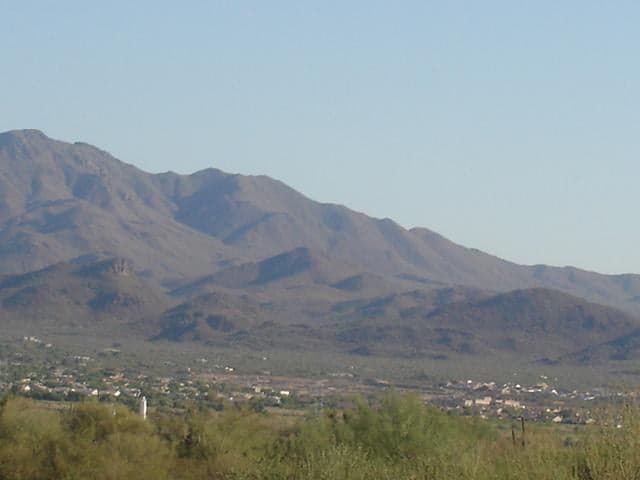
Photo: Wikipedia
Strategic Assessment of Marana, AZ
Meaningful friction. Expect exposure to either population pressure, blast zones, or natural disaster risk. Consider buying a retreat property.
What does the Strategic Assessment tell us?
Our Strategic Assessment grades tactical survivability of an area. Major population centers, military targets, fallout zones, natural disasters, and border exposure all drive risk — lower exposure means a more defensible position in a crisis.
This is heavily inspired by Joel Skousen's Strategic Relocation book. Highly recommended you checkout the book ($)What does this tell us?
Our Strategic Assessment grades tactical survivability of an area. Major population centers, military targets, fallout zones, natural disasters, and border exposure all drive risk — lower exposure means a more defensible position in a crisis.
This is heavily inspired by Joel Skousen's Strategic Relocation book. Highly recommended you checkout the book ($)Strategic Pillars

Key Distances
Regional Safe Places
Below is our recommended "safe zones" in Arizona and the surrounding area based on our strategic heuristics. For most people, it's unrealistic to live in a “safe zone” full-time due to work, family or other personal reasons. They tend to be more rural. However, many of these areas are perfect for second homes and retreat properties that double as a vacation home or even a short-term rental.
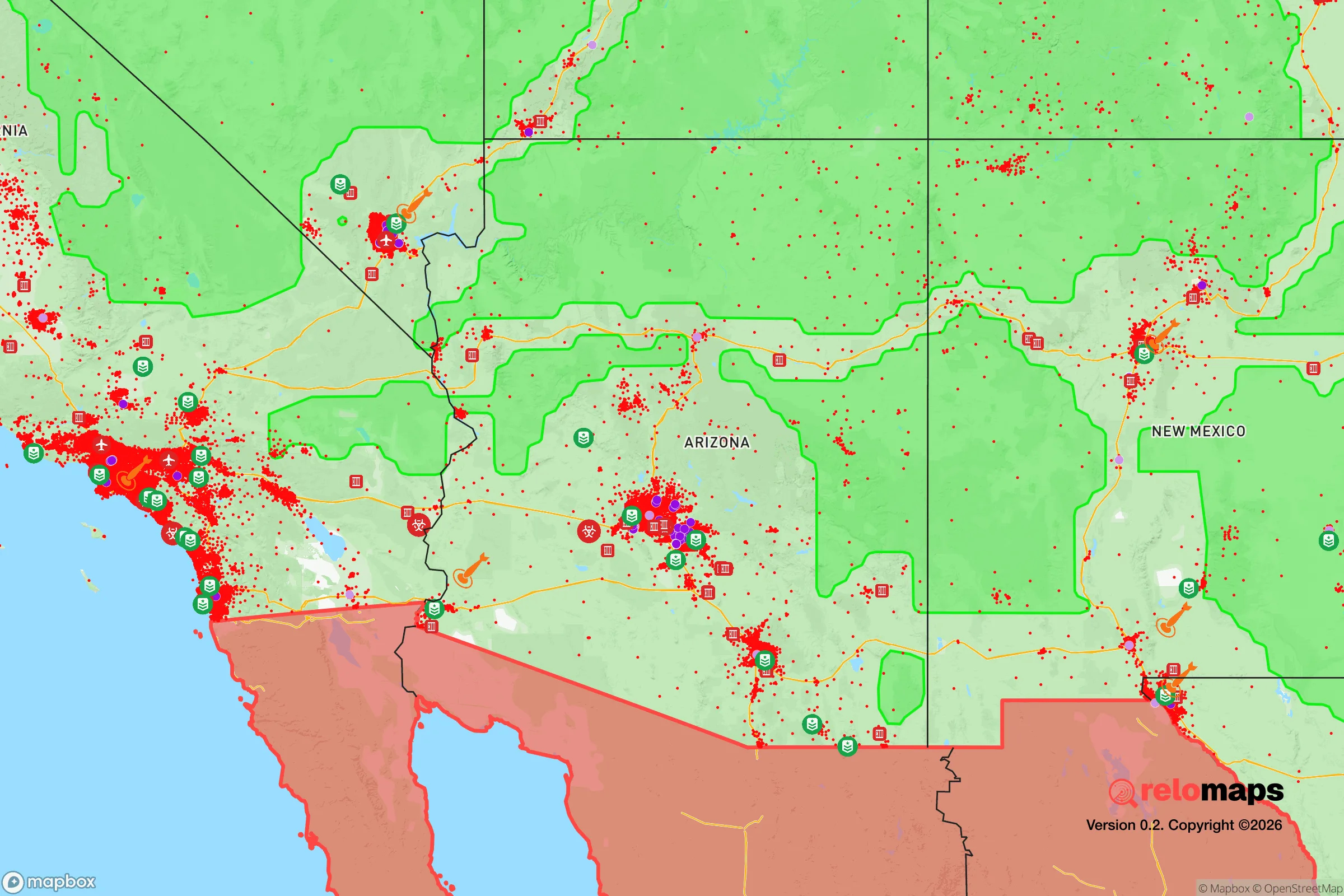
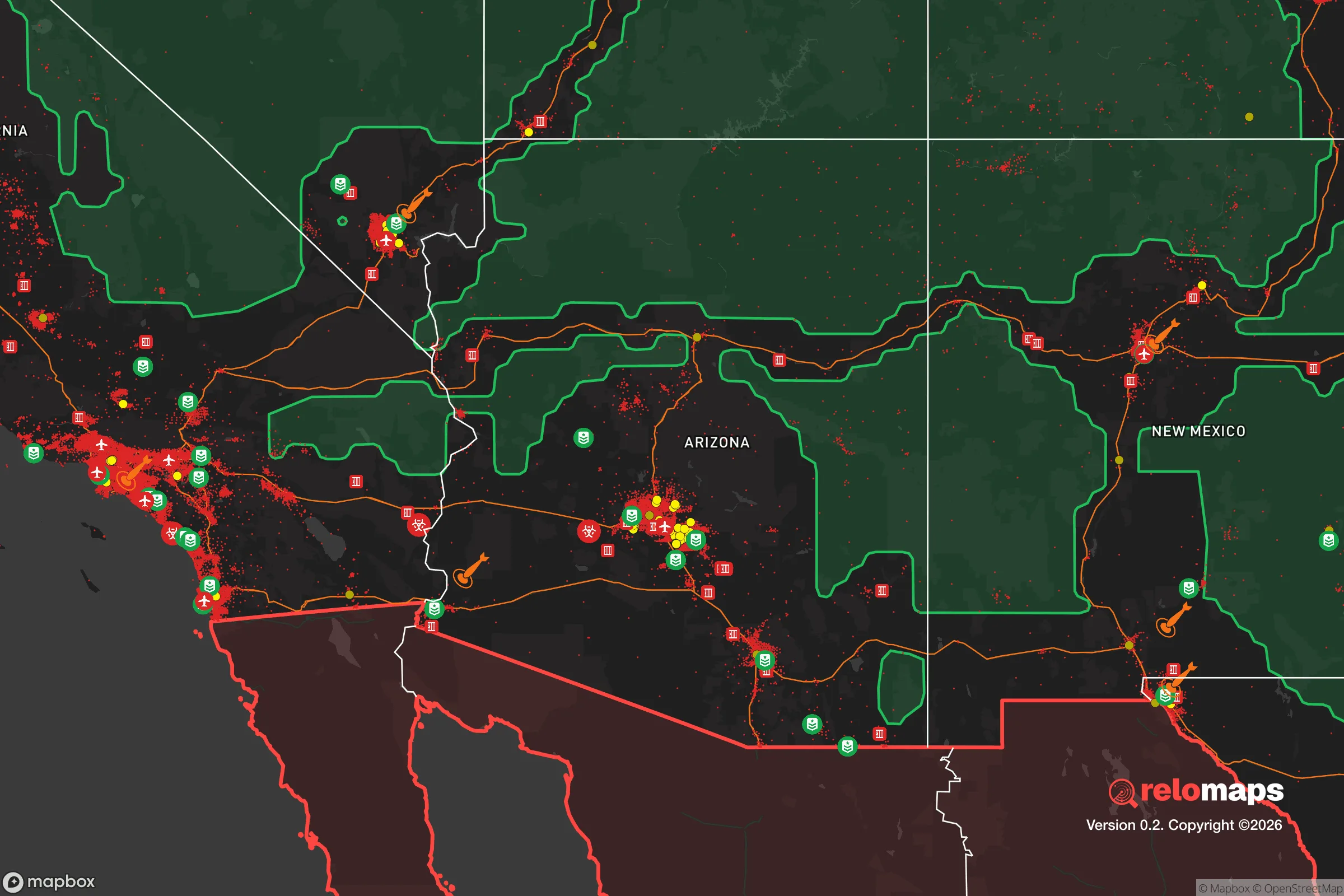


Important Note: For informational purposes only. This does not mean nothing bad ever happens in the green zones. Please use common sense. This is based on public data and modeled with AI. We tried to take a conservative approach but mistakes happen. We update this regularly as new information becomes available.
Solar Generator Recommendations
Backup power matters more here than in safer locations. We've picked three solar generators across budgets and capacity tiers — start with the budget unit if you only need a few essentials, or step up if you want to run a fridge and HVAC for days at a time.

Jackery Portable Power Station Explorer 300
Budget OptionPower on the Go: Weighing only 11 lbs, it's convenient to set up and store with book-sized foldable solar panels

BLUETTI Portable Power Station AC180
Designed for both indoor and outdoor scenarios, AC180 is highly capable as it has a robost capacity and continuous output power.

EF ECOFLOW DELTA Pro Ultra Power Station
Upgraded PickEcoFlow DELTA Pro Ultra is a whole-home energy system designed to grow with your family. Integrated with the Smart Home Panel 2, it scales to meet your evolving energy needs — keeping your home powered, intelligent, and secure through every stage of life.
We earn a commission, at no additional cost to you.
Strategic Assessment Analysis
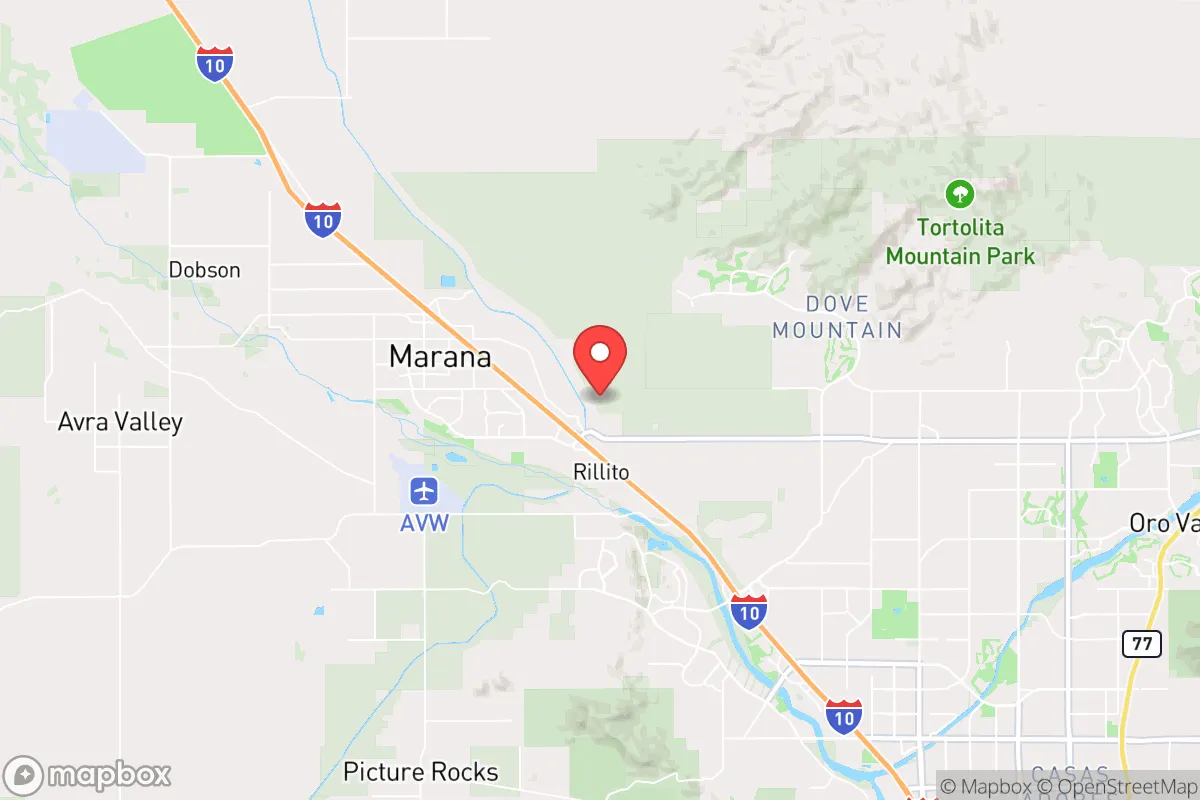
Marana, Arizona, sits in a geographic sweet spot that offers genuine strategic depth for those thinking about long-term resilience, but it’s not without its own set of hard trade-offs. Positioned roughly 20 miles northwest of Tucson along the I-10 corridor, the town benefits from proximity to a major metro’s infrastructure—hospitals, supply chains, transport hubs—while maintaining enough physical separation to avoid being swallowed by urban chaos during a crisis. The surrounding Sonoran Desert provides natural buffers, and the region’s low population density relative to Phoenix or Tucson proper means fewer people competing for the same resources when things go sideways. For a relocator with a prepper mindset, Marana offers a rare combination: access to the grid without being dependent on it, and a climate that, while harsh, is predictable and survivable with the right preparation.
Geographic position and natural advantages for long-term survival
Marana’s location is its primary strategic asset. The town sits at the confluence of the Santa Cruz River and the Tortolita Mountains, giving it both water access and elevated terrain options. The Santa Cruz River, though often dry on the surface, has a significant alluvial aquifer beneath it—meaning well water is viable for those who drill deep enough, and the water table is less stressed than in Phoenix’s sprawling suburbs. The Tortolita Mountains to the north and the Saguaro National Park to the east create natural chokepoints and defensible positions, should you need to secure a perimeter or simply avoid the flow of refugees from a compromised Tucson. The elevation—around 2,000 feet—keeps summer temperatures about 10 degrees cooler than Phoenix, which matters for both heat stress and water evaporation rates. The area also sits outside the primary flight paths for Davis-Monthan Air Force Base and Tucson International Airport, reducing the risk of being near a high-value target during a conflict or terrorist event. For a conservative-leaning prepper, this is the kind of geography that buys you time—time to assess, time to react, and time to decide whether to bug in or bug out.
Risks, exposures, and proximity to fallout-relevant landmarks
No analysis is honest without acknowledging the liabilities. Marana’s biggest exposure is its proximity to Tucson, a city of over 500,000 people with a major Air Force base (Davis-Monthan), a large university (University of Arizona), and a regional medical complex that would be a magnet for both casualties and looters in a mass casualty event. The I-10 corridor, which runs directly through Marana, is a double-edged sword: it’s your supply line in normal times, but it’s also the primary evacuation route for Tucson’s population during a disaster. A major earthquake on the nearby Santa Rita fault or a Cascadia-style event could turn that highway into a parking lot of stranded vehicles, and Marana would be the first choke point north of the city. Additionally, the Davis-Monthan Air Force Base, home to the 309th Aerospace Maintenance and Regeneration Group (the “boneyard”), stores thousands of decommissioned aircraft—a potential target for sabotage or collateral damage in a conflict. While Marana itself is not a primary target, fallout patterns from a strike on Tucson or Phoenix (about 100 miles north) could drift over the area depending on wind direction. The region also faces periodic wildfire risks, particularly in the Tortolita foothills, and the summer monsoon season brings flash flooding in low-lying areas near the Santa Cruz. For a survivalist, these risks are manageable with proper planning—but they require you to have a bug-out route that doesn’t rely on I-10, and a home site that’s elevated and fire-resistant.
Practical resilience for a relocator: food, water, energy, and defensibility
Marana’s practical resilience comes down to three things: water, land, and community. The water situation is better than most of Arizona—the Central Arizona Project canal runs through the area, and the local water utility (Marana Water) has a diversified portfolio including groundwater, CAP allocations, and reclaimed water. For a prepper, this means you can legally drill a private well (permit required) and access the aquifer at depths of 200-400 feet, which is shallower than in Phoenix’s suburbs. Rainwater harvesting is also viable; the area gets about 11 inches of rain annually, mostly during the monsoon, and a well-designed catchment system on a 2,000-square-foot roof can yield over 13,000 gallons per year. Food production is feasible with desert-adapted crops—prickly pear, mesquite, agave, and drought-tolerant vegetables like tepary beans and amaranth—and the growing season is nearly year-round. The soil is rocky and alkaline, but raised beds with imported soil and drip irrigation can produce a surprising amount of calories. Energy independence is straightforward: Marana averages 300+ sunny days per year, making solar panels a no-brainer. Battery storage is essential for nighttime and monsoon clouds, but the grid is stable enough that you can stay connected while building a backup system. Defensibility varies by neighborhood. The newer master-planned communities like Dove Mountain and Gladden Farms are built on grid-like streets with limited entry points, which can be controlled with minimal effort. Older areas near the I-10 corridor are more porous. The ideal property for a prepper is on the northern or eastern edge of town, with a view of the Tortolitas and a single road access that can be monitored. The local gun culture is strong—Arizona is a constitutional carry state, and Marana has a low crime rate relative to Tucson—but the sheriff’s office response time in outlying areas can be 20-30 minutes, so you are your own first responder.
The overall strategic picture for Marana is one of calculated risk. It’s not a remote bunker in Montana, and it’s not a fortified compound in the Ozarks. It’s a suburban-rural hybrid that gives you the tools to build resilience without requiring you to abandon modern life entirely. The proximity to Tucson is a vulnerability, but it’s also a resource—medical care, hardware stores, and trade networks are within 30 minutes when things are normal. The climate is harsh but survivable, the water is available if you plan ahead, and the terrain offers natural defensibility. For a conservative-leaning individual or family who wants to be prepared for civic unrest, economic collapse, or natural disasters without moving off-grid, Marana is a solid B+ option. It’s not perfect, but in a world where perfect doesn’t exist, it’s a place where you can build a life that’s both comfortable and resilient—as long as you’re willing to put in the work.

* Values derived from national, state, county, city and local statistics and may differ in a specific area. Last updated: 2026-05-01T09:49:50.000Z
Narrative content on this page is AI-generated and may contain mistakes. Verify any details that matter before acting on them.
ReloMaps may earn a commission from affiliate links at no extra cost to you.

