Photo: Wikipedia
Political ClimatePolitical Climate in Mapleton, ND
District shown is the primary district for this city’s centroid. Cities may span multiple districts.
Inherited from parent state — no local data available.
Local Political AnalysisPolitical Analysis of Mapleton, ND
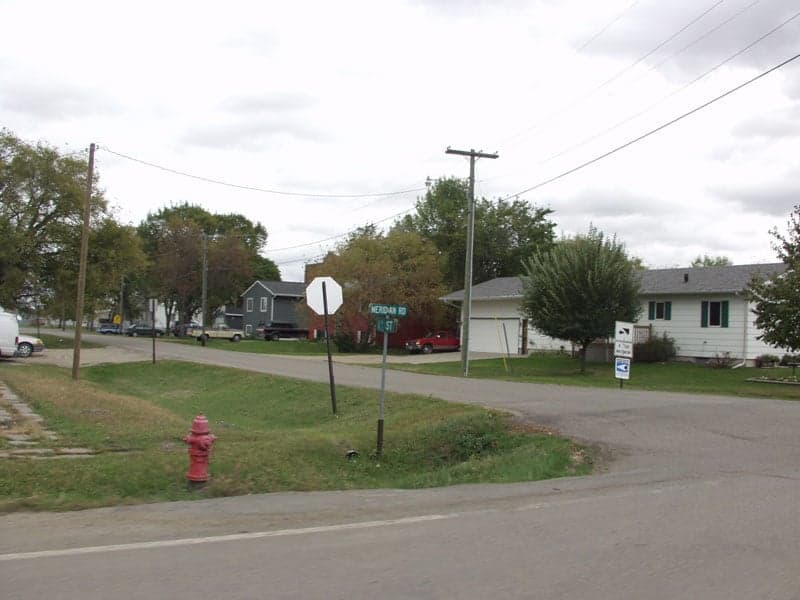
Mapleton, North Dakota, is about as solidly conservative as it gets, and that’s not changing anytime soon. The Cook PVI of R+18 tells you the story in a single number—this area leans Republican by a massive margin, and it’s been that way for generations. You won’t find much political hand-wringing here; folks tend to vote their values, and those values center on limited government, personal responsibility, and keeping Washington out of local affairs. If anything, the trajectory is holding steady or even hardening, as the surrounding Cass County farmland and small towns push back against the more progressive drift you see in bigger cities like Fargo, just a few miles east.
How it compares
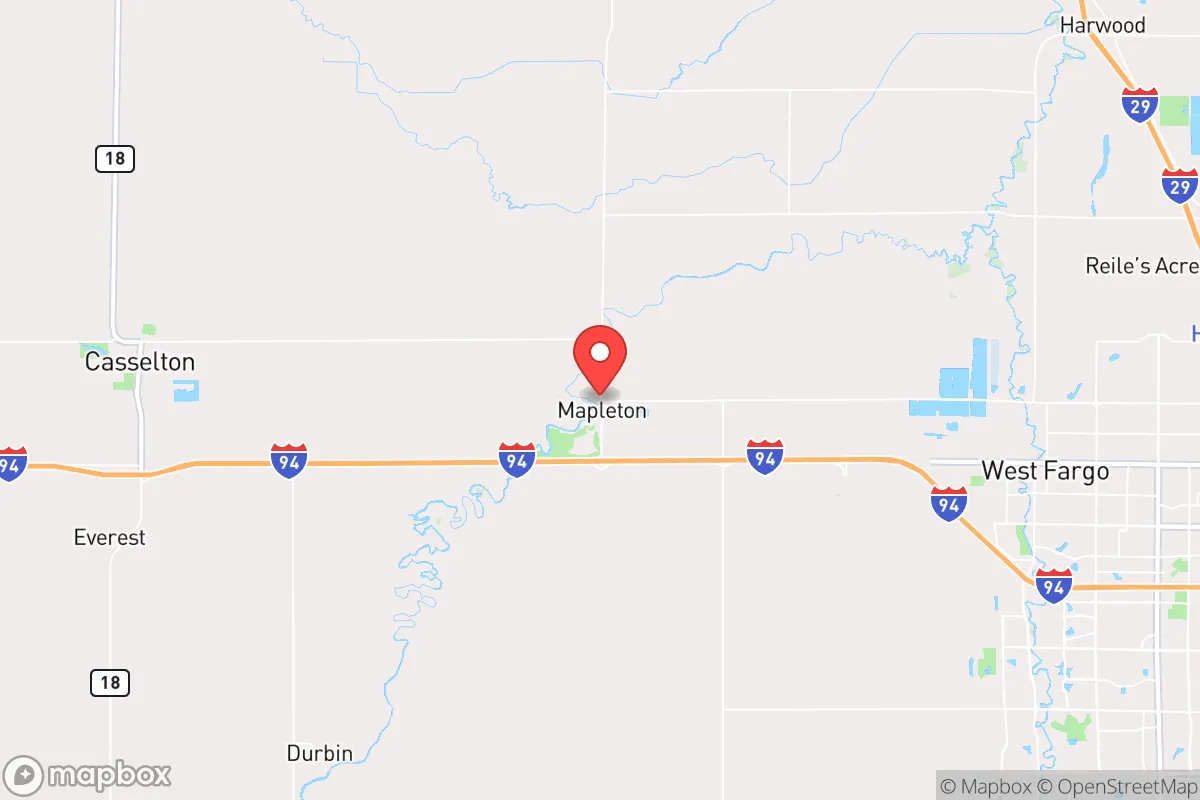
The contrast with Fargo is night and day. Fargo’s Cass County as a whole is still red-leaning, but the city itself has been trending bluer in recent cycles, especially among younger transplants and college students at North Dakota State University. Mapleton, by contrast, feels like a different world—more rural, more family-oriented, and far less tolerant of the kind of government overreach that creeps in when progressive policies take hold. Drive ten minutes west and you’re in Horace, another conservative stronghold, but head east into Fargo proper and you’ll see more diversity in political signs and yard flags. The surrounding towns like Harwood and Argusville share Mapleton’s lean, so it’s not an island—it’s part of a broader conservative belt that wraps around the metro area. That R+18 rating isn’t just a number; it’s a reflection of a community that values its freedoms and isn’t shy about voting to protect them.
What this means for residents
For the people living here, the political climate translates into a pretty straightforward daily life. You’re not dealing with the kind of zoning overreach or regulatory red tape that can choke small businesses in more progressive areas. Property taxes stay relatively low, and there’s a general trust that local officials will keep their hands off your personal choices—whether that’s how you run your farm, what you teach your kids, or how you carry a firearm. The downside? If you’re hoping for big government handouts or expansive social programs, you’ll be disappointed. But most residents see that as a feature, not a bug. The community pulls together through churches, volunteer fire departments, and neighborly help, not through government mandates. There’s a quiet pride in self-reliance here, and any shift toward progressive ideology—like stricter environmental regulations or expanded welfare—would be met with serious skepticism.
One cultural distinction worth noting is Mapleton’s strong agricultural roots. The town’s identity is tied to the land, and that fosters a practical, no-nonsense worldview. You won’t see much appetite for the kind of symbolic politics that dominate national headlines; instead, the focus stays on what works for families and local businesses. That said, there’s a growing concern among longtime residents about Fargo’s influence creeping westward. As the metro expands, some worry about zoning changes or school curriculum shifts that might follow. For now, Mapleton remains a place where personal freedom is the default, and government overreach is still seen as the enemy. If that changes, it won’t be without a fight.

State Political ClimatePolitical Climate in North Dakota
State Political AnalysisPolitical Environment in the State
North Dakota has long been one of the most reliably Republican states in the nation, with a political climate that leans deeply conservative, but it’s not the monolith many outsiders assume. The state has voted for the GOP presidential candidate in every election since 1968, and in 2024, Donald Trump carried it by a massive 20-point margin. However, the real story is the slow, steady shift beneath the surface: the old-school, agrarian, non-interventionist conservatism of the 1990s and early 2000s is being replaced by a more culturally assertive, freedom-oriented brand of politics, driven by an influx of out-of-state workers and a generational turnover in the rural heartland. If you’re looking for a place where the government generally stays out of your business, this is still a strong bet, but the cracks are starting to show in unexpected places.
Urban vs. rural divide
The political map of North Dakota is a textbook case of the urban-rural split, but with a twist. The state’s two largest cities, Fargo and Bismarck, are both conservative-leaning, but they’re not identical. Fargo, home to North Dakota State University and a growing tech and healthcare sector, is the state’s most moderate area—it still votes Republican, but by narrower margins, and it’s where you’ll find the highest concentration of college-educated professionals who lean libertarian on social issues. Bismarck, the state capital, is reliably red, driven by state government workers and energy industry families. The real powerhouse of the conservative vote is the rural expanse: counties like McKenzie and Williams in the oil-rich Bakken region vote 80%+ Republican, while the northeastern corner around Grand Forks (home to the University of North Dakota) is a bit more purple, with a noticeable libertarian streak. The only reliably blue dot in the state is the Turtle Mountain and Fort Berthold reservations, where Native American voters consistently deliver Democratic margins, but their population is too small to shift the statewide balance. What’s interesting is that the rural-urban divide here isn’t as hostile as in states like Oregon or New York—most folks in Fargo still own guns and go to church, so the culture war is more about degrees than outright conflict.
Policy environment
North Dakota’s policy environment is a mixed bag for a conservative. On the plus side, there’s no state income tax—a huge draw for anyone tired of high-tax states. The sales tax is a reasonable 5%, and property taxes are moderate, though they vary by county. The regulatory posture is generally business-friendly, especially for agriculture and energy: the state has streamlined permitting for oil and gas drilling, and it’s one of the few places where you can still build a house without a dozen environmental reviews. On education, the state has a robust school choice movement—there’s a thriving network of private and religious schools, and the legislature has expanded open enrollment, so parents can send kids across district lines. Healthcare is a sore spot: rural hospitals are struggling, and the state’s Medicaid expansion under Obamacare (which the Republican legislature accepted in 2013) remains controversial among fiscal conservatives. Election laws are solid—voter ID is required, and the state has no-excuse absentee voting, but mail-in ballots are not automatically sent. The legislature has also passed laws to restrict ballot initiatives after out-of-state groups tried to push through a legalization measure in 2022. Overall, the policy environment leans conservative, but it’s not as aggressively free-market as, say, Texas or Florida—there’s still a strong populist streak that supports farm subsidies and rural infrastructure spending.
Trajectory & freedom
On the freedom front, North Dakota has been moving in the right direction over the past decade, but the pace is uneven. The state passed constitutional carry in 2017, meaning you can carry a concealed firearm without a permit—a clear win for Second Amendment rights. Parental rights got a boost in 2023 with a law requiring schools to notify parents of any changes to a student’s health or well-being, effectively banning secret gender-transition policies. On medical autonomy, the state has a strong conscience clause for healthcare workers, and in 2024, the legislature passed a law banning gender-affirming care for minors, which is currently tied up in court. Property rights are generally respected, but there’s a growing tension over eminent domain for pipeline projects—the Dakota Access Pipeline protests in 2016-2017 were a flashpoint, and while the pipeline was built, the legal battles over land use continue. The biggest concern for freedom-minded folks is taxation: while there’s no income tax, the state’s reliance on oil and gas revenue means that when energy prices drop, the legislature starts eyeing other revenue sources. In 2023, they raised the gas tax by 3 cents per gallon to fund roads, which didn’t sit well with libertarians. Overall, the trajectory is positive for personal liberties, but the state’s fiscal conservatism is sometimes compromised by its dependence on federal dollars and commodity prices.
Civil unrest & political movements
North Dakota is not a hotbed of civil unrest, but it has had its moments. The most significant was the Dakota Access Pipeline protests near the Standing Rock Reservation in 2016-2017, which drew thousands of activists from across the country. The protests were largely peaceful, but there were clashes with law enforcement, and the state’s response—including the use of water cannons in freezing temperatures—was criticized by civil liberties groups. Since then, the political landscape has been relatively calm, but there’s a growing undercurrent of activism on both sides. On the right, there’s a strong Second Amendment sanctuary movement—over half the counties have passed resolutions declaring themselves sanctuaries for gun rights, vowing not to enforce federal gun laws they deem unconstitutional. On the left, there’s a small but vocal group pushing for environmental regulations on the oil industry, but they haven’t gained much traction. Immigration politics are a non-issue here—the state has a tiny foreign-born population, and there’s no sanctuary city movement. Election integrity is a hot topic: after the 2020 election, the legislature passed a law requiring all ballots to be returned by Election Day (no postmark grace period), and they banned private funding of election administration. You won’t see street protests or riots, but you will see a lot of political yard signs and heated town hall meetings, especially in the oil patch counties like Watford City and Williston.
Projection
Looking ahead 5-10 years, North Dakota is likely to stay deeply red, but the nature of that red is changing. The biggest demographic shift is the influx of workers from blue states—many moving to Fargo and the oil fields from California, Illinois, and Minnesota. These newcomers tend to be more libertarian than traditional conservatives: they want low taxes and gun rights, but they’re less interested in social issues like abortion or school prayer. This could create a tension between the old-guard, church-going conservatives and the new, tech-savvy arrivals. The rural population is aging and shrinking, which means the political center of gravity is slowly shifting toward the Fargo metro area. If that trend continues, you might see the state’s politics become more moderate on economic issues (more support for infrastructure and education spending) while staying conservative on cultural issues. The wild card is the energy sector: if oil prices stay high, the state will have plenty of revenue to keep taxes low and services decent. If they crash, expect a fiscal crisis that could force the legislature to consider an income tax or deep cuts. For someone moving in now, expect a state that will remain conservative for the foreseeable future, but with a growing libertarian streak that values personal freedom over government intervention.
Bottom line for a new resident: North Dakota is a solid choice if you want a state where your rights are generally respected, taxes are low, and the government doesn’t meddle in your daily life. The winters are brutal, the social scene is quiet, and you’ll need to drive an hour for a decent shopping mall, but the trade-off is a community where people still wave at each other and the local sheriff knows your name. Just keep an eye on the oil boom-and-bust cycle, and don’t expect the state to stay exactly the same as it was 20 years ago—the newcomers are changing the culture, and not everyone is thrilled about it.
* Values derived from national, state, county, city and local statistics and may differ in a specific area. Last updated: 2026-04-19T05:54:57.000Z
Narrative content on this page is AI-generated and may contain mistakes. Verify any details that matter before acting on them.
ReloMaps may earn a commission from affiliate links at no extra cost to you.

