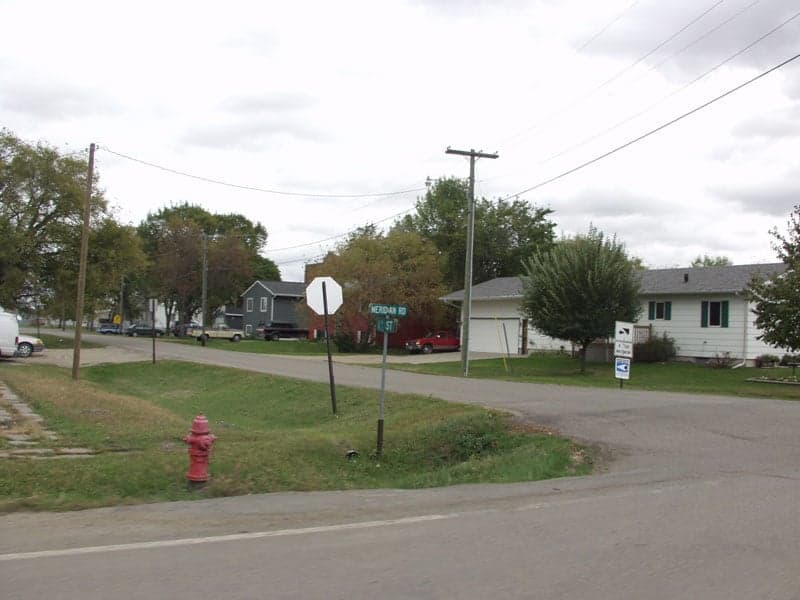
Photo: Wikipedia
Strategic Assessment of Mapleton, ND
Workable tactical position. Some exposure to population density or targets, but generally defensible in a crisis.
What does the Strategic Assessment tell us?
Our Strategic Assessment grades tactical survivability of an area. Major population centers, military targets, fallout zones, natural disasters, and border exposure all drive risk — lower exposure means a more defensible position in a crisis.
This is heavily inspired by Joel Skousen's Strategic Relocation book. Highly recommended you checkout the book ($)What does this tell us?
Our Strategic Assessment grades tactical survivability of an area. Major population centers, military targets, fallout zones, natural disasters, and border exposure all drive risk — lower exposure means a more defensible position in a crisis.
This is heavily inspired by Joel Skousen's Strategic Relocation book. Highly recommended you checkout the book ($)Strategic Pillars

Key Distances
Regional Safe Places
Below is our recommended "safe zones" in North Dakota and the surrounding area based on our strategic heuristics. For most people, it's unrealistic to live in a “safe zone” full-time due to work, family or other personal reasons. They tend to be more rural. However, many of these areas are perfect for second homes and retreat properties that double as a vacation home or even a short-term rental.
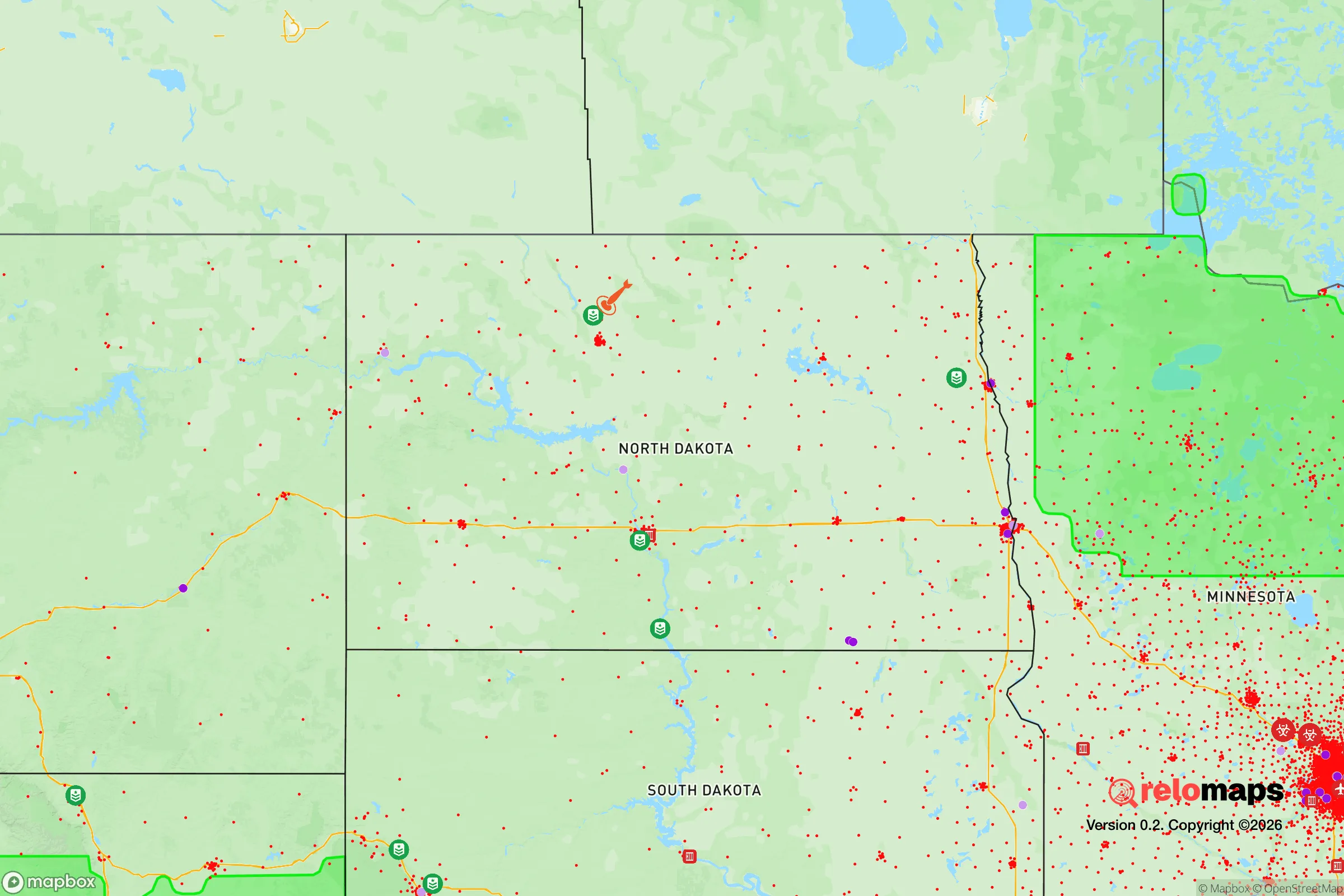
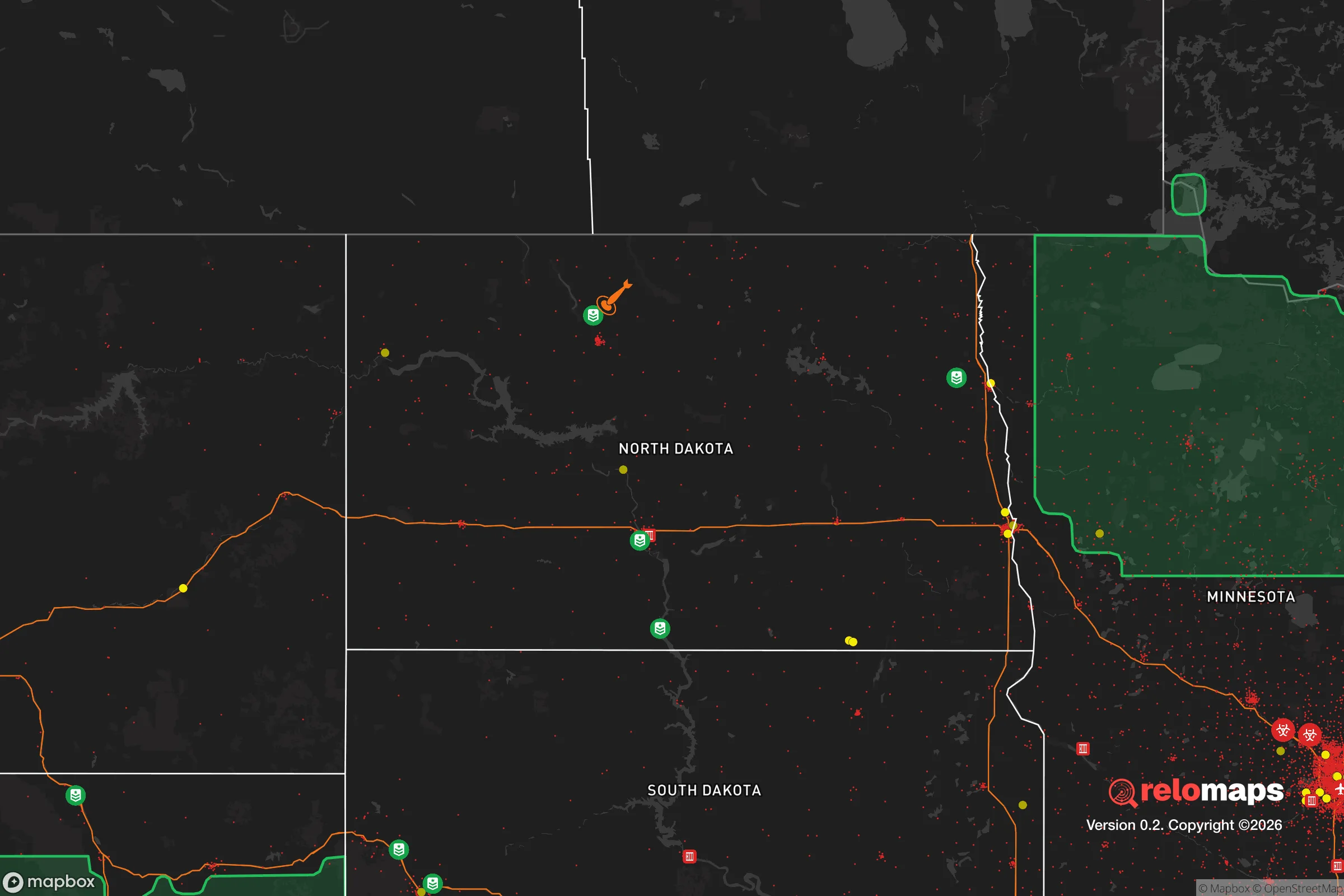


Important Note: For informational purposes only. This does not mean nothing bad ever happens in the green zones. Please use common sense. This is based on public data and modeled with AI. We tried to take a conservative approach but mistakes happen. We update this regularly as new information becomes available.
Solar Generator Recommendations
Backup power matters more here than in safer locations. We've picked three solar generators across budgets and capacity tiers — start with the budget unit if you only need a few essentials, or step up if you want to run a fridge and HVAC for days at a time.

Jackery Portable Power Station Explorer 300
Budget OptionPower on the Go: Weighing only 11 lbs, it's convenient to set up and store with book-sized foldable solar panels

BLUETTI Portable Power Station AC180
Designed for both indoor and outdoor scenarios, AC180 is highly capable as it has a robost capacity and continuous output power.

EF ECOFLOW DELTA Pro Ultra Power Station
Upgraded PickEcoFlow DELTA Pro Ultra is a whole-home energy system designed to grow with your family. Integrated with the Smart Home Panel 2, it scales to meet your evolving energy needs — keeping your home powered, intelligent, and secure through every stage of life.
We earn a commission, at no additional cost to you.
Strategic Assessment Analysis
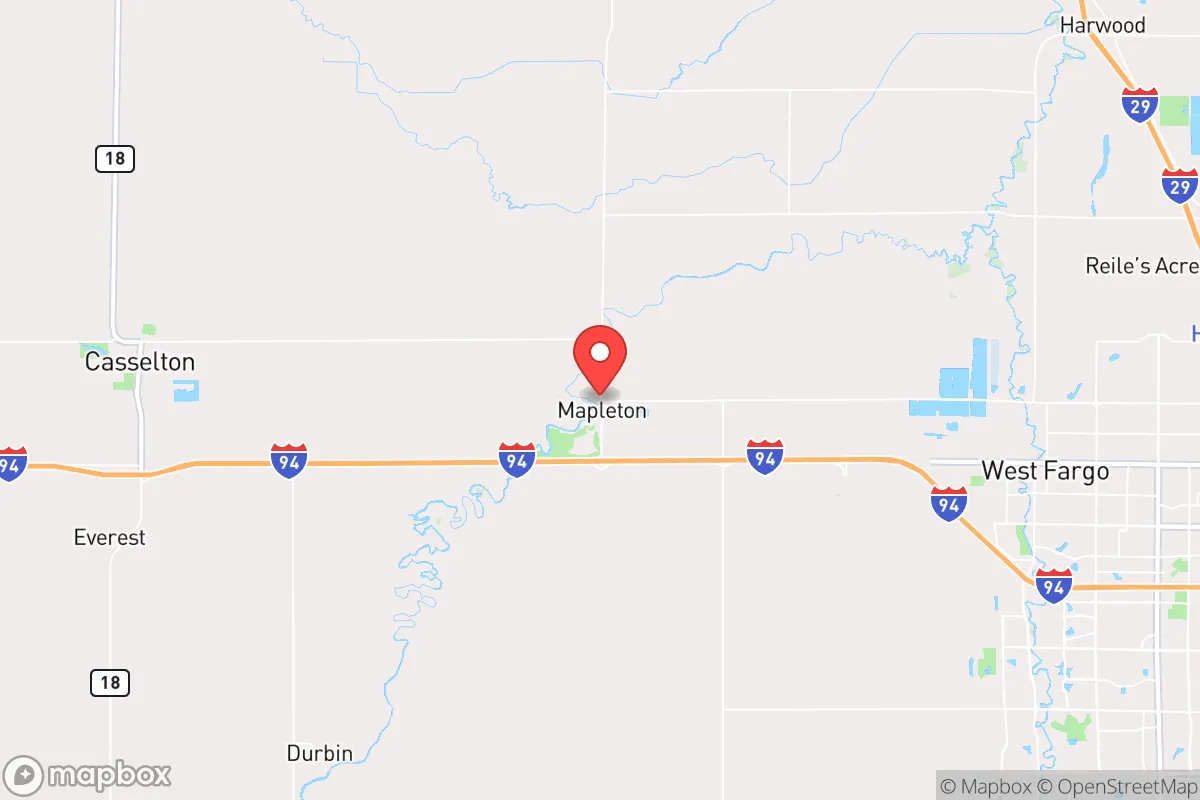
Mapleton, North Dakota, offers a compelling strategic position for those prioritizing resilience and self-sufficiency, sitting at a deliberate distance from major metropolitan vulnerabilities while maintaining access to critical infrastructure. This Cass County community, located roughly 20 miles southwest of Fargo, provides a buffer from the immediate fallout of urban unrest or catastrophic events, yet remains close enough to leverage regional resources when stability returns. For the conservative prepper or survivalist, Mapleton’s low population density, agricultural surroundings, and proximity to the Red River Valley’s fertile land create a foundation for long-term sustainability, though the area’s flat terrain and proximity to a major interstate demand careful planning.
Geographic position and natural advantages for long-term survival
Mapleton’s location in the Red River Valley is a double-edged sword, but for the strategic relocator, the advantages are significant. The region’s rich, dark soil is among the most productive in the nation, supporting corn, soybeans, and wheat—a critical asset for food security in a grid-down scenario. The area is flat, which simplifies construction and farming but offers little natural cover; defensibility relies on distance from threats rather than terrain. The nearby Sheyenne River and numerous drainage ditches provide surface water sources, though treatment and storage are essential given agricultural runoff. Winters are harsh, with average January lows near 0°F and frequent blizzards, which act as a natural deterrent to transient populations and force residents to develop robust cold-weather skills. The region’s low seismic risk and absence of hurricane or wildfire threats make it a stable choice for those seeking to avoid natural disaster zones, though tornadoes are a seasonal concern—typically EF1 to EF2 strength, with warning times often sufficient for basement shelter.
Risks, exposures, and proximity to fallout-relevant landmarks
The primary strategic liability for Mapleton is its proximity to Fargo, a city of roughly 130,000 that would likely become a focal point for civil unrest, resource competition, or disease spread during a national crisis. At 20 miles away, Mapleton is close enough to experience spillover effects—refugee flows, looting parties, or military checkpoints—but far enough to offer a buffer if preemptive security measures are in place. The area sits within 100 miles of Grand Forks Air Force Base, home to Global Hawk drones and a potential target in a conflict scenario, though the base’s strategic value is lower than missile silos or command centers. More concerning is the proximity to the Fargo-Moorhead metropolitan area’s infrastructure: the I-94 and I-29 corridors, rail lines, and the Red River itself could become chokepoints for movement or targets for sabotage. The region’s flat, open landscape offers little concealment from aerial surveillance or ground-based threats, making early warning systems and community coordination vital. For the prepper, the lack of natural barriers means that a perimeter defense strategy must rely on distance, observation, and rapid response rather than terrain.
Practical resilience for a relocator: food, water, energy, and defensibility
Mapleton’s practical resilience hinges on its agricultural base and the ability to establish self-sufficient systems. Food production is the area’s strongest asset; the growing season runs from May to September, with enough heat units for a wide variety of vegetables, grains, and livestock. Local farmers’ markets and co-ops in nearby Casselton and West Fargo provide seed stock and knowledge exchange, while the region’s grain elevators and processing plants offer bulk storage options. Water access is manageable but requires preparation: the Sheyenne River and shallow aquifers provide raw water, but treatment via filtration, boiling, or UV is necessary due to agricultural chemicals and livestock waste. Deep wells are common in the area, with typical depths of 100-200 feet yielding reliable water, though drilling costs run $15-$30 per foot. Energy independence is achievable through solar panels, which perform adequately despite winter cloud cover, and small wind turbines that capitalize on the region’s steady prairie winds. Backup generators running on propane or diesel are advisable for extended grid outages, which occur during ice storms or blizzards. Defensibility is the weakest link: the flat terrain and sparse tree cover mean that a single homestead is visible from miles away. The solution lies in community—forming a network of like-minded neighbors who can share watch duties, maintain a cache of supplies, and coordinate response. Mapleton’s small population (roughly 1,300) and rural character make such networks feasible, but newcomers must invest in relationship-building before a crisis hits. The local law enforcement presence is minimal, so personal security—firearms, ammunition, and training—is non-negotiable.
The overall strategic picture for Mapleton is one of calculated trade-offs. It offers a solid foundation for a resilient lifestyle: productive land, manageable risks from natural disasters, and a buffer from urban chaos without complete isolation. The flat terrain and proximity to Fargo demand a proactive approach to security and resource management, but for the conservative relocator willing to invest in community ties, water infrastructure, and defensive planning, this corner of North Dakota provides a viable long-term base. The key is to treat Mapleton not as a final fortress, but as a launch point for building a sustainable network in a region that rewards preparation and punishes complacency.

* Values derived from national, state, county, city and local statistics and may differ in a specific area. Last updated: 2026-04-19T05:54:57.000Z
Narrative content on this page is AI-generated and may contain mistakes. Verify any details that matter before acting on them.
ReloMaps may earn a commission from affiliate links at no extra cost to you.

