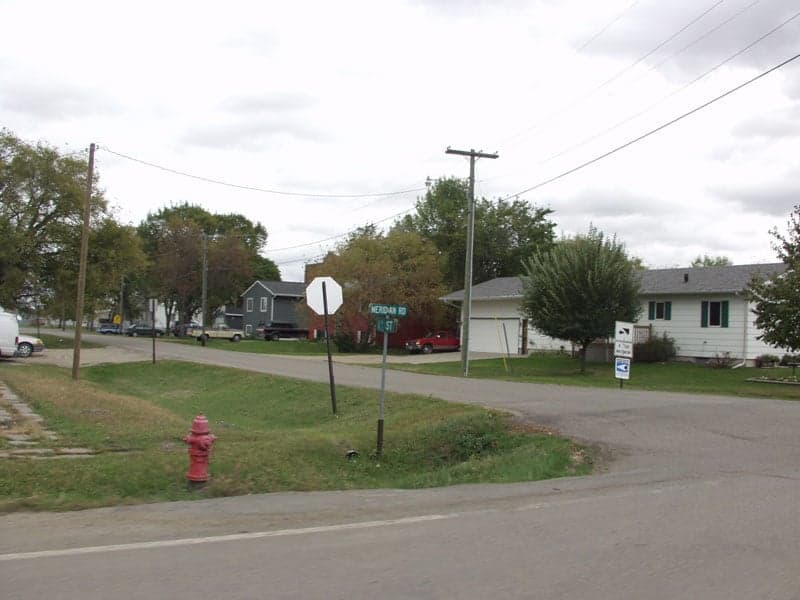
Photo: Wikipedia
Demographics of Mapleton, ND
Affluence Level in Mapleton, ND
An upper-middle-class area. Household wealth, education levels, and homeownership run ahead of national benchmarks.
People of Mapleton, ND
Mapleton, North Dakota, is a small, tight-knit community of 1,243 residents characterized by its overwhelming white majority (87.1%) and a notable Hispanic minority (8.7%) that has grown in recent decades. The city has a 0.0% foreign-born population, meaning nearly all residents are native-born, and a relatively high college education rate of 42.3% for a rural Plains town. Its identity is rooted in agricultural pragmatism and a quiet, family-oriented lifestyle, with a population density that keeps neighbors close but properties spacious.
How the city was settled and grew
Mapleton was founded in the late 19th century as a railroad stop and agricultural service center in Cass County, part of the Red River Valley. The original settlers were predominantly Northern European immigrants—Norwegians, Germans, and Swedes—drawn by the Homestead Act of 1862 and the promise of fertile, flat farmland. These families built the first homes along what is now Main Avenue, the historic core of the city, and established grain elevators and small businesses near the railroad tracks. By the early 1900s, a second wave of German-Russian immigrants, fleeing religious persecution and land scarcity in the Russian Empire, settled in the South Side district, where they built simple frame houses and founded the area’s Lutheran and Catholic churches. The city remained overwhelmingly white and native-born through the mid-20th century, with population hovering around 400–500 residents, sustained by family farms and the nearby American Crystal Sugar Company processing plant.
Modern era (post-1965)
The post-1965 era brought modest but significant demographic change to Mapleton, driven primarily by domestic in-migration rather than foreign immigration. The 1970s and 1980s saw an influx of families from rural Minnesota and the Dakotas, attracted by the expansion of manufacturing and logistics in the Fargo-Moorhead metropolitan area. Many of these newcomers settled in the Prairie View Addition, a subdivision of ranch-style homes built on former farmland east of the historic core. The most notable shift came in the 1990s and 2000s, when Hispanic workers—many from Texas and the Southwest—moved to the region for jobs in meatpacking, construction, and agriculture. In Mapleton, this community concentrated in the West End neighborhood, a cluster of modest single-family homes and duplexes near the city’s western boundary. Today, the Hispanic population stands at 8.7%, making it the largest minority group, though the 0.0% foreign-born figure indicates these are primarily second- or third-generation American citizens. The Black population remains negligible at 0.6%, and there are no recorded East/Southeast Asian or Indian subcontinent residents.
The future
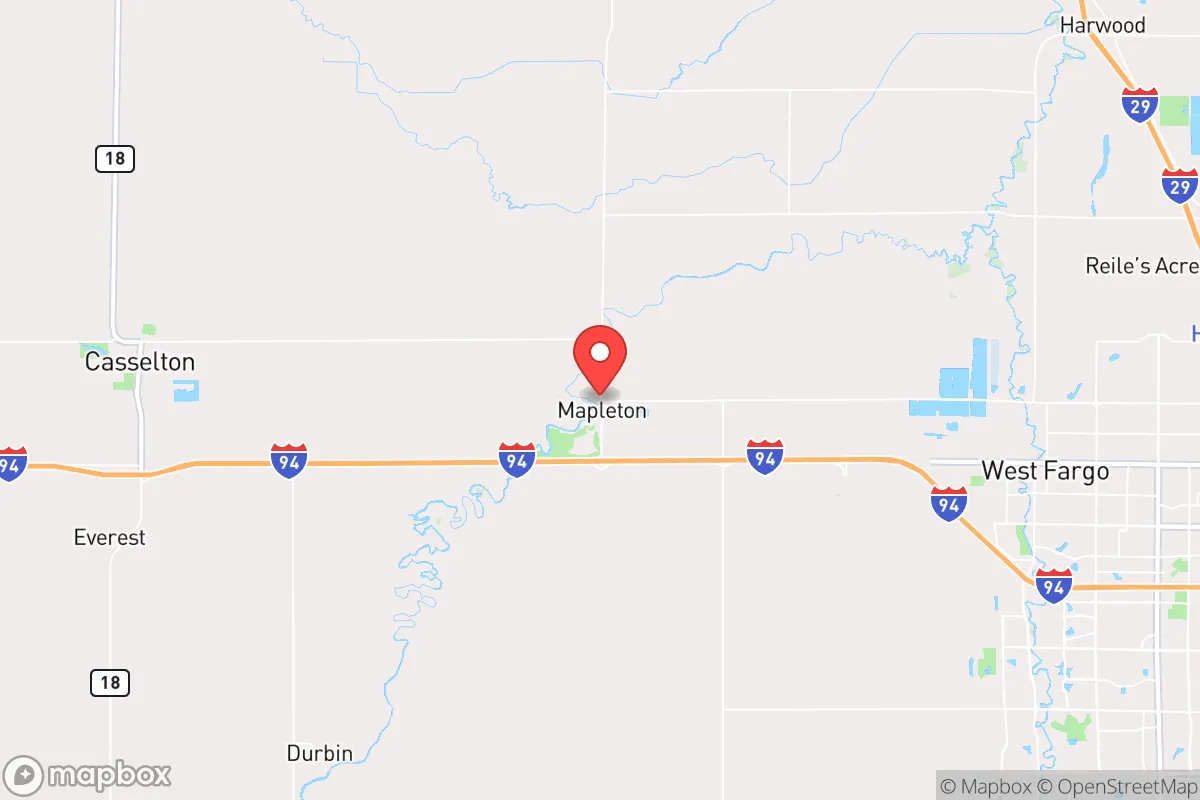
Mapleton’s population trajectory points toward slow, steady growth driven by its proximity to Fargo (about 15 miles east) and the expansion of the metro area’s suburban fringe. The city is likely to become more homogenized in terms of race and ethnicity, as the Hispanic community shows signs of assimilation into the broader white-majority culture—intermarriage rates are rising, and Spanish-language use is declining among younger generations. The 0.0% foreign-born share is expected to remain near zero, as Mapleton lacks the rental housing stock, ethnic grocery stores, or social networks that attract new immigrants. New development is concentrated in the North Ridge Estates, a subdivision of larger, newer homes catering to white-collar commuters working in Fargo’s healthcare and tech sectors. Meanwhile, the Old Town district around Main Avenue is aging, with many original farm families selling to younger couples seeking affordable starter homes. Over the next 10–20 years, Mapleton will likely become a bedroom community for Fargo, with a population that is slightly more educated and affluent but remains overwhelmingly white and native-born.
For someone moving in now, Mapleton offers a stable, low-crime environment with a strong sense of community and easy access to Fargo’s jobs and amenities. The city is becoming more suburban and less agricultural, but its demographic character—white, native-born, and family-oriented—is unlikely to change dramatically. New residents should expect a place where neighbors know each other, local government is responsive, and the pace of life is deliberately slow.

* Values derived from national, state, county, city and local statistics and may differ in a specific area. Last updated: 2026-04-19T05:54:57.000Z
Narrative content on this page is AI-generated and may contain mistakes. Verify any details that matter before acting on them.
ReloMaps may earn a commission from affiliate links at no extra cost to you.

