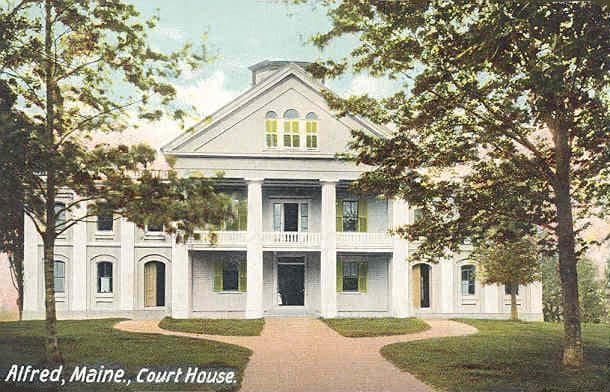
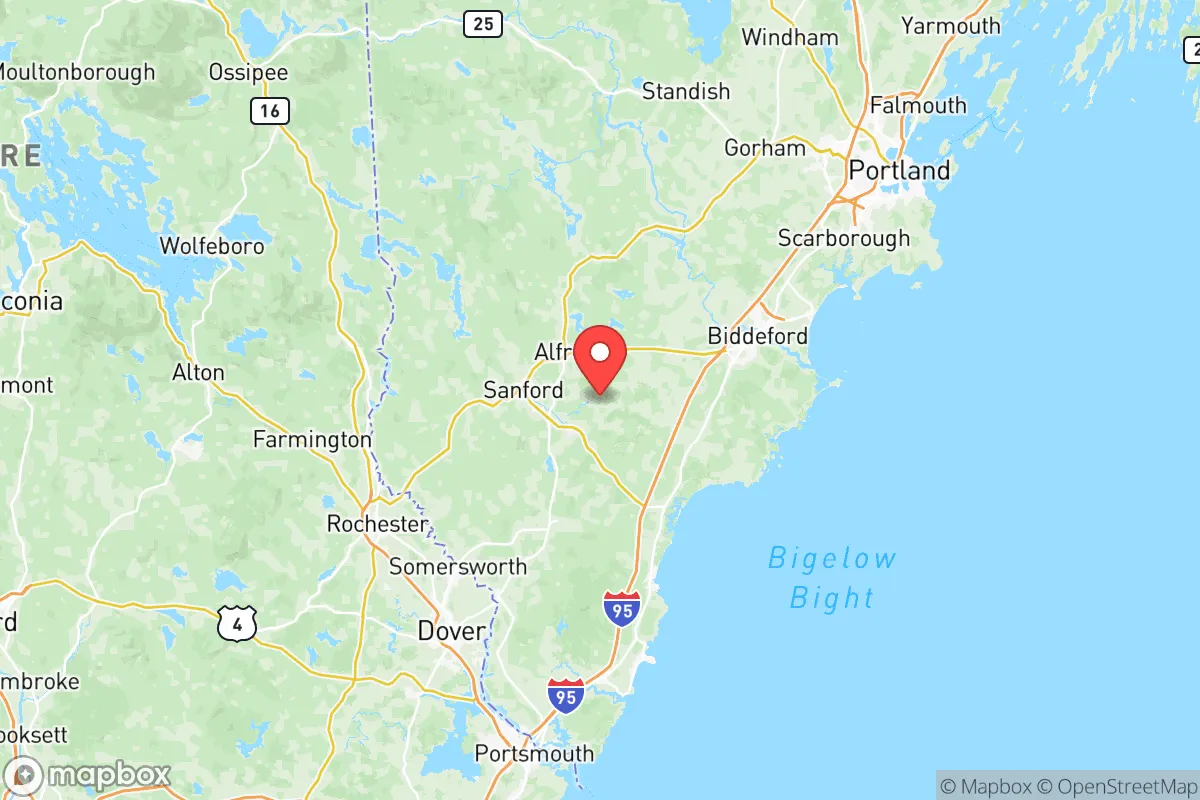
Photo: Wikipedia
Political ClimatePolitical Climate in York County
Showing district-level results — no local-only data available.
Local Political AnalysisPolitical Analysis of York County
York County leans solidly Democratic at the county level, with a Cook Partisan Voting Index (PVI) of D+11, meaning it votes about 11 points more Democratic than the national average. That said, the county is far from a monolith—it’s a patchwork of deep-blue coastal towns, red-leaning rural communities, and a few genuine swing precincts that can flip between parties depending on the cycle. The overall trajectory has been a slow but steady shift leftward since the 2010s, driven largely by in-migration from Massachusetts and New Hampshire, though local races often remain competitive.
How it compares
Maine as a whole is a purple state with a split political identity—its two congressional districts have voted for different parties in recent presidential elections. York County, however, is the most Democratic-leaning county in the state, outpacing even Cumberland County (home to Portland) in raw Democratic vote share. The contrast is sharpest when you compare York County to the more conservative northern and eastern counties like Aroostook or Piscataquis, which often vote Republican by 20 points or more. Within York County itself, the political variation is dramatic: Kennebunkport, Ogunquit, and York Harbor are reliably blue, with precincts often voting 60-70% Democratic, while Sanford, Alfred, and Newfield lean red, sometimes by double digits. The true swing territory is in towns like Biddeford and Saco, where working-class voters and newer residents create a more mixed electorate—Biddeford’s Ward 4, for example, has flipped between parties in recent state legislative races.
What this means for residents
For liberal residents, the D+11 lean means most local offices—county commissioners, state representatives, and school boards—are held by Democrats or left-leaning independents. Policies like paid family leave, expanded Medicaid (which Maine voters approved in 2017), and strong environmental protections are generally supported at the county level. For conservative residents, the political reality is more nuanced. While they are outnumbered countywide, they hold sway in the rural western towns and in Sanford, where Republican candidates regularly win local races. Conservative voters in York County often find their voice in state-level races, where the county’s competitive districts—like Maine House District 14 (covering parts of Saco and Old Orchard Beach)—can determine control of the legislature. The practical effect is that both sides need to show up: a Republican running countywide faces an uphill battle, but a well-organized conservative candidate in a red-leaning town can still win school board or selectman seats.
One cultural distinction that sets York County apart from the rest of Maine is its proximity to New Hampshire and Massachusetts. Many residents commute south for work, and the influx of out-of-state retirees and remote workers has accelerated the county’s leftward drift. This has created a subtle tension between longtime locals—who often lean more moderate or conservative—and newcomers, who tend to be more liberal. You see this play out in debates over development, property taxes, and school funding. In towns like Kittery and Eliot, the housing crunch is a hot-button issue, with newer residents pushing for more affordable housing while some older residents worry about changing the character of their communities. The bottom line: York County is a politically diverse place where the D+11 label tells only part of the story—the real texture is in the town-by-town dynamics, and anyone moving here should expect a mix of blue strongholds, red pockets, and a few purple battlegrounds that keep things interesting.

State Political ClimatePolitical Climate in Maine
State Political AnalysisPolitical Environment in the State
Maine has long been known as a politically independent and pragmatic state, but its overall partisan lean has shifted noticeably leftward over the past two decades. While the state voted for Bill Clinton in 1992 and 1996, it has voted for the Democratic presidential candidate in every election since 1992, with margins growing from single digits to double digits. However, this blue veneer masks a deeply divided political geography: the state’s 2nd Congressional District, which covers the vast, rural northern and eastern regions, has voted for Donald Trump twice, while the 1st District, anchored by the Portland metro area, is solidly Democratic. The result is a state that feels purple in practice, even as its statewide offices and legislature are controlled by Democrats.
Urban vs. rural divide
The political map of Maine is essentially a story of two states. The southern coastal corridor, from Kittery through Portland and up to Brunswick, is the engine of Democratic power. Portland itself is a reliably blue city, with precincts routinely delivering 70-80% of the vote to Democratic candidates. The suburbs of South Portland, Scarborough, and Falmouth have also trended leftward, driven by an influx of younger, college-educated professionals and remote workers from Massachusetts and New York. In contrast, the vast 2nd Congressional District, which covers everything north of Bangor and west of the coast, is a Republican stronghold. Bangor itself is a swing city, but the surrounding towns of Brewer, Hermon, and Hampden lean conservative. The rural counties of Piscataquis, Somerset, and Franklin are deeply red, with many precincts voting 60-70% Republican. The divide is so stark that the 2nd District has become a national bellwether, flipping between parties in recent cycles and drawing significant outside spending.
Policy environment
Maine’s policy environment is a mixed bag that reflects its independent streak. The state has a progressive income tax structure, with rates ranging from 5.8% to 7.15%, and a state sales tax of 5.5%. Property taxes are relatively high, especially in rural areas where the tax base is thin. The regulatory posture is generally business-friendly for small enterprises, but environmental regulations are strict, particularly around coastal development and forestry. Education policy is decentralized, with strong local control over school districts, but the state has moved toward universal pre-K and increased funding for special education. Healthcare is a major issue: Maine expanded Medicaid under the Affordable Care Act via a 2017 ballot initiative, and the state operates its own health insurance exchange. Election laws are among the most accessible in the nation, with same-day voter registration, no-excuse absentee voting, and ranked-choice voting for federal and state primaries and general elections. This system has been a flashpoint, with Republicans arguing it disenfranchises voters in rural areas where straight-ticket voting is common.
Recent policy direction
Over the past five years, Maine’s policy direction has been decidedly progressive, though tempered by the state’s independent streak. On gun rights, Maine has historically been permissive, with no permit required for concealed carry and a strong tradition of hunting and sport shooting. However, in 2023, following the Lewiston mass shooting, the legislature passed a 72-hour waiting period for gun purchases and expanded background checks for private sales. This was a significant shift, and it remains a deeply divisive issue. On education, the state has expanded parental notification requirements for school curriculum changes, but has also moved to codify LGBTQ+ inclusive materials. On speech and privacy, Maine has strong data privacy laws, including a 2019 law requiring internet service providers to obtain opt-in consent before selling customer data. Medical and bodily autonomy is protected: Maine has codified abortion rights into state law, and in 2023, the legislature passed a shield law protecting providers who prescribe abortion pills via telehealth to patients in states with bans. Property rights are generally respected, but the state has a strong “right to farm” law that limits nuisance lawsuits against agricultural operations. On taxation, the state has not passed broad tax cuts, but has increased the property tax fairness credit for low- and middle-income residents. Voting access has been expanded, with the state moving to automatic voter registration at the DMV and expanding early voting.
Civil unrest & political movements
Maine is not known for widespread civil unrest, but it has seen its share of organized political movements. The most visible in recent years has been the gun rights movement, which mobilized heavily after the Lewiston shooting. The Maine Gun Owners Association, a local affiliate of the NRA, has held rallies at the State House and successfully lobbied to defeat some proposed restrictions. On the left, the Maine People’s Alliance, a progressive advocacy group, has been active on housing, healthcare, and climate issues. Immigration politics are relatively muted compared to other New England states, but there have been flashpoints in Portland, where the city’s sanctuary status has been challenged by the state’s Republican governor, Janet Mills, who has taken a more moderate stance. The state has seen a small but vocal secession movement in the northern counties, with some residents advocating for the creation of a separate state called “Northern Maine” or “New England North.” This is largely symbolic, but it reflects the deep cultural and political divide between the rural north and the urban south. Election integrity has been a recurring issue, with Republicans questioning the security of ranked-choice voting and the state’s mail-in ballot system, though no widespread fraud has been documented.
Projection
Over the next 5-10 years, Maine’s political trajectory is likely to continue its slow leftward drift, but with significant caveats. The in-migration of remote workers from southern New England, particularly to the Portland area and the mid-coast, will continue to bolster Democratic margins in the 1st District. However, the 2nd District is likely to remain competitive, as its rural population is aging and declining, but not fast enough to flip it permanently. The state’s independent streak will remain a moderating force, meaning that while Democrats may hold the governor’s office and the legislature, they will not be able to pass the most aggressive progressive agenda without facing a backlash. The gun rights debate will continue to be a major fault line, and the state’s housing crisis, driven by the influx of new residents, will become a central political issue. A new resident moving in now should expect a state that is politically divided but functional, where the culture wars are real but less intense than in many other states. The practical takeaway is that Maine offers a mix of progressive policies on healthcare and civil liberties, but with a strong tradition of local control and individual rights that can frustrate both sides.
For a conservative-leaning relocator, the bottom line is that Maine is not a red state, but it is not a deep blue one either. The rural areas offer a lifestyle and political culture that is more aligned with traditional values, but the state’s policy direction is set by the urban south. If you value low taxes and minimal regulation, you will find the property tax burden and environmental rules frustrating. If you value personal liberty and a slower pace of life, you will find the state’s independent streak refreshing. The key is to choose your location carefully: Bangor and its surrounding towns offer a more balanced political environment, while the far north offers a deeply conservative community. The state’s politics are a reflection of its geography—divided, but with a stubborn commitment to doing things its own way.
* Values derived from national, state, county, city and local statistics and may differ in a specific area. Last updated: 2026-07-06T08:35:34.000Z
Narrative content on this page is AI-generated and may contain mistakes. Verify any details that matter before acting on them.
ReloMaps may earn a commission from affiliate links at no extra cost to you.

