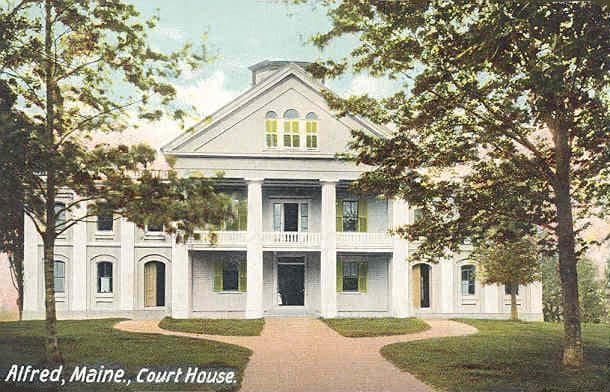
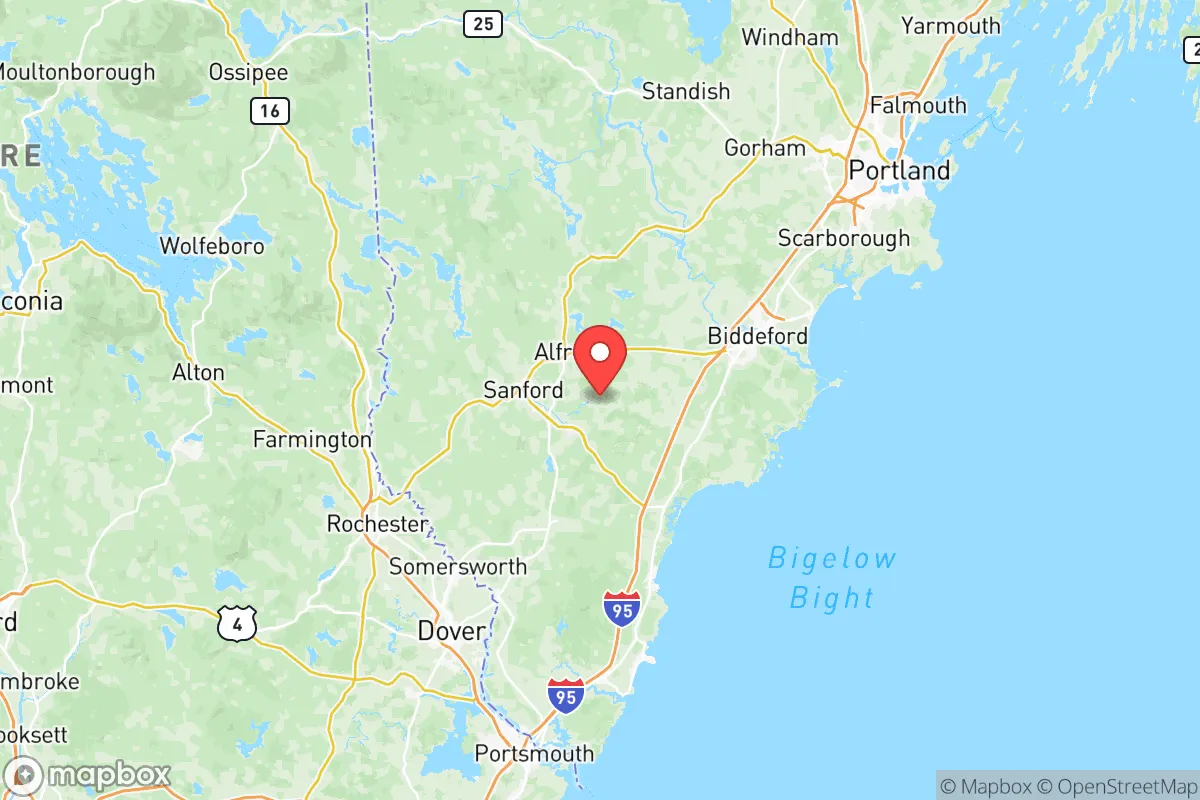
Photo: Wikipedia
Demographics of York County
Affluence Level in York County
A middle-class area roughly in line with national averages across income, home values, education, and employment.
People of York County
The people of York County, Maine today number 214,731, forming a predominantly white (90.8%) and native-born (98.5% U.S.-born) population that is notably less diverse than the national average. The county’s character is shaped by a mix of historic coastal fishing communities, inland farming towns, and rapidly growing commuter suburbs serving the Portland metro area and southern New Hampshire. Distinctive identity markers include a strong sense of local independence, a deep-rooted Franco-American heritage in mill towns like Biddeford and Sanford, and a growing tension between long-term residents and newcomers drawn by relatively lower taxes and scenic quality of life.
Settlement & growth (pre-1960)
Long before European contact, the Wabanaki Confederacy—particularly the Abenaki and Pennacook peoples—occupied the land now called York County, living in seasonal villages along the Saco River and the coast. Their presence is still visible in place names like Kittery (from the Abenaki "kitéhi," meaning "great") and the Ossipee River. English colonists from the Massachusetts Bay Colony began settling the area in the 1620s, establishing the first permanent European settlement at Kittery in 1623. These early arrivals were primarily Puritan farmers and fishermen from southwestern England, drawn by abundant cod fisheries and timber for shipbuilding. By the 1650s, the settlements of York (then called Agamenticus) and Wells had been founded, but the region remained a violent frontier during King Philip’s War (1675–1678) and the French and Indian Wars, which repeatedly depopulated the area.
After the American Revolution, York County’s population grew steadily through natural increase and limited immigration. The dominant group remained English-descended Yankees, but a significant wave of Scots-Irish Presbyterians arrived in the 1740s–1760s, settling inland towns like Sanford and Alfred, where they cleared forests for subsistence farming. The 19th century brought two transformative shifts. First, the Industrial Revolution turned Biddeford and Saco into major textile mill centers, powered by the Saco River’s waterfalls. Between 1840 and 1900, these mills attracted thousands of French-Canadian immigrants from Quebec, who formed tight-knit Franco-American neighborhoods—the "Petit Canada" districts—that still define Biddeford’s cultural identity. By 1900, roughly one-third of Biddeford’s population was Franco-American. Second, the shipbuilding industry in Kittery and Eliot boomed, with the Portsmouth Naval Shipyard (established 1800) becoming a major employer, drawing Irish immigrants in the 1850s and later Polish and Italian workers in the early 1900s.
The period from 1900 to 1960 saw slower population growth, as the textile industry declined and the region’s economy shifted toward tourism and defense. The Portsmouth Naval Shipyard expanded during both World Wars, bringing a temporary influx of workers from across New England, but most left after demobilization. York County’s population in 1960 was approximately 145,000—overwhelmingly white, native-born, and culturally homogeneous, with the Franco-American and Irish communities largely assimilated into the Yankee mainstream. The county’s rural interior—towns like Newfield, Parsonsfield, and Cornish—remained sparsely populated, with many families still working small dairy farms or logging.
Modern era (post-1965)
The 1965 Hart-Cellar Act had minimal direct impact on York County, as the region attracted very few foreign-born immigrants compared to urban centers. The foreign-born population today stands at just 1.5%, far below the national average of 13.7%. The small immigrant communities that do exist are concentrated in Biddeford and Sanford, where a modest number of refugees from Somalia and the Democratic Republic of Congo have resettled since 2010, along with a handful of East/Southeast Asian families (1.0% of the county population) working in healthcare and hospitality. The Hispanic population (2.1%) is scattered, with no distinct enclave, and the Black population (1.1%) is similarly dispersed, with the largest cluster in Biddeford near the mill redevelopment projects.
The major demographic story of the post-1965 era is not immigration but domestic migration. Starting in the 1970s, York County began attracting retirees and second-home buyers from Massachusetts, Connecticut, and New York, drawn by lower property taxes, coastal scenery, and a slower pace of life. This trend accelerated dramatically after 2000, as telecommuting became viable and the Portland metro area’s housing costs pushed families southward. Towns like Kennebunk, Kennebunkport, and Ogunquit saw their populations swell with affluent newcomers, while Biddeford and Sanford experienced a more working-class influx from southern New England. The county’s population grew by 11% between 2010 and 2020, with the fastest growth in the inland towns of Waterboro and Lyman, where new subdivisions replaced former farmland.
Suburbanization has reshaped the county’s geography. The coastal corridor from Kittery to Kennebunkport is now effectively a continuous exurban strip, with commuters driving to jobs in Portsmouth, NH, Portland, or Boston (via Amtrak’s Downeaster service). The college-educated share of the population has risen to 34.6%, driven by these newcomers, while the native-born Yankee and Franco-American populations have aged and declined in rural areas. The county’s racial composition remains overwhelmingly white (90.8%), but the non-Hispanic white share has dropped from 97% in 2000 to 90.8% today, a shift driven almost entirely by domestic migration of non-white families from southern New England rather than by international immigration.
The future
York County is projected to continue growing slowly, reaching approximately 240,000 by 2040, with growth concentrated in the inland towns west of I-95 and along the Route 1 corridor. The population will likely become slightly more diverse, as younger families from Massachusetts and New York bring greater racial and ethnic variety, but the county will remain one of the least diverse in New England. The Hispanic and Asian shares may each rise to 3–4% by 2040, while the Black population could reach 2%, primarily through continued secondary migration from southern New England rather than direct immigration. The Franco-American and Yankee cultural identities will persist but become increasingly diluted as newcomers from outside the region dominate the coastal and suburban areas.
The biggest demographic challenge is aging. York County’s median age is 45.2, significantly above the national median of 38.8, and many rural towns—like Newfield and Parsonsfield—have median ages above 50. Young adults continue to leave for Portland, Boston, or beyond, while retirees continue to arrive. This dynamic is creating a bifurcated housing market: expensive coastal properties for wealthy newcomers and a shortage of affordable housing for working families, particularly in Biddeford and Sanford, where the mill redevelopments have driven up rents. The county’s cultural identity is evolving from a quiet, insular Yankee-Franco enclave into a more transient, amenity-driven exurb of the Boston-Portland corridor.
For someone moving in now, York County offers a stable, safe, and scenic environment with strong schools in the coastal towns and a growing tax base. The trade-off is a population that is less diverse and less dynamic than the national average, with a cultural conservatism that values privacy and self-reliance over community integration. The county is becoming more connected to the broader New England economy, but its demographic future is one of slow, managed change rather than transformation.

* Values derived from national, state, county, city and local statistics and may differ in a specific area. Last updated: 2026-07-06T08:35:34.000Z
Narrative content on this page is AI-generated and may contain mistakes. Verify any details that matter before acting on them.
ReloMaps may earn a commission from affiliate links at no extra cost to you.

