
Photo: Wikipedia
Quality of Life in Cumberland County
A livable area that tracks near national norms for affordability, walkability, and neighborhood health.
What does Quality of Life tell us?
Quality of Life measures an area by evaluating factors like cost of living, nearby amenities, country club access, airport proximity, socioeconomic signals and neighborhood character. For large states, this is a general average — quality of life can vary dramatically between metro areas, suburbs, and rural communities within the same state.
What does this tell us?
Quality of Life measures an area by evaluating factors like cost of living, nearby amenities, country club access, airport proximity, socioeconomic signals and neighborhood character. For large states, this is a general average — quality of life can vary dramatically between metro areas, suburbs, and rural communities within the same state.
Cost of Living
35% above national average
79%
The Real Cost of Living in Cumberland County for 2026
| Tier | Individual | Family (4) |
|---|---|---|
| Survival | $24k | $45k |
| Comfortable | $80k | $117k |
| Luxury | $168k+ | $260k+ |
| Elite (Top 5%) | $203k+ | $314k+ |
Quality-of-Life Analysis
Cumberland County, Maine, offers a spectrum of quality-of-life options that ranges from the dense, walkable urban core of Portland to quiet, rural villages and coastal hamlets, drawing everyone from young professionals and creatives to families seeking top-ranked schools and retirees looking for a slower pace. With a cost of living index of 135 (35% above the national average) and a median home value of $411,400, the county commands a premium for its access to the coast, employment hubs, and outdoor recreation. The average commute of roughly 23 minutes is manageable, but the experience of daily life shifts dramatically depending on whether you live in the county's largest city, a commuter suburb, or a remote coastal town.
Largest town(s) & population centers
Portland is the county's undisputed population and economic center, home to roughly 68,000 residents and the region's densest concentration of restaurants, arts venues, and professional services. Daily life here is defined by walkable neighborhoods like the West End and Munjoy Hill, a robust local food scene, and a reliance on public transit or biking for many commutes. South Portland and Westbrook function as major suburban anchors; South Portland offers the Maine Mall retail corridor and easy access to Portland International Jetport, while Westbrook provides more affordable housing stock and a growing downtown revitalization along the Presumpscot River. These population centers attract people who want urban amenities—museums, breweries, and a strong job market in healthcare (Maine Medical Center) and education—without the higher costs or congestion of a major metro like Boston.
Smaller towns & rural pockets
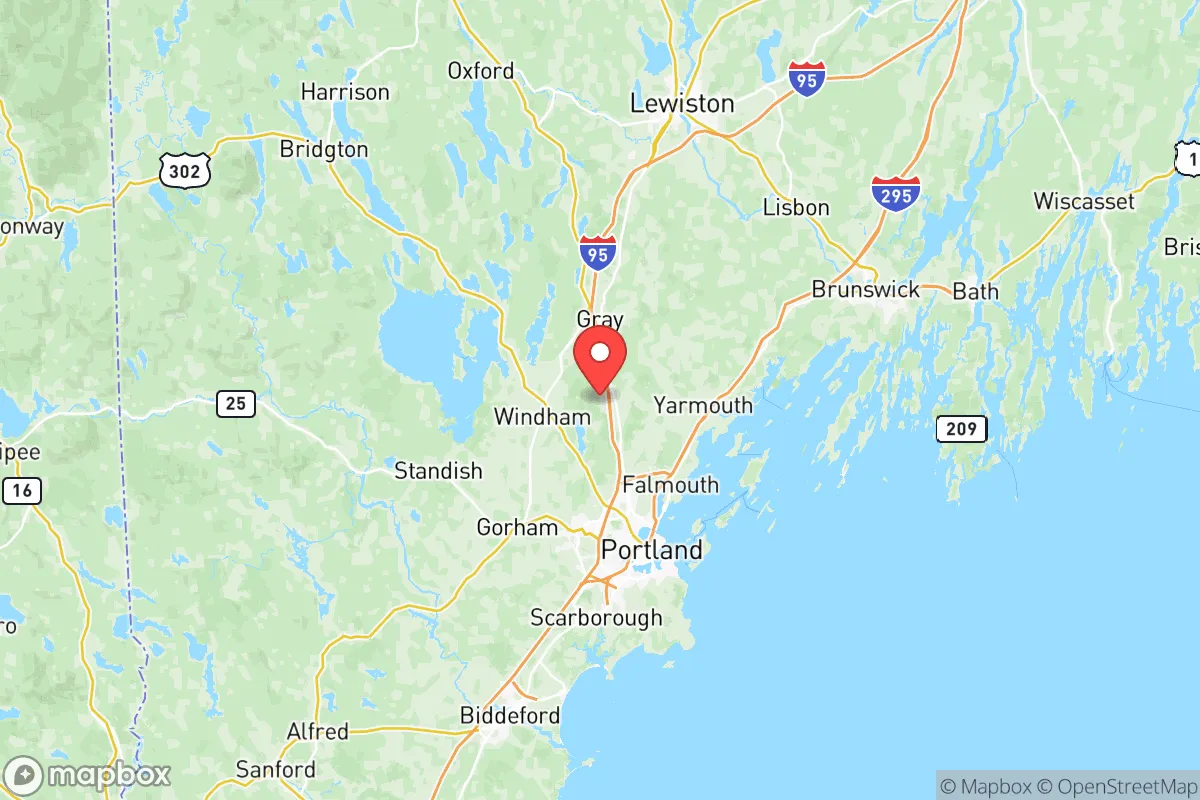
Beyond the urban core, Cumberland County contains distinct smaller towns that offer a markedly different lifestyle. Freeport, home to L.L.Bean's flagship store, blends tourism-driven retail with coastal residential neighborhoods and is a draw for outdoor enthusiasts. Yarmouth and Falmouth are affluent, family-oriented communities with highly rated public schools and direct access to Casco Bay, attracting professionals who commute to Portland but want more space and waterfront recreation. Further inland, Gray and Windham offer a more rural feel with larger lots, lakes (Sebago Lake region), and a slower pace, though they still fall within a 30-minute commute to Portland. The unincorporated areas and small villages in the northern part of the county, such as parts of Standish and Baldwin, are sparsely populated and dominated by forests and farmland, appealing to those seeking privacy and a self-sufficient lifestyle.
Cost & lifestyle range
The cost of living and available amenities vary widely across the county. At the high end, Cape Elizabeth and Falmouth feature median home values well above the county average of $411,400, often exceeding $600,000, with top-tier schools, ocean views, and exclusive neighborhoods. These areas attract professionals and families willing to pay a premium for coastal access and low crime rates. At the more affordable end, Westbrook and Windham offer median home prices closer to $350,000–$400,000, with a mix of older homes and new construction, though inventory remains tight. Renters face a median rent of $1,492, which is steep for the region but still lower than in Portland's downtown core. The lifestyle range is equally broad: in Portland and South Portland, residents enjoy walkable streets, cultural events, and a vibrant food scene; in Gray or Standish, daily life centers on outdoor activities like hiking, boating, and snowmobiling, with fewer dining and entertainment options but significantly more land and quiet.
Cumberland County is best suited for people who value proximity to the Maine coast and a strong regional economy but are flexible about the trade-offs between urban convenience, suburban schools, and rural solitude. Young professionals and empty-nesters often thrive in Portland's dense neighborhoods, while families with children gravitate toward Falmouth, Yarmouth, or Cape Elizabeth for their school systems. Those seeking a more independent, land-based lifestyle find their fit in the county's northern and western towns, where the commute to Portland remains reasonable but the feel is distinctly rural. The county's diversity of settings means that most people can find a niche, provided they can absorb the above-average housing costs.

Crime in Cumberland County
Lower crime rates than 81% of comparable U.S. locations.
Violent CrimeViolent Crime Analysis
Property CrimeProperty Crime Analysis
Crime Analysis
Cumberland County, Maine, presents a safety profile that is markedly safer than national averages, though property crime rates warrant attention from prospective residents. With a violent crime rate of 93.4 per 100,000 residents and a property crime rate of 944.9 per 100,000, the county is a study in contrasts: its urban core, Portland, drives much of the reported crime, while surrounding towns like Yarmouth, Falmouth, and Cape Elizabeth consistently rank among the safest communities in the state. The county's overall safety picture is shaped by its mix of dense coastal city life and sprawling suburban and rural areas, where policing resources and community engagement vary significantly.
Crime in context
Cumberland County's violent crime rate is roughly 75% lower than the national average of approximately 380 per 100,000, placing it among the safest counties in New England for violent offenses. Property crime, however, runs closer to the national rate of about 1,950 per 100,000, with the county's figure of 944.9 per 100,000 representing about half the U.S. average. This disparity is largely driven by Portland, where property crimes like theft from vehicles and bicycle theft are concentrated. By contrast, communities such as Scarborough and Gorham report property crime rates well below the county average, often below 500 per 100,000. The Portland metropolitan area's progressive judicial philosophy, particularly in the Cumberland County District Attorney's office, has drawn criticism from law enforcement and victims' advocates who argue that a focus on diversion and reduced sentencing for property offenders has contributed to repeat offenses and a perception of leniency. This approach, while intended to reduce incarceration, has led to concerns about recidivism and public safety, especially in Portland's downtown and Bayside neighborhoods.
What residents experience
Daily life in Cumberland County is generally safe, but experiences vary sharply by location. In Portland, residents frequently report issues with car break-ins, package theft, and occasional street-level drug activity, particularly around the Old Port and Congress Street corridors. Violent crime is rare but not absent; incidents are often tied to domestic disputes or drug-related conflicts rather than random attacks. In suburban towns like Westbrook and South Portland, residents encounter lower property crime rates but still see occasional thefts from unlocked cars or sheds. The safest experiences are in affluent coastal communities such as Cumberland and Freeport, where neighborhood watch programs and robust local police presence keep crime minimal. For families, the most common safety concern is property crime rather than personal violence, though the progressive policies of the county's justice system—including bail reform and reduced prosecution of low-level theft—have led to frustration among homeowners and small business owners who feel the system prioritizes offender rehabilitation over victim restitution.
Neighborhood-level variation is pronounced. Portland's Parkside and East Bayside areas have higher crime densities, while the West End and Deering Center are quieter. Outside Portland, towns like Windham and Gray offer rural safety with occasional property crime, while Bridgton in the county's northern reaches sees seasonal spikes tied to tourism. Prospective residents should research specific neighborhoods and consider that the county's overall low violent crime rate masks pockets where progressive judicial policies have created a revolving door for property offenders, making vigilance and community engagement essential for long-term safety.
* Values derived from national, state, county, city and local statistics and may differ in a specific area. Last updated: 2026-07-12T08:32:58.000Z
Narrative content on this page is AI-generated and may contain mistakes. Verify any details that matter before acting on them.
ReloMaps may earn a commission from affiliate links at no extra cost to you.

