
Photo: Wikipedia
Personal Sovereignty in Cumberland County
Viable for self-reliance. Generally workable, though some barriers may limit total independence.
What does Personal Sovereignty tell us?
Personal Sovereignty measures your capacity for self-reliance and independence with minimal government friction. Higher scores mean fewer barriers between you and the way you want to live... but it assumes you have the space you need and good neighbors.
What does this tell us?
Personal Sovereignty measures your capacity for self-reliance and independence with minimal government friction. Higher scores mean fewer barriers between you and the way you want to live... but it assumes you have the space you need and good neighbors.
State Policy
Energy independence: Importer (30% of energy produced in-state)
Personal Liberty
Homesteading

Personal Liberty Analysis
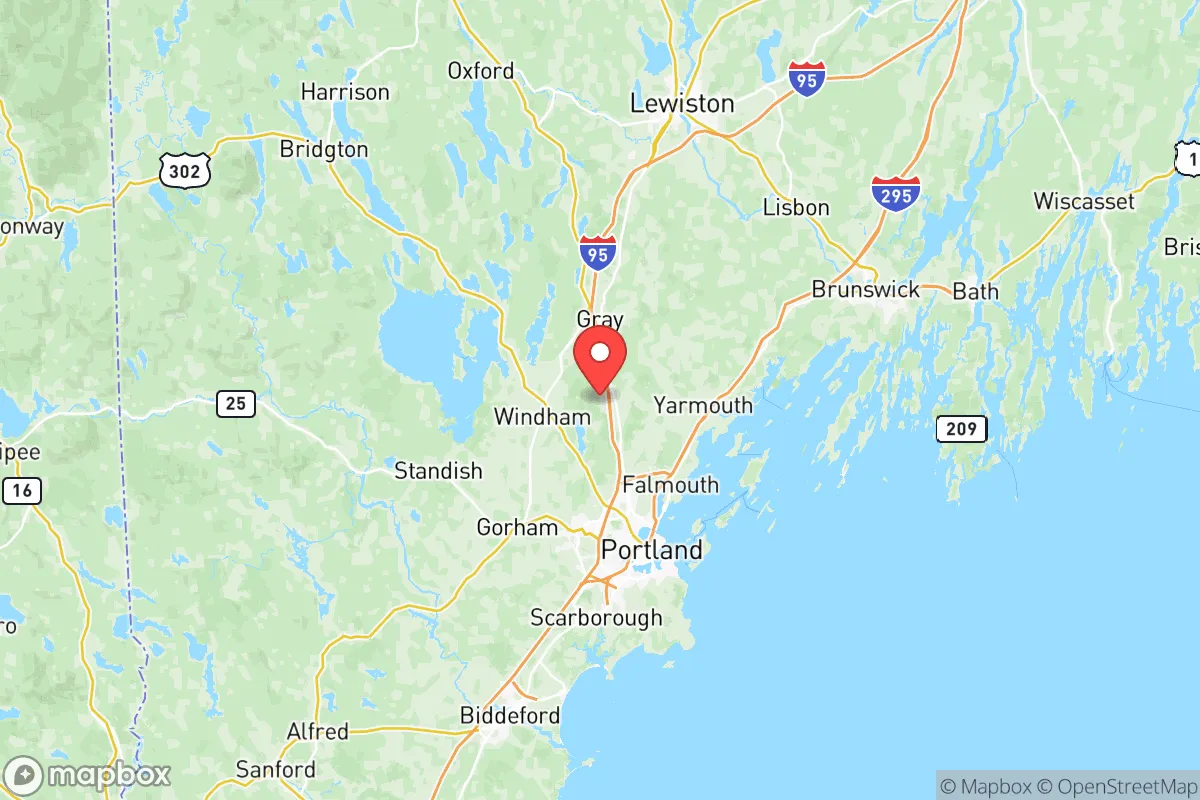
Cumberland County, Maine, presents a nuanced environment for personal sovereignty, where state-level policies often set a baseline that local municipalities can either amplify or moderate. The county's autonomy landscape is shaped by Maine's relatively high tax burden and progressive regulatory framework, but tempered by strong traditions of self-reliance, particularly in its more rural towns. For a conservative-leaning individual or family, the key is understanding that personal freedom in Cumberland County is not uniform—it varies significantly between the urban core of Portland, its close-in suburbs, and the more independent-minded towns to the north and west.
Tax burden and regulatory posture in Cumberland County
Maine's state-level tax burden is among the highest in the nation, and Cumberland County residents feel this acutely. The state's income tax is progressive, with a top marginal rate of 7.15%, and the statewide property tax rate is substantial. Within Cumberland County, property tax rates vary by municipality. For example, Portland and South Portland have higher mill rates to support urban services, while towns like Windham and Standish offer comparatively lower rates, though still significant by national standards. The regulatory posture is similarly mixed. Maine has a statewide building code and stringent environmental regulations, particularly around coastal development and wetlands, which can impact property use in towns like Falmouth and Yarmouth. However, inland towns such as Gray and New Gloucester operate with a lighter touch, with less restrictive zoning and fewer permitting hurdles for home-based businesses and accessory dwellings. The overall environment is one where state-level mandates create a baseline of regulation, but local control allows for meaningful variation, making town selection a critical factor for those seeking to minimize bureaucratic friction.
Self-defense and gun law specifics in Maine
Maine is a "shall-issue" state for concealed carry permits, and since 2015, it has allowed permitless concealed carry for anyone 21 or older who is legally allowed to possess a firearm. This is a strong point for personal sovereignty advocates. Cumberland County, however, is home to the state's largest city, Portland, which has attempted to enact local gun ordinances, such as a ban on firearms in city parks and public buildings. While these local efforts have faced legal challenges and are often preempted by state law, they signal a cultural divide. In contrast, towns like Windham, Standish, and Baldwin have a deeply ingrained gun culture, with active sportsmen's clubs and a general acceptance of firearms for hunting and self-defense. The practical reality is that a resident in rural Baldwin enjoys near-total freedom in firearm ownership and carry, while a resident in Portland must navigate a more restrictive local environment, even if state law ultimately protects their right to carry. The county's sheriff's office is generally supportive of Second Amendment rights, but applicants for permits in Portland may face longer processing times and more scrutiny than those in less populated towns.
Self-reliance and homesteading viability across Cumberland County
The viability of a self-reliant, homesteading lifestyle varies dramatically within Cumberland County. The coastal and suburban towns—Portland, South Portland, Falmouth, Yarmouth—feature small lot sizes, restrictive zoning, and homeowners' association covenants that often prohibit livestock, extensive gardening, or off-grid systems. In these areas, true self-sufficiency is impractical. However, the northern and western reaches of the county offer a different story. Towns like Standish, Windham, Gray, and New Gloucester have large tracts of land zoned for agricultural and rural residential use, with minimum lot sizes of two acres or more. In these towns, raising chickens, goats, and even small livestock is common, and large vegetable gardens are the norm. Off-grid feasibility is limited by state building codes that require connection to the electrical grid for new construction, but solar panel installation is permitted and increasingly common. Rainwater collection is legal for non-potable uses, and private wells are standard. For a family seeking a homesteading lifestyle, the towns of Baldwin and Sebago, in the county's western foothills, offer the most permissive environment, with large parcels, minimal zoning, and a strong tradition of self-reliance. The key takeaway is that homesteading is viable in Cumberland County, but only if you choose the right town—the urban and suburban areas are fundamentally incompatible with this goal.
Personal liberties: parental rights, medical autonomy, speech, and property
Maine's state-level policies on personal liberties are generally more progressive than conservative-leaning residents might prefer. The state has strong anti-discrimination laws, a robust vaccine mandate framework for school attendance, and a medical aid-in-dying law. Parental rights are protected by state statute, but school districts in Cumberland County, particularly in Portland and South Portland, have implemented policies on gender identity and curriculum that some parents find overreaching. In contrast, towns like Windham and Standish have more traditional school boards and a greater emphasis on parental involvement. Medical autonomy is a mixed bag: Maine expanded Medicaid under the ACA and has a state-run health insurance marketplace, but it also protects access to reproductive healthcare. Freedom of speech is constitutionally protected, and property rights are generally strong, though environmental regulations on coastal and wetland properties in towns like Falmouth and Yarmouth can significantly limit what an owner can do with their land. The overall environment is one where personal liberties are legally protected, but the cultural and political climate in the more urban areas can feel restrictive to those with traditional values. Choosing a town with a local government and school board aligned with one's values is essential for preserving personal autonomy.
Compared to other areas in New England, Cumberland County offers a moderate level of personal sovereignty, with significant variation by town. It is far more permissive than Massachusetts or Connecticut on gun rights and property use, but less so than New Hampshire, which has no income or sales tax and a stronger culture of individual liberty. For a conservative-leaning individual or family, the county's rural towns—Standish, Windham, Gray, New Gloucester, and Baldwin—provide a solid foundation for self-reliance and personal freedom, while the urban and suburban centers present a more regulated environment. The strategic choice is clear: prioritize town selection carefully, as the local regulatory and cultural climate will define your day-to-day autonomy far more than state-level policies.

* Values derived from national, state, county, city and local statistics and may differ in a specific area. Last updated: 2026-07-12T08:32:58.000Z
Narrative content on this page is AI-generated and may contain mistakes. Verify any details that matter before acting on them.
ReloMaps may earn a commission from affiliate links at no extra cost to you.

