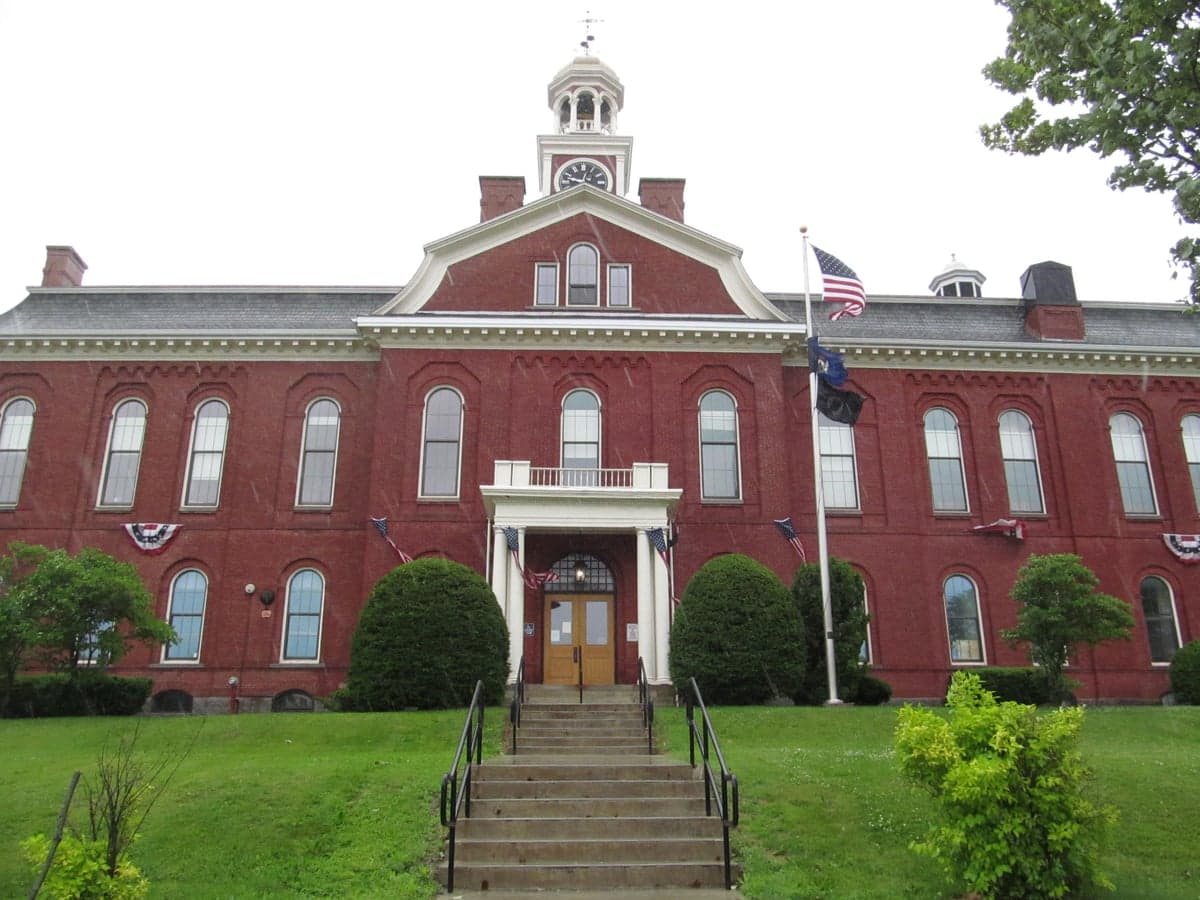
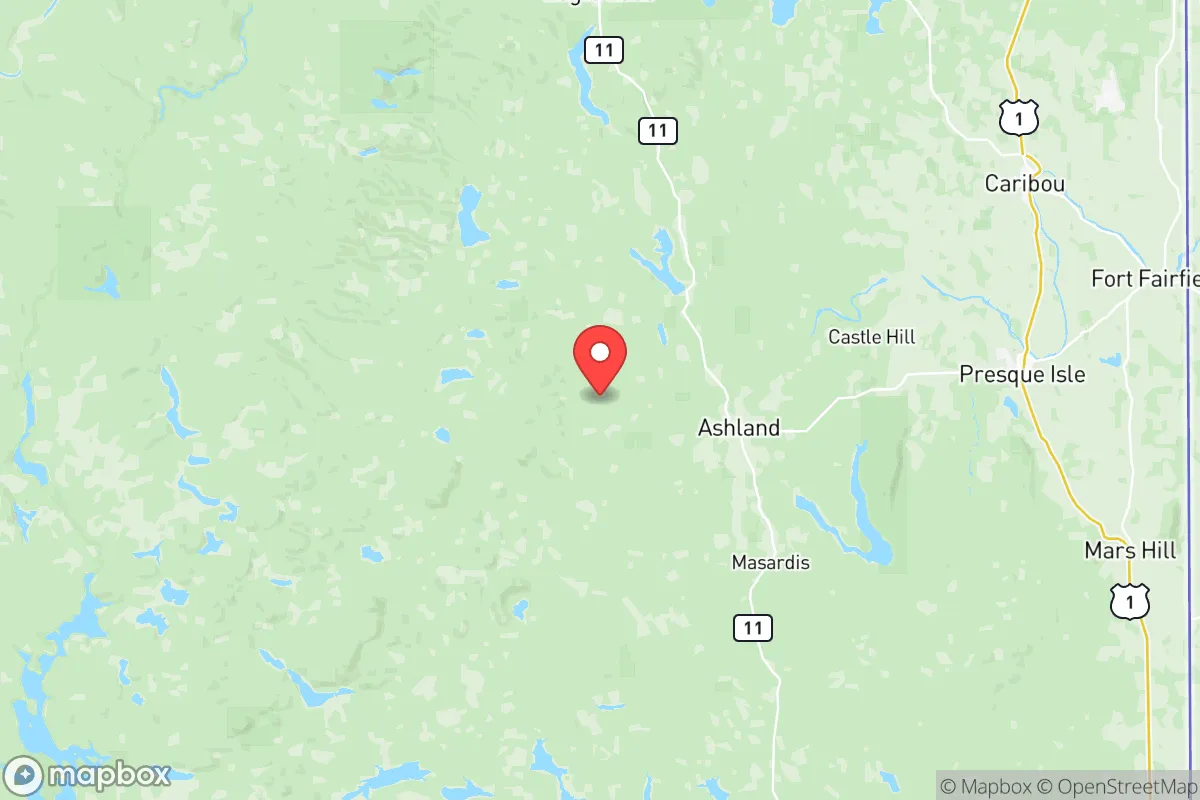
Photo: Wikipedia
Political ClimatePolitical Climate in Aroostook County
Showing district-level results — no local-only data available.
Local Political AnalysisPolitical Analysis of Aroostook County
Aroostook County, Maine, leans Republican in its federal politics, with a Cook Partisan Voting Index (PVI) of R+4, making it one of the few reliably red regions in an otherwise blue-leaning state. However, this county-level number masks a far more nuanced local reality: the politics here are less about party loyalty and more about geography, economic dependency, and a deep-rooted independent streak. While the county as a whole voted for Donald Trump by roughly 10 points in 2020, the margins swing dramatically depending on whether you're in a mill town, a university community, or a farming hub. The long-term trend is a slow reddening of the rural outskirts, even as a few key towns hold steady or inch leftward.
How it compares
Compared to the rest of Maine, Aroostook County is significantly more conservative. Maine's statewide Cook PVI is not officially calculated at the state level, but the state overall has voted Democratic in every presidential election since 1992 (except 2000 and 2016), making it a lean-blue state—perhaps around D+2 or D+3. Aroostook's R+4 position puts it roughly seven points to the right of the state average. For context, the only other counties in Maine that are similarly red are rural, inland areas like Oxford and Franklin. But Aroostook is distinct because it's geographically isolated from the rest of the state, with a strong agricultural and forestry base that shapes its politics. The contrast is starkest when comparing Aroostook to southern Maine's Cumberland County (home to Portland), which is heavily Democratic. In county-to-county terms, Aroostook is the conservative outlier in a state that is often perceived as moderate to liberal.
What this means for residents
For a conservative resident, living in Aroostook County means being part of the dominant local political culture, especially in towns like Presque Isle, Caribou, and Fort Kent, where Republican candidates routinely win by double-digit margins. You'll find a majority of local elected officials, from county commissioners to school board members, who share your values on taxes, gun rights, and energy development. Conservative social views are common, and you won't feel out of place. For a liberal resident, the experience is different. You're more likely to live in the county's few blue-dot communities. Orono is an outlier—it's actually in Penobscot County, but it's a major economic draw for Aroostook students at the University of Maine. The town of Houlton is the largest swing precinct in the county; it voted for Joe Biden in 2020 by a narrow margin, reflecting its mixed economy of government services, healthcare, and small business. In Madawaska and Van Buren, the politics are more conservative, but there's a strong French-American cultural identity that sometimes overrides party lines, making local elections less predictable. Liberal residents often find community in the county's small non-profits, the university system, or through local activism around environmental issues and healthcare access.
Culturally, Aroostook County's political lean shapes policy in very tangible ways. The county is a stronghold for the state's agricultural right-to-farm laws and has pushed back on stricter environmental regulations on forestry and potato farming, which are key economic drivers. At the state level, Aroostook politicians regularly fight for more funding for rural infrastructure and internet access, often aligning with conservative fiscal priorities. But there's a pragmatic streak: the county relies heavily on federal subsidies for programs like SNAP and heating assistance, creating a paradox where residents vote for small-government candidates but depend on big-government benefits. In daily life, this means you'll see more pickup trucks with "Don't Tread on Me" plates than with "Coexist" bumper stickers, but people are still neighborly—politics rarely gets in the way of helping a neighbor plow a driveway or bringing a casserole to a sick friend. The pace of change is slow, and the political climate is more stubborn than volatile, which suits the temperament of most folks who call "The County" home.

State Political ClimatePolitical Climate in Maine
State Political AnalysisPolitical Environment in the State
Maine has long been one of the most politically schizophrenic states in the Northeast, simultaneously electing centrist Republican senators like Susan Collins and progressive icons like Representative Alexandria Ocasio-Cortez-endorsed Jared Golden, all while the state’s presidential vote has stubbornly swung left in every election since 1992 except 2000. Over the past 20 years, the state has drifted from a true purple battleground to a consistently blue presidential state — Joe Biden won it by 9 points in 2020 — but that top-line number conceals a deeply fractured political landscape where the Second Congressional District, covering the state’s vast northern interior, voted for Donald Trump in both 2016 and 2020, and where the legislature has passed some of the nation’s most progressive policies while also protecting gun rights more than many blue states.
Urban vs. rural divide
Maine’s political geography follows a stark urban-rural split, with Portland and its immediate suburbs — South Portland, Westbrook, Scarborough — delivering the bulk of Democratic votes. Cumberland County, home to Portland, gave Biden over 60% in 2020. Meanwhile, the vast Second Congressional District, which covers the northern and eastern two-thirds of the state, is the only congressional district that voted for Trump in 2020 and also the only one that split its electoral votes — Maine is one of only two states that awards electoral votes by congressional district. Within that district, the reliably blue Bangor area and the college town of Orono (home to the University of Maine) provide Democratic bulwarks, while the rest — from Lewiston to Biddeford to the rural towns along the Canadian border — lean conservative, often by 20-30 point margins. A notable exception is Augusta, the capital, which tends to vote Democratic but is ringed by conservative rural towns. The coastal towns of Camden and Bar Harbor, once Republican-leaning, have shifted Democratic over the past two decades as second-home owners and out-of-state retirees move in.
Policy environment
Maine’s policy environment is a study in contrasts. The state has a flat income tax of 5.8% — higher than zero-tax states but low for New England — and a sales tax of 5.5% that exempts most groceries and prescription drugs, making it relatively tax-friendly for retirees and middle-income families. Property taxes, however, are among the highest in the nation as a percentage of home value, averaging about 1.2% of assessed value, though some towns like Boothbay Harbor push above 1.5%. On regulation, Maine has expanded Medicaid under the Affordable Care Act and maintains a strict vaccine mandate for schoolchildren — no philosophical exemptions — which is a point of tension for conservative families. The state also passed a paid family and medical leave program (2023) that will fund 12 weeks of partial wage replacement beginning in 2026, funded by a small payroll tax split between employer and employee. Right-to-work is not recognized in Maine; union membership remains relatively high at about 12% of the workforce.
Recent policy direction
Maine’s recent legislative track record shows a clear leftward tilt, but with notable restraint in two areas: guns and self-defense. In 2023, the legislature passed a 72-hour waiting period on gun purchases and expanded background checks to private sales, but a proposed "red flag" law — allowing temporary seizure of firearms from individuals deemed a risk by family or police — failed to pass after a sustained lobbying effort by over 40,000 Maine residents who contacted their legislators. The state does not require a permit to carry a concealed firearm (permitless carry was adopted in 2015), and stand-your-ground is on the books. Maine also has no seatbelt law for adults in the back seat, reflecting a libertarian streak. On education, the state adopted a universal school meal program in 2023 and prohibits public schools from banning books based on viewpoint. Parental rights are protected in law regarding medical decisions, but there is no specific statutory right to opt out of LGBTQ-inclusive curriculum, which has been a flashpoint in conservative towns like Rangeley and Madison. On privacy, Maine was the first state to require ISPs to get opt-in consent before selling customer data (2019). On bodily autonomy, abortion is legal up to viability and protected by statute (2019’s LD 820), and gender-affirming care for minors is legal, though the state has not explicitly preempted local ordinances that might restrict it.
Civil unrest & political movements
Maine’s political activism is notably quieter than in larger states, but recent years have seen visible tensions. The 2023 mass shooting in Lewiston — the deadliest in state history — reignited debates about gun control but also produced a grassroots pushback from rural residents who felt their traditions were under attack. Organized protests have been sparse but targeted: the 2020 Black Lives Matter protests in Portland were large for the city (several thousand), but the state saw no significant property damage or sustained unrest. The Maine Woods resistance — a loose coalition of libertarian-leaning and conservative activists — has successfully blocked proposed national monument designations and large-scale wind farm projects in the North Woods, often using local land-use boards. Immigration politics are muted compared to border states, but the arrival of asylum seekers in Portland strained city services in 2023, leading the city to declare a state of civil emergency. Bangor and Waterville have seen smaller-scale tensions over refugee resettlement. Election integrity has not been a major flashpoint; Maine uses a paper ballot system and automatic voter registration, and the 2020 election saw the country’s lowest rate of irregularities per capita. The movement to secede and form a "State of Acadia" in northern Maine has faded since its 2016 peak, but the cultural grievance underlying it — that Portland and the southern coast dominate state politics — remains potent.
Projection
Over the next 5-10 years, Maine will likely shift further left at the state level, driven by three demographic forces: the continued influx of remote workers and retirees to the coast (Portland metro grew 6% from 2010-2020, while rural Aroostook County shrank 8%), the aging of the state’s Republican base (Maine has the oldest median age in the nation at 44.8), and the political alignment of young Mainers who grew up under the opioid crisis and climate anxiety — both pressing issues here. The Second Congressional District is expected to remain competitive but could flip to a permanent Democratic lean as the Portland metro sprawl creeps north and Bangor’s college population grows. Gun laws will likely tighten incrementally — a waiting period already passed, and a red flag law could return in 2025 or 2027 — but permitless carry and stand-your-ground are almost certainly safe for at least the next decade, as they enjoy broad support among the state’s independent-leaning rural voters. Property taxes will remain high, but the state’s flat income tax is unlikely to rise under a Republican governor (a moderate Republican won in 2018 and again in 2022). The biggest wildcard is the state’s dependence on federal spending — Maine receives $1.31 back from Washington for every dollar sent in taxes — meaning any significant federal budget cuts would hit rural Maine hardest and could upend the state’s fiscal politics.
For a conservative relocating to Maine, the bottom line is this: you’ll live in a state where your gun rights are among the strongest in New England, your tax burden is moderate if you choose a low-property-tax town (avoid the coastal hotspots), but you’ll have no meaningful influence on the state’s presidential vote and limited sway in the legislature. The best bet for a conservative-leaning new resident is to settle in a Second District town like Ellsworth, Newport, or Sanford, where local governance is more aligned with your values and the cost of living is significantly lower than in Portland. You’ll also benefit from the state’s strong pro-housing policies — Maine has streamlined permitting for accessory dwelling units and eliminated minimum parking requirements, making it easier to build or buy in rural areas. Just don’t expect the state to become red anytime soon; the demographic tide is running the other way.
* Values derived from national, state, county, city and local statistics and may differ in a specific area. Last updated: 2026-07-01T05:27:24.000Z
Narrative content on this page is AI-generated and may contain mistakes. Verify any details that matter before acting on them.
ReloMaps may earn a commission from affiliate links at no extra cost to you.

