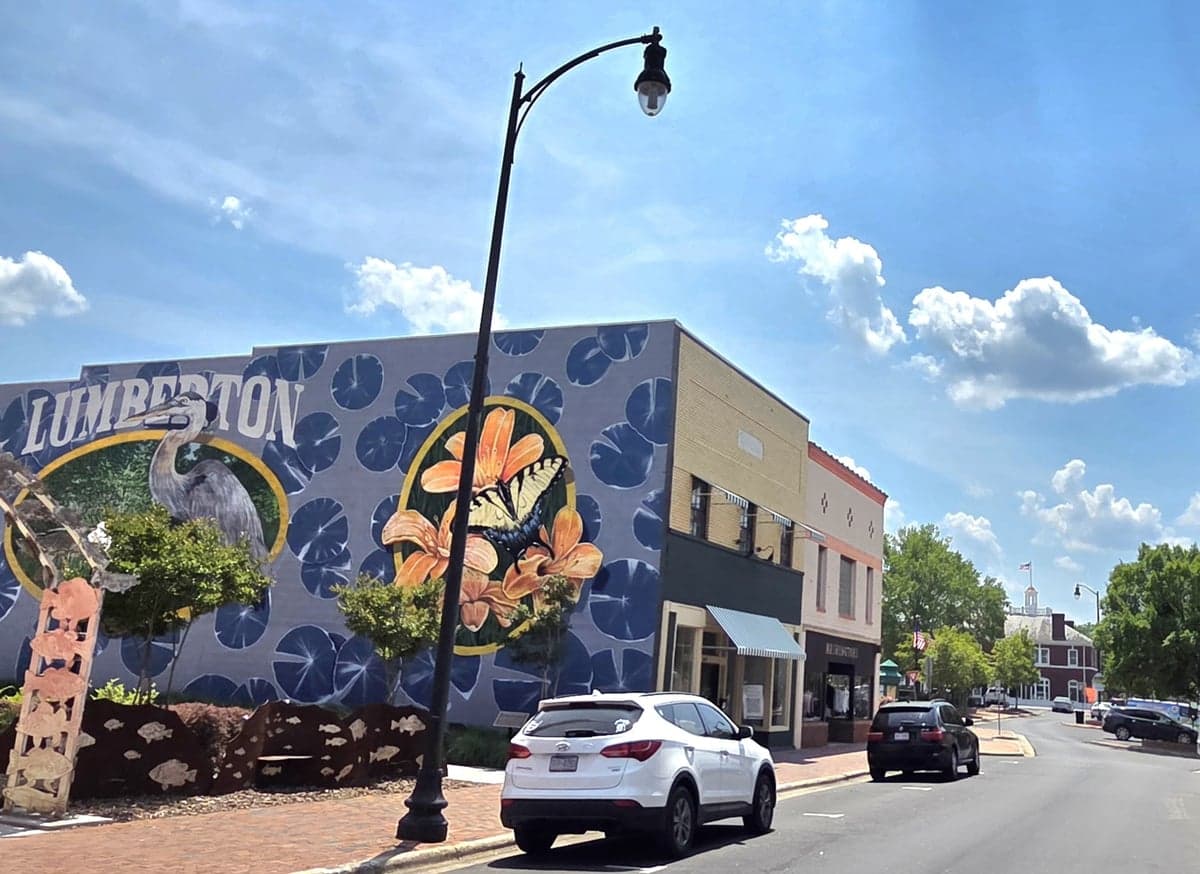
Photo: Wikipedia
Strategic Assessment of Lumberton, NC
Meaningful friction. Expect exposure to either population pressure, blast zones, or natural disaster risk. Consider buying a retreat property.
What does the Strategic Assessment tell us?
Our Strategic Assessment grades tactical survivability of an area. Major population centers, military targets, fallout zones, natural disasters, and border exposure all drive risk — lower exposure means a more defensible position in a crisis.
This is heavily inspired by Joel Skousen's Strategic Relocation book. Highly recommended you checkout the book ($)What does this tell us?
Our Strategic Assessment grades tactical survivability of an area. Major population centers, military targets, fallout zones, natural disasters, and border exposure all drive risk — lower exposure means a more defensible position in a crisis.
This is heavily inspired by Joel Skousen's Strategic Relocation book. Highly recommended you checkout the book ($)Strategic Pillars
Key Distances
Regional Safe Places
Below is our recommended "safe zones" in North Carolina and the surrounding area based on our strategic heuristics. For most people, it's unrealistic to live in a “safe zone” full-time due to work, family or other personal reasons. They tend to be more rural. However, many of these areas are perfect for second homes and retreat properties that double as a vacation home or even a short-term rental.

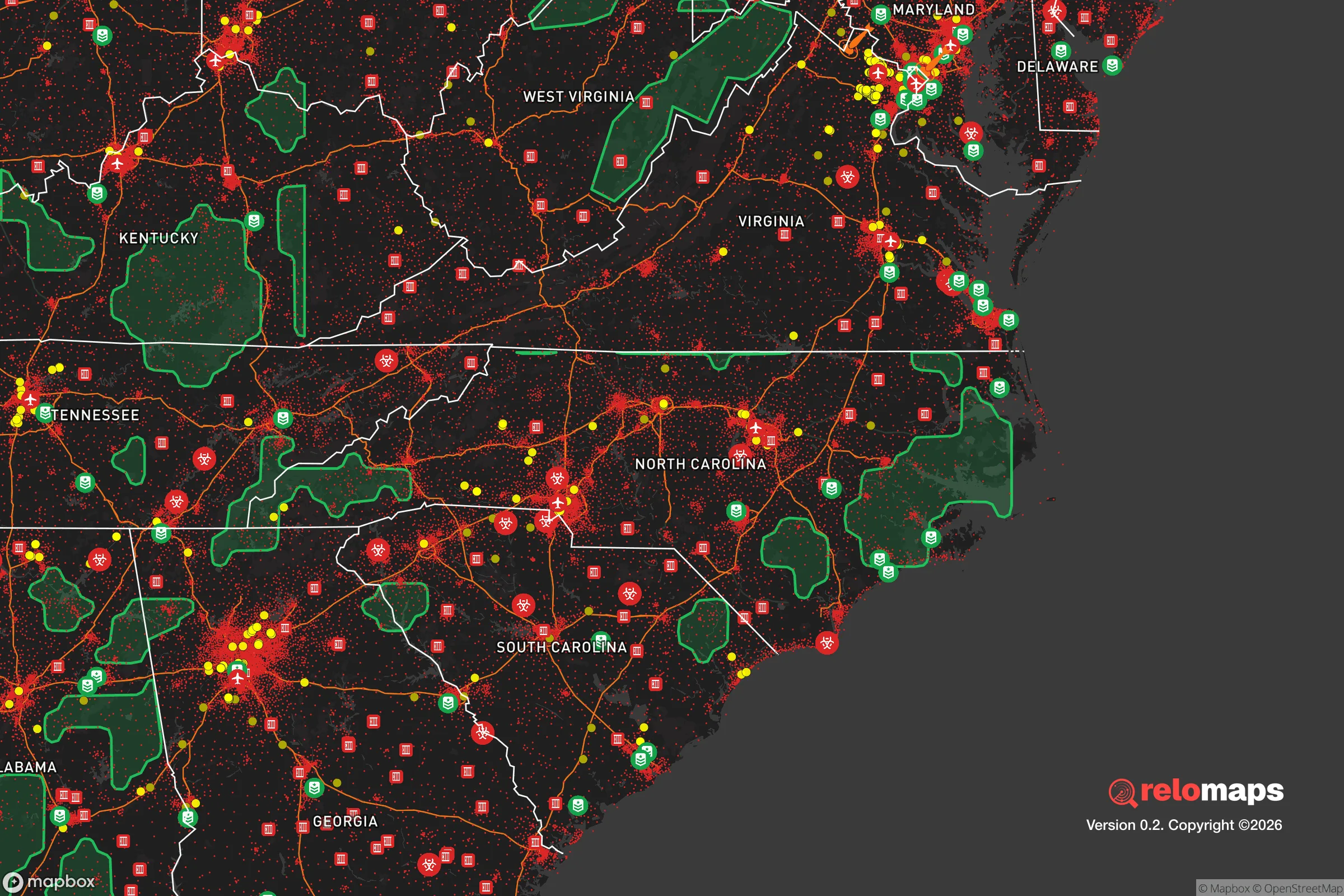


Important Note: For informational purposes only. This does not mean nothing bad ever happens in the green zones. Please use common sense. This is based on public data and modeled with AI. We tried to take a conservative approach but mistakes happen. We update this regularly as new information becomes available.
Solar Generator Recommendations
Backup power matters more here than in safer locations. We've picked three solar generators across budgets and capacity tiers — start with the budget unit if you only need a few essentials, or step up if you want to run a fridge and HVAC for days at a time.
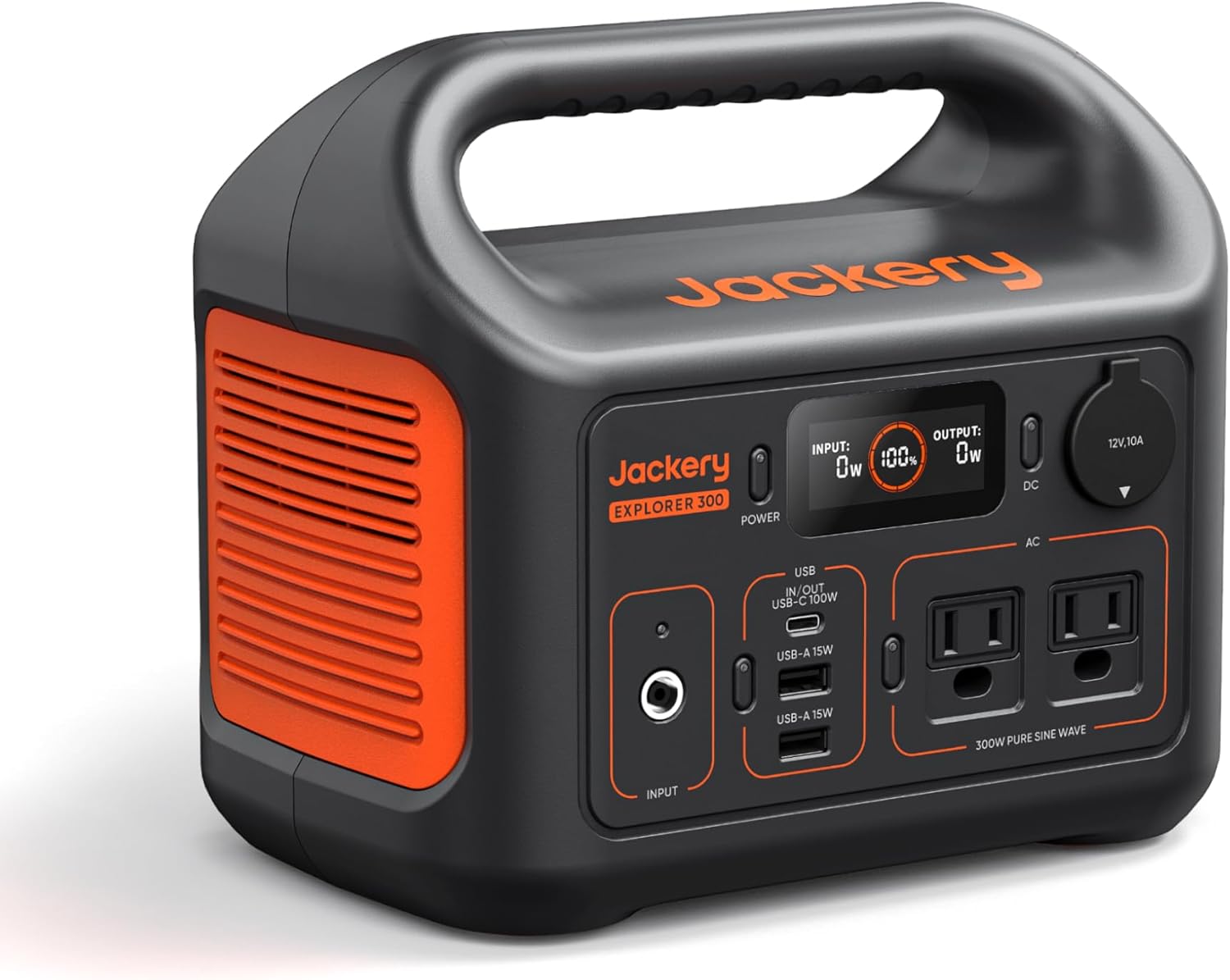
Jackery Portable Power Station Explorer 300
Budget OptionPower on the Go: Weighing only 11 lbs, it's convenient to set up and store with book-sized foldable solar panels

BLUETTI Portable Power Station AC180
Designed for both indoor and outdoor scenarios, AC180 is highly capable as it has a robost capacity and continuous output power.

EF ECOFLOW DELTA Pro Ultra Power Station
Upgraded PickEcoFlow DELTA Pro Ultra is a whole-home energy system designed to grow with your family. Integrated with the Smart Home Panel 2, it scales to meet your evolving energy needs — keeping your home powered, intelligent, and secure through every stage of life.
We earn a commission, at no additional cost to you.
Strategic Assessment Analysis
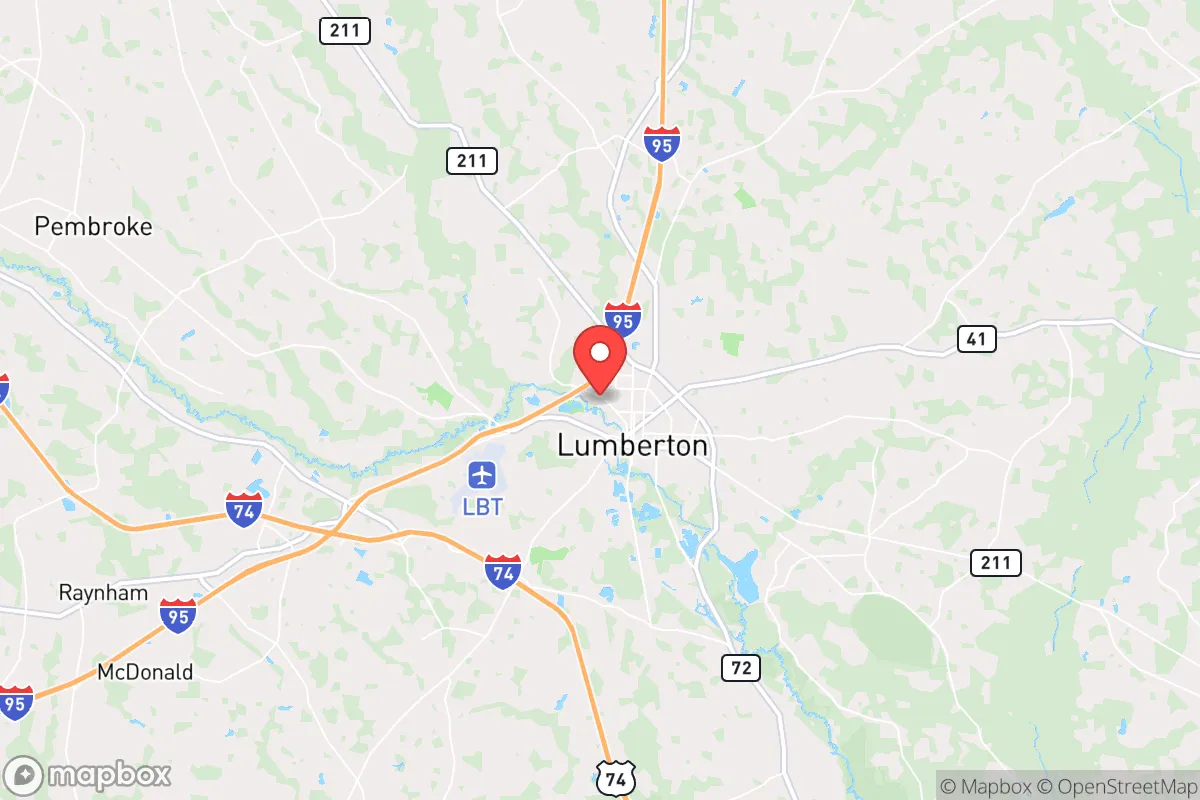
Lumberton, North Carolina, occupies a strategic position in the southeastern part of the state that offers a blend of accessibility and buffer—close enough to major metropolitan areas for supply runs and economic ties, yet far enough to avoid the immediate blast radius of high-value targets. The city sits at the crossroads of I-95 and US-74, making it a logistical node for regional distribution, but this same infrastructure also means it’s a potential chokepoint in a crisis. For a relocator weighing disaster readiness and self-sufficiency, Lumberton presents a mixed picture: genuine geographic advantages in terms of water access and agricultural proximity, offset by real exposure to flooding, hurricane tracks, and the fallout risks that come with being near military and industrial infrastructure.
Geographic position and natural advantages for long-term stability
Lumberton’s location in the Coastal Plain gives it flat terrain and rich soil, which historically made it a center for agriculture—tobacco, soybeans, corn, and cotton still dominate the surrounding fields. This agricultural base is a tangible resilience asset: local food production capacity exists within a short drive, and the Cape Fear River runs through the city, providing a surface water source that could be leveraged for irrigation or emergency supply. The city sits about 30 miles from the coast as the crow flies, which puts it outside the most severe storm surge zones but still within the typical inland path of hurricanes moving up from the Cape Fear region. Elevation is low—around 130 feet above sea level—so drainage and floodplain management are ongoing concerns, but the area is not prone to earthquakes, wildfires, or landslides. The climate is humid subtropical, with hot summers and mild winters, meaning cold-weather survival challenges are minimal. For someone looking to establish a long-term homestead or smallholding, the growing season runs roughly from April to October, and the soil is workable without heavy amendment. The proximity to the Lumber River State Park and the surrounding wetlands also offers hunting, fishing, and foraging opportunities, though these areas are not wilderness—they’re managed public lands with access restrictions during certain seasons.
Risks, exposures, and proximity to fallout-relevant landmarks
The most significant natural risk for Lumberton is flooding. The city has experienced multiple major flood events in the past decade, most notably from Hurricanes Matthew (2016) and Florence (2018), which inundated large portions of the city and surrounding Robeson County. The Lumber River and its tributaries are prone to overflowing after prolonged rainfall, and the flat topography means water can sit for days. FEMA flood maps show substantial portions of the city in the 100-year floodplain, particularly south of I-95 and along the river corridor. Any relocator should verify parcel elevation and flood history before purchasing property. Beyond weather, Lumberton’s position near I-95 and the intersection of major rail lines makes it a potential secondary target in a conflict scenario—transportation hubs are often targeted for disruption. More directly, the city lies roughly 60 miles from the Wilmington port and the Sunny Point Military Ocean Terminal, a major ammunition shipping point. That facility is a high-value strategic asset, and while Lumberton is outside the immediate blast radius of a conventional strike on Sunny Point, fallout patterns from a nuclear event at that location could affect the area depending on wind direction. Similarly, Fort Bragg (now Fort Liberty) is about 50 miles northwest, and the Raleigh-Durham metro area is roughly 90 miles north—both are potential primary targets. Lumberton’s distance from these sites offers a buffer, but not a guarantee. The presence of the Robeson County landfill and several industrial facilities along I-95 also means localized chemical or hazmat incidents are a non-zero concern, though not a primary risk.
Practical resilience for a relocator: food, water, energy, and defensibility
For someone serious about self-sufficiency, Lumberton offers a few concrete advantages and some notable gaps. On the food side, the agricultural surroundings mean that local farmers’ markets, roadside stands, and bulk suppliers are available within a 20-minute drive. Robeson County has a strong farming community, and land prices remain relatively low compared to the Triangle or Charlotte metro areas—agricultural parcels can be found for $3,000–$6,000 per acre as of 2025. This makes small-scale farming or hobby homesteading financially feasible. Water access is good for those on well water, but municipal water in Lumberton comes from the Cape Fear River and is treated at the city’s water plant. In a prolonged grid-down scenario, well owners with hand pumps or solar-powered pumps would have a significant advantage. The city’s water table is high, so shallow wells are viable in most areas. Energy resilience is more mixed. Lumberton is served by Duke Energy Progress, and power outages are common during thunderstorms and hurricanes—many residents already own generators. Solar potential is decent, with about 215 sunny days per year, but net metering policies in North Carolina have become less favorable in recent years, so off-grid solar with battery storage is the more reliable path for true independence. Defensibility is where Lumberton falls short for a relocator seeking isolation. The city itself has a population of roughly 19,000, and Robeson County is one of the most populous rural counties in the state at around 130,000. You are not remote here. Neighbors are close, and the area has above-average property crime rates—the Lumberton Police Department reported around 3,500 property crimes in 2023, which is high for a city of its size. Rural properties outside city limits offer more buffer, but the county’s road network is dense, and there are few natural barriers that would slow movement. For a family looking to hunker down, a well-chosen parcel with good drainage, a reliable well, and some distance from main roads is the best bet. For a single individual, a smaller homestead with solar and a garden is feasible, but you’ll need to accept that you’re not disappearing into the woods—you’re settling in a working-class agricultural town with real community ties and real crime concerns.
Overall, Lumberton’s strategic picture is one of moderate resilience with clear trade-offs. The area offers affordable land, good water access, and proximity to local food production, all of which are genuine assets for a self-sufficient lifestyle. The downsides are equally real: flood risk, hurricane exposure, and a location that is not far enough from major military and industrial targets to offer true strategic depth. For a relocator who is willing to invest in elevation surveys, flood mitigation, and off-grid infrastructure, Lumberton can work as a base of operations. But it is not a retreat in the classic sense—it is a populated, infrastructure-connected town with the vulnerabilities that come with that. If your priority is absolute isolation and minimal risk exposure, you would look further inland or into the mountains. If you want a place where you can buy a few acres, dig a well, and still drive an hour to a major city for supplies or work, Lumberton is a realistic option that deserves a serious look.

* Values derived from national, state, county, city and local statistics and may differ in a specific area. Last updated: 2026-11-17T17:49:59.000Z
Narrative content on this page is AI-generated and may contain mistakes. Verify any details that matter before acting on them.
ReloMaps may earn a commission from affiliate links at no extra cost to you.

