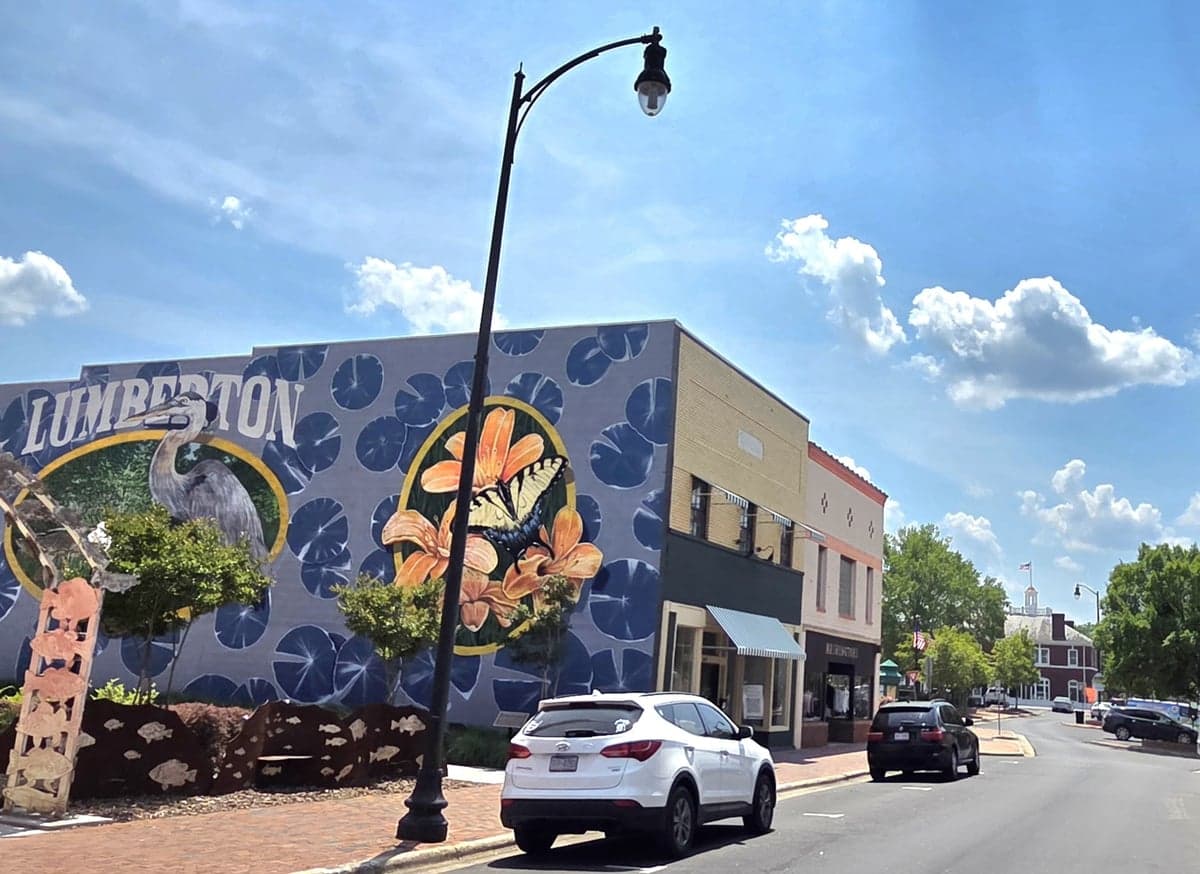
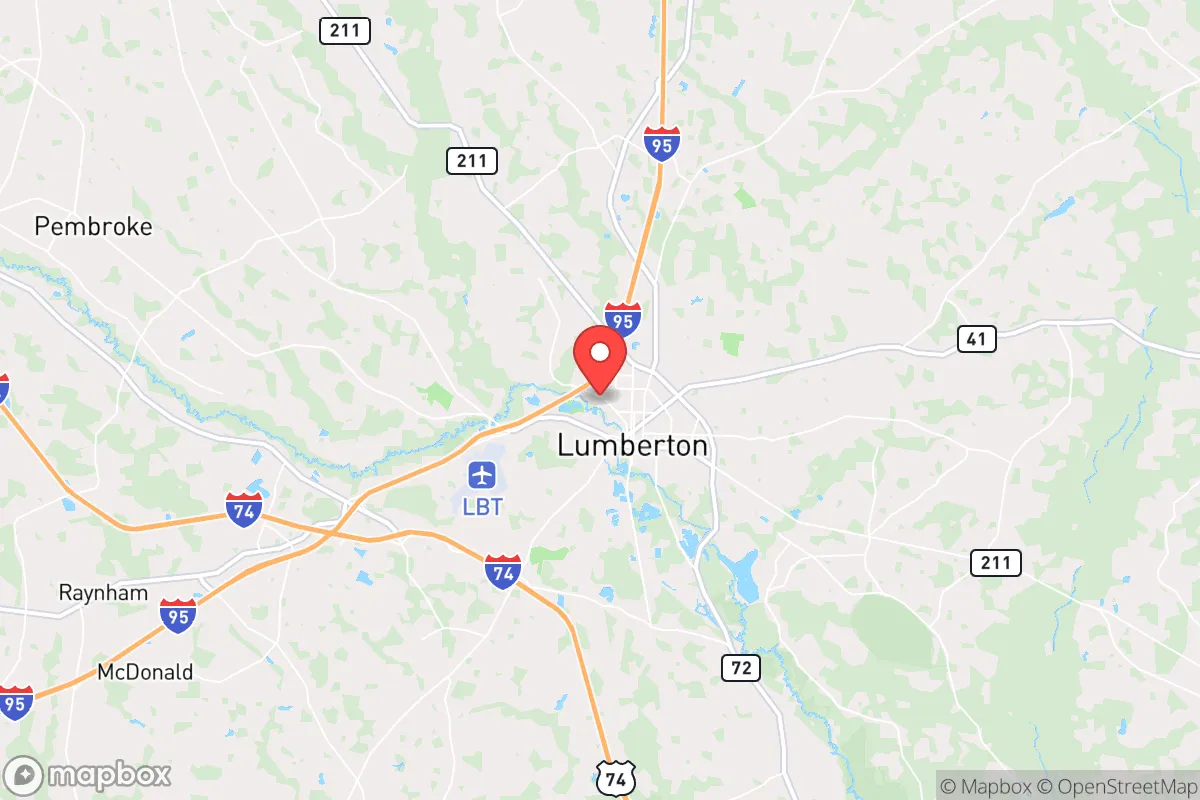
Photo: Wikipedia
Quality of Life in Lumberton, NC
A high quality of life with strong walkability, manageable living costs, healthy neighborhood signals, and solid amenity access.
What does Quality of Life tell us?
Quality of Life blends cost of living, nearby amenities, socioeconomic signals, and neighborhood character. City-level scores represent the whole municipality; individual neighborhoods can differ.
What does this tell us?
Quality of Life blends cost of living, nearby amenities, socioeconomic signals, and neighborhood character. City-level scores represent the whole municipality; individual neighborhoods can differ.
Cost of Living
38% below national average
The Real Cost of Living in Lumberton, NC for 2026
| Tier | Individual | Family (4) |
|---|---|---|
| Survival | $13k | $25k |
| Comfortable | $27k | $40k |
| Luxury | $78k+ | $121k+ |
| Elite (Top 5%) | $116k+ | $180k+ |
108%
The Area Signal
A metric tracking the socioeconomic signals of the area.
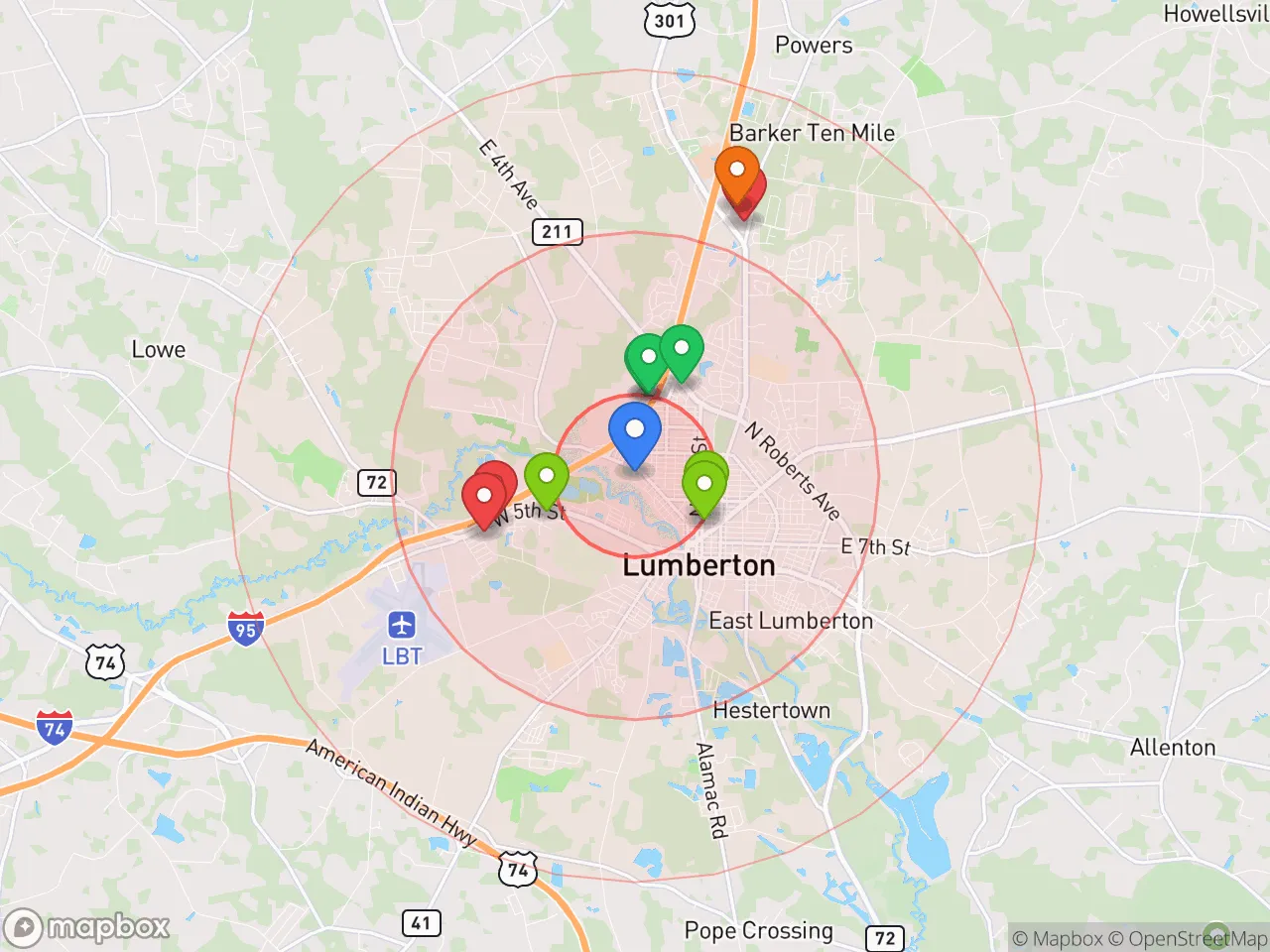
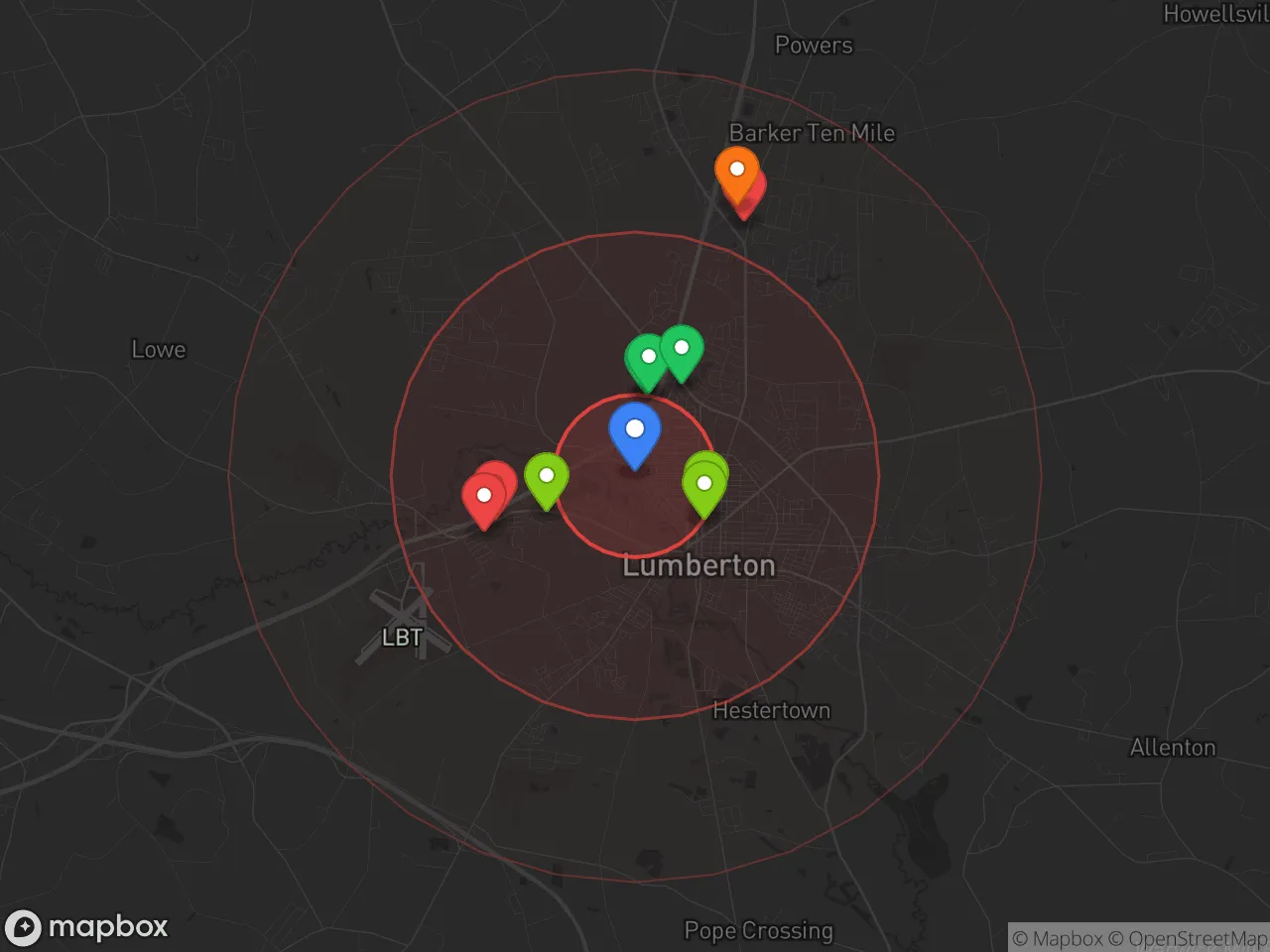
Hobbies
Explore the areaGroceries
0 within 10 miles
Gas
0 within 10 miles
Hospital
0 within 20 miles
Airport
RDU — Raleigh–Durham International
Post Office
Critical Amenities
Quality-of-Life Analysis
Lumberton, North Carolina, offers a notably affordable quality of life, with a cost of living index of 62 (well below the US average of 100) and a median home value of just $140,100. The area is characterized by a mix of working-class families, long-term residents, and those seeking a slower pace of life, with a median household income that aligns with the region's low expenses. While not affluent by national standards, Lumberton provides a practical, budget-friendly environment where housing costs leave room for other priorities, attracting people who value financial stability over high-end amenities.
Cost of living, housing affordability, and how it compares to nearby areas
Lumberton's cost of living index of 62 makes it one of the most affordable places in southeastern North Carolina. The median home value of $140,100 is significantly lower than the state median of roughly $290,000, and the median rent of $824 is about half the national average. Compared to nearby Fayetteville (COL index ~85) or Wilmington (COL index ~95), Lumberton offers substantial savings on both housing and everyday expenses. The average commute of 18.9 minutes is notably short, reducing transportation costs and freeing up time for family or leisure. This combination of low home prices, cheap rent, and minimal commuting makes Lumberton especially attractive for first-time homebuyers, retirees on fixed incomes, and remote workers who want to stretch their earnings further than in pricier metros.
Schools, daily amenities, and what the local rhythm feels like
Daily life in Lumberton centers on a relaxed, small-city rhythm anchored by the Lumber River and a handful of local parks. The Public Schools of Robeson County serve the area, with Lumberton Senior High School and several elementary schools providing educational options; for families seeking alternatives, there are a few private and charter schools nearby. Grocery stores, chain retailers, and local restaurants are concentrated along Fayetteville Road and Roberts Avenue, covering most routine needs without requiring a long drive. For more extensive shopping or entertainment, residents typically drive 30 minutes to Fayetteville or an hour to Wilmington. The area's cultural touchpoints include the Carolina Civic Center and the annual Robeson County Fair, but the overall pace is quiet and unhurried — more about backyard gatherings and river walks than nightlife or big-city bustle.
Lumberton is best suited for people who prioritize affordability and a low-stress commute over urban excitement. It works well for budget-conscious families, remote workers, and retirees who want a low-cost home base with reasonable access to larger cities. Those seeking high-end dining, robust public transit, or a vibrant cultural scene will find the area limited. However, for anyone whose top criteria are a median rent under $850, a commute under 20 minutes, and a cost of living that makes financial breathing room possible, Lumberton delivers a practical, grounded quality of life.

Crime in Lumberton, NC
Significantly higher crime rates than 95% of comparable U.S. locations.
Violent CrimeViolent Crime Analysis
Property CrimeProperty Crime Analysis
Crime Analysis
Lumberton, North Carolina, faces a severe public safety challenge, with crime rates that far exceed both state and national averages. The city's violent crime rate stands at 1,249.9 incidents per 100,000 residents, while property crime reaches 8,410.1 per 100,000, placing it among the most dangerous communities in the state. These figures reflect a systemic issue that potential residents should weigh carefully, particularly given the broader context of Robeson County's criminal justice environment.
Crime in context
Lumberton's violent crime rate is more than three times the national average of roughly 380 per 100,000 and significantly higher than the North Carolina state average of approximately 400 per 100,000. Property crime in the city is similarly elevated, exceeding the national average of about 2,200 per 100,000 by a factor of nearly four. These statistics place Lumberton in the bottom percentile nationally for safety. The high rates are compounded by the fact that Lumberton is part of the Fayetteville metropolitan area, a region that itself struggles with elevated crime. Readers should be aware that large metro areas, particularly those with progressive district attorneys and judges who prioritize offender rehabilitation over public safety, often see higher recidivism and more criminals on the street. This ideological approach, while sympathetic to offenders, can directly undermine justice for victims and embolden criminal activity.
What residents experience
For those living in Lumberton, the risk of becoming a victim of crime is a daily reality. The violent crime category includes aggravated assault, robbery, and homicide, with the city recording incidents at a rate that suggests a resident has a roughly 1-in-80 chance of being a victim of violence each year. Property crimes such as burglary, theft, and motor vehicle theft are even more pervasive, with a likelihood of about 1-in-12 households being affected annually. These conditions create an environment where personal safety and property security require constant vigilance. The presence of a progressive criminal justice philosophy in the region—focused on reducing incarceration and diverting offenders from prosecution—means that many individuals arrested for these crimes face minimal consequences, further eroding deterrence and public confidence in the system.
Neighborhood-level safety in Lumberton varies considerably, though reliable block-by-block data is limited. Areas closer to the downtown core and along major thoroughfares like Roberts Avenue and Fayetteville Road tend to report higher concentrations of both violent and property crime. In contrast, some outlying residential subdivisions and newer developments on the city's western and southern edges may experience lower incident rates, though they are not immune to the citywide trend. Prospective residents should consult local police department crime maps and speak with neighbors before committing to a specific area. The broader Robeson County context, including the influence of progressive prosecutorial policies, means that even relatively safer pockets exist within a jurisdiction where the justice system often fails to hold offenders accountable, leaving residents to bear the burden of elevated crime.
* Values derived from national, state, county, city and local statistics and may differ in a specific area. Last updated: 2026-11-17T17:49:59.000Z
Narrative content on this page is AI-generated and may contain mistakes. Verify any details that matter before acting on them.
ReloMaps may earn a commission from affiliate links at no extra cost to you.

