Photo: Wikipedia
Personal Sovereignty in Louisiana
Strong independent fundamentals that actively favor personal liberty and low regulation.
What does Personal Sovereignty tell us?
Personal Sovereignty measures your capacity for self-reliance and independence with minimal government friction. Higher scores mean fewer barriers between you and the way you want to live... but it assumes you have the space you need and good neighbors.
What does this tell us?
Personal Sovereignty measures your capacity for self-reliance and independence with minimal government friction. Higher scores mean fewer barriers between you and the way you want to live... but it assumes you have the space you need and good neighbors.
State Policy
Energy independence: Net exporter (280% of energy produced in-state)
Personal Liberty
Homesteading

Personal Liberty Analysis
Louisiana offers one of the strongest personal sovereignty environments in the South, rooted in a legal tradition that prizes local control, minimal state interference, and individual responsibility. The state’s "Napoleonic Code" civil law system, while distinct from common law, actually provides clearer property and inheritance protections for individuals who plan ahead. For a relocation audience prioritizing autonomy, Louisiana’s combination of low regulatory overhead, robust self-defense statutes, and permissive land-use rules creates a landscape where self-reliant individuals and families can operate with far fewer constraints than in many coastal or Midwestern states. However, the degree of personal sovereignty varies significantly between urban centers like New Orleans and Baton Rouge and the more libertarian-leaning rural parishes and small towns.
Tax burden and regulatory posture: How Louisiana compares to neighboring states
Louisiana’s overall tax burden is among the lowest in the nation, ranking 44th in combined state and local tax collections as a percentage of income. The state has no estate tax, no inheritance tax, and no tax on Social Security benefits, which directly benefits retirees and wealth-transfer planning. The state income tax is a flat 3% for individuals, down from a graduated system in recent years, and property taxes are exceptionally low — the median effective property tax rate is roughly 0.55%, compared to the national average of 1.07%. This means a $200,000 home in a parish like Livingston or St. Tammany might carry an annual tax bill under $1,200. Sales taxes are higher, often exceeding 10% in parishes like Orleans and Jefferson when local add-ons are included, but necessities like groceries and prescription drugs are exempt. The regulatory posture is generally light-touch: Louisiana is a right-to-work state, has no statewide building code for single-family homes in most rural parishes, and permits local governments to opt out of many state-level environmental and land-use mandates. For a family or individual seeking to minimize government overhead, parishes like West Feliciana, Vernon, and Beauregard offer the most hands-off regulatory environments, while New Orleans and Baton Rouge impose stricter permitting, zoning, and business licensing requirements.
Self-defense and gun law specifics: Stand Your Ground and permitless carry
Louisiana is one of the most firearm-friendly states in the country, with a legal framework that strongly favors individual self-defense rights. The state enacted constitutional carry (permitless carry) in 2024, allowing any law-abiding adult 18 or older to carry a concealed handgun without a permit. Louisiana also has a "Stand Your Ground" statute that removes any duty to retreat before using deadly force in any place where the individual has a legal right to be. The Castle Doctrine applies to homes, vehicles, and workplaces. There is no state-level firearm registration, no waiting period for purchase, and no limit on magazine capacity. Local preemption laws prevent parishes and municipalities from enacting their own gun restrictions, meaning that even in New Orleans, which has historically attempted to impose local ordinances, state law overrides them. For the relocation reader, this means that self-defense rights are uniform across the state — from the rural parishes of Franklin and Morehouse to the suburban communities of Lafayette and Shreveport. The only notable restriction is that carrying in certain sensitive locations (schools, government buildings, bars) remains prohibited, but these are consistent with federal law.
Self-reliance and homesteading viability: Lot sizes, zoning, and off-grid feasibility
Louisiana’s rural parishes offer some of the most permissive conditions for homesteading and off-grid living in the Gulf South. There is no statewide zoning law; land-use regulation is delegated entirely to parish and municipal governments. In parishes like St. Helena, Tangipahoa, and Evangeline, minimum lot sizes for agricultural or residential use can be as small as one acre, and many parishes have no minimum at all for unincorporated areas. Off-grid living is legally feasible: rainwater collection is unrestricted, composting toilets are permitted under the state’s alternative sanitation guidelines, and solar panel installation requires no state-level permit. The Louisiana Department of Health does require septic system approval, but the standards are less stringent than in states like California or Oregon. For those seeking to raise livestock or grow food, the state’s "Right to Farm" law protects agricultural operations from nuisance lawsuits, even if suburban development encroaches later. The primary constraint is floodplain regulation: building in a FEMA-designated flood zone requires elevation and insurance, but this is a federal requirement, not a state one. Parishes like Vernon and Beauregard, which sit on higher ground away from major river systems, offer the easiest path to low-cost, self-sufficient living.
Personal liberties: Parental rights, medical autonomy, speech, and property
Louisiana has enacted several laws that strengthen parental rights in education and healthcare. The state’s "Parental Bill of Rights" (Act 466 of 2024) affirms that parents have the fundamental right to direct the upbringing, education, and medical care of their children, and that government entities must obtain parental consent before providing medical or mental health services to minors. In education, Louisiana has a robust school choice system, including charter schools, voucher programs, and the nation’s most expansive Course Choice program, which allows students to take courses from private providers at public expense. Medical autonomy is generally respected: the state has no vaccine mandate for adults, and while childhood vaccines are required for school attendance, medical and philosophical exemptions are available. On property rights, Louisiana’s civil law tradition provides strong protections for landowners, including clear rules on acquisitive prescription (adverse possession) and mineral rights. The state also has a "Right to Farm" law that shields agricultural operations from nuisance claims, and a "Private Property Rights Protection Act" that requires government to compensate landowners for any regulatory taking that reduces property value by 20% or more. Free speech is protected under the state constitution, which includes an explicit guarantee that "no law shall abridge the freedom of speech" — language that courts have interpreted more broadly than the First Amendment in some contexts.
Overall, Louisiana ranks among the top 10 states for personal sovereignty when measured by tax burden, gun rights, property protections, and regulatory freedom. The state’s combination of low taxes, permissive land-use rules, and strong self-defense laws creates an environment where individuals and families can exercise a high degree of autonomy in their daily lives. The primary trade-offs are the state’s high sales tax and the need to navigate floodplain regulations in certain areas, but for a relocation audience that values independence over convenience, Louisiana offers a compelling alternative to the more restrictive environments of the Northeast, West Coast, and even parts of the Sun Belt. Parishes like West Feliciana, St. Helena, and Vernon represent the most sovereignty-friendly pockets, while New Orleans and Baton Rouge impose more local regulation — but even there, state preemption laws ensure that core liberties like gun rights and property protections remain intact.

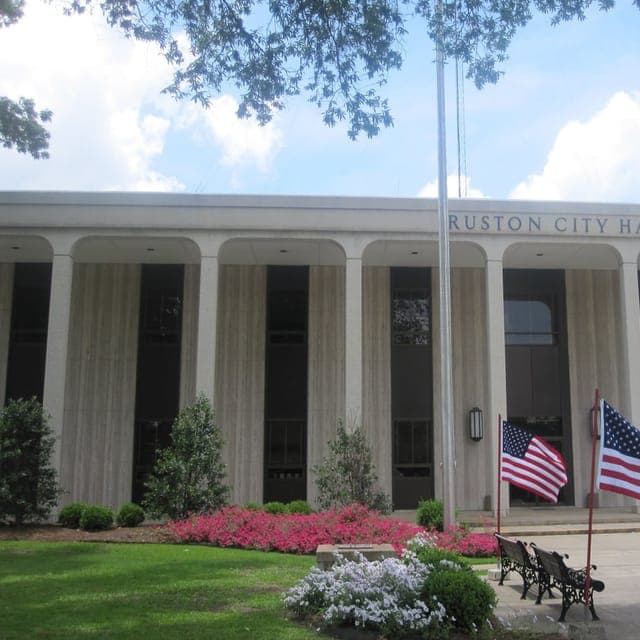
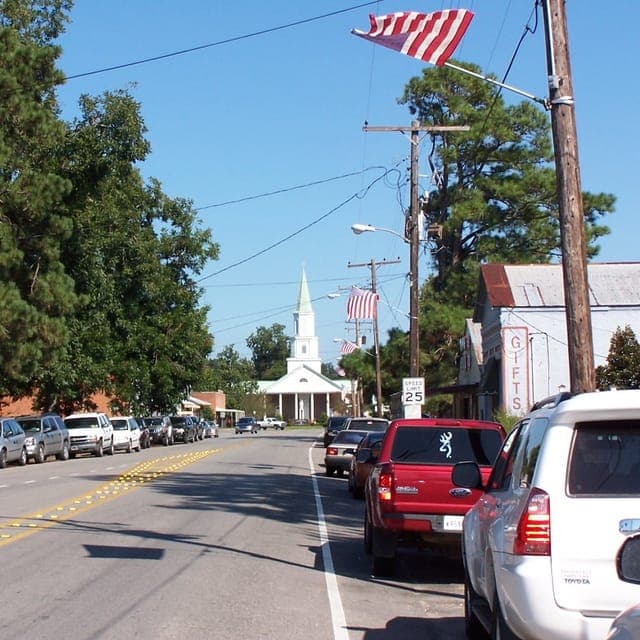
Top Cities for Personal Sovereignty in Louisiana







* Values derived from national, state, county, city and local statistics and may differ in a specific area. Last updated: 2026-07-04T01:47:37.000Z
Narrative content on this page is AI-generated and may contain mistakes. Verify any details that matter before acting on them.
ReloMaps may earn a commission from affiliate links at no extra cost to you.

