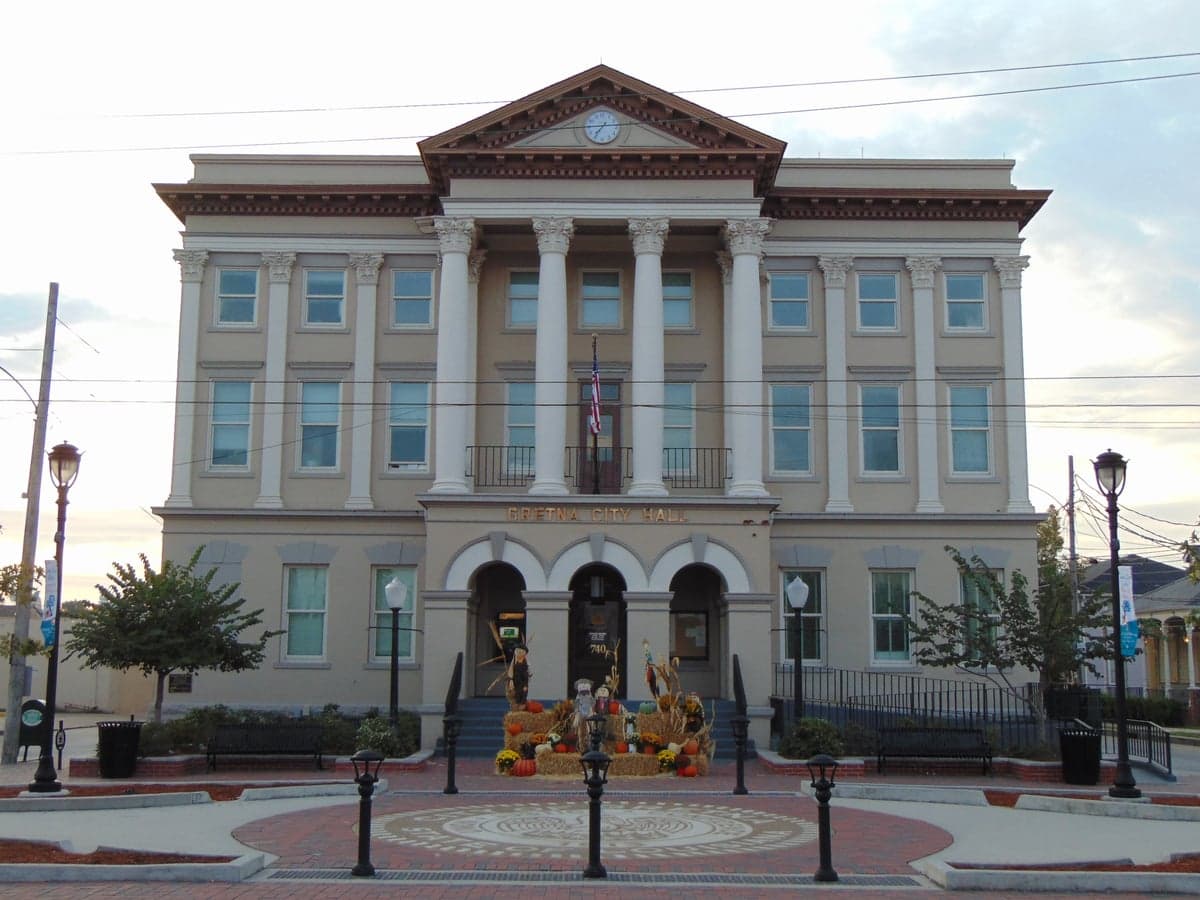
Photo: Wikipedia
Demographics of Jefferson County
Affluence Level in Jefferson County
A middle-class area roughly in line with national averages across income, home values, education, and employment.
People of Jefferson County
Today, Jefferson Parish is home to 432,484 residents, making it the most densely populated parish in Louisiana outside of Orleans. The population is a complex blend of White (48.1%), Black (25.6%), and Hispanic (18.2%) residents, with smaller East/Southeast Asian (3.3%) and Indian (0.8%) communities. This demographic profile reflects a historically Catholic, Creole, and Cajun-influenced region that has absorbed waves of domestic migration and international immigration, creating a distinctive suburban identity that is both deeply rooted in Louisiana's French and Spanish colonial past and increasingly diverse in the 21st century.
Settlement & growth (pre-1960)
Long before European contact, the land that is now Jefferson Parish was inhabited by the Chitimacha and Houma Native American peoples, who lived along the bayous and swamps of the Mississippi River Delta. The region's recorded human history begins with French and Spanish colonization in the 18th century. French settlers established the first European presence along the Mississippi River's west bank, followed by Spanish colonists after France ceded Louisiana to Spain in 1763. These early settlers, known as Creoles, established small farms and plantations along the natural levees of the river, with early settlements forming in what are now Kenner and Gretna.
The 19th century brought a significant wave of German and Irish immigrants, who arrived in the decades before and after the Louisiana Purchase of 1803. Many Germans settled in the area around Metairie, where they established truck farms and dairies that supplied New Orleans with fresh produce and milk. Irish immigrants, fleeing the Great Famine of the 1840s, found work in the port of New Orleans and in the construction of the New Orleans and Carrollton Railroad, which later spurred suburban development. By the Civil War era, Jefferson Parish had a mixed population of French-speaking Creoles, German farmers, Irish laborers, and enslaved African Americans who worked the sugar and cotton plantations along the river.
The post-Reconstruction period saw the emergence of a free Black population in Jefferson Parish, concentrated in communities like Bridge City and Harvey, where many found work in the emerging shipbuilding and maritime industries. The early 20th century brought Italian immigrants, particularly Sicilians, who settled in Westwego and along the west bank, working in fishing, shrimping, and the seafood processing industry that became a cornerstone of the local economy. The discovery of oil and gas in southern Louisiana in the 1920s and 1930s drew workers from across the state and region, including Cajuns from the Acadiana region, who settled in communities like Marrero and Lafitte.
World War II transformed Jefferson Parish. The construction of the Michoud Assembly Facility in eastern New Orleans and the Avondale Shipyard in Avondale drew tens of thousands of workers from across the South, including Black families participating in the Great Migration from rural Louisiana and Mississippi. This period marked the beginning of Jefferson Parish's transition from a rural, agricultural parish to a suburban, industrial one. The post-war housing boom, fueled by the GI Bill and the construction of the Lake Pontchartrain Causeway in 1956, spurred rapid suburbanization in Metairie and Kenner, which grew from small towns into sprawling bedroom communities for New Orleans commuters.
Modern era (post-1965)
The 1965 Hart-Cellar Act fundamentally reshaped Jefferson Parish's demographics, though the effects were slower to manifest than in other parts of the country. The first significant post-1965 immigrant group was Vietnamese refugees, who began arriving after the fall of Saigon in 1975. Many settled in eastern New Orleans initially, but a substantial community established itself in Gretna and along the west bank of Jefferson Parish, where they found work in fishing, shrimping, and the seafood industry. Today, the East/Southeast Asian population stands at 3.3%, with Vietnamese Americans forming the largest subgroup, concentrated in the Gretna and Harvey areas.
The 1980s and 1990s brought a wave of Hispanic immigration, primarily from Mexico and Central America, drawn by construction, hospitality, and service industry jobs in the greater New Orleans metropolitan area. The Hispanic population grew steadily, reaching 18.2% by the 2020 census. The largest concentrations are in Kenner and Metairie, where Honduran and Mexican communities have established churches, grocery stores, and cultural organizations. A smaller but notable Indian community (0.8%) has grown in recent decades, concentrated in Metairie and Kenner, working primarily in healthcare, technology, and hospitality.
Hurricane Katrina in 2005 was a demographic watershed for Jefferson Parish. The storm devastated New Orleans and caused significant flooding in eastern Jefferson Parish, particularly in Lakeview and Gentilly areas. In the aftermath, Jefferson Parish experienced a significant influx of displaced New Orleans residents, many of whom were Black and lower-income. This migration shifted the parish's racial composition, increasing the Black population from roughly 18% pre-Katrina to 25.6% today. At the same time, many White residents who had lived in New Orleans moved to the north shore of Lake Pontchartrain or to other states, further altering the demographic balance.
The post-Katrina period also saw an acceleration of Hispanic immigration, as construction workers arrived to rebuild homes, infrastructure, and businesses. This wave was more diverse than earlier Hispanic migration, including significant numbers of Guatemalans, Salvadorans, and Nicaraguans. The Indian community also grew during this period, as healthcare professionals and technology workers were recruited to fill labor shortages in the rebuilding economy. The foreign-born population now stands at 8.3%, a figure that has doubled since 2000.
The future
Jefferson Parish is becoming more diverse, but the pace of change is moderating. The Hispanic population is projected to continue growing, potentially reaching 22-25% by 2040, driven by both immigration and natural increase. The Black population is likely to stabilize or grow slowly, as the post-Katrina influx has largely subsided and younger Black residents continue to move to other parts of the metro area or out of state. The White population, which has been declining since the 1980s, will likely continue its gradual decrease, though at a slower rate than in the immediate post-Katrina years.
The East/Southeast Asian and Indian communities are expected to grow modestly, driven by professional migration to the healthcare and technology sectors. Metairie and Kenner will likely remain the primary hubs for immigrant communities, while the west bank communities of Gretna and Harvey will continue to diversify as housing costs on the east bank rise. The parish's cultural identity is evolving from a historically Catholic, Creole, and Cajun character toward a more pluralistic, multiethnic suburban identity that reflects the broader demographic trends of the Sun Belt.
For someone moving to Jefferson Parish now, the parish offers a suburban lifestyle with strong community institutions, good schools in certain areas, and proximity to New Orleans' cultural and economic opportunities. The population is increasingly diverse, politically moderate to conservative, and family-oriented. The parish's future will be shaped by its ability to integrate new immigrant communities while preserving the distinctive Louisiana culture that has defined it for three centuries.

* Values derived from national, state, county, city and local statistics and may differ in a specific area. Last updated: 2026-06-17T14:32:28.000Z
Narrative content on this page is AI-generated and may contain mistakes. Verify any details that matter before acting on them.
ReloMaps may earn a commission from affiliate links at no extra cost to you.

