Photo: Wikipedia
Personal Sovereignty in Livingston, MT
Viable for self-reliance. Generally workable, though some barriers may limit total independence.
What does Personal Sovereignty tell us?
Personal Sovereignty measures your capacity for self-reliance and independence with minimal government friction. Higher scores mean fewer barriers between you and the way you want to live... but it assumes you have the space you need and good neighbors.
What does this tell us?
Personal Sovereignty measures your capacity for self-reliance and independence with minimal government friction. Higher scores mean fewer barriers between you and the way you want to live... but it assumes you have the space you need and good neighbors.
State Policy
Energy independence: Net exporter (120% of energy produced in-state)
Personal Liberty
Homesteading

Personal Liberty Analysis
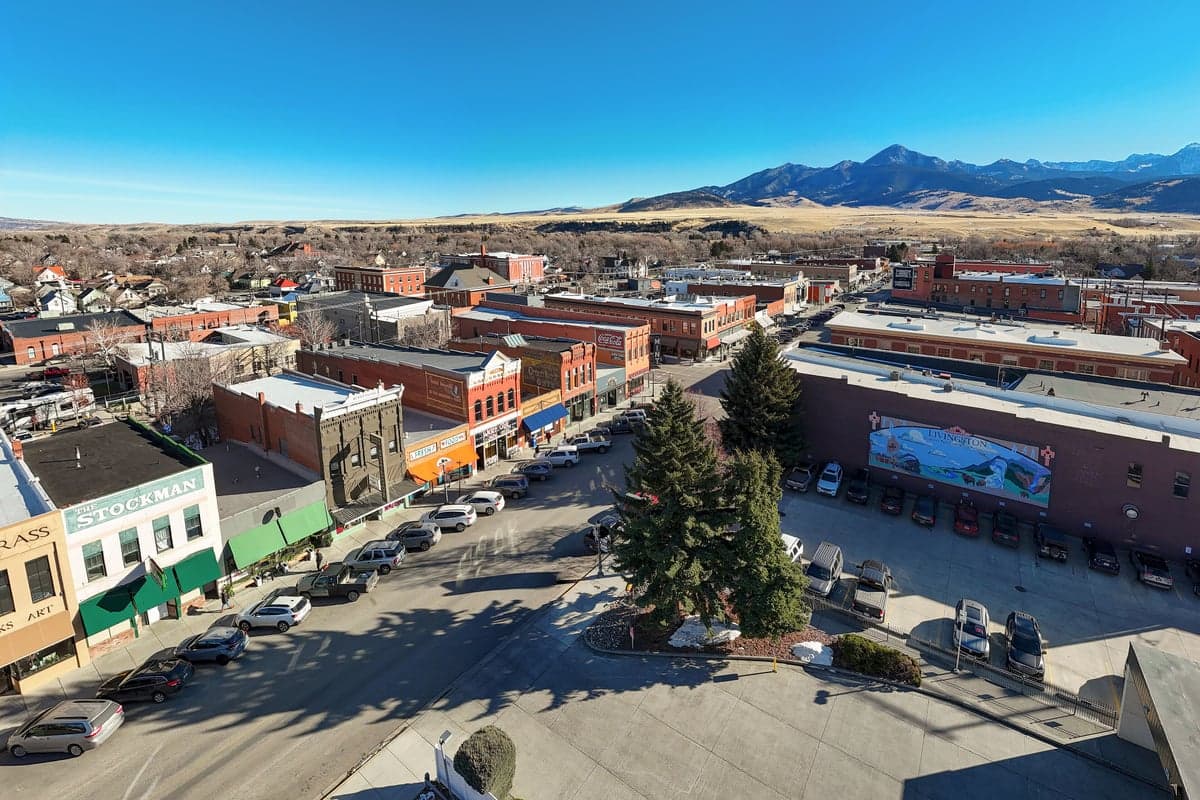
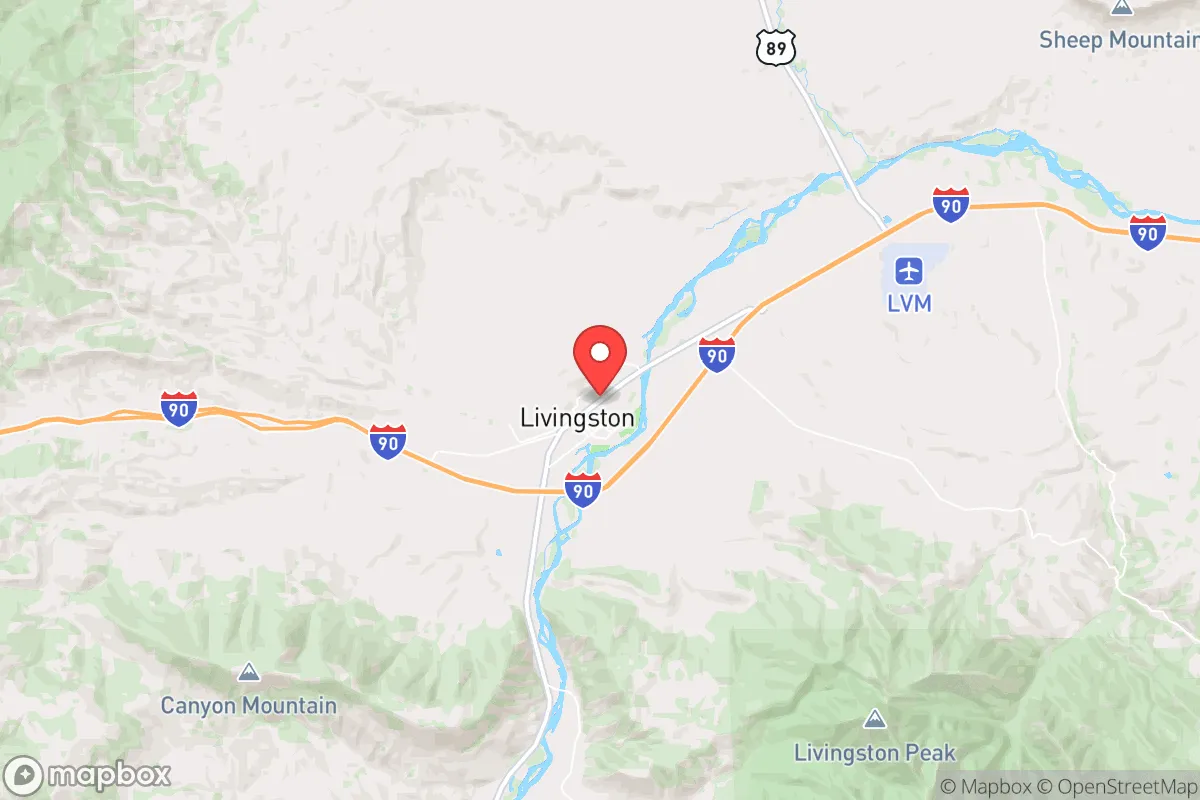
Livingston, Montana, offers a notably high degree of personal sovereignty relative to most of the United States, particularly for those who view autonomy as a buffer against federal overreach and societal instability. Nestled in Park County, this town of roughly 7,000 sits at the convergence of the Yellowstone and Shields Rivers, and its political and cultural DNA is a blend of Western libertarian independence, agricultural pragmatism, and a growing cohort of remote workers and preppers seeking escape from coastal mandates. While not a lawless frontier, Livingston provides a legal and practical environment where a survivalist or conservative-leaning individual can exercise significant control over their life, property, and family—provided they understand the local constraints and state-level dynamics that still apply.
Tax burden and regulatory posture: How Montana compares to high-control states
Montana’s tax structure is a clear asset for anyone prioritizing financial sovereignty. There is no state sales tax, which means every dollar earned or spent in Livingston stays out of state coffers—a stark contrast to states like California or New York where combined state and local sales taxes can exceed 10%. Property taxes in Park County are moderate, averaging around 0.75% of assessed value, though recent reassessments have pushed some homeowners’ bills higher. The state income tax is a flat 5.9% as of 2025, which is competitive but not the lowest in the region (Wyoming has none). For a prepper or homesteader, the absence of a sales tax is a direct win for stockpiling supplies, building materials, and firearms without a hidden consumption penalty. Regulatory posture in Livingston is generally light-touch. The city has zoning codes, but they are far less intrusive than in Bozeman or Missoula. County-level building permits are required for new structures, but enforcement is pragmatic—many rural properties operate with minimal oversight. The Montana Environmental Policy Act (MEPA) can slow large projects, but for an individual building a cabin or workshop, the red tape is thin. One notable constraint: Montana’s property tax on business equipment (the "business equipment tax") can be a nuisance for home-based enterprises, though the first $100,000 in value is exempt. Overall, the state’s regulatory climate ranks in the top 10 for economic freedom, and Livingston’s local government rarely adds extra layers.
Self-defense and gun law specifics: What the Second Amendment looks like in Park County
Montana is a constitutional carry state, meaning no permit is required to carry a concealed firearm for anyone legally allowed to possess one. This is a foundational sovereignty right that Livingston residents enjoy without the licensing delays or fees seen in states like New York or California. Park County’s sheriff’s office is generally pro-Second Amendment, and there are no local ordinances restricting magazine capacity, firearm types, or ammunition sales. The state preempts local gun laws, so Livingston cannot enact its own bans—a critical protection against city-level overreach. Stand-your-ground laws are in effect, with no duty to retreat in any place where a person is lawfully present. Castle doctrine protections extend to occupied vehicles and structures. For preppers, this means a defensive firearm can be kept loaded in a truck or home without legal gymnastics. Background checks are required for all commercial firearm sales, but private transfers between individuals are unregulated—a point of flexibility for building a community armory. One practical consideration: Montana’s winter climate demands reliable, cold-weather firearm maintenance, and Livingston’s elevation (4,500 feet) can affect ammunition performance. But legally, the environment is as permissive as any in the lower 48. The state also has strong protections against firearm confiscation during emergencies, with laws prohibiting the seizure of lawfully owned firearms without due process.
Self-reliance and homesteading viability: Lot sizes, zoning, and off-grid feasibility
Livingston’s surrounding landscape is a prepper’s dream for self-reliance, but the specifics matter. Within city limits, standard residential lots range from 5,000 to 10,000 square feet, and city water and sewer are required—off-grid living is not permitted inside town. However, the real opportunity lies in Park County’s unincorporated areas. Outside Livingston, minimum lot sizes for rural residential zoning are typically 20 acres, though some subdivisions allow 5- or 10-acre parcels. This is where homesteading becomes viable. Wells are common, and the water table in the Paradise Valley is generally accessible at 50–150 feet. Septic systems are required but straightforward to permit. Solar power is feasible—Montana averages 4–5 peak sun hours per day—but winter cloud cover and snow accumulation on panels require battery storage and backup generation. Off-grid living is legal in Park County, with no state mandate to connect to a utility grid, provided you meet basic health and safety codes for water and waste. The county’s zoning allows for livestock, gardens, and even small-scale agriculture on rural parcels without excessive permitting. For a survivalist, the ability to raise chickens, goats, or a few head of cattle is a given. The growing season is short (90–110 frost-free days), so cold-hardy crops and greenhouse strategies are essential. Firewood is abundant from national forest lands with a permit, and the Yellowstone River provides a reliable water source for irrigation. The main constraint is access: many rural properties require a 4WD vehicle in winter, and emergency services can be 30–45 minutes away. That isolation is a feature, not a bug, for those seeking distance from government reach.
Personal liberties: Parental rights, medical autonomy, speech, and property
Montana has strong statutory protections for parental rights, including a 2023 law (HB 362) that affirms parents’ fundamental right to direct the upbringing, education, and healthcare of their children. This means Livingston parents can opt out of school curricula, vaccines, or medical treatments without state interference—a critical safeguard against federal or local mandates. The state’s medical freedom laws also protect the right to refuse any medical procedure, and there is no state-level vaccine mandate for adults. During the COVID-19 era, Park County saw minimal enforcement of mask or business closure orders compared to urban counties, reflecting a local culture of individual choice. Speech protections are robust under Montana’s constitution, which explicitly guarantees the right to speak, write, or publish freely on any subject. There are no local hate speech ordinances or social media censorship laws that would chill political or religious expression. Property rights are similarly strong: Montana has a right-to-farm law that protects agricultural operations from nuisance lawsuits, and eminent domain is rarely abused. For a prepper, this means you can build a bunker, store supplies, or operate a home-based business without fear of zoning harassment—as long as you stay within the county’s basic setback and health codes. One area of caution: Montana’s land use planning laws allow counties to adopt growth policies that can restrict subdivision and development, but Park County has not imposed aggressive growth controls. The biggest threat to property sovereignty is the federal government’s presence—much of the surrounding land is national forest or park, and federal regulations on water rights, endangered species, and fire management can affect private land use. But within the bounds of private property, Livingston offers one of the most permissive environments in the nation for living according to your own rules.
In the broader landscape of American sovereignty, Livingston stands out as a place where a survivalist or conservative individual can operate with minimal friction from state or local government. The absence of sales tax, constitutional carry, off-grid legality, and strong parental rights create a foundation for genuine autonomy. Compared to Bozeman’s rapid gentrification and regulatory creep, or Missoula’s progressive city council, Livingston retains a working-class, independent ethos that aligns with self-reliance. The trade-offs are real: harsh winters, limited medical infrastructure, and the constant presence of federal land management. But for those who view government overreach as the primary threat to liberty, Livingston offers a defensible, low-tax, high-freedom redoubt in the Northern Rockies. It is not a utopia—no place is—but it is a rare pocket where the law and the land still encourage you to stand on your own two feet.

* Values derived from national, state, county, city and local statistics and may differ in a specific area. Last updated: 2026-04-30T00:18:01.000Z
Narrative content on this page is AI-generated and may contain mistakes. Verify any details that matter before acting on them.
ReloMaps may earn a commission from affiliate links at no extra cost to you.

