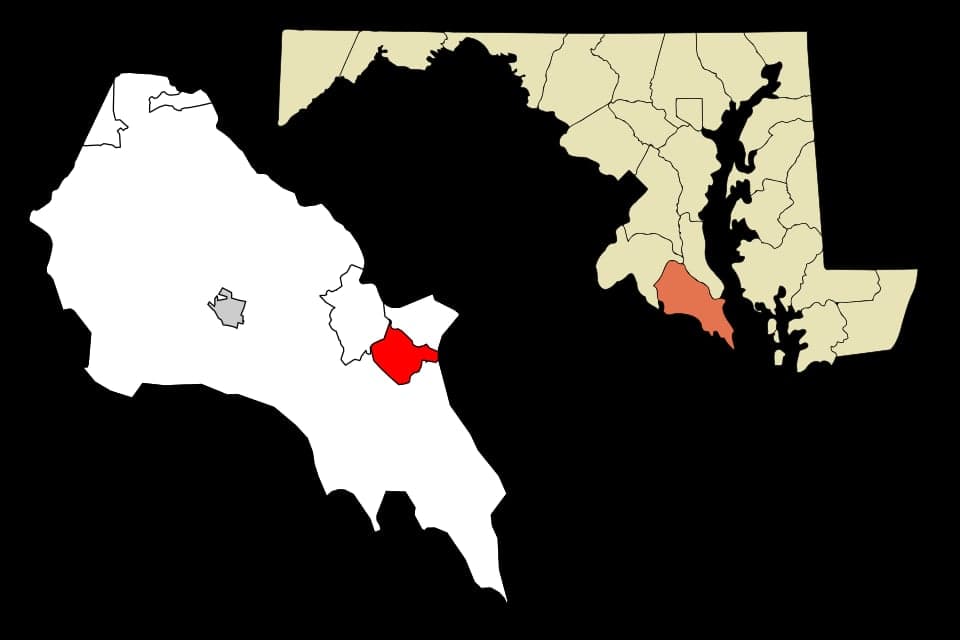
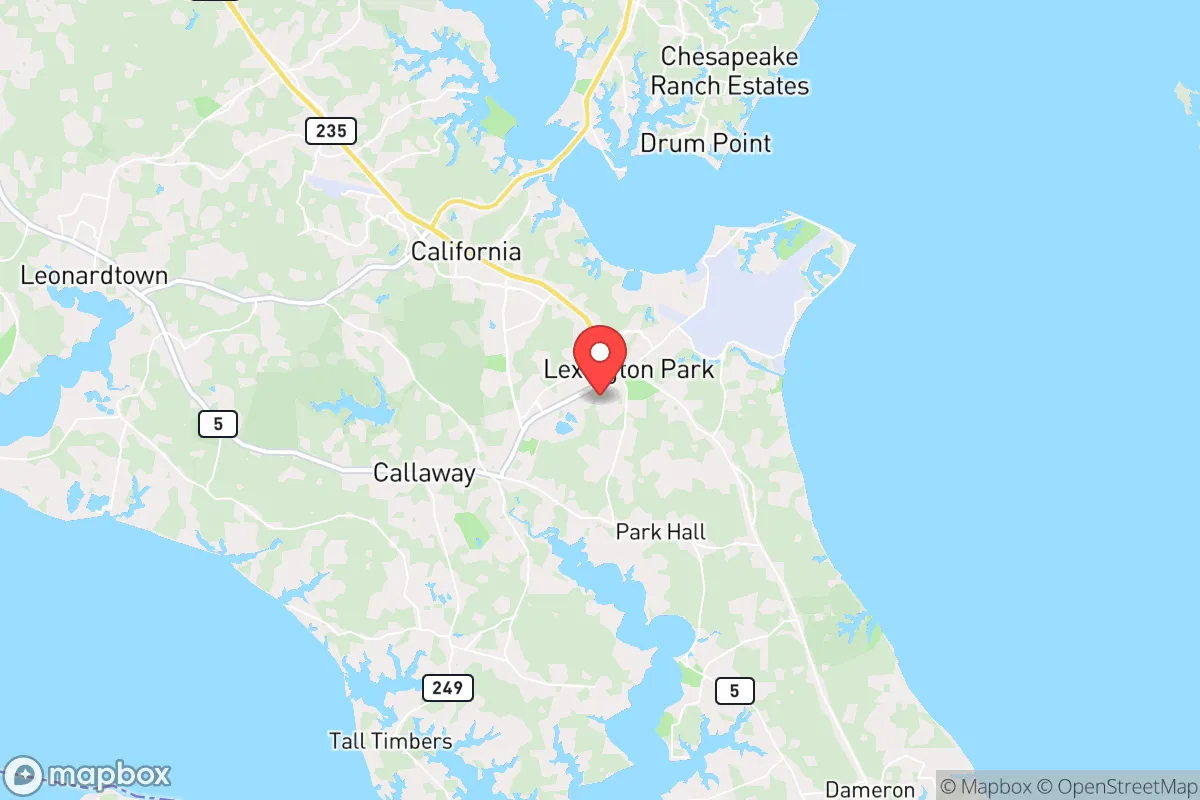
Photo: Wikipedia
Personal Sovereignty in Lexington Park, MD
Viable for self-reliance. Generally workable, though some barriers may limit total independence.
What does Personal Sovereignty tell us?
Personal Sovereignty measures your capacity for self-reliance and independence with minimal government friction. Higher scores mean fewer barriers between you and the way you want to live... but it assumes you have the space you need and good neighbors.
What does this tell us?
Personal Sovereignty measures your capacity for self-reliance and independence with minimal government friction. Higher scores mean fewer barriers between you and the way you want to live... but it assumes you have the space you need and good neighbors.
State Policy
Energy independence: Importer (18% of energy produced in-state)
Personal Liberty
Homesteading

Personal Liberty Analysis
Lexington Park, Maryland, sits within a state that imposes a relatively high tax burden and a dense regulatory framework, but the local environment in St. Mary’s County offers a notably more restrained, autonomy-friendly atmosphere than what many associate with the state as a whole. For a relocation-minded individual or family who values personal sovereignty, the area presents a mixed picture: you get the practical freedoms of a rural-suburban peninsula—lower property crime, ample space, and a strong gun culture—alongside the constraints of a state that leans progressive on taxation, business regulation, and certain personal liberties. The key is understanding where local control and state law diverge, and how that shapes daily life for someone who prioritizes self-reliance.
Tax burden and regulatory posture: how Maryland’s rules affect Lexington Park
Maryland is a high-tax state overall, ranking among the top ten for combined state and local tax burden. The state income tax is progressive, with rates from 2% to 5.75%, and St. Mary’s County adds a local income tax of 3.10% (the maximum allowed by state law), meaning a resident earning $75,000 pays roughly 8.85% in combined income taxes. Property taxes are more moderate: the county rate is about $0.93 per $100 of assessed value, and with no city tax in Lexington Park (it’s an unincorporated area), the total effective rate lands around 1.0%–1.1% of home value annually. That’s lower than many suburban Maryland counties like Montgomery or Howard, where rates can exceed 1.3%. Sales tax is a flat 6% statewide, with no local add-ons. The regulatory posture is mixed: Maryland has a robust state-level environmental review process (e.g., for septic systems and shoreline development), but St. Mary’s County government is generally more permissive on land use than the state’s central planning agencies. For a small business owner or homesteader, the main friction points are state-level licensing and environmental compliance, not local zoning. The county’s economic development office actively courts defense contractors and tradespeople tied to the Patuxent River Naval Air Station, so the regulatory climate for defense-adjacent work is pragmatic. Overall, the tax burden is real and above the national average, but the local regulatory touch is lighter than in Maryland’s urban corridors.
Self-defense and gun law specifics: what you can and cannot do in Lexington Park
Maryland is a “may-issue” state for concealed carry permits, but a 2022 U.S. Supreme Court ruling (NYSRPA v. Bruen) forced the state to shift toward a “shall-issue” standard. As of 2025, the Maryland State Police process permits for anyone who completes an approved 16-hour training course and passes a background check; the “good and substantial reason” requirement was struck down. In practice, Lexington Park residents can obtain a concealed carry permit without proving a specific threat, though the process takes 60–90 days and costs around $200 in fees and training. Open carry is legal in most unincorporated areas of St. Mary’s County, but it’s uncommon and can draw police attention. The state bans certain “assault weapons” (defined by a 2013 law that lists specific models and features), and magazine capacity is capped at 10 rounds for long guns and 10 rounds for handguns. Private firearm sales (including at gun shows) require a background check through a licensed dealer, and there is a 7-day waiting period for handgun purchases. St. Mary’s County has a strong gun culture—there are multiple shooting ranges within 20 minutes, including the Sanners Lake Sportsman’s Club, and the county sheriff’s office is known for being pro-Second Amendment in its permit issuance. Home defense with a firearm is legally protected under Maryland’s “castle doctrine,” but there is no “stand your ground” statute; a duty to retreat applies in public spaces if safe to do so. For a self-reliant individual, the gun laws are restrictive by national standards but workable with planning, and the local enforcement climate is more lenient than in Baltimore or Prince George’s County.
Self-reliance and homesteading viability: lot sizes, zoning, and off-grid feasibility
Lexington Park itself is a densely developed unincorporated area with mostly small lots (0.25–0.5 acres) and standard suburban zoning that restricts livestock, large gardens, and accessory structures. However, the surrounding St. Mary’s County—especially areas like Great Mills, California, and rural routes toward the Potomac River—offers plenty of land zoned for agricultural and rural residential use. Minimum lot sizes in rural zones are typically 1 to 3 acres, and you can find undeveloped parcels for $15,000–$30,000 per acre. Raising chickens, goats, or a few head of cattle is allowed on parcels over 1 acre in most agricultural zones, though you’ll need a county permit for structures like barns or coops. Off-grid living is legally challenging: Maryland requires connection to public water and sewer in most subdivisions, and the state’s building code mandates grid-tied electrical service for new homes (solar with battery backup is allowed as a supplement, but full off-grid is not permitted for primary residences). Rainwater collection is legal but regulated—you can capture up to 5,000 gallons without a permit, but larger systems require approval from the Maryland Department of the Environment. Composting toilets are allowed in rural areas with a septic system, but the county health department inspects all waste disposal. For a serious homesteader, the best bet is to buy a 3–5 acre parcel in a rural zone outside the Lexington Park growth area, where you can have a large garden, a few animals, and a solar array, but you’ll still need to be grid-tied for electricity and have a conventional septic system. The regulatory burden is moderate—not as free as West Virginia or Virginia’s Shenandoah Valley, but far more permissive than suburban Maryland counties like Anne Arundel or Howard.
Personal liberties: parental rights, medical autonomy, speech, and property
Maryland law generally respects parental rights in education—parents can opt their children out of specific curriculum content (including sex education) and have a statutory right to review instructional materials. The state does not have a broad “parental bill of rights” like some conservative states, but St. Mary’s County Public Schools have a conservative-leaning school board that has resisted controversial curriculum mandates from Annapolis. Medical autonomy is more constrained: Maryland has a vaccine mandate for school attendance (with medical and religious exemptions available, though religious exemptions have been challenged in court), and the state’s public health emergency powers are broad. During the COVID-19 pandemic, St. Mary’s County largely followed state mandates but with local enforcement that was less aggressive than in urban counties. Telehealth and direct-primary-care arrangements are legal and growing. Free speech is fully protected under the First Amendment, and Lexington Park has a visible presence of conservative and libertarian political groups; there is no local “hate speech” ordinance beyond state law. Property rights are generally strong, but Maryland’s “critical area” law restricts development within 1,000 feet of tidal waters (which includes much of the county’s shoreline). The county’s zoning board has a reputation for being practical—variances for fences, sheds, and home businesses are routinely approved if they don’t impact neighbors. For a family that values autonomy in healthcare decisions and educational choices, Lexington Park offers a middle ground: you’ll face state-level constraints, but local governance is more aligned with personal freedom than in Maryland’s liberal strongholds.
Overall, personal sovereignty in Lexington Park is a trade-off: you get a lower cost of land, a strong gun culture, and a local government that respects property rights and self-reliance, but you operate within a state that imposes above-average taxes, restricts off-grid living, and mandates certain health and environmental standards. Compared to rural areas in Virginia or Pennsylvania, the regulatory ceiling is lower; compared to suburban Maryland counties like Columbia or Bethesda, it’s significantly higher. For a relocation-minded individual who wants a balance of personal freedom and access to defense-sector employment, Lexington Park is a pragmatic choice—not a libertarian paradise, but a place where a self-reliant person can live largely on their own terms with reasonable effort.

* Values derived from national, state, county, city and local statistics and may differ in a specific area. Last updated: 2026-11-12T16:37:17.000Z
Narrative content on this page is AI-generated and may contain mistakes. Verify any details that matter before acting on them.
ReloMaps may earn a commission from affiliate links at no extra cost to you.

