Photo: Wikipedia
Political ClimatePolitical Climate in Lead, SD
District shown is the primary district for this city’s centroid. Cities may span multiple districts.
Inherited from parent state — no local data available.
Local Political AnalysisPolitical Analysis of Lead, SD
Lead, South Dakota, is about as solidly conservative as it gets, with a Cook PVI of R+15 that tells you the political lean isn't just a habit—it's a deeply held conviction. This isn't a place that's been drifting left; it's a community that's held the line, and for the most part, that's how folks like it. You'll find a strong, no-nonsense libertarian streak here, where people value their personal freedoms and are quick to push back on any government overreach, whether it comes from Pierre or Washington. The local culture is built on self-reliance, a respect for the Second Amendment, and a general skepticism of any policy that tries to tell you how to live your life.
How it compares
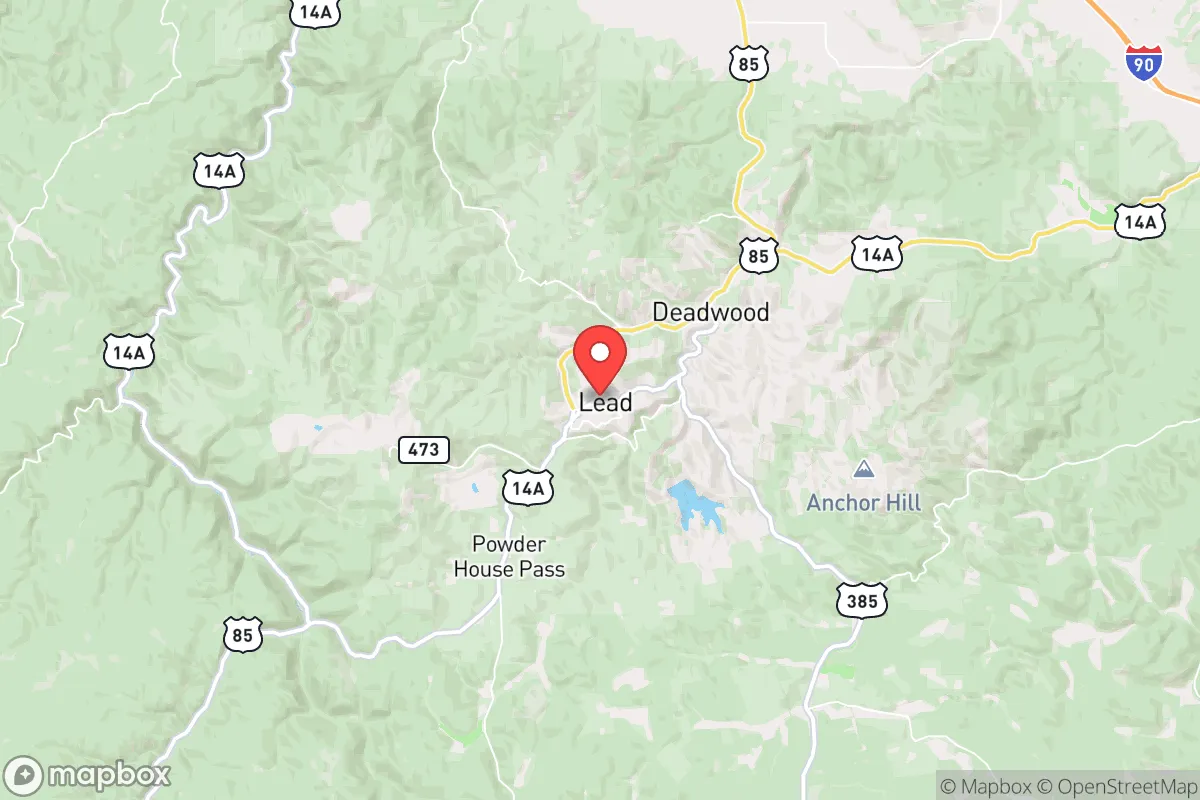
Drive just a few miles east to Deadwood, and you'll see a slightly different flavor—still conservative, but with a bit more of a tourist-driven, "live and let live" vibe that can sometimes lean a little more moderate on social issues. Head south to Rapid City, and you'll find a more diverse political mix, with a growing progressive presence that's been trying to push a more urban agenda. But here in Lead, it's a different story. The surrounding Lawrence County is reliably red, and Lead itself is the heart of that. The contrast is stark: while Rapid City has seen some local battles over things like mask mandates or diversity initiatives, Lead has largely stayed out of that fray, preferring to focus on what works for the community without outside interference. The shift you might see in other parts of the Black Hills hasn't really taken root here, and that's a point of pride for many long-time residents.
What this means for residents
For the people who call Lead home, this political climate translates into a pretty straightforward daily life. You're not going to see a lot of heavy-handed local ordinances or zoning battles that try to micromanage your property or your business. The tax burden is relatively low, and there's a general understanding that the government's job is to keep the roads plowed and the schools running, not to get involved in your personal choices. The biggest concern for many is that the creeping progressive ideology from larger cities might eventually try to make its way up here, whether through state-level mandates or federal overreach. There's a real wariness about any policy that could infringe on gun rights, property rights, or the ability to run a small business without a mountain of red tape. For now, though, Lead remains a place where you can pretty much live your life the way you see fit, and that's exactly how most residents want to keep it.
One of the biggest cultural distinctions here is the strong sense of local control. The city council and county commission are made up of people you see at the grocery store or the local diner, and they're generally responsive to the community's will. There's no appetite for things like sanctuary city policies or radical environmental regulations that could hurt the mining or tourism economy. The long-term outlook is cautiously optimistic, but with a clear warning: if the political winds shift too far toward progressive ideology, you'll see a lot of folks digging in their heels. This is a community that remembers its history—the gold rush, the boom-and-bust cycles—and it's not about to let outside forces dictate its future. For anyone considering a move here, the message is simple: if you value personal freedom and a government that stays out of your way, you'll fit right in. If you're looking for a place that's embracing the latest progressive trends, you might want to keep looking.

State Political ClimatePolitical Climate in South Dakota
State Political AnalysisPolitical Environment in the State
South Dakota is a deeply conservative state, with a Republican lean that has only intensified over the past two decades. The state has not voted for a Democratic presidential candidate since 1964, and in 2024, Donald Trump carried it by a margin of over 30 points. The dominant coalition is a mix of rural agricultural interests, small-government libertarians, and evangelical Christians, all united around low taxes, gun rights, and resistance to federal overreach. Over the last 10-20 years, the state has shifted further right, driven by an influx of conservative migrants from blue states and a growing distrust of federal mandates, especially visible in places like Rapid City and the Black Hills region.
Urban vs. rural divide
The political map of South Dakota is starkly divided between a few small urban centers and vast rural expanses. The largest city, Sioux Falls, is the state's economic engine and a moderate-to-conservative hub, but it does have a noticeable liberal pocket in its downtown and near the university. Minnehaha County, home to Sioux Falls, voted for Trump by about 15 points in 2024, a margin that has narrowed slightly as the city grows. In contrast, Rapid City in Pennington County is more reliably conservative, with Trump winning by over 20 points, driven by a strong military and tourism presence. The rural counties—like Harding, Perkins, and Ziebach—are overwhelmingly Republican, often voting 80-90% for the GOP. The only real Democratic stronghold is Oglala Lakota County on the Pine Ridge Reservation, which consistently votes 70%+ Democratic, but its population is small and isolated. The divide is not just about party—it's about culture: Sioux Falls feels more corporate and suburban, while the rest of the state prizes self-reliance and distrusts government intervention.
Policy environment
South Dakota's policy environment is a conservative dream. There is no state income tax, and the sales tax is a moderate 4.5%, with local options pushing it to around 6.5% in some cities. Property taxes are relatively low, especially compared to the coasts. The regulatory posture is aggressively pro-business: the state has right-to-work laws, minimal zoning restrictions in rural areas, and a fast-track permitting process for new construction. On education, the state has embraced school choice, with a robust voucher program passed in 2023 that allows parents to use public funds for private or homeschool expenses. Healthcare is a mixed bag: the state did expand Medicaid under Trump-era waivers, but the system remains market-driven, with few mandates. Election laws are among the most secure in the nation: voter ID is required, same-day registration is not allowed, and mail-in voting is restricted to those with a valid excuse. The state also passed a law in 2024 banning ranked-choice voting, ensuring the system stays simple and transparent.
Trajectory & freedom
South Dakota is becoming more free in many respects, but with some concerning caveats. On the positive side, the state has expanded gun rights significantly: permitless carry was signed into law in 2019, and in 2023, the legislature passed a law prohibiting any state enforcement of federal gun bans, a direct challenge to federal overreach. Parental rights were strengthened in 2022 with a law requiring school districts to notify parents of any curriculum changes involving sexuality or gender identity, and a 2024 law banned transgender procedures for minors. Medical autonomy has been protected: the state has no vaccine mandates, and in 2021, Governor Kristi Noem signed an executive order banning vaccine passports. However, there are red flags. The state has a history of aggressive use of eminent domain for pipelines, as seen in the Keystone XL controversy, which angered many property rights advocates. Additionally, the state's sales tax is regressive, and there is no homestead exemption, meaning low-income homeowners can face high property tax burdens. The biggest concern for freedom-minded residents is the growing influence of federal dollars: South Dakota takes more federal funding per capita than almost any other state, which creates a dependency that could be leveraged for future mandates.
Civil unrest & political movements
South Dakota has seen relatively little civil unrest compared to other states, but there have been flashpoints. The Dakota Access Pipeline protests in 2016-2017 were a major event, with thousands of activists from across the country converging on the Standing Rock Reservation, just south of the border in North Dakota. While the protests were largely peaceful, they did lead to clashes with law enforcement and a lasting distrust between the state government and tribal nations. In 2020, there were small Black Lives Matter protests in Sioux Falls and Rapid City, but they were dwarfed by counter-protests and a strong "Back the Blue" movement. The state has also seen a rise in organized conservative activism, particularly around school board meetings and library content. In 2023, the town of Brookings saw a heated debate over a proposed "drag story hour," which was ultimately canceled after public pressure. Immigration politics are muted, as the state has a very small foreign-born population, but there is a strong undercurrent of opposition to any sanctuary policies. The most visible political movement is the "Free South Dakota" coalition, which pushes for nullification of federal laws and has gained traction in rural counties like Meade and Lawrence. Election integrity is a hot topic: the state's voter ID laws are popular, but there is ongoing concern about the security of mail-in ballots, leading to the 2024 law restricting their use.
Projection
Over the next 5-10 years, South Dakota will likely become even more conservative, but with growing internal tensions. The in-migration of conservatives from California, Illinois, and Minnesota is accelerating, particularly to the Black Hills and the Sioux Falls suburbs. This influx is driving up housing prices and creating a cultural clash between new arrivals who want to "keep it free" and long-time residents who fear the state is being "Californicated." The state's population is aging, and younger residents are leaving for better job opportunities, which could shift the political balance if the newcomers are not as reliably conservative. The biggest wildcard is the tribal nations: if they become more politically organized and turn out in higher numbers, they could flip a few legislative districts, particularly in the western part of the state. However, the state's gerrymandered districts and voter ID laws make that unlikely. The most realistic projection is that South Dakota remains a deep red state, but with a more libertarian flavor, as the legislature continues to pass laws limiting federal power and expanding individual rights. The key risk is that the state's dependence on federal funding could be used as leverage by a future progressive administration, forcing a choice between freedom and solvency.
For a new resident, the bottom line is this: South Dakota offers a high degree of personal freedom, low taxes, and a government that largely stays out of your life. You will find a welcoming community of like-minded conservatives, especially in the smaller towns and rural areas. But be prepared for a growing tension between the state's libertarian ideals and its reliance on federal money, and keep an eye on the influx of newcomers who may not share your values. If you value gun rights, parental control over education, and a government that respects your privacy, this is one of the best states in the union. Just don't expect it to stay exactly the same forever.
* Values derived from national, state, county, city and local statistics and may differ in a specific area. Last updated: 2026-04-30T12:57:47.000Z
Narrative content on this page is AI-generated and may contain mistakes. Verify any details that matter before acting on them.
ReloMaps may earn a commission from affiliate links at no extra cost to you.

