Photo: Wikipedia
Political ClimatePolitical Climate in Laurel, MT
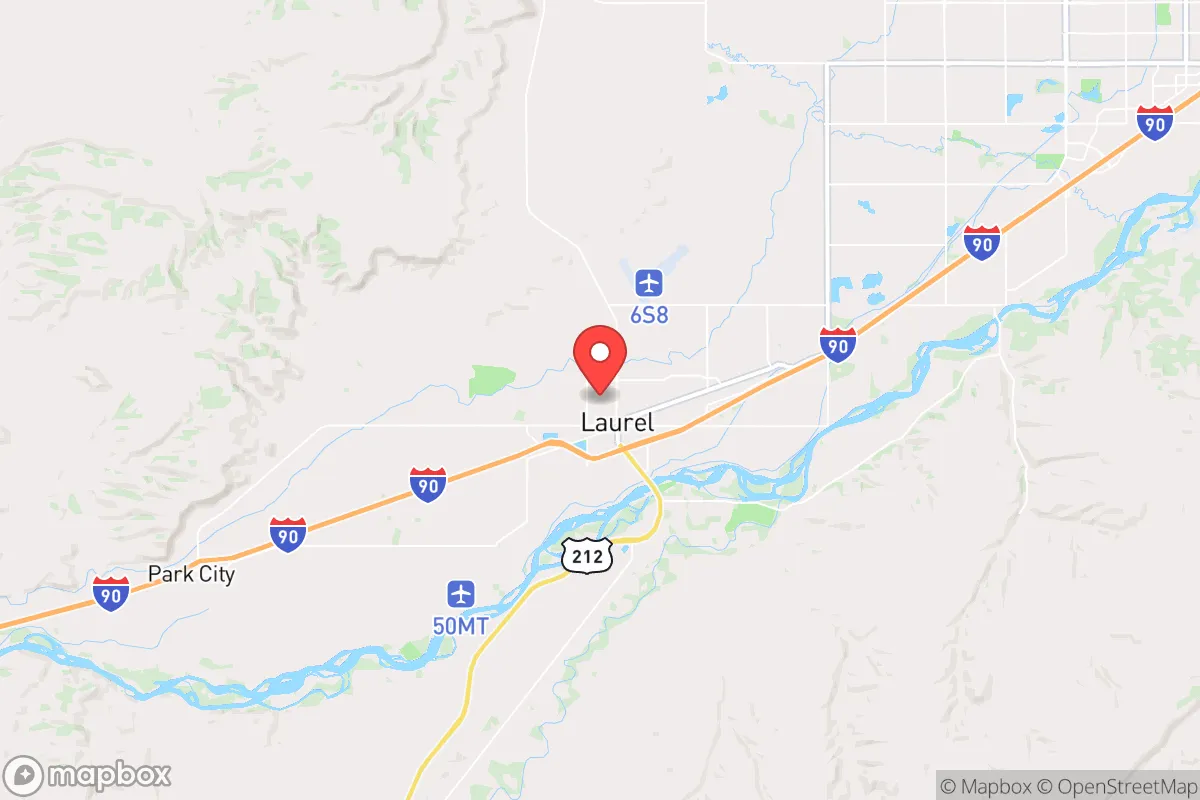
District shown is the primary district for this city’s centroid. Cities may span multiple districts.
Local Political AnalysisPolitical Analysis of Laurel, MT
Laurel, Montana, is about as solidly conservative as they come, with a Cook PVI of R+15 that tells you the political lean hasn't budged much over the years. You're looking at a community where folks still believe in minding their own business and keeping the government out of their personal lives, and that's been the backbone of this town since I can remember. The trajectory here is steady—no wild swings toward the left, though you do see some of that progressive chatter creeping in from Billings, just 15 miles up the road, and from the college crowd in Bozeman. But Laurel? It's a working-class town, rooted in the railroad and agriculture, and the voting patterns reflect that: Trump won Yellowstone County by a solid margin in 2020, and Laurel's precincts were even redder.
How it compares
If you drive 15 minutes north to Billings, you'll hit a more mixed bag—still conservative overall, but with a noticeable progressive undercurrent in the downtown and near the hospital. Billings has a younger, more transient population, and you see that in local elections where school board races and city council seats sometimes get flipped by folks pushing "equity" initiatives and climate action plans. Laurel, by contrast, is a different animal. Head south toward Red Lodge, and you'll find a similar conservative streak, but it's tempered by the tourist economy and the influx of out-of-staters buying up property. Laurel's advantage is that it's not a destination—it's a place people live and work, so the political culture stays grounded. The surrounding towns like Park City and Columbus lean even more conservative, if you can believe it, with fewer of the "new Montana" influences that are starting to shift places like Livingston and Bozeman toward the left. Laurel remains a stronghold where the Second Amendment isn't debated, property rights are respected, and the idea of a carbon tax is laughed out of the room.
What this means for residents
For the folks living here, the political climate means you can generally trust that your local government isn't going to meddle in your day-to-day affairs. The city council and county commissioners are overwhelmingly conservative, so you're not seeing the kind of overreach you hear about in places like Missoula or Helena—no mask mandates that drag on forever, no zoning laws that tell you what you can do with your own land, and no school boards pushing critical race theory on your kids. Property taxes are reasonable compared to the western part of the state, and there's a general understanding that personal freedom comes first. That said, you do have to keep an eye on the state level, where the governor's office and legislature have been solidly red, but there's always a risk of federal overreach seeping in through environmental regulations or gun control measures. Locally, though, life is straightforward: you work hard, you keep what you earn, and you don't have to worry about the government telling you how to live.
One cultural distinction that sets Laurel apart is its strong sense of self-reliance and community watchfulness. There's a quiet but firm resistance to any progressive drift, whether it's a proposal for a "sustainability" ordinance or a push to change the name of a school. The town's identity is tied to the Burlington Northern Santa Fe rail yard and the sugar beet plant, and that working-class ethos means people are skeptical of anything that smells like elitism or top-down control. In the long term, the concern is that as Billings expands and more people move in from out of state, Laurel could start to feel pressure to "modernize" its politics. But for now, it's a place where you can still have a conversation about personal freedoms without someone calling you a bigot, and that's getting harder to find in Montana.

State Political ClimatePolitical Climate in Montana
State Political AnalysisPolitical Environment in the State
Montana has long been a reliably Republican state at the presidential level, voting for the GOP candidate in every election since 1968 except for Bill Clinton’s 1992 win. However, the state’s political landscape is far more nuanced than a simple red-state label suggests, with a deep urban-rural divide, a growing libertarian streak, and a recent influx of out-of-state transplants that is beginning to shift the balance. Over the last 10-20 years, the state has moved from a solidly conservative, libertarian-leaning stronghold to a place where the western mountain counties are trending blue, while the eastern plains and small towns remain deeply red. This trajectory is a major concern for those who value limited government and personal freedom, as the new arrivals often bring the very big-government habits they claim to have fled.
Urban vs. rural divide
The political map of Montana is a study in contrasts. The state’s two largest cities, Billings and Missoula, anchor opposite ends of the spectrum. Billings, the largest city in the state, is a conservative stronghold in Yellowstone County, which voted for Trump by a comfortable margin in 2024. Missoula, home to the University of Montana, is the epicenter of progressive activism, with Missoula County consistently voting blue by double digits. Bozeman and Gallatin County are the state’s most politically volatile area; once a reliably red region, it has seen a massive influx of out-of-state tech workers and remote professionals, turning it into a purple battleground. In 2024, Gallatin County narrowly went for Trump, but the margin was razor-thin compared to a decade ago. Helena, the state capital, is a moderate blue island in a sea of red, driven by state government employees. The rural eastern counties—like McCone, Garfield, and Petroleum—routinely deliver 80-90% of their votes to Republicans, while the western mountain counties like Ravalli and Flathead remain conservative but are seeing the same demographic pressures as Bozeman. The divide is stark: the state’s economy is driven by agriculture and energy in the east, and by tourism, tech, and outdoor recreation in the west, creating a cultural and political chasm that is only widening.
Policy environment
Montana’s policy environment is a mixed bag for conservatives. On the plus side, the state has no state sales tax, a flat income tax rate of 5.9% (recently reduced from 6.75%), and a relatively low property tax burden compared to the national average. The regulatory posture is generally business-friendly, with a right-to-work law on the books and a strong push for energy development, including oil, gas, and coal. However, the state’s education policy is a growing concern. Montana’s school choice options are limited compared to states like Arizona or Florida, and the teachers’ unions remain powerful, particularly in Missoula and Bozeman. The state’s healthcare landscape is dominated by a few large systems, and while there is no Medicaid expansion repeal movement, the program has been a point of contention. Election laws are solid: Montana has voter ID requirements, no same-day registration, and a ban on ballot harvesting, though mail-in voting is widespread. The state’s gun laws are among the most permissive in the nation, with no permit required for concealed carry and no magazine capacity limits. This is a key selling point for freedom-minded individuals.
Trajectory & freedom
The trajectory of freedom in Montana is a tale of two trends. On one hand, the state has passed significant pro-liberty legislation in recent years. The Montana Firearms Freedom Act (2013) asserted the state’s right to regulate firearms made and kept in Montana, a direct challenge to federal overreach. In 2021, the legislature passed a constitutional carry law, removing the permit requirement for concealed carry. Parental rights were strengthened with the Parental Rights in Education Act (2023), which requires schools to notify parents of any curriculum involving sexuality or gender identity. On the other hand, the state has seen a troubling expansion of government power. The Montana Land Use Planning Act (2023) gave local governments more authority to regulate property use, a move that has been criticized as a threat to property rights. The state’s response to COVID-19 was a mixed bag: while Governor Greg Gianforte resisted lockdowns, local health departments in Missoula and Gallatin counties imposed some of the most restrictive mandates in the country. The influx of new residents from California, Washington, and Oregon is driving up housing costs and pushing for more government intervention in land use and zoning, a trend that is eroding the state’s traditional libertarian ethos.
Civil unrest & political movements
Montana is not known for widespread civil unrest, but there have been notable flashpoints. The Standing Rock protests (2016-2017) drew activists from across the state, particularly from Missoula and Bozeman, and highlighted the tension between environmental activism and energy development. In 2020, Black Lives Matter protests occurred in Missoula, Bozeman, and Helena, but they were relatively small and peaceful compared to other states. The state has seen a rise in organized activist movements on both sides. On the right, the Montana Freedom Caucus has become a powerful force in the legislature, pushing for lower taxes, school choice, and gun rights. On the left, groups like Montana Conservation Voters and Indivisible Montana are active, particularly in the western counties. Immigration politics are less of a flashpoint here than in border states, but there is a growing concern about the state’s sanctuary city policies in Missoula and Bozeman, which have declared themselves welcoming to undocumented immigrants. Election integrity has been a hot topic, with the state’s widespread mail-in voting system drawing scrutiny from conservatives who worry about ballot security. The Montana Election Integrity Act (2021) tightened voter ID requirements and banned ballot harvesting, but the debate continues.
Projection
Looking ahead 5-10 years, Montana is at a crossroads. The state is experiencing one of the fastest growth rates in the nation, driven by remote workers and retirees fleeing high-tax states. This influx is disproportionately landing in the western counties—Gallatin, Missoula, Flathead, and Ravalli—which are trending blue. If current trends hold, Gallatin County could flip to blue in a presidential election within the next decade, and Missoula County will become even more dominant for Democrats. The eastern plains will remain deeply red, but their population is stagnant or declining, meaning their electoral power is shrinking. The state’s two U.S. House seats are currently held by Republicans, but the western district is becoming increasingly competitive. The state legislature is still firmly in GOP hands, but the margin is shrinking. For a conservative moving in now, the expectation should be that the state will become more politically divided, with the western mountain counties becoming a battleground. The key battleground will be over property rights and land use, as new residents push for more government control over development, while longtime residents fight to preserve the state’s libertarian character.
For a new resident, the bottom line is this: Montana is still a great place for those who value personal freedom, low taxes, and a rural lifestyle, but it is not immune to the forces that have turned other Western states blue. If you are moving here, choose your location carefully. The eastern plains and small towns like Glendive or Miles City will remain conservative strongholds for the foreseeable future. The western mountain towns like Bozeman and Missoula are already lost to progressive politics. The sweet spot for a conservative is likely the Flathead Valley or Ravalli County, where the culture is still red but the growth is manageable. Keep an eye on local elections, especially county commissions and school boards, because that is where the battle for Montana’s soul will be fought. The state’s future is not yet written, but the ink is drying fast.
* Values derived from national, state, county, city and local statistics and may differ in a specific area. Last updated: 2026-04-30T07:50:24.000Z
Narrative content on this page is AI-generated and may contain mistakes. Verify any details that matter before acting on them.
ReloMaps may earn a commission from affiliate links at no extra cost to you.

