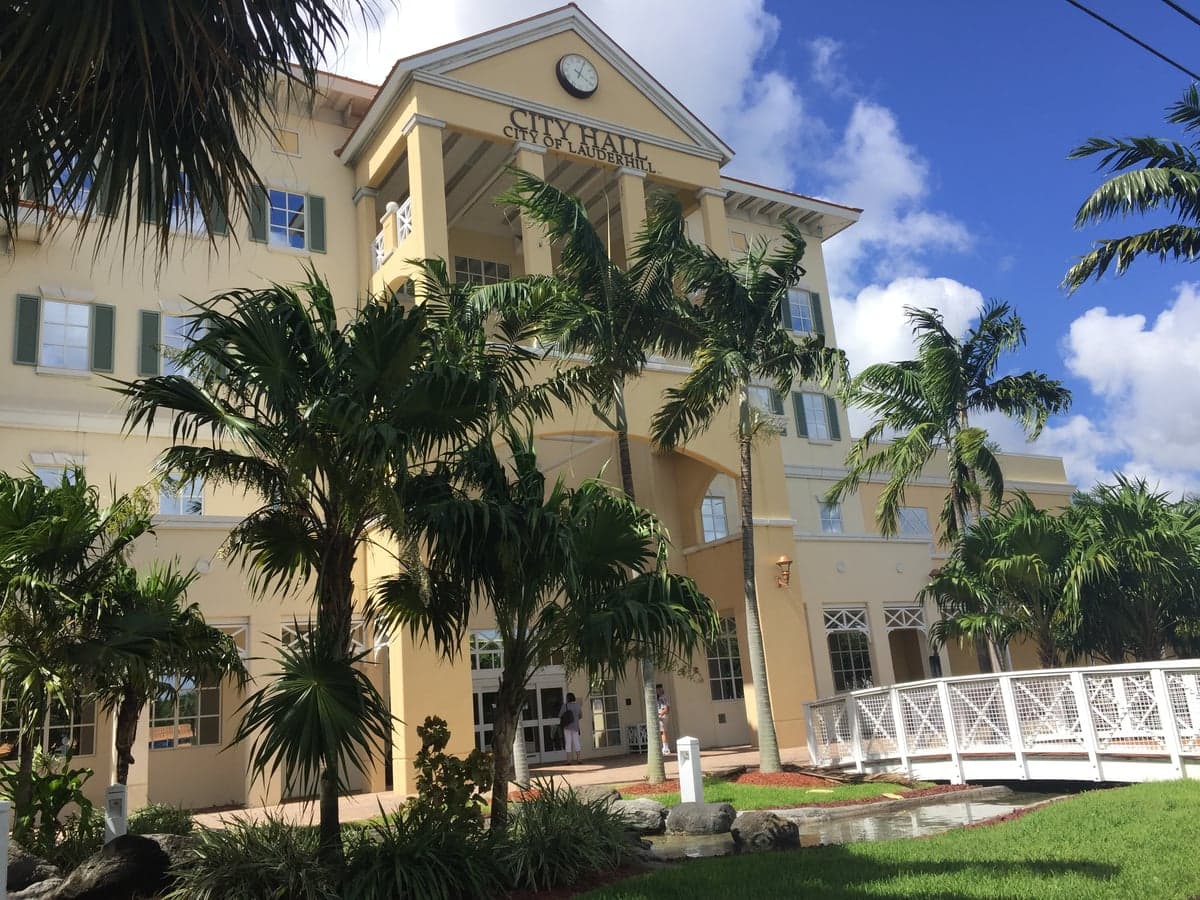
Photo: Wikipedia
Political ClimatePolitical Climate in Lauderhill, FL
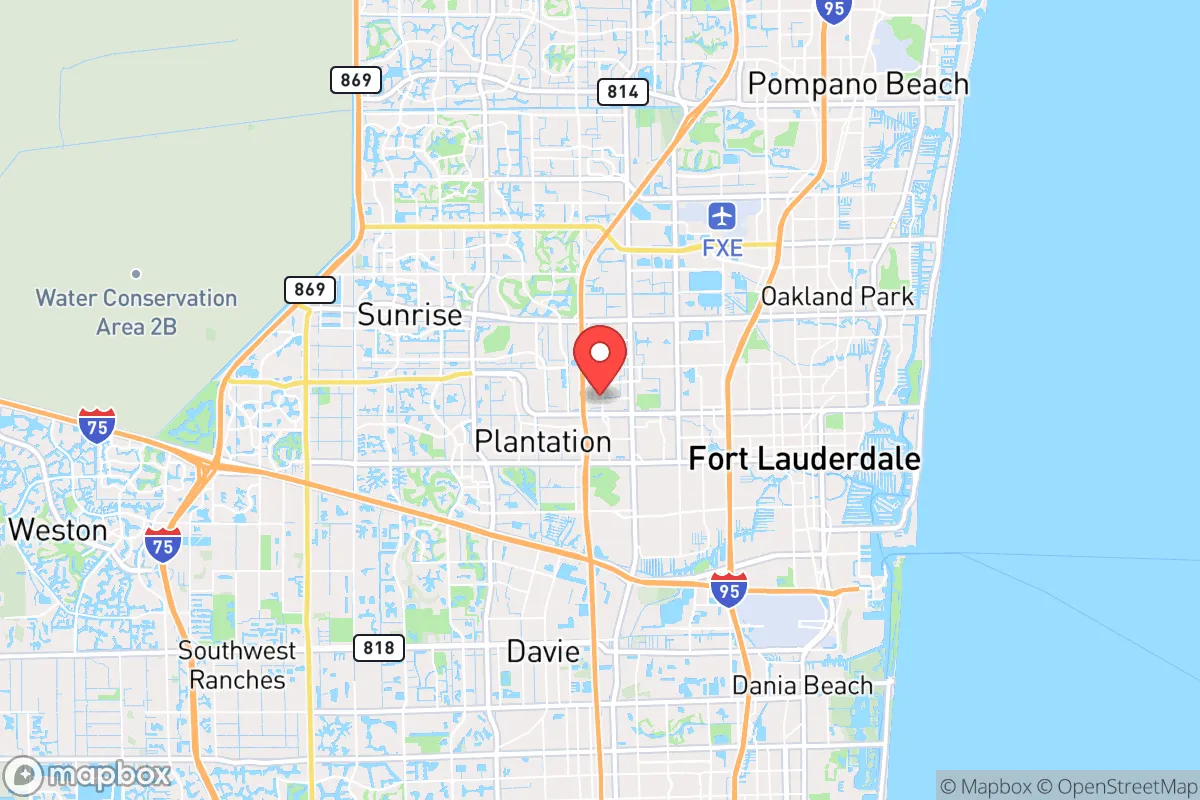
District shown is the primary district for this city’s centroid. Cities may span multiple districts.
Local Political AnalysisPolitical Analysis of Lauderhill, FL
Look, I’ve been in Lauderhill long enough to remember when this was a quiet, middle-class suburb where folks mostly kept to themselves and the biggest political argument was over pothole funding. Today, it’s a different animal. Lauderhill is one of the most reliably Democratic strongholds in South Florida, with a Cook PVI of D+22 — meaning it votes about 22 points more Democratic than the national average. That’s not just blue; it’s deep indigo. The trajectory has been steadily leftward for two decades, driven by an influx of younger families from the Northeast and Caribbean, plus a city council that’s increasingly comfortable with progressive policy experiments. If you value personal freedoms and limited government, this shift is worth watching closely.
How it compares
To understand Lauderhill’s politics, you have to look at the neighbors. Drive 10 minutes west to Sunrise or Tamarac, and you’ll find a more mixed political landscape — still blue-leaning, but with a noticeable conservative minority that shows up at commission meetings. Head north to Coral Springs, and you’re in a purple zone where local races are genuinely competitive. But Lauderhill? It’s a one-party town. The city council hasn’t had a Republican member in over a decade, and the last serious conservative candidate for mayor got about 30% of the vote. Compare that to Parkland or Weston, where you’ll see more fiscal conservative voices, and the contrast is stark. Lauderhill has become a laboratory for progressive governance — higher taxes, more regulations, and a city government that seems to think it knows better than you how to run your life.
What this means for residents
Practically speaking, this political monoculture has real consequences. Property taxes here are noticeably higher than in surrounding towns, and the city has been aggressive about adding new fees — stormwater, business licenses, even a proposed “affordable housing linkage fee” that would hit any new construction. The school board is similarly one-sided, which means parents who want school choice or charter options often feel like they’re shouting into a void. If you’re a small business owner or a homeowner who values keeping more of your own money, Lauderhill’s political direction is a red flag. The city council has also pushed symbolic resolutions on national issues — things that have nothing to do with local potholes or crime — which tells you where their priorities lie. It’s not about making Lauderhill a better place to live; it’s about signaling virtue to a national audience.
On the cultural side, Lauderhill has a strong Caribbean and African-American heritage that gives it a unique vibe — great food, lively festivals, and a real sense of community. But that community spirit is increasingly being co-opted by a political class that sees every local issue through an ideological lens. The city has flirted with “sanctuary” policies, which raises questions about public safety and federal cooperation. Long-term, I worry that Lauderhill is heading toward the same problems we see in cities like Portland or Seattle — where progressive governance leads to higher costs, less personal freedom, and a government that’s more interested in social engineering than basic services. If you’re thinking of moving here, come for the diversity and the location, but keep one eye on the ballot box. The direction this city is going isn’t one that respects the individual’s right to live their own life without a bureaucrat’s permission.

State Political ClimatePolitical Climate in Florida
State Political AnalysisPolitical Environment in the State
Florida has transformed from a classic swing state into a solidly Republican-leaning powerhouse over the past two decades, with a registered Republican voter advantage of over 600,000 as of 2026 and a 13-point GOP margin in the 2024 presidential election. The dominant coalition is a blend of conservative retirees, Hispanic voters (especially Cuban-Americans and Venezuelans in Miami-Dade), and fast-growing exurban families fleeing high-tax states. This shift accelerated after 2020, when Governor Ron DeSantis’s aggressive pandemic policies and cultural battles cemented Florida as the national laboratory for conservative governance, pulling the state rightward even as other Sun Belt states like Texas showed signs of softening.
Urban vs. rural divide
The political map of Florida is starkly divided, with three distinct zones. The I-4 corridor—running from Tampa through Orlando to Daytona Beach—remains the ultimate battleground, but it’s trending redder, especially in suburban counties like Polk and Lake that flipped hard for DeSantis in 2022. Miami-Dade County, once a Democratic stronghold, shocked the nation by voting for Donald Trump in 2020 and 2024, driven by Cuban and Nicaraguan exiles who view the GOP as the party of anti-communism and economic freedom. Meanwhile, the Panhandle—places like Panama City and Pensacola—is deep red, culturally Southern, and reliably conservative. On the flip side, the urban cores of Miami, Orlando, and Tampa remain blue, powered by younger renters and service workers, but their influence is diluted by massive suburban growth in St. Johns County (Jacksonville’s bedroom communities) and Collier County (Naples), both of which vote 60%+ Republican. The rural north—counties like Liberty and Calhoun—is as red as any place in Alabama, but they have little population weight.
Policy environment
Florida’s policy environment is a deliberate contrast to states like California and New York. There is no state income tax, a constitutional protection that draws high-earners and retirees. Property taxes are moderate (averaging 0.83% of assessed value), and the state caps annual assessment increases at 3% for homesteaded properties via the Save Our Homes amendment. Regulatory posture is business-friendly: Florida is a right-to-work state, and the 2023 Live Local Act preempts local zoning to fast-track affordable housing development. On education, the state has universal school choice through the Family Empowerment Scholarship program, which allows any K-12 student to use state funds for private or homeschool expenses. Higher education is under political scrutiny: the 2023 Stop WOKE Act restricts critical race theory in public universities, and the Board of Governors has overhauled diversity, equity, and inclusion (DEI) programs at schools like the University of Florida and Florida State University. Election laws are among the most restrictive in the nation: the 2021 SB 90 limited drop boxes, tightened voter ID, and banned third-party ballot collection. Healthcare policy is mixed—Florida did not expand Medicaid under the ACA, but it has strong protections for medical conscience rights and a 15-week abortion ban (with a six-week ban triggered in 2024 after the state supreme court ruling).
Trajectory & freedom
On the freedom index, Florida is a tale of two trends. Personal liberty has expanded dramatically in several key areas: the 2023 permitless carry law (HB 543) allows any law-abiding adult to carry a concealed firearm without a license, and the 2024 expansion of the Parental Rights in Education law (the “Don’t Say Gay” law) now extends through 12th grade, giving parents control over classroom discussions of sexuality and gender. Property rights were strengthened by the 2024 Live Local Act amendments, which limit local governments’ ability to deny housing projects. However, freedom has contracted in other domains. The 2023 SB 254 restricts Chinese nationals from buying land near military bases and critical infrastructure, a move that some see as overreach. The state’s aggressive pursuit of election integrity—including a 2024 law creating a new election police force—has raised concerns about government overreach into voting rights. Medical freedom took a hit with the 2024 ban on gender-affirming care for minors, which, while popular with conservatives, represents a clear government restriction on medical decisions. Overall, the trajectory is toward more freedom in cultural and economic spheres, but with a heavier hand on immigration, election administration, and medical choices for minors.
Civil unrest & political movements
Florida has seen relatively low levels of civil unrest compared to blue states, but flashpoints exist. The 2020 George Floyd protests in Miami and Tampa were large but largely peaceful, though looting occurred in downtown Miami. The state’s response—DeSantis’s 2021 anti-riot law (HB 1) created new felonies for participating in violent assemblies and protected drivers who hit protesters—was a national model for conservative states. Organized activist movements are polarized: on the right, the Moms for Liberty group, founded in Florida in 2021, has become a national force in school board politics, particularly in Brevard County and Sarasota. On the left, the Dream Defenders and local chapters of the ACLU remain active, but their influence has waned since 2022. Immigration politics are a constant flashpoint: DeSantis’s 2023 law (SB 1718) made it a felony to transport undocumented immigrants into the state, and the administration has bused migrants to Martha’s Vineyard and Sacramento as political theater. Sanctuary cities are banned by state law, and local sheriffs in Polk County and Lee County actively cooperate with ICE. Election integrity controversies persist: the 2024 arrest of several Miami-Dade poll workers for alleged ballot harvesting has kept the issue alive, though no widespread fraud has been proven. A new resident would notice the heavy police presence at polling places and the constant political ads on TV, but actual street-level unrest is rare.
Projection
Over the next 5-10 years, Florida will likely become even more Republican, but with internal tensions. In-migration from blue states—roughly 1,000 people per day—is overwhelmingly conservative-leaning, but the new arrivals are often moderate suburbanites who may resist further cultural wars. The Hispanic vote, particularly in Miami-Dade, is shifting right, but younger Hispanic voters in Orlando are more progressive, creating a generational split. The biggest wildcard is climate change: rising sea levels and hurricane intensity could drive insurance costs so high that they slow growth in coastal areas like Miami Beach and Fort Myers, potentially shifting population inland to redder counties like Osceola and Hernando. Politically, expect continued battles over school curriculum (with possible expansion of school choice to include microschools), further restrictions on ballot access, and a push for a state constitutional amendment on property tax relief for renters. The 2026 gubernatorial race will be a test: if DeSantis’s successor is a hardliner, the state stays on its current trajectory; if a moderate wins, expect a slight softening on social issues. For a new resident, the bottom line is that Florida will remain a low-tax, culturally conservative state with strong parental rights and gun freedoms, but with a growing tension between the libertarian “leave me alone” crowd and the activist “make them conform” wing of the GOP.
For someone moving to Florida today, the practical takeaways are clear: you’ll enjoy no income tax, robust school choice, and a government that actively pushes back against federal overreach. But you’ll also live in a state where the government is increasingly involved in your medical decisions (abortion, gender care), your children’s education (curriculum transparency), and your voting process (strict ID and limited drop boxes). If you value low taxes and cultural conservatism above all, Florida is a haven. If you prize personal autonomy in every domain—including medical and electoral—you’ll need to pick your battles. The state is freer than it was a decade ago in many ways, but the freedom is increasingly defined by the state government, not by the individual. Choose your county wisely: St. Johns for conservative stability, Miami-Dade for a vibrant Hispanic-rights culture, or Alachua (Gainesville) if you want a blue island in a red sea.
* Values derived from national, state, county, city and local statistics and may differ in a specific area. Last updated: 2026-05-03T20:22:10.000Z
Narrative content on this page is AI-generated and may contain mistakes. Verify any details that matter before acting on them.
ReloMaps may earn a commission from affiliate links at no extra cost to you.

