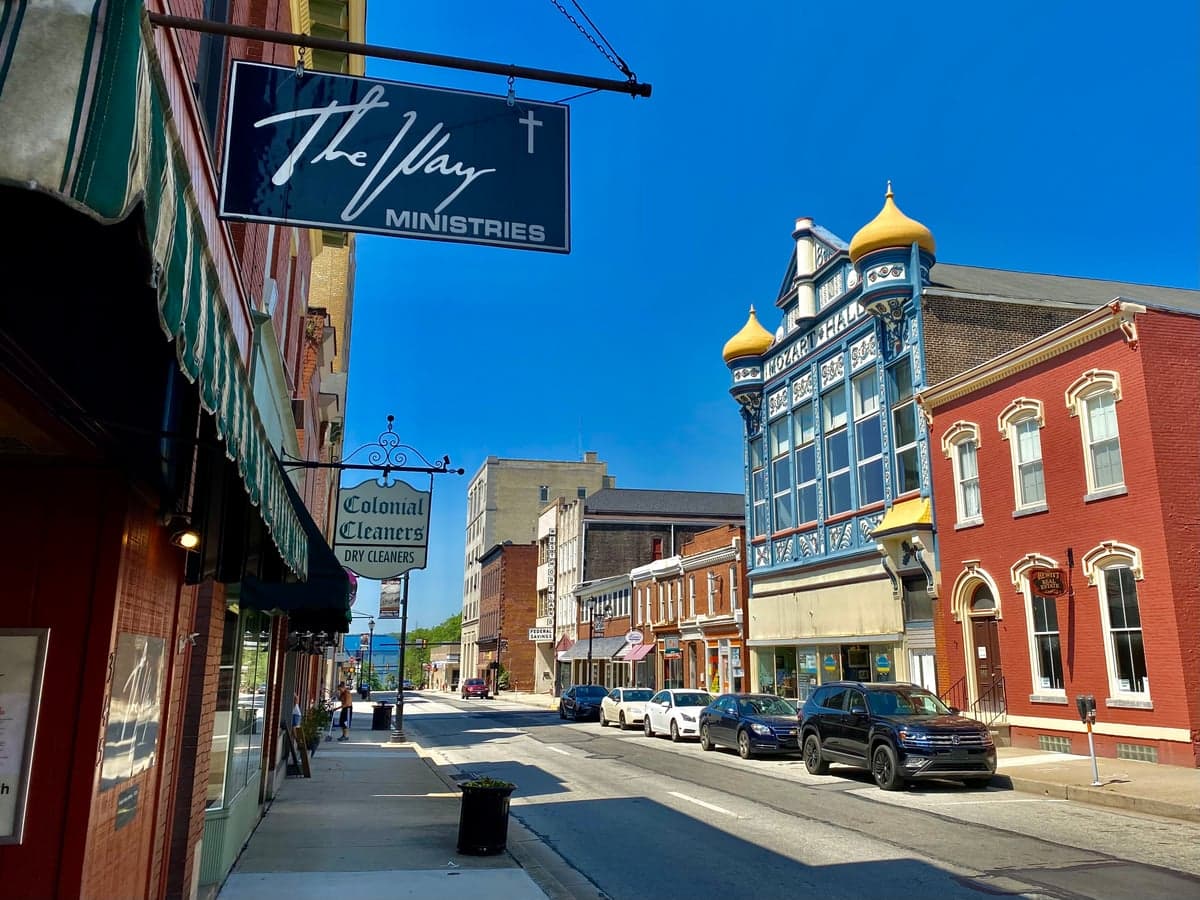
Photo: Wikipedia
Political ClimatePolitical Climate in Latrobe, PA
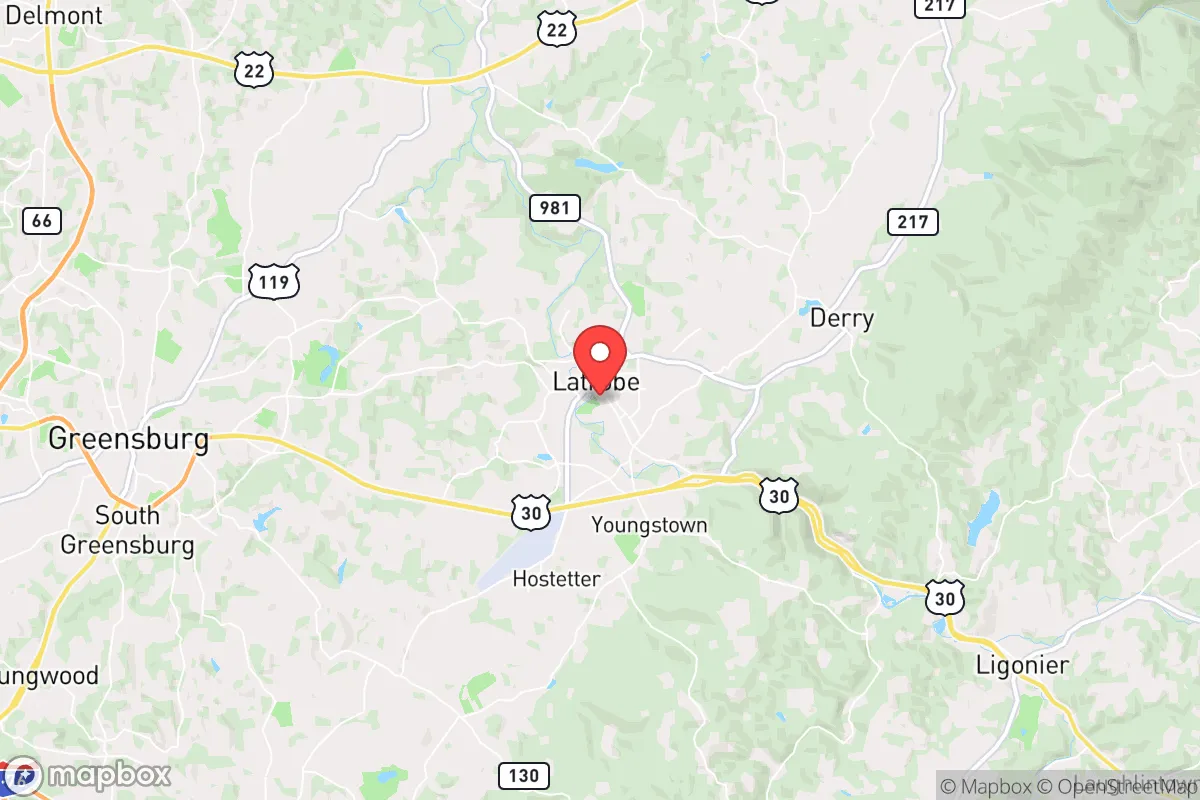
District shown is the primary district for this city’s centroid. Cities may span multiple districts.
Local Political AnalysisPolitical Analysis of Latrobe, PA
Latrobe, Pennsylvania, is a solidly conservative community in a state that’s become the ultimate political battleground. With a Cook Partisan Voting Index (PVI) of R+17, the area leans heavily Republican—far to the right of Pennsylvania’s statewide PVI of EVEN, which reflects the state’s near-perfect partisan split. This isn’t a recent shift; Latrobe has been reliably red for decades, though the intensity of that conservatism has deepened since the 2010s, mirroring the broader rural-urban divide that now defines American politics. If you’re moving here, you’re stepping into a place where “Trump country” isn’t just a slogan—it’s the everyday reality, from yard signs to local government meetings.
How it compares
To understand Latrobe’s political climate, you have to look at the contrast with its surroundings. The city sits in Westmoreland County, which voted for Donald Trump by roughly 30 points in 2020, while neighboring Allegheny County—home to Pittsburgh, just 40 miles west—went for Joe Biden by a similar margin. That’s the story of Pennsylvania in a nutshell: a deep blue urban core surrounded by a sea of red. Latrobe itself is more conservative than even some nearby towns like Greensburg (R+12) or Ligonier (R+15), but it’s less extreme than rural areas further east, like Somerset County (R+30). The key difference from the state as a whole is that Latrobe’s politics are stable and predictable, while Pennsylvania’s statewide races swing wildly—think 2016 (Trump by 0.7%) versus 2020 (Biden by 1.2%). In Latrobe, you won’t see that kind of volatility; local elections are decided in the Republican primary, not the general.
What this means for residents
For conservative residents, Latrobe is a comfortable place to live. You’ll find your views reflected in local policy—low taxes, a strong police presence, and a school board that leans traditional on issues like curriculum and parental rights. The local Republican Party is well-organized, and attending a township meeting means you’re likely among like-minded neighbors. For liberal residents, the reality is more nuanced. You won’t face hostility, but you’ll be in a clear minority. The local Democratic Party is small and often struggles to field candidates for local offices. That said, Latrobe isn’t a hotbed of culture-war conflict; most people are more concerned with the local economy—jobs at Kennametal or the Latrobe Brewing Company—than with national debates. The biggest practical difference from living in a blue area like Pittsburgh is that you’ll have fewer progressive institutions—no indie bookstores, no LGBTQ+ community centers, and a limited selection of ethnic restaurants. But the trade-off is a lower cost of living and a slower pace of life.
One cultural distinction worth noting: Latrobe is the birthplace of Arnold Palmer and the home of Rolling Rock beer, and that local pride often transcends politics. The annual Great Race and the Latrobe Art Center draw a mix of residents, and you’ll find that shared heritage can bridge some partisan gaps. However, the area’s political trajectory is clear: as Pennsylvania’s population continues to concentrate in Philadelphia and Pittsburgh, Latrobe’s rural and exurban character will likely make it even redder over the next decade. For anyone moving here, the takeaway is simple: if you’re conservative, you’ll feel at home; if you’re liberal, you’ll need to find your community in shared interests rather than shared politics. Either way, the area’s political stability means you can focus on what really matters—like finding the best pierogi in town.

State Political ClimatePolitical Climate in Pennsylvania
State Political AnalysisPolitical Environment in the State
Pennsylvania is the ultimate swing state, with a Cook PVI of EVEN that perfectly captures its knife-edge balance. Over the past 20 years, the state has shifted from a reliably blue-leaning battleground to a true toss-up, driven by the collapse of Democratic support in the rural west and north, while the Philadelphia and Pittsburgh suburbs have moved sharply left. The result is a state that feels like two different countries, and whoever wins Pennsylvania usually wins the White House.
Urban vs. rural divide
The political map of Pennsylvania is a story of three distinct regions. Philadelphia and its inner suburbs (Montgomery, Delaware, Chester counties) are the Democratic engine, delivering margins of 60-70% in presidential elections. Pittsburgh and Allegheny County are similarly blue, though less extreme. The Philadelphia collar counties like Bucks and Chester have flipped from Republican-leaning to solidly Democratic over the past decade, driven by college-educated professionals moving from the city. Meanwhile, the vast rural expanse — from the Lackawanna Valley around Scranton, through the Coal Region (Schuylkill, Luzerne counties), and across the Northern Tier (Bradford, Tioga, Potter) — has become deeply Republican. The I-81 corridor cities like Harrisburg and York are competitive but trending red, while Erie and Scranton have flipped from blue to purple. The Lancaster area, once a Republican stronghold, is now a microcosm of the state: the city is blue, the Amish country is deep red, and the suburbs are splitting.
Policy environment
Pennsylvania’s policy landscape is a patchwork of compromise and gridlock. The state has a flat income tax of 3.07%, one of the lowest in the nation, and no tax on Social Security or most retirement income. Property taxes are high, averaging about 1.5% of home value, but there is a homestead exemption that reduces the burden for owner-occupied homes. The state’s sales tax is 6%, with no tax on clothing or groceries. Education is a flashpoint: Pennsylvania has one of the most unequal school funding systems in the country, with wealthy suburban districts spending $30,000 per student while rural districts spend half that. The state has no school choice voucher program, though charter schools are allowed. Election laws are relatively moderate: no-excuse mail-in voting was passed in 2019, but voter ID is required for first-time voters only. Gun laws are preemption-heavy — the state prohibits local governments from passing their own gun ordinances, and there is no permit required to carry a concealed firearm (constitutional carry passed in 2024).
Recent policy direction
The last five years have seen Pennsylvania lurch in both directions simultaneously. In 2024, the Republican-controlled legislature passed and the Democratic governor signed constitutional carry, making Pennsylvania the 29th state to allow permitless concealed carry. That same year, the legislature passed a parental rights bill requiring schools to notify parents of any changes to a child’s health or well-being, including gender identity. On the other hand, the Democratic governor has used executive orders to expand Medicaid and protect abortion access, including a 2023 order barring state agencies from cooperating with out-of-state investigations into abortion care. The state has also tightened election security by requiring signature verification on mail-in ballots and banning private funding of election offices. Property rights are strong: Pennsylvania is a “Dillon’s Rule” state, meaning local governments have only the powers explicitly granted by the state, which limits zoning and land-use restrictions. The state has no statewide rent control and no cap on property tax increases. Privacy and surveillance are a mixed bag: the state has no warrantless license plate reader ban, but it does require a warrant for cell phone location data. Medical freedom is limited: the state has no vaccine mandate ban for private employers, and the 2024 “Right to Try” law for experimental treatments is on the books but rarely used.
Civil unrest & political movements
Pennsylvania has seen its share of political flashpoints. The 2020 election was a firestorm, with Trump challenging the results in Philadelphia and Allegheny counties, leading to the “Stop the Steal” rallies in Harrisburg and the state capitol. The January 6th committee hearings highlighted Pennsylvania as a key battleground for election integrity claims. On the left, the Black Lives Matter protests in Philadelphia in 2020 were among the largest in the country, with looting and property damage in Center City. The Pittsburgh synagogue shooting in 2018 galvanized both gun control and Second Amendment activism. Immigration politics are relatively quiet, as Pennsylvania is not a border state, but Philadelphia is a sanctuary city, limiting cooperation with ICE. The Lancaster County area has seen a growing Amish and Mennonite political movement focused on religious liberty and homeschooling rights. The “Second Amendment sanctuary” movement has passed resolutions in over 30 counties, mostly in the rural north and west, declaring they will not enforce certain gun laws. The 2024 election saw record turnout and no major unrest, but the “election integrity” movement remains active, with volunteer poll watchers and legal challenges expected in every future cycle.
Projection
Over the next 5-10 years, Pennsylvania is likely to remain a battleground, but the demographic trends favor the Republicans slightly. The Philadelphia suburbs are already as blue as they can get, while the rural areas are emptying out, losing population and electoral weight. The Pittsburgh region is stable but aging. The wild card is in-migration: Pennsylvania is gaining people from New York and New Jersey, many of whom are conservative-leaning families seeking lower taxes and more space. These newcomers are settling in the Lehigh Valley (Allentown, Bethlehem) and the Poconos, areas that are currently purple but trending red. The state’s flat tax and retirement-friendly tax policies are a draw for older conservatives. However, the younger, college-educated population in Philadelphia and Pittsburgh is solidly Democratic, and the state’s union legacy (especially in construction and public sector) still leans blue. The most likely outcome is that Pennsylvania remains a toss-up state for the next decade, with a slight rightward drift in the exurbs and small cities, but not enough to flip it permanently red. A new resident moving in now should expect to live in a state where every election is close, where policy is gridlocked, and where your local politics depend entirely on whether you live in a city, suburb, or small town.
For a conservative-leaning individual or family, Pennsylvania offers a mixed bag: low income taxes, strong gun rights, and a growing conservative presence in the exurbs, but also a Democratic governor, a blue-leaning Supreme Court, and a state government that is often at war with itself. The practical takeaway is that you can find a community that matches your values — from the deep-red farm country of Franklin County to the purple suburbs of York to the blue cities — but you will never be far from the other side. The state’s political climate is like its weather: unpredictable, occasionally stormy, but always interesting. If you want a place where your vote matters and where you can see the national debate play out in real time, Pennsylvania is the place. If you want a settled, predictable political environment, look elsewhere.
* Values derived from national, state, county, city and local statistics and may differ in a specific area. Last updated: 2026-08-24T07:10:29.000Z
Narrative content on this page is AI-generated and may contain mistakes. Verify any details that matter before acting on them.
ReloMaps may earn a commission from affiliate links at no extra cost to you.

