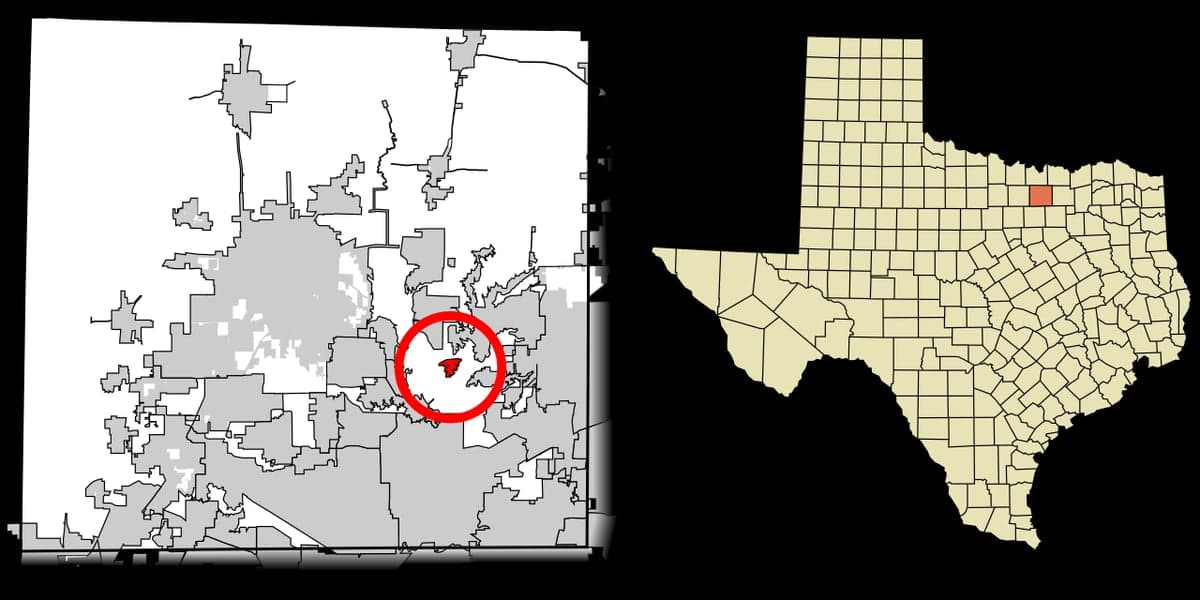
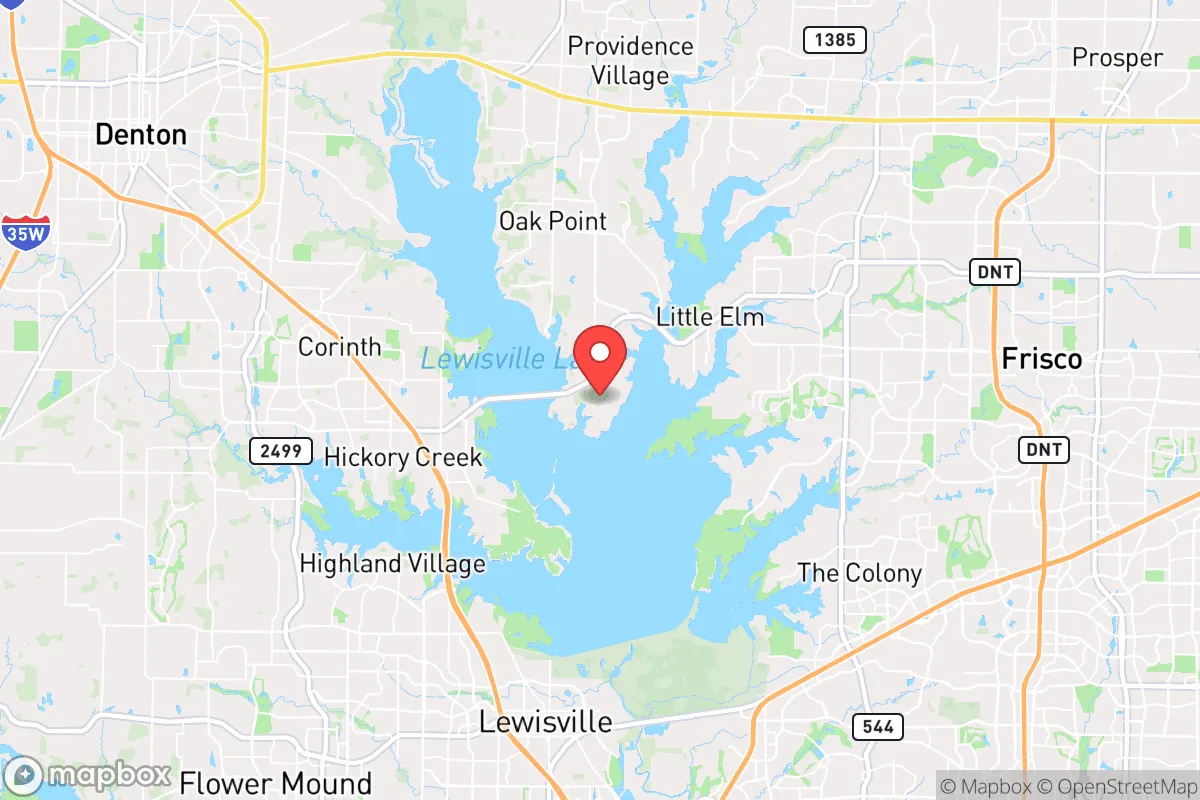

Photo: Wikipedia
Political ClimatePolitical Climate in Lakewood Village, TX
District shown is the primary district for this city’s centroid. Cities may span multiple districts.
Local Political AnalysisPolitical Analysis of Lakewood Village, TX
Lakewood Village, Texas, is a reliably conservative community, with a Cook Partisan Voting Index (PVI) of R+11, making it significantly more Republican than the state of Texas as a whole, which sits at R+4. This isn't a recent shift; the area has long been a stronghold for GOP candidates, and local elections tend to reflect that same lean. If you're moving here, you're stepping into a place where conservative values are the baseline, not the exception.
How it compares
To put the R+11 rating in perspective, Lakewood Village is about seven points more Republican than the statewide average. That's a meaningful gap. While Texas as a whole has been trending slightly more competitive in recent cycles—especially in suburban and urban districts—Lakewood Village has held steady. Nearby cities like Denton and Lewisville, just a short drive away, have seen more political diversity, with pockets of Democratic-leaning voters in their urban cores and college areas. In contrast, Lakewood Village feels more like the rural and exurban parts of Denton County, where Republican candidates routinely win by double digits. The trajectory here is one of stability: the community isn't swinging, and it's not expected to in the near future.
What this means for residents
For conservative residents, this political climate means your views are the norm. Local government, school board decisions, and even community events tend to align with traditional conservative priorities—lower taxes, Second Amendment rights, and a focus on law and order. You'll find that your neighbors likely share your outlook, and civic engagement often revolves around Republican party activities or local church groups. For liberal residents, the reality is different. You'll be in the minority, and that can feel isolating at times, especially during election seasons. However, the area is not hostile; most folks are polite and neighborly, and you can still find like-minded people through online groups or by driving into Denton or Carrollton for more diverse social and political circles. The key is understanding that your voice may not carry as much weight in local elections, but you can still participate and advocate for your views without fear of confrontation.
Culturally, Lakewood Village is a place where community events often have a patriotic or faith-based flavor. The Fourth of July parade is a big deal, and local churches are central to social life. There's a strong emphasis on self-reliance and personal responsibility, which shows up in everything from how people maintain their properties to the types of small businesses that thrive here. Policy-wise, you'll see lower property tax rates compared to more liberal-leaning parts of the metroplex, and there's less appetite for new regulations or zoning changes. The town's small size—just a few thousand residents—means that politics feels personal. You might know your city council member by name, and decisions about parks, roads, or development are made with a local, not a partisan, lens. For anyone moving here, the takeaway is simple: if you're comfortable in a conservative, tight-knit community where your vote aligns with the majority, you'll feel right at home. If you're not, you'll still find a welcoming place, but you'll need to adjust your expectations about the political conversation.

State Political ClimatePolitical Climate in Texas
State Political AnalysisPolitical Environment in the State
Texas is a solidly Republican state with a Cook PVI of R+4, but that headline number masks a dramatic and ongoing political realignment. Over the past 20 years, the state has shifted from a reliably red stronghold to a battleground where explosive population growth in the suburbs and major metros is steadily chipping away at the GOP’s dominance. In 2024, Donald Trump still carried the state by about 5.5 points, down from 9 points in 2020 and 16 points in 2012, a trajectory that has made Texas the single most watched state for future national elections. The dominant coalition remains a mix of rural conservatives, suburban moderates, and a growing Hispanic electorate that is far from monolithic, while Democrats pile up huge margins in the urban cores of Houston, Dallas, San Antonio, and Austin.
Urban vs. rural divide
The political map of Texas is a study in extremes. The big four metros—Houston (Harris County), Dallas (Dallas County), San Antonio (Bexar County), and Austin (Travis County)—are deep blue, with Democrats routinely winning these counties by 20 to 40 points. Harris County alone, home to 4.7 million people, has flipped from a red-leaning swing county in 2012 to a solidly Democratic one, driven by a surge of young, diverse, and college-educated voters. Meanwhile, the rural and exurban counties that ring these metros—places like Collin County (north of Dallas), Fort Bend County (southwest of Houston), and Comal County (north of San Antonio)—are where the real action is. Collin County, once a GOP fortress, has shifted from +30 Republican in 2012 to +14 in 2024, as tech and corporate transplants from California and the Northeast flood into suburbs like Plano and Frisco. The Rio Grande Valley, a historically Democratic stronghold of Hispanic voters, has also become a major swing region, with counties like Hidalgo and Cameron moving sharply right in 2020 and 2024, driven by conservative social values and a growing working-class base. The rural Panhandle and West Texas—think Lubbock, Amarillo, and Midland—remain deeply red, often voting 80%+ Republican.
Policy environment
Texas’s policy environment is defined by a low-tax, low-regulation, and socially conservative framework. There is no state income tax, a major draw for relocators, with revenue coming from a high property tax system (averaging roughly 1.6% of home value) and a 6.25% state sales tax (localities can add up to 2%, making the total often 8.25%). The state’s regulatory posture is famously business-friendly, with no state-level occupational licensing for many trades and a right-to-work law that weakens union power. On education, Texas has a school choice program (the Texas Education Savings Account program, passed in 2023) that allows parents to use state funds for private or homeschool expenses, though it’s capped and limited to certain student populations. Healthcare policy is a flashpoint: Texas is one of the 10 states that has not expanded Medicaid under the Affordable Care Act, leaving roughly 1.5 million low-income adults uninsured. Election laws have tightened significantly, with the 2021 SB 1 law banning 24-hour and drive-through voting, imposing new ID requirements for mail ballots, and empowering partisan poll watchers. The state also has a near-total abortion ban (trigger law from 2021, effective after Dobbs) with no exceptions for rape or incest, and a strict “heartbeat” law (SB 8) that allows private citizens to sue anyone who aids an abortion.
Recent policy direction
The last five years have seen Texas move aggressively on a range of fronts that matter to relocators. On gun and self-defense law, Texas became a permitless carry state in 2021 (HB 1927), allowing anyone 21 or older who can legally possess a firearm to carry it openly or concealed without a license. On parental and education rights, the 2023 “Parental Bill of Rights” (HB 900) requires schools to get parental consent before students can access library materials deemed “sexually explicit,” and the state has banned diversity, equity, and inclusion (DEI) programs at public universities. On speech and privacy, Texas passed a law in 2023 (HB 20) that restricts social media platforms from moderating content based on “viewpoint,” a direct challenge to First Amendment protections for private companies. On medical and bodily autonomy, the abortion bans are the headline, but the state also passed a law in 2023 (SB 14) banning gender-affirming care for minors, including puberty blockers and hormone therapy. On property rights, Texas has no state-level rent control and strong eminent domain protections for landowners, but property taxes remain a top complaint. On taxation, the 2023 session saw a $18 billion property tax cut package (Proposition 4), which raised the homestead exemption from $40,000 to $100,000 and temporarily compressed school tax rates. On voting and ballot access, SB 1 (2021) remains the baseline, and the state has also purged voter rolls aggressively, removing over 1 million names since 2021, though officials say this is routine maintenance.
Civil unrest & political movements
Texas has been a flashpoint for political activism on both sides. The 2020 Black Lives Matter protests in Austin and Houston were among the largest in the country, with Austin seeing sustained demonstrations for weeks. In response, the state legislature passed the 2021 “Back the Blue” law (HB 9) that increases penalties for rioting and blocking roadways, and a 2023 law (SB 22) that defunds cities that “defund” their police departments. Immigration politics are a constant, with Governor Greg Abbott’s Operation Lone Star (launched 2021) deploying state troopers and National Guard to the border, busing migrants to Democratic-led cities like New York and Chicago, and passing a 2023 law (SB 4) that makes illegal entry a state crime—currently tied up in federal court. Secession rhetoric, while fringe, has a real presence: the Texas Nationalist Movement has been active for decades, and a 2024 poll showed about 20% of Texans support secession, though it remains a non-starter legally. Election integrity controversies have been a persistent theme, with Trump’s 2020 loss in the state sparking baseless fraud claims, and the 2022 primary saw a purge of election officials in some rural counties. A new resident will notice the political polarization in everyday life: bumper stickers, yard signs, and even church affiliations often signal a person’s lean, especially in the suburbs.
Projection
Over the next 5-10 years, Texas is likely to continue its slow drift toward competitiveness, driven by demographic shifts and in-migration. The state is adding roughly 1,000 new residents a day, many from California and the Northeast, and these newcomers tend to be younger, more diverse, and more moderate-to-liberal on social issues. The Hispanic population, now 40% of the state, is not a monolith—younger, more secular Hispanics lean left, while older, churchgoing ones lean right—but the overall trend is toward a more Democratic-leaning electorate. The suburbs of Dallas, Houston, and Austin will continue to flip from red to purple, while the rural areas will become even more Republican. By 2032, Texas could be a true swing state, with a PVI of D+1 or R+1, depending on national trends. For a relocator, this means the political environment will feel less monolithic than it does today, with more contested elections, more policy volatility, and a growing tension between the state’s conservative leadership and its increasingly diverse population.
For a new resident, the bottom line is that Texas offers a low-tax, business-friendly environment with a strong conservative tilt on social issues, but that tilt is under constant pressure from rapid growth and demographic change. If you’re a conservative, you’ll find a state government that largely aligns with your values on guns, abortion, education, and taxes, but you’ll also see your political dominance eroding in the suburbs. If you’re a liberal, you’ll find vibrant blue cities and a growing coalition, but you’ll face a state government that is actively hostile to many of your priorities. The practical takeaway: choose your county carefully. A move to Collin County or Fort Bend will feel very different from a move to Travis County or Harris County, and that gap is only widening.
* Values derived from national, state, county, city and local statistics and may differ in a specific area. Last updated: 2026-07-24T16:09:56.000Z
Narrative content on this page is AI-generated and may contain mistakes. Verify any details that matter before acting on them.
ReloMaps may earn a commission from affiliate links at no extra cost to you.

