Photo: Wikipedia
Strategic Assessment of Lakewood Village, TX
Meaningful friction. Expect exposure to either population pressure, blast zones, or natural disaster risk. Consider buying a retreat property.
What does the Strategic Assessment tell us?
Our Strategic Assessment grades tactical survivability of an area. Major population centers, military targets, fallout zones, natural disasters, and border exposure all drive risk — lower exposure means a more defensible position in a crisis.
This is heavily inspired by Joel Skousen's Strategic Relocation book. Highly recommended you checkout the book ($)What does this tell us?
Our Strategic Assessment grades tactical survivability of an area. Major population centers, military targets, fallout zones, natural disasters, and border exposure all drive risk — lower exposure means a more defensible position in a crisis.
This is heavily inspired by Joel Skousen's Strategic Relocation book. Highly recommended you checkout the book ($)Strategic Pillars

Key Distances
Regional Safe Places
Below is our recommended "safe zones" in Texas and the surrounding area based on our strategic heuristics. For most people, it's unrealistic to live in a “safe zone” full-time due to work, family or other personal reasons. They tend to be more rural. However, many of these areas are perfect for second homes and retreat properties that double as a vacation home or even a short-term rental.

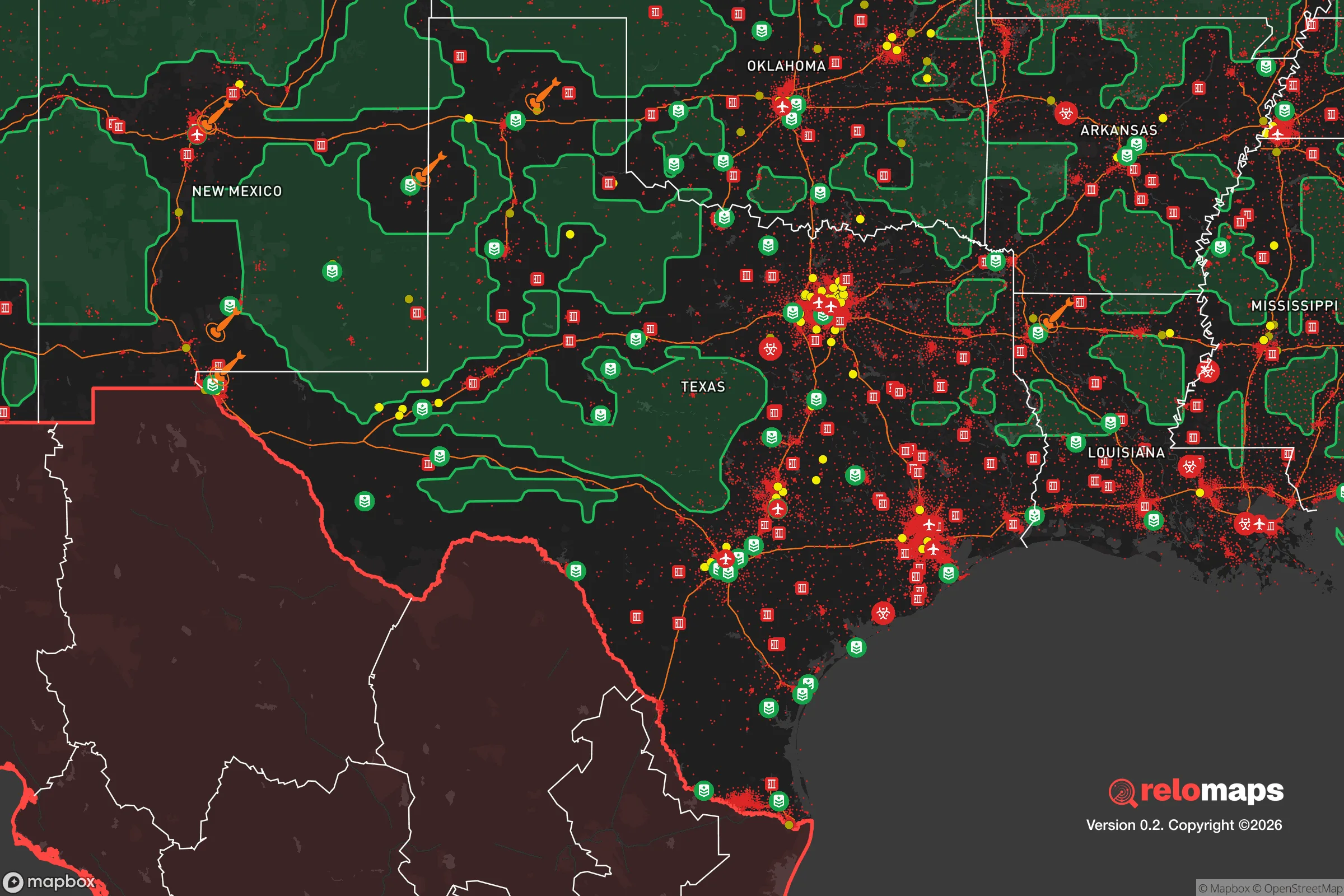


Important Note: For informational purposes only. This does not mean nothing bad ever happens in the green zones. Please use common sense. This is based on public data and modeled with AI. We tried to take a conservative approach but mistakes happen. We update this regularly as new information becomes available.
Solar Generator Recommendations
Backup power matters more here than in safer locations. We've picked three solar generators across budgets and capacity tiers — start with the budget unit if you only need a few essentials, or step up if you want to run a fridge and HVAC for days at a time.

Jackery Portable Power Station Explorer 300
Budget OptionPower on the Go: Weighing only 11 lbs, it's convenient to set up and store with book-sized foldable solar panels

BLUETTI Portable Power Station AC180
Designed for both indoor and outdoor scenarios, AC180 is highly capable as it has a robost capacity and continuous output power.

EF ECOFLOW DELTA Pro Ultra Power Station
Upgraded PickEcoFlow DELTA Pro Ultra is a whole-home energy system designed to grow with your family. Integrated with the Smart Home Panel 2, it scales to meet your evolving energy needs — keeping your home powered, intelligent, and secure through every stage of life.
We earn a commission, at no additional cost to you.
Strategic Assessment Analysis
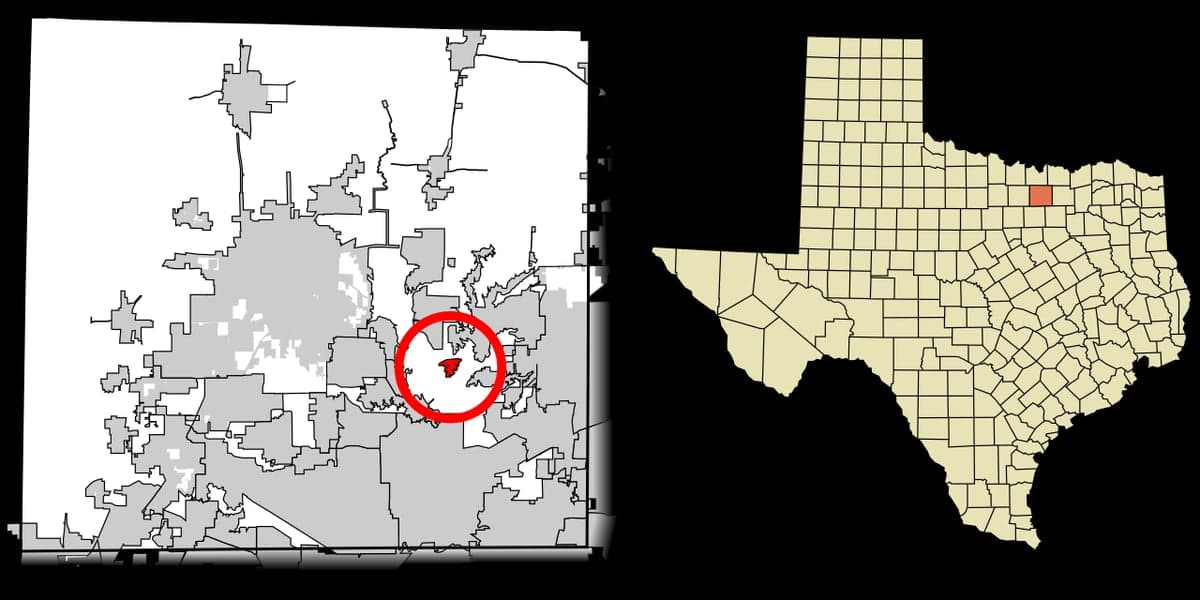
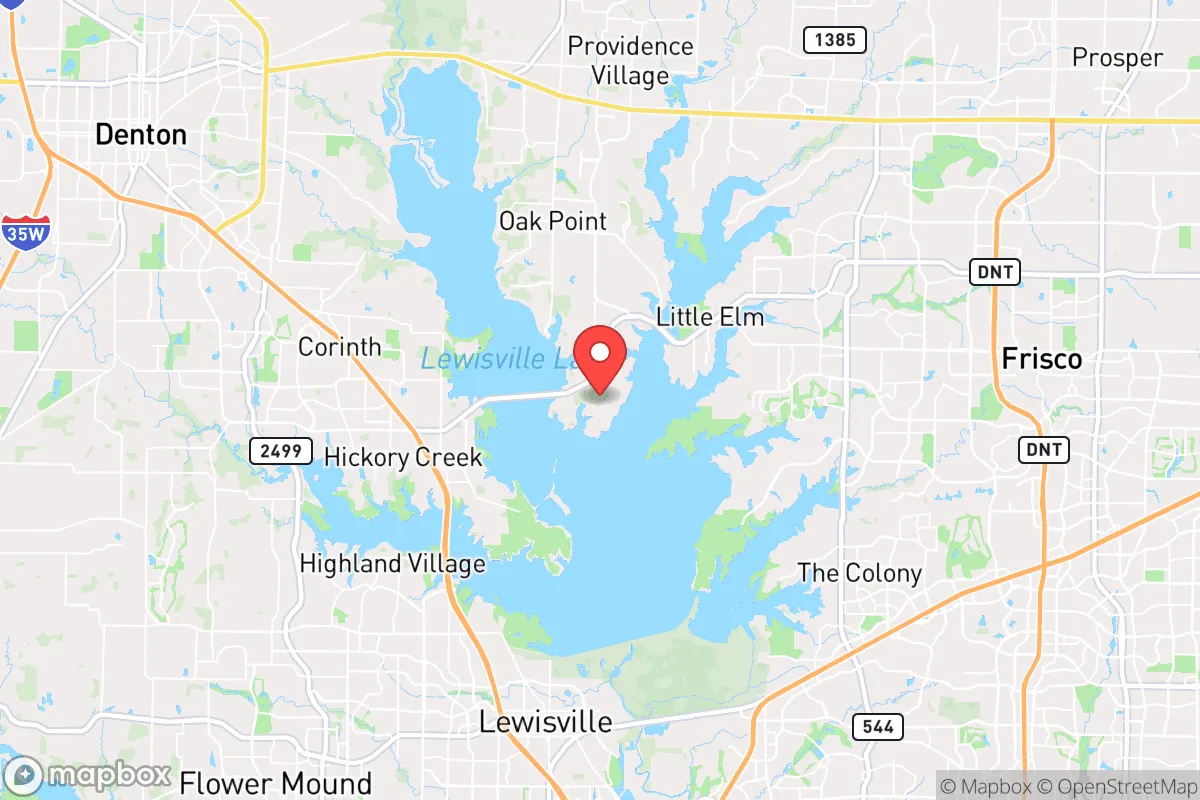
Lakewood Village, Texas, occupies a strategic position for those prioritizing disaster readiness and self-sufficiency, offering a blend of small-town remoteness and practical access to critical resources that many North Texas suburbs lack. Located in southern Denton County, roughly 35 miles north of downtown Dallas, this unincorporated community of fewer than 1,000 residents sits on the edge of the Dallas-Fort Worth metroplex—close enough to reach major supply chains and medical facilities, yet far enough to avoid the worst of urban congestion and the concentrated fallout risks associated with a major metropolitan target. For a relocator thinking seriously about resilience, Lakewood Village presents a defensible, low-profile base with genuine geographic advantages, though it is not without exposure to natural and man-made threats that demand careful planning.
Geographic position and natural advantages for self-sufficiency
Lakewood Village’s location along the Elm Fork of the Trinity River provides a reliable freshwater source, a critical asset for long-term self-sufficiency. The area sits atop the Trinity Aquifer, meaning well water is accessible for those willing to drill—a key advantage over suburban subdivisions reliant on municipal systems that could fail during grid disruptions. The surrounding terrain is gently rolling, with mixed hardwood forest and open pastureland, offering natural cover and defensible sightlines without the fire-prone dense vegetation of East Texas. The community is bordered by the Lewisville Lake Environmental Learning Area (LLELA) to the east, a 2,000-acre protected greenbelt that buffers development and provides a wildlife corridor for hunting and foraging. This green space also acts as a natural barrier against urban sprawl, preserving the area’s low population density—roughly 200 people per square mile, compared to over 3,000 in nearby Frisco. For a relocator, this means fewer neighbors to compete with for resources during a crisis, and more room to establish independent food and water systems without immediate encroachment.
Risks, exposures, and proximity to fallout-relevant landmarks
While Lakewood Village avoids the direct blast radius of a major city, its proximity to several high-value targets introduces real man-made risks that cannot be ignored. The community lies roughly 12 miles northwest of the Dallas/Fort Worth International Airport (DFW), one of the busiest in the world and a likely primary target in a conflict scenario. Additionally, the nearby Lewisville Lake Dam—a major flood-control structure—is a potential secondary target; its failure could inundate downstream areas, though Lakewood Village sits on higher ground and would likely escape catastrophic flooding. On the natural risk side, Denton County sits in Tornado Alley, with an average of 5-7 tornado warnings per year. The area’s flat, open terrain offers little natural shielding from severe weather, meaning a storm shelter or reinforced safe room is a non-negotiable investment. Wildfire risk is low due to the region’s humid subtropical climate, but drought conditions—common in North Texas—can elevate fire danger during summer months. The single greatest exposure, however, is the area’s reliance on the ERCOT power grid, which has proven vulnerable to winter storms (as in 2021) and summer heat waves. A relocator should plan for multi-day outages, especially given the community’s rural classification, which often means slower utility restoration compared to denser suburbs.
Practical resilience for a relocator: food, water, energy, and defensibility
For a family or individual serious about self-sufficiency, Lakewood Village offers a workable foundation, but it demands upfront investment. Water security is the strongest asset: the shallow Trinity Aquifer means a private well can be drilled to depths of 200-400 feet, with yields typically sufficient for a household and small-scale irrigation. Rainwater catchment is also viable, given the area’s average 38 inches of annual rainfall—enough to supplement a 5,000-gallon cistern system for drinking and gardening. Food production is feasible but requires land: most lots in Lakewood Village are 1-5 acres, allowing for vegetable gardens, fruit trees, and small livestock like chickens or goats. The growing season runs roughly March through November, with hot summers limiting cool-weather crops. Local soil is clay-heavy, so raised beds or soil amendments are necessary for consistent yields. For energy, solar is the most practical off-grid option, with the region averaging 215 sunny days per year—above the national average. However, net metering policies in Denton County are limited, so a battery storage system (e.g., Tesla Powerwall or equivalent) is essential for true independence. Defensibility is a mixed picture: the community’s low density and limited road access (primarily two-lane FM 424 and FM 1385) create natural chokepoints that can be monitored, but the lack of a formal homeowners’ association or neighborhood watch means security is the responsibility of individual residents. Firearms ownership is common in this part of Texas, and the local sheriff’s office (Denton County) has a response time of 15-25 minutes for rural calls, so personal preparedness is paramount. For food storage, the nearest bulk suppliers are in Aubrey (10 minutes) and Denton (20 minutes), but a deep pantry with at least a 3-month supply is advisable given potential supply chain disruptions during regional emergencies.
The overall strategic picture for Lakewood Village is one of moderate resilience with clear trade-offs. Its geographic position offers genuine advantages—proximity to fresh water, low population density, and a buffer of protected green space—that make it a viable base for a self-sufficient lifestyle. The man-made risks from nearby DFW and the grid’s fragility are real but manageable with proper planning, particularly if a relocator invests in off-grid energy and water systems. The natural threats (tornadoes, drought) are typical for North Texas and can be mitigated with standard preparedness measures. For a conservative-leaning audience valuing independence and community, Lakewood Village strikes a reasonable balance: it is not a hardened bunker, but it is a defensible, low-profile location where a prepared family can thrive without the vulnerabilities of dense suburban or urban living. The key is to treat it as a starting point—not a finished solution—and to build out resilience systems before a crisis arrives.

* Values derived from national, state, county, city and local statistics and may differ in a specific area. Last updated: 2026-07-24T16:09:56.000Z
Narrative content on this page is AI-generated and may contain mistakes. Verify any details that matter before acting on them.
ReloMaps may earn a commission from affiliate links at no extra cost to you.

