 Popular
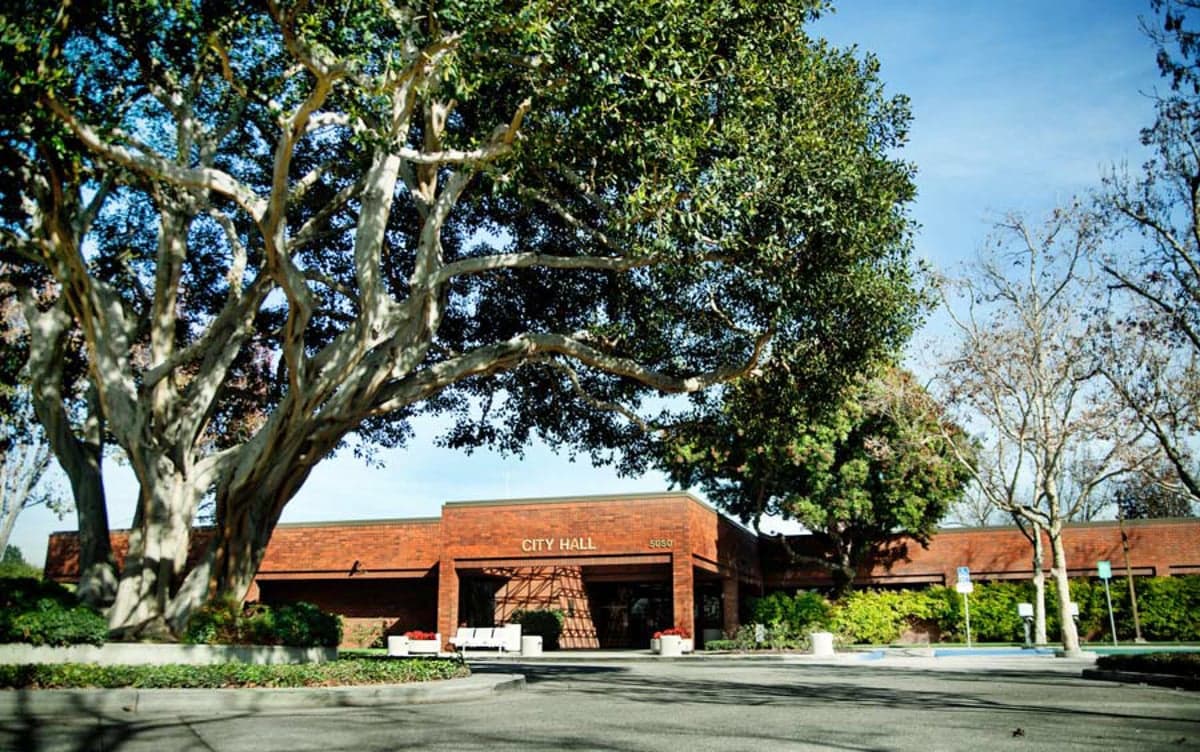
Photo: Wikipedia
Quality of Life in Lakewood, CA
Above-average quality of iife. The area offers a reasonable cost of living, decent mobility, and a mix of neighborhood amenities.
What does Quality of Life tell us?
Quality of Life blends cost of living, nearby amenities, socioeconomic signals, and neighborhood character. City-level scores represent the whole municipality; individual neighborhoods can differ.
What does this tell us?
Quality of Life blends cost of living, nearby amenities, socioeconomic signals, and neighborhood character. City-level scores represent the whole municipality; individual neighborhoods can differ.
Cost of Living
130% above national average
The Real Cost of Living in Lakewood, CA for 2026
| Tier | Individual | Family (4) |
|---|---|---|
| Survival | $37k | $70k |
| Comfortable | $108k | $158k |
| Luxury | $158k+ | $245k+ |
| Elite (Top 5%) | $186k+ | $288k+ |
74%
The Area Signal
A metric tracking the socioeconomic signals of the area.
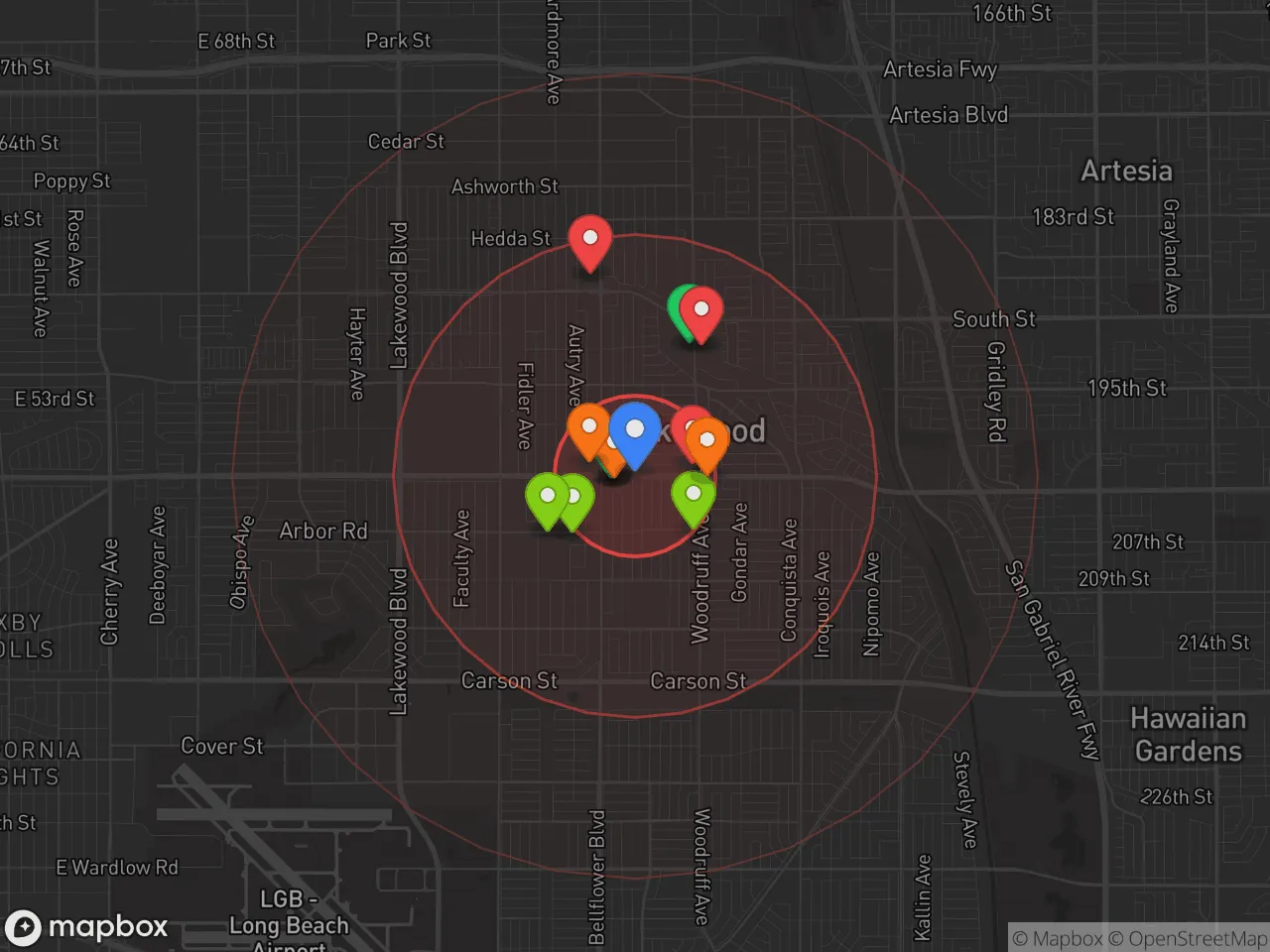
Hobbies
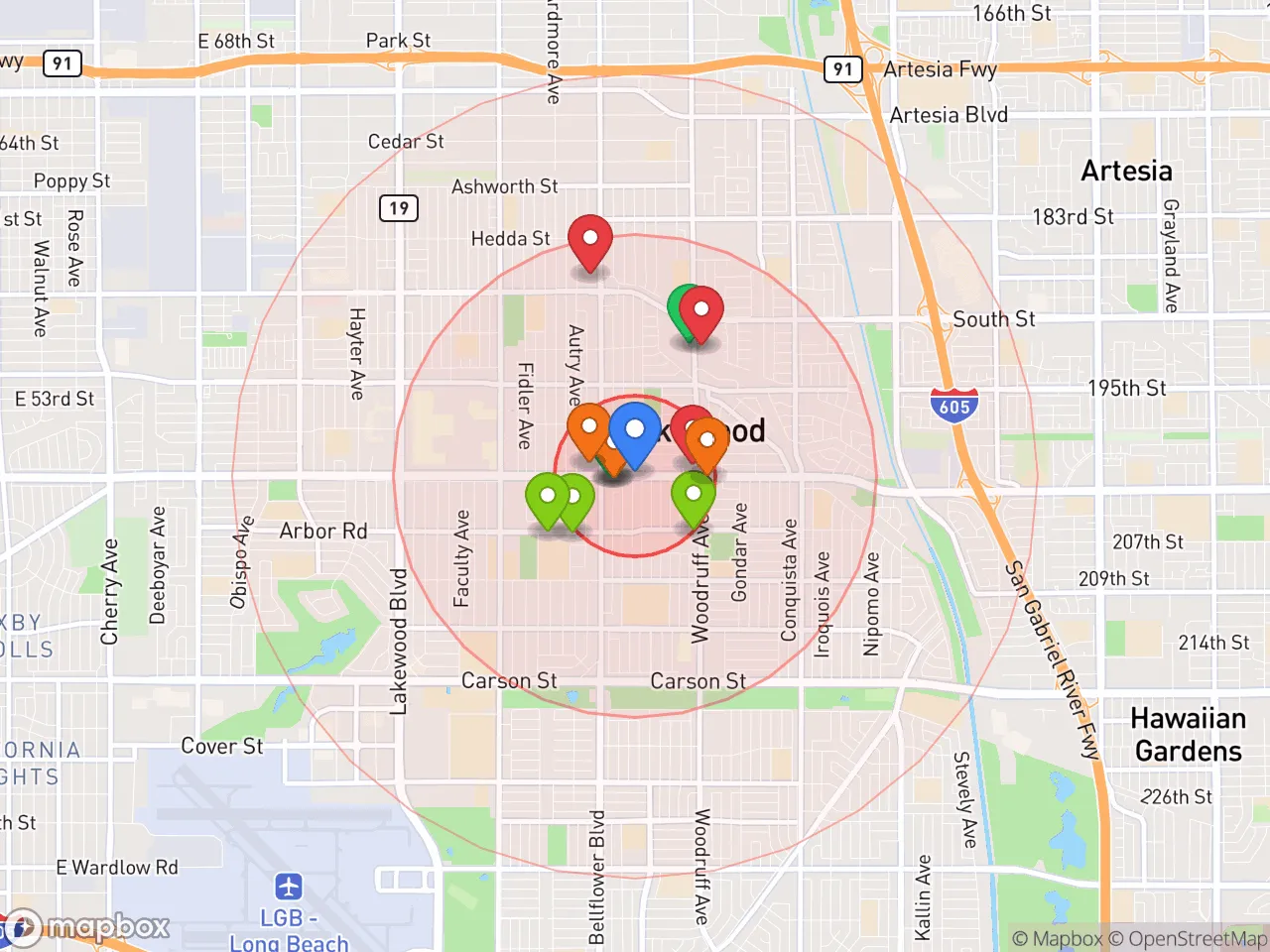
Explore the areaGroceries
0 within 10 miles
Gas
0 within 10 miles
Hospital
0 within 20 miles
Airport
SAN — San Gabriel Valley
Post Office
Critical Amenities
Quality-of-Life Analysis
Lakewood, California, is an affluent, family-oriented suburb in Los Angeles County, known for its well-maintained post-war housing stock, strong sense of community, and a population that skews toward middle-to-upper-middle-class professionals, long-term homeowners, and multi-generational families. With a cost-of-living index of 230 (more than double the U.S. average), the city attracts residents who prioritize space, safety, and suburban amenities over the urban energy of nearby Long Beach or downtown L.A., and who are willing to pay a premium for a quieter, more predictable daily life.
Cost of living, housing costs, and how Lakewood compares to Long Beach and Cerritos
Lakewood’s cost-of-living index of 230 reflects a housing market that is expensive by national standards but competitive within the L.A. basin. The median home value sits at $774,100, while the median rent is $2,324 per month. Compared to neighboring Cerritos (median home value ~$900,000) and Long Beach (~$720,000), Lakewood offers a relative value proposition: homes are generally larger and sit on bigger lots than comparably priced properties in Long Beach, yet they are less expensive than the newer, more exclusive stock in Cerritos. The average commute of 29 minutes is shorter than the L.A. County average of roughly 32 minutes, thanks to the city’s proximity to the 405, 605, and 105 freeways, as well as the Lakewood Center transit hub. However, property taxes and insurance costs are elevated due to California’s Proposition 13 framework and wildfire risk in adjacent areas, so buyers should budget beyond the sticker price.
Parks, schools, and what daily life is like for families in Lakewood
Daily life in Lakewood revolves around its extensive park system—the city operates 20 parks covering over 200 acres—and its highly rated public schools, which are part of the Long Beach Unified School District. Schools such as Lakewood High School and Hoover Middle School consistently earn above-average test scores, and the district offers specialized programs like the California Academy of Mathematics and Science (CAMS) for high-achieving students. The Lakewood Center mall anchors retail and dining, while the nearby El Dorado Nature Center and the San Gabriel River bike trail provide outdoor recreation. The city’s grid-like street layout and low crime rates (violent crime is roughly 40% below the national average) make it a popular choice for families with young children. Weekend rhythms include youth sports leagues at Mayfair Park, farmers’ markets at the Civic Center, and community events like the Lakewood Summer Concerts series. The trade-off is a lack of nightlife and a car-dependent layout; most errands require driving, and public transit options are limited to a few bus lines.
Lakewood is best suited for families, long-term homeowners, and professionals who work in the greater L.A. area but want a suburban buffer from the city’s congestion and cost. Retirees on fixed incomes may find the cost-of-living index challenging unless they already own a home, while young singles or renters seeking walkable urban energy will likely prefer Long Beach or downtown L.A. For those who value good schools, safe streets, and a stable, neighborly atmosphere—and who can afford the premium—Lakewood delivers a consistent, high-quality suburban life.

Crime in Lakewood, CA
Crime rates similar to the national median for U.S. locations.
Violent CrimeViolent Crime Analysis
Property CrimeProperty Crime Analysis
Crime Analysis
Lakewood, California, presents a mixed safety profile for potential residents. The city’s violent crime rate of 355.7 incidents per 100,000 residents is notably higher than the national average, while its property crime rate of 2,050.5 per 100,000 also exceeds typical benchmarks. These figures place Lakewood in a cautionary category for those evaluating relocation to this Los Angeles County suburb, particularly given the broader regional context of progressive criminal justice policies that can influence local enforcement and recidivism.
Crime in context
When compared to statewide and national data, Lakewood’s crime rates demand attention. The city’s violent crime rate of 355.7 per 100,000 is roughly 20% higher than the national average of about 300 per 100,000, and significantly above California’s own elevated state average. Property crime in Lakewood, at 2,050.5 per 100,000, is also well above the national figure of approximately 1,950 per 100,000. These numbers reflect a community where theft, burglary, and vehicle-related crimes are persistent concerns. The surrounding Los Angeles metro area, governed by district attorneys and judges who often prioritize progressive, offender-focused reforms, contributes to an environment where repeat offenders face reduced consequences, directly undermining public safety and victim justice.
What residents experience
Daily life in Lakewood involves navigating these elevated risks. Residents report property crime—particularly package theft, vehicle break-ins, and residential burglaries—as the most common safety nuisance. Violent incidents, while less frequent, include aggravated assaults and robberies that can occur in commercial corridors and near transit hubs. The city’s proximity to Long Beach and downtown Los Angeles means that regional crime patterns, including gang activity and drug-related offenses, occasionally spill into Lakewood neighborhoods. Progressive sentencing policies in Los Angeles County have led to early releases and reduced bail requirements, meaning individuals arrested for property or drug crimes often return to the streets quickly, eroding deterrence and increasing victimization risks for law-abiding residents.
Neighborhood-level variation is notable within Lakewood. Areas east of the San Gabriel River (near the 605 Freeway) and those bordering the city of Bellflower tend to report higher incident densities, particularly for property crimes. In contrast, the western sections near Lakewood Center Mall and the gated communities around the Lakewood Country Club generally see lower crime volumes, though no area is immune. Prospective residents should examine block-level crime maps and consider that the county’s liberal judicial philosophy means even statistically safer pockets remain vulnerable to regional crime spillover. For those prioritizing security, Lakewood requires proactive measures—such as home security systems and neighborhood watch participation—to mitigate the systemic risks posed by the area’s justice system approach.
* Values derived from national, state, county, city and local statistics and may differ in a specific area. Last updated: 2026-09-25T04:28:24.000Z
Narrative content on this page is AI-generated and may contain mistakes. Verify any details that matter before acting on them.
ReloMaps may earn a commission from affiliate links at no extra cost to you.

