 Popular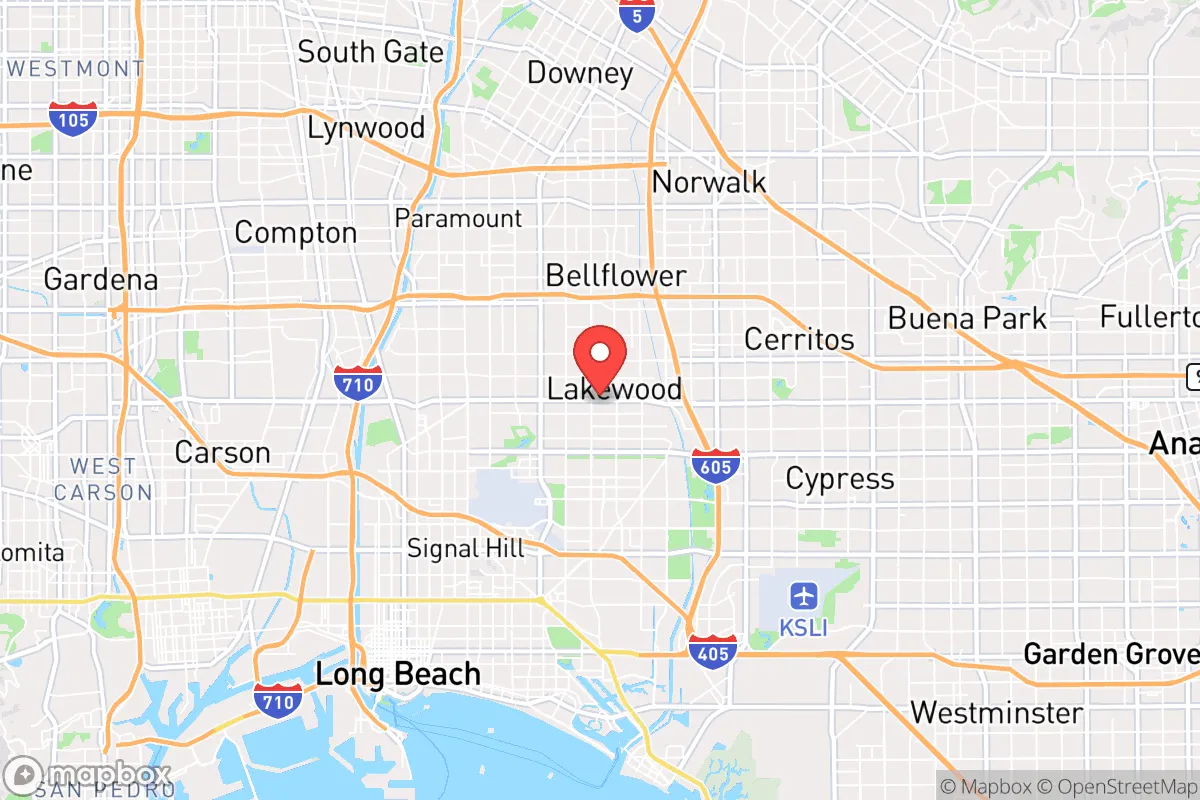
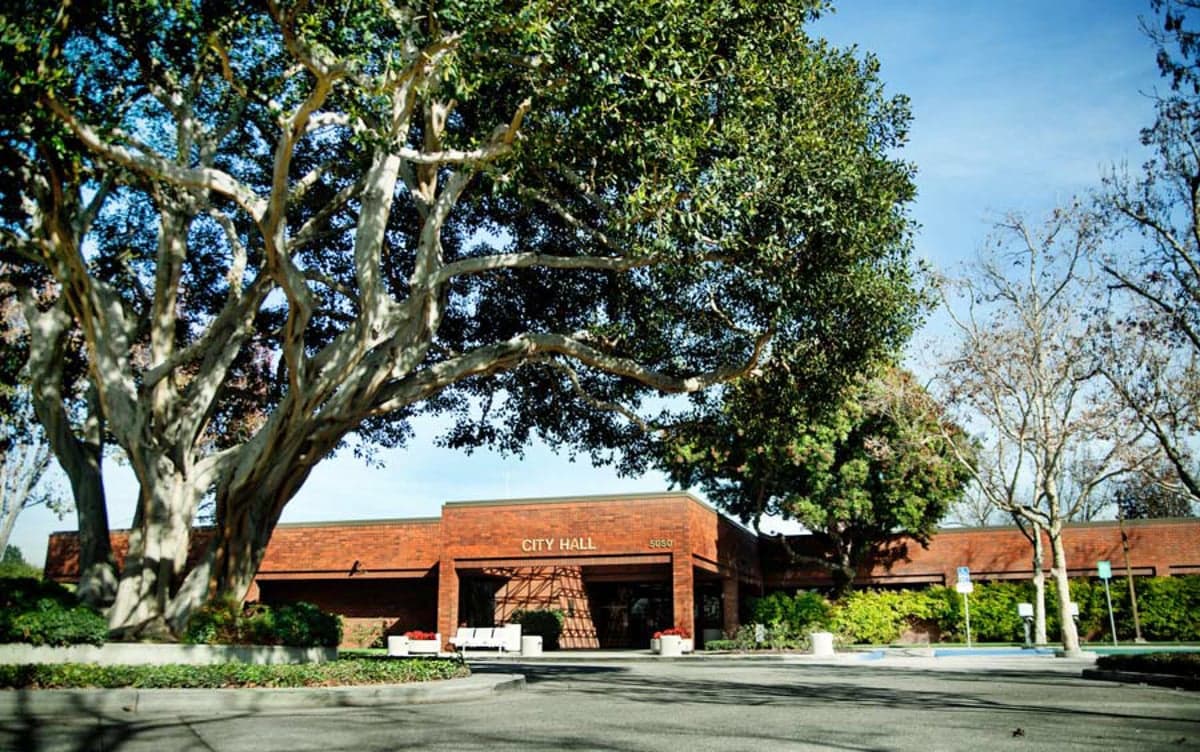
Photo: Wikipedia
Political ClimatePolitical Climate in Lakewood, CA
District shown is the primary district for this city’s centroid. Cities may span multiple districts.
Local Political AnalysisPolitical Analysis of Lakewood, CA
Lakewood, California, sits in a unique political pocket. While Los Angeles County leans heavily Democratic, Lakewood itself is a notable exception, with a Cook PVI of R+2. This means the district is slightly more Republican than the nation as a whole, a rarity in a state where Democratic registration often dominates by wide margins. Over the past decade, the area has held fairly steady, though the broader shift of suburban voters toward the Democratic party has made this Republican lean more of a moderate, independent-minded stance than a hardline conservative one. You won't see the same kind of deep-red energy you'd find in, say, Bakersfield or Orange County's inland cities, but you also won't mistake it for Santa Monica.
How it compares
The contrast with the rest of California is stark. The state as a whole has a Cook PVI of D+13, meaning it votes about 13 points more Democratic than the national average. Lakewood's R+2 is a 15-point swing to the right. This isn't just a number on a map; it plays out in local elections and policy debates. Neighboring cities like Long Beach (D+17) and Downey (D+8) are significantly more liberal, while Cerritos and parts of Cypress lean more conservative. Lakewood occupies a middle ground that feels distinctly suburban: a place where you'll see both Trump and Biden yard signs, but the conversations at the local coffee shop are more about potholes and school funding than national culture wars. The city council tends to be more pragmatic than ideological, focusing on public safety and local services rather than hot-button state issues.
What this means for residents
For conservative residents, Lakewood offers a rare sense of political comfort in a blue state. You can express your views without feeling like an outlier, and local representation often aligns with fiscally conservative priorities like lower taxes and efficient government. However, you'll still be living under California's state-level policies on things like gun control, environmental regulations, and housing mandates, which can feel frustrating. For liberal residents, the area is generally tolerant and diverse, but you won't find the same activist energy or progressive policy pushes as in nearby Long Beach. The practical reality is that most local issues—like maintaining parks, funding the sheriff's department, and managing traffic—are handled with a centrist, results-oriented approach. The political climate here is less about ideological purity and more about what works for a community of families and long-time homeowners.
One cultural distinction worth noting is Lakewood's strong sense of local identity. The city was a planned community built in the 1950s, and that history fosters a "we take care of our own" mentality that transcends party lines. You'll see this in the high voter turnout for local elections and the active neighborhood watch programs. The political trajectory likely remains stable: a moderate, slightly right-leaning suburb in a deeply blue state, where the biggest fights are over development and traffic, not the direction of the country. For anyone moving here, the key takeaway is that Lakewood is a place where you can be politically engaged without being consumed by politics—a quiet, practical middle ground in a state that often feels anything but.

State Political ClimatePolitical Climate in California
State Political AnalysisPolitical Environment in the State
California is a deeply blue state where Democrats hold every statewide office and supermajorities in both legislative chambers, but that blanket statement hides a more complicated reality. The state hasn't voted Republican for president since George H.W. Bush in 1988, and the Democratic share of the vote has crept from about 54% in 2000 to over 60% in 2020. However, that dominance is almost entirely driven by the coastal metros—the Central Valley and inland counties have been moving the other direction, creating one of the sharpest urban-rural divides in the country.
Urban vs. rural divide
The political map of California is essentially a tale of two states. The Bay Area (San Francisco, San Jose, Oakland) and Los Angeles County are the engine of the state's Democratic supermajority, routinely delivering 70-85% of the vote for Democratic candidates. San Diego and Sacramento are reliably blue but more moderate. Meanwhile, the Central Valley—places like Bakersfield, Fresno, and Visalia—votes solidly Republican, often by 20-30 point margins. The inland Inland Empire (Riverside and San Bernardino counties) is a genuine battleground; it voted for Obama twice, then flipped to Trump in 2016 and 2020, though by narrow margins. Orange County, once the heart of California conservatism, has flipped blue in presidential elections since 2016, though it still elects some Republican House members and local officials. The Central Coast (Santa Barbara, San Luis Obispo) leans blue but with significant conservative pockets, especially in agricultural areas.
Policy environment
California's policy environment is defined by high taxes, heavy regulation, and expansive government services. The state has a progressive income tax with rates from 1% to 13.3% (the highest in the nation), a state sales tax of 7.25% (with local add-ons pushing it to 10%+ in many cities), and some of the highest gas taxes in the country. Property taxes are capped at 1% of assessed value under Proposition 13, but reassessment upon sale means newcomers often pay significantly more than long-term owners. The regulatory posture is aggressive: California has its own environmental standards (often stricter than federal), a landmark climate law (AB 32, the Global Warming Solutions Act), and some of the nation's strongest labor and employment protections. Education policy is dominated by the California Teachers Association, with per-pupil spending around $15,000 (above the national average) but outcomes that lag behind many states. Healthcare is heavily regulated, with a state-run exchange (Covered California) and a recent push toward a single-payer system that hasn't yet passed. Election laws are among the most accessible in the country: same-day voter registration, automatic voter registration at the DMV, no-excuse mail-in voting for all registered voters, and a top-two primary system that often locks third parties out of general elections.
Recent policy direction
The last five years have seen California accelerate its progressive agenda. On gun and self-defense law, the state has passed some of the nation's strictest measures: a 10-day waiting period, an "assault weapons" ban, a ban on high-capacity magazines, and a requirement that all ammunition purchases go through licensed dealers. A 2023 law (SB 2) effectively bans carrying firearms in most public places, though it's currently tied up in court. On parental and education rights, California has moved strongly in the opposite direction from red states: it passed a law (AB 1955) prohibiting schools from notifying parents if a child changes their gender identity, and it requires ethnic studies for high school graduation. On speech and privacy, the state has a strong consumer privacy law (CCPA) but has also passed laws that critics say chill free speech online (like AB 587, which requires social media platforms to disclose their content moderation policies). On medical and bodily autonomy, California has enshrined abortion rights in the state constitution (Proposition 1, 2022) and passed laws protecting providers and patients from out-of-state prosecution. On property rights, the state has some of the nation's strongest rent control laws (AB 1482 caps annual rent increases at 5% plus inflation) and has preempted local single-family zoning (SB 9 allows duplexes on most residential lots). On taxation, the trend is toward higher taxes on the wealthy: a 2023 law increased the top marginal rate to 14.4% (including the mental health services tax). On voting and ballot access, California has moved to universal mail-in voting (permanent since 2021) and expanded ballot drop boxes, but also passed a law (AB 307) that restricts who can observe ballot counting.
Civil unrest & political movements
California has a long history of political activism, and recent years have been no exception. The 2020 George Floyd protests were particularly intense in Los Angeles, Oakland, and San Francisco, with widespread property damage and a lasting impact on policing policy (the state passed a law banning chokeholds and requiring body cameras). The homelessness crisis has become a major political flashpoint, with cities like San Francisco and Los Angeles seeing tent encampments that have sparked both progressive calls for more services and conservative demands for enforcement. Immigration politics are a constant battleground: California is a "sanctuary state" (SB 54, 2017) that limits local law enforcement cooperation with federal immigration authorities, and the state has sued the Trump administration multiple times over immigration policy. Secession rhetoric (the "Calexit" movement) flares up periodically but has never gained serious traction—a 2018 poll found only about 20% support. Election integrity has been a lower-profile issue than in many states, but the 2020 and 2022 elections saw scattered protests and a few high-profile recounts (like the 2021 recall election of Governor Gavin Newsom, which he survived by a 62-38 margin). Organized labor remains a powerful force, with recent strikes by hotel workers, grocery workers, and Hollywood writers and actors. A new resident would notice the constant presence of political signage, the prevalence of "Housing is a Human Right" and "Defund the Police" graffiti in coastal cities, and the occasional "Trump 2024" flag flying in the Central Valley.
Projection
Over the next 5-10 years, California's political trajectory is likely to remain blue but with growing internal tension. Demographic shifts are the key factor: the state's population has been declining since 2020 (down about 500,000 people), with net out-migration concentrated among lower-income and middle-class families, many of whom are moving to Texas, Arizona, and Nevada. The people moving in tend to be wealthier, more educated, and more liberal—which reinforces the coastal blue vote. However, the Central Valley and Inland Empire are growing faster than the coast, and those areas are trending redder. The housing crisis will continue to be the defining political issue; the state's push for more density (SB 9, SB 10) is likely to accelerate, but local opposition in suburbs like Orange County and San Diego County will slow it down. Climate change will become an even bigger factor: wildfires, droughts, and sea-level rise will force expensive adaptation measures that will test the state's budget. The recall process will remain a tool for Republicans (they successfully recalled a district attorney in San Francisco in 2022), but a statewide recall of a Democratic governor is unlikely given the partisan math. For a new resident, the practical takeaway is that California will remain a high-tax, high-regulation state with a strong safety net and a progressive cultural tilt, but the cost of living and housing will continue to push people toward the inland areas, where the politics are more mixed.
For a conservative-leaning relocator, the bottom line is that California is not a friendly political environment for your views, but it's not a monolith either. You'll find like-minded communities in the Central Valley, parts of the Inland Empire, and some inland suburbs of San Diego and Orange County. You'll pay high taxes and deal with regulations that may feel intrusive, but you'll also have access to world-class natural beauty, a strong economy, and a diverse population. For a liberal relocator, California is essentially your ideal state—but you'll pay for it in cost of living and housing scarcity. Either way, the state's political trajectory is set: it will stay blue, but the internal fights over housing, homelessness, and the cost of living will only intensify.
* Values derived from national, state, county, city and local statistics and may differ in a specific area. Last updated: 2026-09-25T04:28:24.000Z
Narrative content on this page is AI-generated and may contain mistakes. Verify any details that matter before acting on them.
ReloMaps may earn a commission from affiliate links at no extra cost to you.

