 Popular
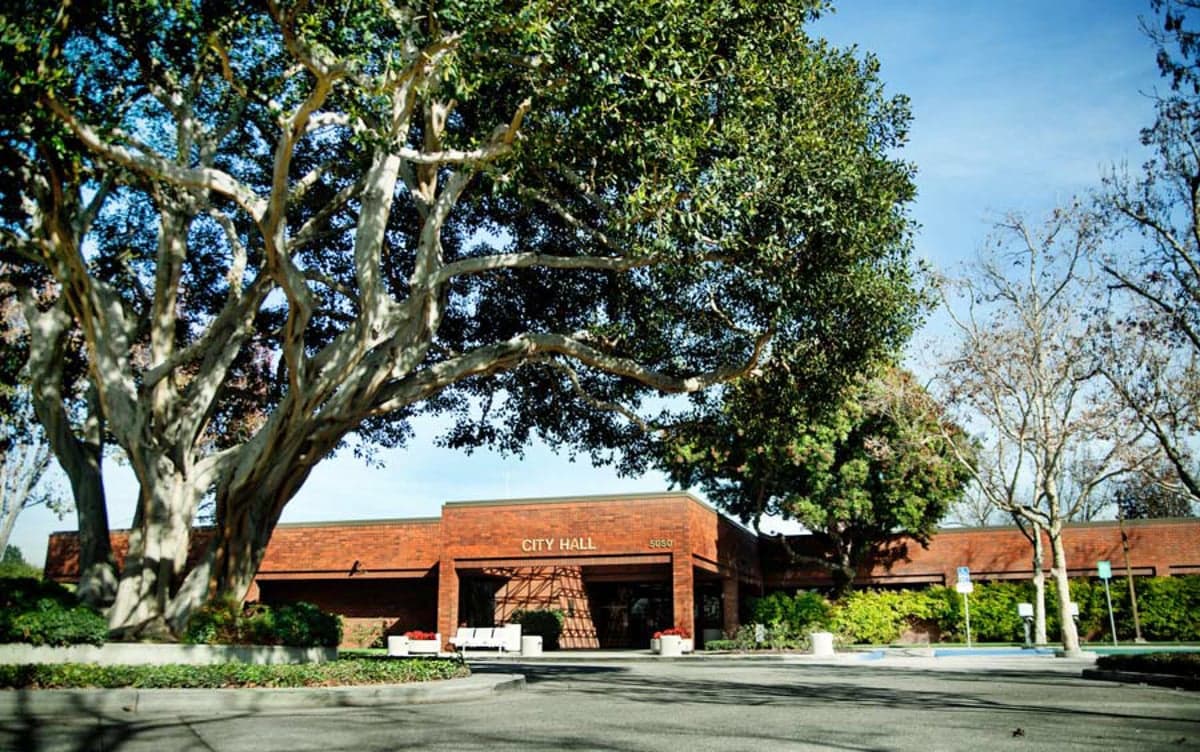
Photo: Wikipedia
Demographics of Lakewood, CA
Affluence Level in Lakewood, CA
An upper-middle-class area. Household wealth, education levels, and homeownership run ahead of national benchmarks.
People of Lakewood, CA
Lakewood, California, is a densely settled, middle-class suburb of 80,510 residents that was deliberately planned and built from scratch in the post-World War II era. Its population today is a majority-minority mix, with Hispanic residents (36.2%) forming the largest single group, followed by White (32.0%) and East/Southeast Asian communities (16.7%), alongside a smaller Black population (7.8%) and a very small Indian-subcontinent community (0.8%). The city is known for its uniform post-war housing stock, strong sense of local identity, and a population that is notably less foreign-born (5.6%) than many neighboring Los Angeles County suburbs, reflecting its roots as a destination for domestic migrants rather than recent immigrants.
How the city was settled and grew
Lakewood was not a gradual settlement but a master-planned instant city, built on former agricultural land—primarily lima bean and sugar beet fields—that had been part of the vast Rancho Los Cerritos and Rancho San Pedro Spanish land grants. The original population was drawn by the promise of affordable, single-family homes for returning World War II veterans and their families, a wave that crested between 1950 and 1953 when developer Louis Boyar built over 17,000 homes in what was then the largest housing development in the United States. The first residents were overwhelmingly White, middle-class, and young, many of them moving from other parts of Los Angeles County or arriving from the Midwest and the South. The earliest neighborhoods to fill were the Lakewood Village core, centered around the Lakewood Center shopping mall, and the Caruthers neighborhood, named after the original landowner. These areas were built with a strict uniformity of floor plans—four basic models—that gave the city its iconic, orderly look. The city incorporated in 1954, largely to prevent annexation by Long Beach, cementing its identity as a distinct, self-governing community.
Modern era (post-1965)
The post-1965 era brought significant demographic change, driven by the Immigration and Nationality Act and broader suburban shifts across Southern California. White families began a gradual out-migration to farther exurbs like Orange County and the Inland Empire, while Hispanic and East/Southeast Asian families moved in, attracted by the still-affordable housing stock and the city’s central location. The North Lakewood area, near the border with Bellflower, saw a particularly strong influx of Hispanic residents, who now form the majority in that section of the city. The South Lakewood neighborhoods, closer to the Long Beach border, became a destination for East/Southeast Asian families, especially those of Filipino and Vietnamese heritage, who today make up a visible share of the local business community along South Street. The Black population, while smaller at 7.8%, is concentrated in the Lakewood Village East area and parts of the Del Amo corridor. The Indian-subcontinent community remains very small (0.8%) and is dispersed rather than clustered in any single neighborhood. The city’s low foreign-born rate (5.6%) reflects the fact that most of these shifts were driven by domestic migration—families moving from other parts of Los Angeles County—rather than by direct immigration from abroad.
The future
The population of Lakewood is projected to become more diverse, with the Hispanic share continuing to grow and the White share declining further, a trend consistent across most of suburban Los Angeles County. The East/Southeast Asian population is expected to hold steady or increase modestly, particularly as younger, college-educated Asian families (32.6% of residents hold a bachelor’s degree or higher) are drawn to the city’s relatively affordable housing compared to nearby Cerritos or Irvine. The Black population is likely to remain stable, as Lakewood does not have the same draw for Black families as neighboring Long Beach or Compton. New development is limited—the city is almost entirely built out—so future population changes will come from generational turnover and the resale of existing homes rather than new construction. The cultural identity of Lakewood is evolving from its original "Leave It to Beaver" image into a more working- and middle-class, multiethnic suburb where Spanish and Tagalog are increasingly heard alongside English in schools and shopping centers.
For someone moving in now, Lakewood offers a stable, family-oriented environment with a strong sense of community identity, a low crime rate relative to surrounding cities, and a housing stock that, while aging, remains affordable by regional standards. The city is becoming a more diverse, slightly more Hispanic, and slightly more Asian place than it was a generation ago, but it retains its core character as a planned, middle-class suburb where homeownership and neighborhood pride are central to daily life.

* Values derived from national, state, county, city and local statistics and may differ in a specific area. Last updated: 2026-09-25T04:28:24.000Z
Narrative content on this page is AI-generated and may contain mistakes. Verify any details that matter before acting on them.
ReloMaps may earn a commission from affiliate links at no extra cost to you.

