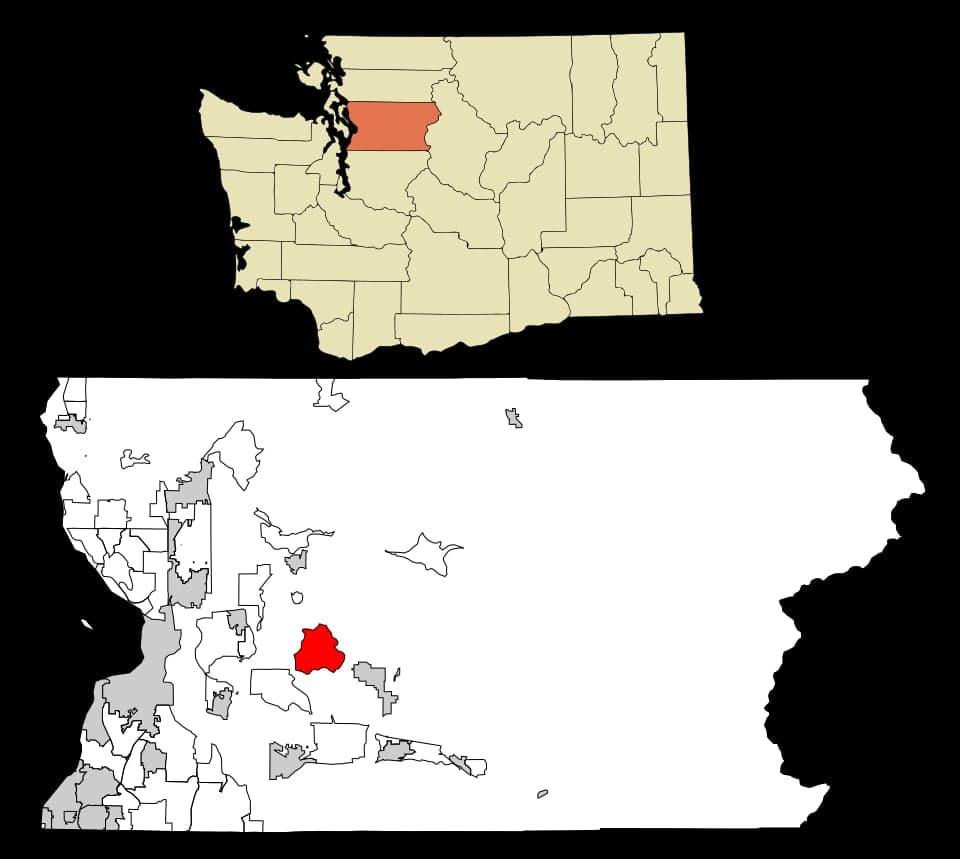
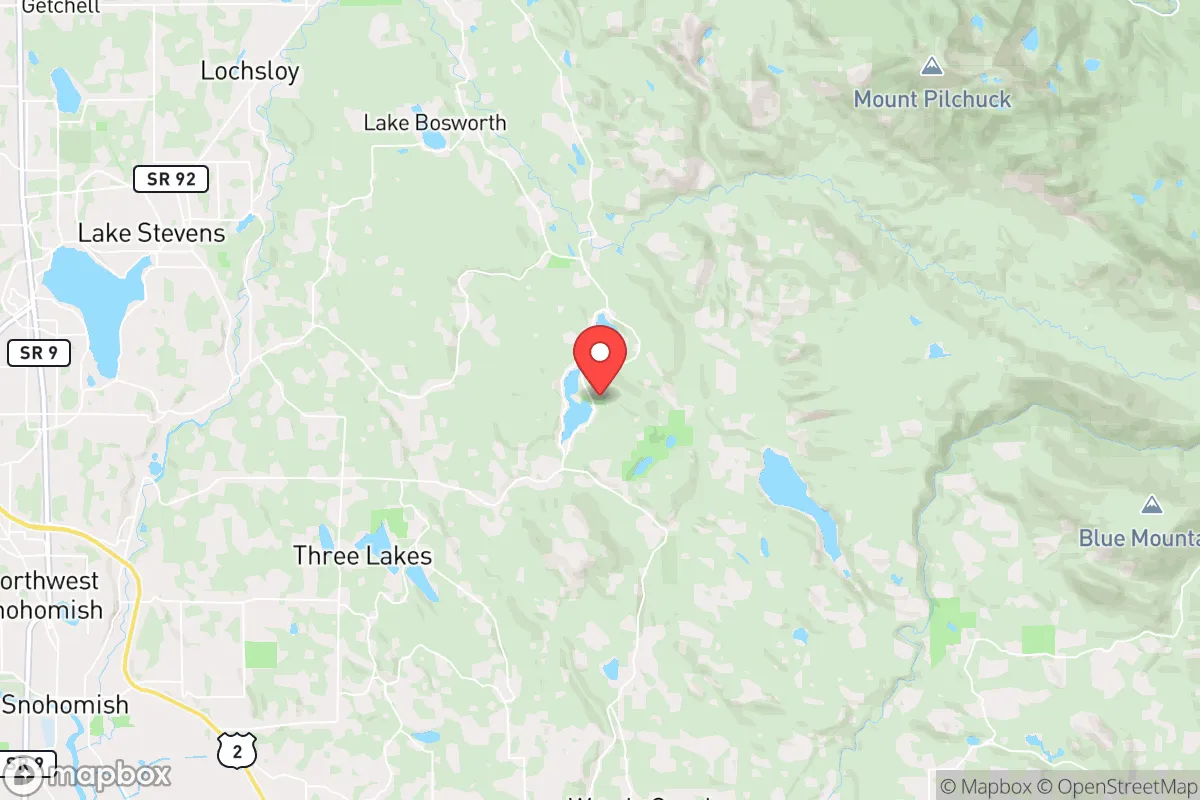
Photo: Wikipedia
Demographics of Lake Roesiger, WA
Affluence Level in Lake Roesiger, WA
An upper-middle-class area. Household wealth, education levels, and homeownership run ahead of national benchmarks.
People of Lake Roesiger, WA
Lake Roesiger, Washington, is a small, tightly-kinned lakeside community of 981 residents that remains overwhelmingly White (83.8%) with no recorded foreign-born population. The city’s character is defined by its rural, waterfront setting and a notably high educational attainment—42.4% of adults hold a college degree—which attracts families and remote workers seeking privacy and natural recreation. With zero Black, Asian, or Indian-subcontinent residents and a Hispanic share of just 1.1%, Lake Roesiger is one of Snohomish County’s least ethnically diverse places, a demographic profile that has been remarkably stable over decades.
How the city was settled and grew
Lake Roesiger’s human history begins with the original inhabitants, the Snohomish people, who used the lake and its surrounding forests for fishing and seasonal camps. Euro-American settlement began in the late 1880s, driven by the logging boom in the Stillaguamish River watershed. The first permanent homesteaders—primarily of Northern European (Scandinavian and German) stock—cleared land for small farms and timber operations. The Lake Roesiger Shoreline area saw the earliest cabins and summer homes built by Seattle families seeking a rustic escape. By the 1920s, a handful of year-round residents had established the Roesiger Landing district, a cluster of homes and a general store near the lake’s outlet. The population grew slowly through the mid-20th century, remaining under 200 until the 1970s, as the area lacked incorporated services and remained a sparsely populated unlogged patch of Snohomish County. No major land grants or railroad lines reached the lake, keeping development minimal and preserving its isolated character.
Modern era (post-1965)
After the 1965 Hart-Cellar Act, Lake Roesiger saw virtually no immigration-driven diversification. Instead, the modern era (post-1970) brought domestic in-migration from the Seattle metropolitan area, as families and retirees sought affordable lakefront property within commuting distance of Everett and Marysville. The North Shore Estates subdivision, platted in the early 1980s, attracted middle-class White families from Snohomish and King counties, many working in aerospace (Boeing) or construction. The South Lake Road corridor developed with larger custom homes on multi-acre lots, drawing professionals and business owners who valued seclusion. By the 2000s, the Roesiger Shores neighborhood—a mix of older cabins and newer year-round homes—became the community’s social hub, with a homeowners association that reinforced a homogeneous, family-oriented culture. The 2020 census data confirms that this pattern has persisted: the population remains 83.8% White, with no measurable Asian, Black, or Indian-subcontinent presence, and the foreign-born share is zero. The Hispanic population, at 1.1%, is negligible and concentrated in a few households along the lake’s eastern edge, near the Snohomish County park.
The future
Lake Roesiger’s population is aging and slowly shrinking, with a median age trending above the county average as younger families are priced out by rising lakefront property values. The community is not becoming more diverse: the White share has held steady above 80% for two decades, and there is no evidence of new immigrant or minority settlement. Future growth will likely be limited by zoning restrictions (most lots are 1-5 acres) and the lack of rental housing or multifamily development. The Roesiger Park area, a county-owned day-use park, may see increased regional visitation but not permanent residents. Over the next 10-20 years, the population is expected to remain under 1,200, with a slight uptick in retirees from the Seattle area and a continued absence of ethnic or cultural diversification. The cultural identity will stay rooted in outdoor recreation—boating, fishing, and hiking—and a preference for low-density, private living.
For someone moving in now, Lake Roesiger offers a stable, homogeneous, and highly educated lakeside community with no demographic churn. It is a place where the population is neither growing nor diversifying, and where the next decade will look much like the last. This is an ideal fit for families or individuals who prioritize seclusion, natural beauty, and a consistent social fabric over urban amenities or multicultural exposure.

* Values derived from national, state, county, city and local statistics and may differ in a specific area. Last updated: 2026-10-11T18:48:14.000Z
Narrative content on this page is AI-generated and may contain mistakes. Verify any details that matter before acting on them.
ReloMaps may earn a commission from affiliate links at no extra cost to you.

