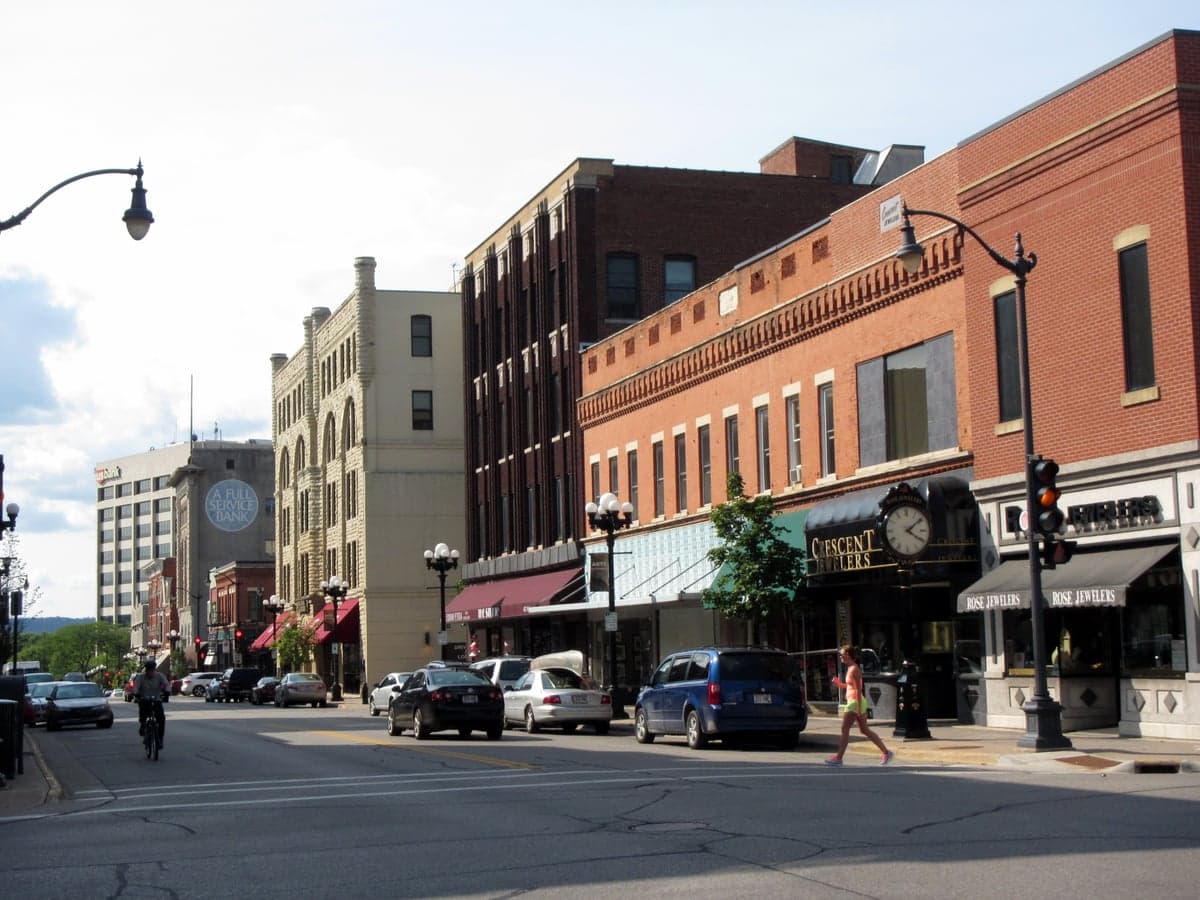
Photo: Wikipedia
Personal Sovereignty in La Crosse, WI
Moderate friction. Expect trade-offs in some aspect of personal liberty and independence.
What does Personal Sovereignty tell us?
Personal Sovereignty measures your capacity for self-reliance and independence with minimal government friction. Higher scores mean fewer barriers between you and the way you want to live... but it assumes you have the space you need and good neighbors.
What does this tell us?
Personal Sovereignty measures your capacity for self-reliance and independence with minimal government friction. Higher scores mean fewer barriers between you and the way you want to live... but it assumes you have the space you need and good neighbors.
State Policy
Energy independence: Importer (15% of energy produced in-state)
Personal Liberty
Homesteading

Personal Liberty Analysis
La Crosse, Wisconsin, offers a mixed bag for those prioritizing personal sovereignty, with the city's local governance leaning left while the surrounding county and state provide meaningful structural buffers. For a conservative-leaning individual or family concerned with government overreach, the key takeaway is that La Crosse itself presents some friction—higher local taxes and a progressive city council—but Wisconsin's broader legal framework on gun rights, parental authority, and property use gives you significant room to operate. The real question is whether you can tolerate the city's regulatory climate to access the state-level protections and the surrounding Driftless Region's self-reliance potential.
Tax burden and regulatory posture in La Crosse and Wisconsin
Wisconsin's overall tax burden is moderate compared to high-tax states like Illinois or Minnesota, but La Crosse adds a local layer that demands attention. The city's property tax rate is among the higher in the region, driven by a school district that consistently passes referenda and a municipal government that funds expanded public services. State income tax is a flat 4.4% for most earners, which is predictable but not negligible. On the regulatory front, Wisconsin is a right-to-work state, meaning you won't be forced into union membership, and the state has preempted many local ordinances on things like short-term rentals and plastic bag bans—a win for property rights. However, La Crosse's city council has shown willingness to push its own agenda on zoning and environmental regulations, so expect more hoops if you're looking to run a home-based business or modify your property. The state's regulatory climate for small-scale manufacturing or agriculture is generally favorable, but the city's permitting process can be slow and costly.
Self-defense rights and gun law specifics in Wisconsin
Wisconsin is a shall-issue state for concealed carry, meaning if you pass a background check and complete a training course, the permit is yours—no discretionary denial by local sheriffs. This is a solid foundation for personal sovereignty. The state also has a strong Castle Doctrine law, with no duty to retreat in your home, vehicle, or workplace, and it extends to any place you are lawfully present. Stand Your Ground protections apply, though the law is slightly less explicit than in states like Texas. Open carry is legal without a permit, and the state preempts local gun ordinances, so La Crosse cannot ban firearms in city parks or impose its own waiting periods. The major limitation is that Wisconsin does not recognize all out-of-state permits, so if you're moving from a more permissive state, you'll need to get a Wisconsin license within 60 days of establishing residency. For preppers, this means you can keep a well-stocked armory without local interference, but you should be aware that the city's police department has a reputation for being proactive on "disturbance" calls, so keep your defensive posture low-profile.
Self-reliance and homesteading viability in La Crosse County
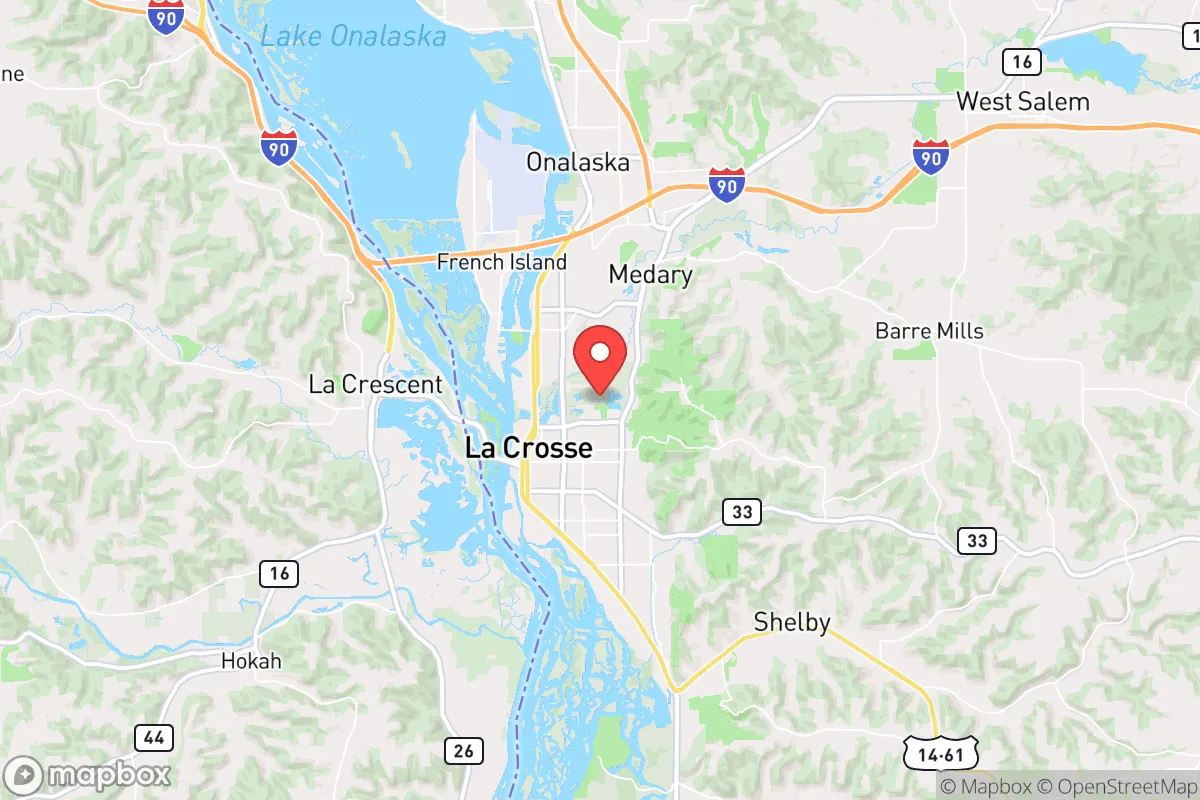
The Driftless Region's topography makes La Crosse County one of the better spots in the Midwest for off-grid and homesteading lifestyles, but you have to get outside the city limits. Within La Crosse proper, lot sizes are small—typically under 0.25 acres—and zoning restricts livestock, large gardens, and accessory structures like workshops or greenhouses. The city also has strict codes on rainwater collection and composting, which can frustrate self-reliance efforts. Move to the surrounding townships like Shelby, Onalaska, or West Salem, and the picture changes dramatically. Rural parcels of 5 to 40 acres are available within a 20-minute drive, with minimal zoning restrictions on farming, hunting, and building. Wisconsin's well and septic regulations are reasonable, and the state does not ban off-grid solar systems, though net metering policies are less generous than in some western states. The growing season is short (about 140 days), but the soil in the coulee region is fertile for vegetables and orchards. For a prepper, the ideal setup is a rural property in La Crosse County with a well, septic, and solar backup, while using the city for employment and supply runs.
Personal liberties: parental rights, medical autonomy, and property protections
Wisconsin has strong parental rights in education, with a robust school choice program that includes vouchers for private and religious schools—a major plus for parents wanting to opt out of the public school system's curriculum. The state also has a parental consent law for minors seeking abortion, and parents have broad authority to direct their children's medical care, including vaccine exemptions for school attendance. On medical autonomy for adults, Wisconsin is not a free-for-all: the state has a prescription drug monitoring program and tight control over controlled substances, but it does allow medical cannabis only in a very limited form (low-THC oil for seizure disorders). Full recreational cannabis remains illegal, and possession can bring fines or jail time, which is a significant limitation for those seeking full bodily autonomy. Property rights are generally well-protected, with strong eminent domain protections and no statewide rent control. However, La Crosse has a rental inspection program and a "just cause" eviction ordinance that can make being a landlord more burdensome. Speech protections are solid under both the state and federal constitutions, and the city has not enacted the kind of "hate speech" ordinances seen in some progressive cities, though public discourse can be tense on campus near UW-La Crosse.
Overall, La Crosse offers a tiered sovereignty environment: the city itself is a zone of moderate friction, but the county and state provide a solid foundation for those willing to navigate the local bureaucracy. Compared to areas like Madison or Milwaukee, La Crosse is far more manageable for a conservative prepper—lower crime, better access to rural land, and a state government that hasn't fully capitulated to progressive overreach. The biggest trade-off is that you'll need to live outside the city to fully exercise self-reliance, and you'll have to accept that Wisconsin's medical freedom landscape is incomplete. For a single individual or family who values gun rights, school choice, and the ability to build a resilient homestead, La Crosse County is a viable option—just don't expect the city itself to be a sanctuary of liberty.

* Values derived from national, state, county, city and local statistics and may differ in a specific area. Last updated: 2026-04-21T10:34:26.000Z
Narrative content on this page is AI-generated and may contain mistakes. Verify any details that matter before acting on them.
ReloMaps may earn a commission from affiliate links at no extra cost to you.

