Photo: Wikipedia
Demographics of Scott County
Affluence Level in Scott County
A middle-class area roughly in line with national averages across income, home values, education, and employment.
People of Scott County
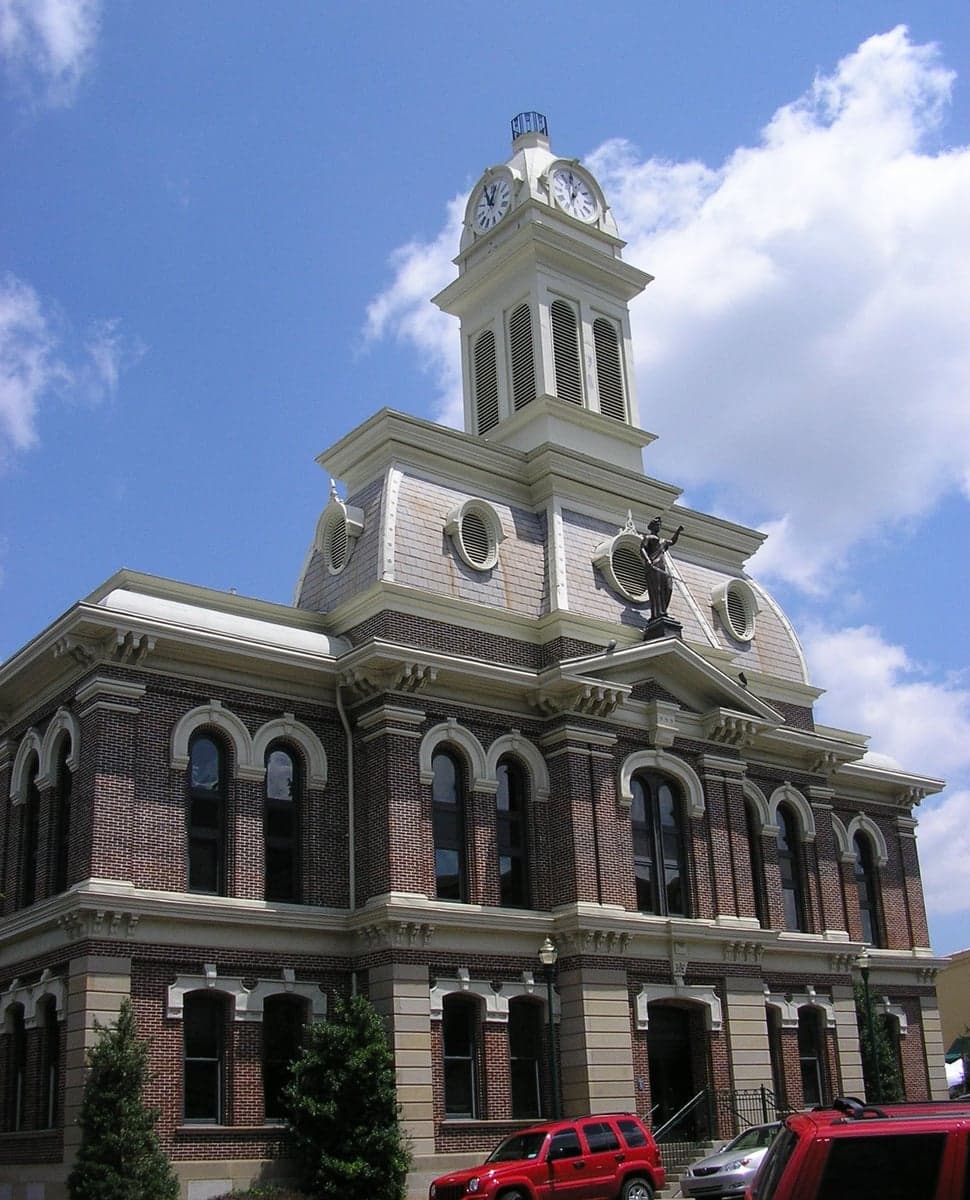
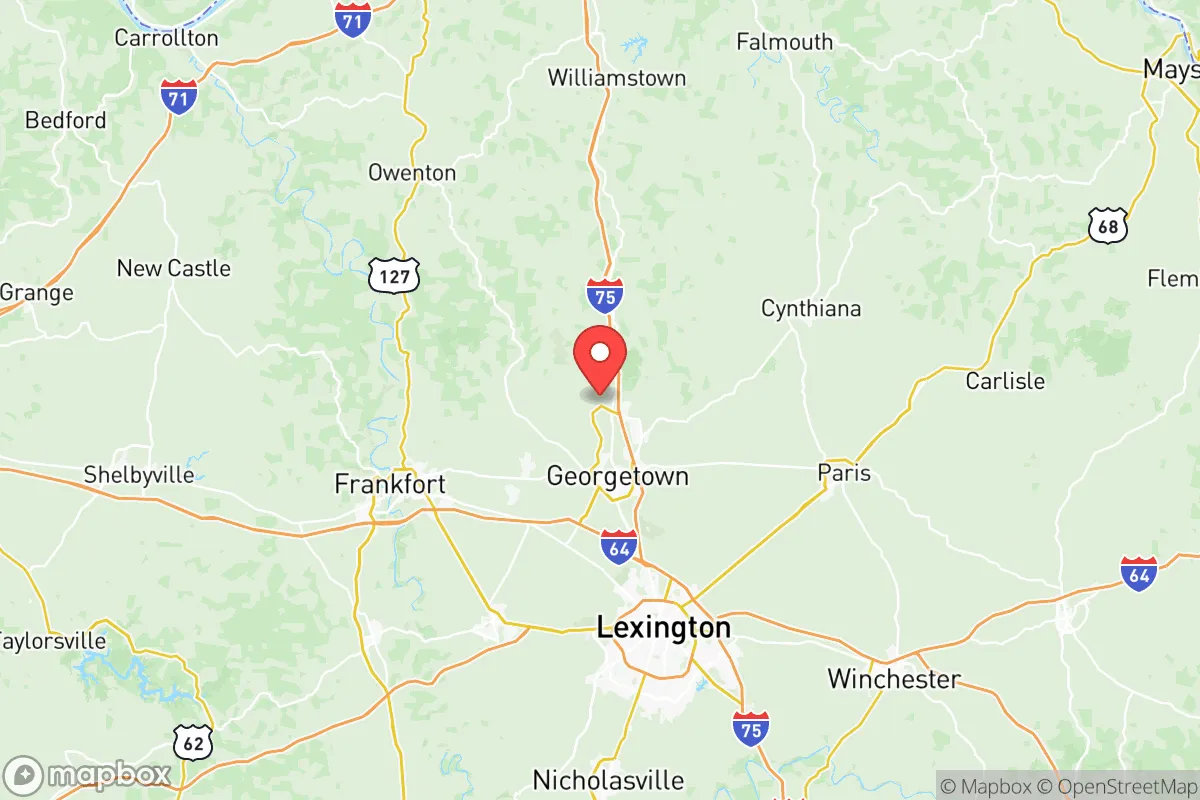
Scott County, Kentucky, today is a predominantly white, family-oriented community of 58,269 residents, characterized by a strong local identity rooted in its agricultural and equestrian heritage, yet increasingly shaped by suburban growth spilling north from Lexington. The population is notably less diverse than the national average, with 84.7% identifying as white, a small but growing Hispanic community at 5.5%, and a Black population of 4.7%. With a foreign-born share of just 1.3% and a college attainment rate of 33.2%, the county presents as a stable, moderately educated, and culturally homogeneous area where newcomers are often drawn by affordable housing, rural landscapes, and proximity to the Bluegrass region's economic hub.
Settlement & growth (pre-1960)
Before European settlement, the area now known as Scott County was part of the traditional hunting grounds of the Shawnee and Cherokee nations, who used the region's abundant game and salt licks. The first permanent American settlers arrived in the 1770s, primarily Scots-Irish and English pioneers moving west through the Cumberland Gap. These early families, such as the McClellands and the Johnsons, were granted large tracts of land for farming, and they established the county's first settlements along the North Elkhorn Creek and Eagle Creek. The town of Georgetown, founded in 1790 and named after President George Washington, quickly became the county seat and the primary population center, serving as a market town for the surrounding tobacco and hemp farms.
Through the 19th century, the population grew steadily but remained overwhelmingly of British Isles descent. The construction of the Louisville, Cincinnati and Lexington Railroad in the 1850s connected Georgetown and the smaller hamlet of Stamping Ground to regional markets, spurring modest growth. Unlike many Kentucky counties, Scott County did not see large waves of German or Irish Catholic immigrants during the 1840s-1860s; the area's agricultural economy and established Protestant culture attracted few foreign-born settlers. The post-Civil War era saw the establishment of a small African American community, many of whom were freedmen who stayed on as sharecroppers and laborers, settling in neighborhoods like East Georgetown and the rural crossroads of Sadieville. By 1900, the county's population was roughly 90% white and 10% Black, a ratio that held until the Great Migration drew many Black families north to industrial cities after 1910.
The early 20th century brought little demographic change. The county remained rural and agricultural, with tobacco, corn, and livestock as economic mainstays. The founding of Georgetown College in 1829 provided a small but steady influx of faculty and students, but the county's population hovered around 18,000 until the post-World War II era. The construction of Interstate 75 in the 1960s, running directly through the county's eastern edge, was the single most transformative event. It connected Georgetown and the tiny community of Oxford directly to Lexington and Cincinnati, setting the stage for suburbanization. By 1960, the population had reached just over 21,000, still overwhelmingly native-born white, with a small Black minority and virtually no Hispanic or Asian residents.
Modern era (post-1965)
The 1965 Hart-Cellar Act had a minimal direct effect on Scott County, as the area's low foreign-born share (1.3% today) reflects. Unlike major metropolitan areas, the county did not experience significant immigration from Asia, Latin America, or the Middle East during the late 20th century. Instead, the dominant demographic force since the 1970s has been domestic migration: white families moving outward from Lexington and other Kentucky cities in search of larger lots, lower taxes, and a slower pace of life. This suburban wave concentrated in Georgetown, which grew from a town of 8,000 in 1970 to over 35,000 today, and in newer subdivisions around Muir and Parkers Lake.
The most notable modern demographic shift has been the growth of the Hispanic population, which rose from negligible levels in 1990 to 5.5% by the 2020s. This community is largely composed of Mexican and Central American immigrants and their U.S.-born children, drawn by jobs in the county's expanding manufacturing and service sectors. The Toyota Motor Manufacturing Kentucky plant, which opened in Georgetown in 1988 and now employs over 10,000 workers, has been a major pull factor. Hispanic residents are concentrated in Georgetown, particularly in the North Georgetown and West Georgetown neighborhoods, and in the rural area around Stamping Ground, where many work in agriculture and horse farms. The Black population, at 4.7%, has remained relatively stable in share since 2000, with most Black residents living in Georgetown's older central neighborhoods and in the community of Clintonville.
The East/Southeast Asian population (0.9%) and Indian subcontinent population (0.1%) are very small, consisting mostly of professionals and their families employed by Toyota, Georgetown College, and the growing healthcare sector. These residents are dispersed throughout Georgetown rather than forming a distinct ethnic enclave. The county's overall racial and ethnic character remains overwhelmingly white, but the Hispanic share is the fastest-growing segment, projected to continue rising as the county's economy diversifies beyond automotive manufacturing into logistics and distribution.
The future
Scott County is projected to become slightly more diverse over the next 10-20 years, but it will remain a predominantly white, suburban-rural community. The Hispanic population is expected to grow to 8-10% of the total by 2040, driven by both immigration and higher birth rates, while the white share will decline gradually to around 80%. The Black and Asian populations will likely see modest increases as Lexington's growth continues to push outward and as Toyota's supplier network expands. New residential development is concentrating in Georgetown's southern and western edges, near the Interstate 75 corridor, and in the emerging subdivisions around Double Culvert and Paynes Depot.
The county's cultural identity is evolving slowly. The traditional horse-farming and tobacco-growing heritage remains strong, but it is increasingly overlaid with a commuter-suburb character. Newer residents, many from Lexington and other parts of the Midwest, tend to be more politically moderate and slightly more diverse than the long-established population. The county's schools, particularly Scott County High School and the new Western Elementary in Georgetown, are seeing growing numbers of Hispanic and English-learner students, which is gradually shifting the community's cultural landscape. However, the foreign-born share will likely remain well below the national average, and the county will not become a major immigrant destination.
For someone moving in now, Scott County offers a stable, safe, and family-oriented environment with strong schools and a growing economy, but with limited racial and cultural diversity. The population is becoming slightly more varied, but the county's character will remain defined by its white, native-born majority and its blend of rural tradition and suburban convenience. Newcomers should expect a community where change is gradual and where the dominant cultural touchpoints remain local sports, church life, and the horse industry, even as Georgetown's skyline fills with new subdivisions and distribution centers.

* Values derived from national, state, county, city and local statistics and may differ in a specific area. Last updated: 2026-06-16T13:54:03.000Z
Narrative content on this page is AI-generated and may contain mistakes. Verify any details that matter before acting on them.
ReloMaps may earn a commission from affiliate links at no extra cost to you.

